Monday, May 4, 2026
31.4 C
Lagos
Home Blog Page 341

FOR THE RECORD

0
MTN

Address by Prince Julius Adelusi-Adeluyi, OFR, mni, Chairman, MTN Nigeria Foundation, at the launch of MTN Foundation ‘What Can We Do Together’ Phase 2 at Civic Centre, Victoria Island, Lagos, on Tuesday, May 31, 2016.

On behalf of the MTN Nigeria Foundation Board of Directors, it gives me great pleasure to welcome you tothe MTN Foundation “What Can We Do Together” Nominators’ Appreciation Party herein Lagos.

This initiative was originally conceived as part of activities marking our tenth anniversary. It has now grown to become another MTN Foundation success story and we are very pleased at the way it has been embraced by the public.

Under the first phase of this initiative, we received over thirty seven thousand nominations from people seeking to help their communities in the best possible way. Following an objective and rigorous selection process, the MTN Foundation team and its partners were able to successfully complete 200 projects in 200 communities nationwide in just 5 months.

I would like to commend the Executive Secretary and the MTN Foundation team for their passion and dedication, and for ensuring that all these projects were completed within the shortest possible time.

Behind every completed project lies a story of real people, real communities and real needs.

For instance, Alaguntan CDA community in Alimosho Local Government area in Lagos State, was in need of electricity,having been in darkness for months. One of the residents, Olanrewaju Ogundeyi, heard of the What Can We Do Together initiative and decided to take matters into his own hands. He nominated his community for a transformer. Today, that community is one of 20 communities that have received a fully functional 500KVA transformer.

In Osun State, the residents of Igbalaye/Olayiwolacommunity in OsogboLocal Government area were in great need of clean drinking water to reduce the growing cases of waterborne diseases.

One of the indigenes – Olanrewaju Oladosu– heard about the ‘WhatCanWeDoTogether’ initiative on radio and he quickly nominated his community. The rest, as they say, is history.

Today, Igbalaye/Olayiwola community is one of the 20 communities where a borehole was constructed with a 500-litre overhead tank and 10 KVA Generator provided.

Ladies and Gentlemen, for their partnership and trust, I would like to ask that you join me in giving a big round of applause to celebrate all the nominators.

There are many more examples across the country, and they speak to our desire to be a brand that cares; one that is committed to empowering our communities in ways that improve the quality of life of the residents.

Distinguished Ladies and gentlemen, it would interest you to know that the Phase 2 of this exciting initiative is already under way.

So I urge you to nominate a community today: Send ‘MTN Foundation’ via SMS to 321. The SMS is FREE!

At the MTN Foundation, we remain committed to improving the quality of life in our communities. Indeed, since inception, the MTN Foundation has invested over N18 billion to execute various projects in 550 locations across the 36 States and the Federal Capital Territory of Nigeria.

In conclusion, I would like to thank all MTN customers whose patronage forms the bedrock of the financial support we receive from MTN Nigeria.

Every MTN customer rightly deserves credit for all that the Foundation has achieved and they can all look upon this Foundation with a sense of pride.

I also thank members of the media for your unending support for all our activities.

Finally, I thank everyone present here today, for taking the time to be here. I wish you all a safe journey back to your respective destinations.

Thank you for your attention.

‘CHANGE’: One Year of Buharinomics! – Executive Summary

0
Buhari

One year into the transition from President Jonathan to the Buhari-led administration, the burden on Government remained the need to rejuvenate the Nigerian economy which has suffered from the declining global oil prices, poor governance structure, sub-optimal fiscal crisis and monetary policy actions.

Recent domestic macroeconomic numbers have suffered from both global and domestic shocks which currently threaten the economic fundamentals of the country. The recent data published by the National Bureau of Statistics (NBS) reflects the impact of the delayed budget passage as well as the weak monetary policy response on macroeconomic aggregates.

The significant drop in government revenue and lower allocation to Sub-Nationals bites harder, pushing many States to the edge of a fiscal crisis with most unable to pay workers’ salaries for more than 3 months.

However, many view the implementation of the 2016 budget as a catalyst for reflating the economy and resetting it on a growth pedestal.

According to the NBS, Real GDP contracted 0.36% in Q1:2016 dragged by declines in the manufacturing and key services sector components.

Similarly, unemployment rate in Q1:2016 worsened to 12.4% from 10.1% in Q4:2015 as total number of people in full time employment decreased by 528,148 within the quarter and about 1.5m people joined the labour force. Inflationary pressures continued unabated rising to 13.7% in April 2016 (from the 12.8% in March 2016) due to cost push factors which impacted on most components of the Consumer Price Index (CPI).

Thus, Nigeria’s mystery index also rose to 24.9% in Q1:2016 from 20.0% in Q4:2015. Pressure on external reserves (declined 8.6% YTD) continued relentlessly despite controls introduced by the CBN. Parallel market FX rate has depreciated 24.0%YTD due to control measures in the official market.

Thankfully, the Monetary Policy Committee (MPC) took a major move during the week in voting for the adoption of a flexible FX rate regime, though with a “small window” to cater for critical transactions. Nonetheless, the lack of economic impulse from the fiscal space for most of H1:2016 signals that the economy already nears a recession.

The Buhari-led administration sought to employ a new approach to budget formation and implementation in a bid to hasten infrastructural development and reflate the economy. The 2016 Budget adopted a zero-based budgeting system, a move from incremental budgeting system. Hence, the 2016 Appropriation Bill tagged “the Budget of Change” was characterised with cocktail of controversies leading to late passage and signing by the President.

Nonetheless, the structure of the 2016 budget is a significant deviation from the previous years as the anticipated revenue was less tilted towards oil receipts (21.2%) and more skewed towards tax revenue as well as intensified efforts to reduce leakages across Ministries, Departments and Agencies (MDAs).

On the back of the huge infrastructure deficit which has hampered growth and constrained business activities, the government increased allocation for capital expenditure from 11.0% in 2015 to 28.8% in 2016. Worthy of note is the special intervention programme on social safety nets (N500.0bn or 8.0% of total expenditure) to ensure an inclusive growth in 2016.

Whilst we hold the view that the 2016 budget has the potentials to reflate the economy if properly implemented, the required funding of the budget for optimal performance could be a drag.

We note that the specific provisions for capital spending will boost infrastructure projects and investments while the recurrent expenditure would have a multiplier effect on private consumption expenditure component of the GDP.

We think the fiscal deficit may exceed the 2.2% level projected for 2016 owing to pipeline vandalism which has lately hampered production.

We see the recent liberalisation of the downstream petroleum sector and the interbank foreign exchange market as a seeming synergy of fiscal-monetary policy synchronisation, but amidst the various macro-economic constraints, we ask; how much can the “budget of change” achieve?

– Afrinvest Research

MTN Plans $96m Network Upgrade in Ghana

0
MTN Group

MTN Ghana will this year, proceed to the modernisation of its telecom network and improve the quality of the services it provides its users across the country.

In order to achieve this, the telecom firm plans to invest $96 million which will be divided in three. $62 million will be spent to modernize and extend the network, $16 million will be used to develop technological services and the remaining $18 million will serve to deploy 4G LTE.

Though holding the biggest share (46.89%) of the Ghanaian market, ahead of Vodafone who comes second with 21.95%, MTN Ghana would like, through its investment, to improve population’s access to its services.

By meeting the growing demand for data and providing its services to secluded rural areas, MTN Ghana will become a true reference in the country and boost its revenues.

Keep providing its users an excellent telecom experience-such is MTN Ghana’s strategy to remain on top permanently in the extremely competitive local market, where it rivals Vodafone, Tigo, Airtel, Globacom and Expresso.

Afreximbank Raises $750m via Eurobond Issue

0
Afreximbank Raises $750m via Eurobond Issue

African import-export bank Afreximbank has announced in a statement that it has, on May 17, 2016, in London, raised $750 million after issuing a Eurobond. The 5-year bond has a 4% interest rate.

The fundraising comes few weeks after Afreximbank’s President, Benedict Oramah, announced the issuance of Eurobonds to finance part of $3 billion required to fund the bank’s activities in 2016.

Oramah also said that his institution would explore syndications, institutional and bilateral loans. The same stands for local-currency-bonds which will be issued in the last quarter of 2016, for no more than $200 million.

One of the aims of the pan-African bank with this fundraising is to reinforce its support to member-countries.

To this end, Afreximbank is looking to increase its deposits to these countries respective central banks, eying $10 billion against $3 billion presently.

Commonwealth ICT Minister Forum Opens June 14

0
ICT event

At their first biennial Commonwealth ICT Forum held in March 2014 in London, ICT ministers of Commonwealth countries mandated the CTO to lead in the following areas:

· Supporting broadband national policies and plans
· Promoting ICT applications in areas such as education, health, and agriculture
· Providing greater coordination of Commonwealth countries’ positions and secure consensus on key international issues i.e. radio spectrum, standards, and Internet governance.

The Commonwealth ICT Ministers Forum 2016 will focus on addressing emerging issues, such as:

· Improving national regulatory environments
· Challenges in achieving universal broadband access
· Opportunities in spectrum management after WRC’15
· Emerging e-applications
· Internet of Things and its policy and regulatory implications
· Cybersecurity and the Sustainable Development Goals
· Internet governance

This year’s event is specifically designed to allow wider participation from industry, civil society and academia, as follows:

· 14 June 2016: Closed-door Ministerial Meeting followed by the 2016 Commonwealth ICT & Industry Awards.
· 15 – 16 June 2016: Open Forum with industry, civil society and academia.

This is a unique opportunity to understand and influence policy and regulatory considerations in over 40 countries at a single event.

Your registration will include the Commonwealth ICT & Industry Awards on 14 June (evening) as well as Open Forum on 15 – 16 June 2016.

About the Commonwealth Telecommunications Organisation
The Commonwealth Telecommunications Organisation is the oldest and largest Commonwealth membership organisation in the field of Information and Communication Technologies (ICTs), and uses its experience and expertise to support members in using ICTs to deliver effective development interventions that enrich, empower, equalise and emancipate people within the Commonwealth and beyond.

Ghana Hosts Africa Funds, Asset Management Forum

0
AIFAM

The Africa Investment Funds and Asset Management – West Africa Regional Forum is scheduled for the 27th & 28th of July 2016 in Accra, Ghana.

The Africa Investment Funds and Asset Management (AIFAM Forum) convenes regional capital owners (pensions, sovereign funds, insurers, central banks etc.), fund managers, and investment professionals from the continent to meet with institutional investors and other stakeholders who are interested in opportunities on the continent.

The meeting is an invitation-only session on developing viable financial products/structures that can increase the availability of capital to invest in the continent’s infrastructure, deepen capital markets innovation and mainstream investing alternative asset classes.

We are taking this events across targeted regions in Africa, this approach is design to gather all the important aspects around pension funds investment in each of the countries falling within a specific region and then in November we will gather in Ethiopia for the main event, where we are already inviting key stakeholders from across the globe to converge for two days and hold dialogues that will continue to pave way for economic development in Africa.

Some of our confirmed Speakers include:

  • Dr Johnson P. Asiama, Deputy Governor – Bank of Ghana
  • Kofi Anokye Owusu-Darko, Chief Executive Officer – National Pensions Regulatory Authority
  • Waheed Qaiser, President – MaximLLP UK
  • Langalakhe Dlamini, General Manager: Business Development & Finance –Swaziland National Provident Fund
  • Busisa Jiya, Managing Director – Jiya Africa Asset Managers
  • Alex Burn, Partner, Malczynski Burn Risk Management
  • Xolisa Dlamini – Industry Expert (Independent Consultant)
  • Dharmesh Dayal, Business Development Executive – Old Mutual Investment Group

‘We have been delighted to work with a wide range of partner organisations during the course of the past months in researching and developing this unique forum.

We value such collaborative partnerships greatly as providing the opportunity to share resources and ideas and to bring together a range of different perspectives to help produce this thought-leading forum.

We are looking forward to what should be the most interesting and informative gathering of policy-makers, investment funds, corporate and investment professionals in West Africa.’

Intra-Africa Trade Set for Greater GDP Growth

0

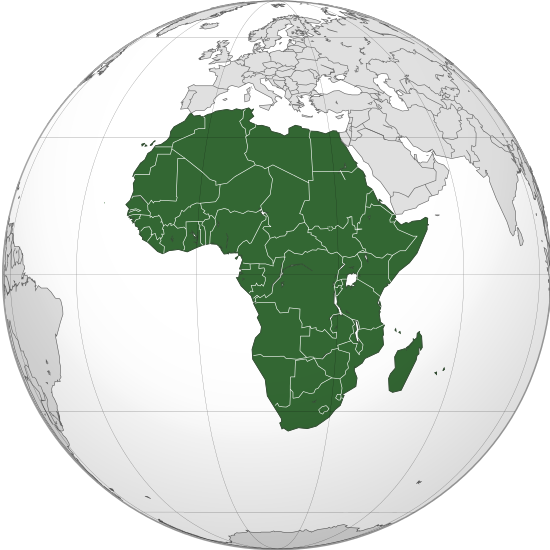
As growth in developed markets such as Europe, China and North Africa continue to stagnate, greater regional integration in Africa, amongst all role players, is needed to capitalise on the continent’s growth potential.

This is according to Hennie Heymans, CEO of DHL Express Sub-Saharan Africa who says that when comparing intra-regional trade statistics, Africa’s rates are amongst the lowest in the world, with less than 20% of what is produced in the region, remaining on the continent.

“This, in essence, means that over 80% of what is produced in Africa is exported, mainly to the European Union, China and the United States.

In comparison, over 65% of Europe’s trade occurs on its own continent, and in North America, the figure is around 50%(1),” says Heymans.

According to the latest IMF April 2016 World Economic Outlook report, developing economies and emerging markets will continue to account for a large portion of the world’s economic growth in 2016, which is expected at a rate of 3.2%.

The report also reveals that growth in sub-Saharan Africa is also expected to remain low this year, at 3%, down 0.4% from 2015.

“Sub-Saharan Africa’s dwindling growth is influenced by factors such as slowed, moderate growth in advanced markets such as China, as well as the downward revision of growth for the region’s oil-exporting countries.”

Heymans says that intra-African trade has enormous potential to catalyze investment and foster growth on the continent.

“To ensure that Africa is equipped to maintain and exceed its growth trajectory of 4% in 2017(2), business leaders, the government and the community need to work together towards making Africa an easier place to do business and to stimulate trade between the various African countries.”

“Trade blocs such as SADC (Southern African Development Community), EAC (East African Community), ECOWAS (Economic Community of West African States), all promote cross-border trade and are focused on facilitating trade and reducing bureaucracy within the region.

However, more needs to be done to connect and encourage the movement of goods, services, people and capital across borders in Africa.

The World Bank recently reported(3) that intra-African trade costs are estimated to be approximately 50% higher than in East Asia due to the number of permits required when transporting goods across certain borders, or the fees payable for prolonged waiting periods at the border.

Another issue is the varying de minimis values across the region. In Angola for example, the de minimis value is $350 (if imported via Luanda) while in Zimbabwe, the de minimis is $10. The varying values can often make it difficult for companies to plan market expansion strategies in Africa.

On the contrary, a new law in the United States has simplified shipping to the U.S. by raising the import de minimis limit from $200 to $800, which means that goods below $800 will not require formal customs procedures and will not be liable for duties or taxes.

Heymans says that in light of poor global growth forecasts, the biggest game changer for Africa going forward will be its ability to boost connectivity and intra-Africa trade.

“The government and the private sectors need to continue to work together to create a sustainable and inclusive environment, and work on solutions to make it easier for African businesses to conduct business within their local and regional environment,” concludes Heymans.

Huawei Sues Samsung over Patent Infringements

0
Huawei

China’s Huawei has launched a series of lawsuits against Samsung in China and the USA alleging the company has infringed on its patents.

Huawei alleges a number of patent infractions, including the use of its 4G technologies in Samsung smartphones.

“We hope Samsung will stop infringing our patents and get the necessary license from Huawei, and work together with Huawei to jointly drive the industry forward,” says Ding Jianxing, President of Huawei’s Intellectual Property Rights Department in a statement.

Huawei claims that Samsung violates 11 standard-essential patents that it has filed.

The lawsuits were filed in U.S. Federal Court in California and in Shenzhen, the Chinese city where Huawei is based.

8.1m people work in Renewable Energy Industry Worldwide

0

8.1 million people work in the renewable energy industry. This is 5% higher than in 2015.

This was revealed by the International Renewable Energy Agency (IRENA) in a report entitled “Renewable Energy and Jobs – Annual Review 2016”.

“The continued job growth in the renewable energy sector is significant because it stands in contrast to trends across the energy sector,” said IRENA’s Director-General, Adnan Amin.

Solar photovoltaic energy is the leading employer with 2.8 million jobs divided in production, installation, exploitation and maintenance of the related plants. Next is liquid biofuels which employs 1.7 million people. It is followed by hydropower (dams with more than 10 MW of capacity) with 1.3 million jobs and the wind energy, fourth employer with 1.1 million jobs.

The trend is sustained by the decreasing costs used to implement these technologies and should continue like that given the global goals set for climate worldwide. As the on-going energy transition accelerates, growth in renewable energy employment will remain strong, said IRENA’s director.

In 2015, renewable energy grew by 8.3% with 153 GW developed across the world, a record.

– Gwladys Johnson

Apple Eyes 4,000 Indian Experts to Boost Maps Service

0

Apple has opened a new office in Hyderabad that will focus on development of Maps for its products. The company said that the investment will accelerate Maps development and create up to 4,000 jobs.

“Apple is focused on making the best products and services in the world and we are thrilled to open this new office in Hyderabad which will focus on Maps development,” said Tim Cook, Apple’s CEO.

“The talent here in the local area is incredible and we are looking forward to expanding our relationships and introducing more universities and partners to our platforms as we scale our operations.”

Apple has been continually updating and adding new features to Maps, including 3D views, the Flyover feature and tools to help customers find convenient places to shop, eat and explore nearby areas. With iOS 9 Apple added Transit, offering a combination of trains, subways, buses and walking, which is already available for more than 300 cities around the world.

The new facility, located on the Waverock campus, will provide a LEED-certified home for the expanding Maps team.

“We are honored Apple chose Hyderabad as a home for its Maps development office,” said Telangana Chief Minister Kalvakuntla Chandrashekar Rao. “This will create thousands of jobs here and is a testament to our proactive approach, quality infrastructure and the excellent talent base we have in the region.”

TMT, IHS Towers Plan Finance Africa Summit in Lagos

0
TMT, IHS Towers Plan Finance Africa Summit in Lagos

TMT Finance the global telecom investment news and events provider, and IHS Towers, the largest mobile telecommunications infrastructure provider in Africa, Europe and the Middle East, have announced the launch of the inaugural TMT Finance Africa in Lagos, Nigeria Conference on September 20, 2016.

The conference will gather key leadership from telecom, media and technology companies, global and regional financial institutions, government representatives, investors, professional and legal advisers to assess the best opportunities for co-investment and partnership across the Africa.

“We are delighted to partner with TMT Finance for this event which will bring key telecom, media and technology focused international institutions and investors to Lagos,” said IHS Towers Co-founder and Interim IHS Nigeria CEO Mohamad Darwish. “Nigeria, being Africa’s largest economy, has always been a large hub for investments into Africa, and this Lagos event is proof of this continued phenomenon. As telecommunications, media and technology continue to converge, sustaining investment in development is critical to the sector. We hope that this conference will create a valuable platform for all players in the region to contribute to an exchange of ideas.”

“We are excited to have the opportunity to partner with IHS, and bring the conference series and our global network of industry and finance executives to Lagos for the first time,” said Dominic Lowndes, Managing Director of TMT Finance.

“Lagos has become a critical hub for investment in telecoms infrastructure and services across Africa and the event will assess some of the most exciting opportunities for partnership and investment worldwide.”

Over 20 speakers have already been announced for the event, including key C-level financial decision makers from MTN, Bharti Airtel, IHS Towers, MainOne, Standard Bank, IFC World Bank, First Bank Nigeria, Africa Internet Group and Access Bank.

In total, over 50 key speakers will be announced, including leading regional telecom and tech CEOs, CFOs and Strategy Heads, Regulators, Policy Makers, Global and Regional Heads of leading financial institutions, investors and advisers. The agenda will feature a series of Leadership Panels, Peer to Peer Round Tables, Keynotes and Breakout Networking session.

Key session themes announced include: Telecom Leadership Africa: Broadband Infrastructure Investment; Digital Africa; Mobile Infrastructure Strategies; Mergers and Acquisitions; Private Equity Africa Roundtable; Regulation and Policy; Financing Telecoms; Broadband Infrastructure; Investing in Mobile Data and Services; Mobile Banking, Fintech and M-Health; and Media and Convergence.

“We are inviting companies and representatives from across the region, as well as global players, to participate and we encourage local players to contact us if they would like to take part,” said Lowndes. “We will announce the first round of key speakers in May.”

TMT Finance events provide a unique platform for facilitating dialogue between leading industry executives and the global financial and advisory community.

Speakers and delegates are telecom, technology and infrastructure CEOs, CFOs, CSOs, MDs and Heads of M&A, investment banking heads, private equity investors, government representatives, regulators and specialist legal and strategic advisers and thought leaders.

Worldwide Smartphone Sales Grew 3.9% in 1st Qtr 2016

0
mobile broadband modem

Global sales of smartphones to end users totaled 349 million units in the first quarter of 2016, a 3.9 percent increase over the same period in 2015, according to Gartner.

Smartphone sales represented 78 percent of total mobile phone sales in the first quarter of 2016.

Smartphone sales were driven by demand for low-cost smartphones in emerging markets and for affordable 4G smartphones, led by 4G connectivity promotion plans from communications service providers (CSPs) in many markets worldwide.

“In a slowing smartphone market where large vendors are experiencing growth saturation, emerging brands are disrupting existing brands’ long-standing business models to increase their share,” said Anshul Gupta, Research Director at Gartner.

“With such changing smartphone market dynamics, Chinese brands are emerging as the new top global brands. Two Chinese brands ranked within the top five worldwide smartphone vendors in the first quarter of 2015, and represented 11 percent of the market. In the first quarter of 2016, there were three Chinese brands – Huawei, Oppo and Xiaomi – and they achieved 17 percent of the market.”

Oppo had the best performance in the quarter, moving into the No. 4 position with unit sales growth of 145 percent. Like Huawei and Xiaomi, Oppo saw strong growth in China, taking share from players such as Lenovo, Samsung and Yulong. Huawei saw strong smartphone demand in Europe, the Americas and Africa, while Xiaomi and Oppo saw their smartphone sales in emerging Asia/Pacific rise by 20 percent and 199 percent, respectively.

In the first quarter of 2016, Samsung extended its lead over Apple with 23 percent market share. “Samsung’s Galaxy S7 series phones and renewed portfolio positioned it as a strong competitor in the smartphone market, and more so in the emerging markets where it has been facing fierce competition from local manufacturers,” said Gupta.

Apple had its first double-digit decline year on year, with iPhone sales down 14 percent. Apple’s “upgrade program” in the U.S. has helped sweeten its flagship iPhone 6s and 6s plus model pricing to drive sales in its largest smartphone market. Apple is also exploring ways to refarm second-hand iPhones coming through the program in emerging markets.

Lenovo disappeared from the top five smartphone vendor ranking as well as the top 10 mobile phone vendor market in the first quarter of 2016. “Lenovo had another challenging quarter with its worldwide smartphone sales declining 33 percent,” said Gupta.

“Its smartphone sales fell by 75 percent in Greater China, where it faced strong competition from local brands. Lenovo is also struggling to bring synergies with Motorola’s device business, managing lower costs and overheads of the two brands.”

In terms of the smartphone operating system (OS) market, Android regained share over iOS and Windows to achieve 84 percent share.

MTN Digital TV Goes Live TODAY!

0
MTN

Nigerians Embraces Convergence as MTN launches Nigeria’s 1st converged Digital TV and OTT-VOD service.

Nigeria takes a bold step into the era of Telecommunications, Broadcasting and Media convergence as MTN Nigeria launches the pilot of its digital television broadcasting service in Jos, Plateau State.

The TV service, which went live today [Thursday, 26 May 2016], is sequel to the issuance of a digital broadcast licence to MTN by the Nigerian Broadcasting Corporation (NBC) last year.

According to Ferdi Moolman, CEO, MTN Nigeria, “MTN is committed to providing Nigerians with innovative digital platforms which will enhance the way we live, work and play. Once we commence full commercial activities, the TV service will deliver an exciting bouquet of rich local and international content to Nigerians. In addition, subscribers will have the freedom to watch their favourite programmes when they choose to via MTN VOD service, rather than having to watch at a specific broadcast time. This will be the first fully converged broadcast and OTT-VOD service to launch in MTN.”

“Indeed, the launch of MTN TV is another bold demonstration of MTN’s abiding faith in the future of Nigeria, driving growth and development by enabling Nigerians keep pace with the latest global trends and converged solutions.”

Elaborating further, MTN Nigeria Executive, Lynda Saint-Nwafor said “MTN’s vision is to lead the delivery of a bold new digital world. We are committed to exploring opportunities and avenues to expand our digital footprint and value offering to our customers. We are therefore constantly seeking appropriate channels to place the latest technologies and services in the hands of Nigeriansand this is one of such.”

Nigeria, 9 Others Account for 92% of Insurance Premium in Africa

0
AIO

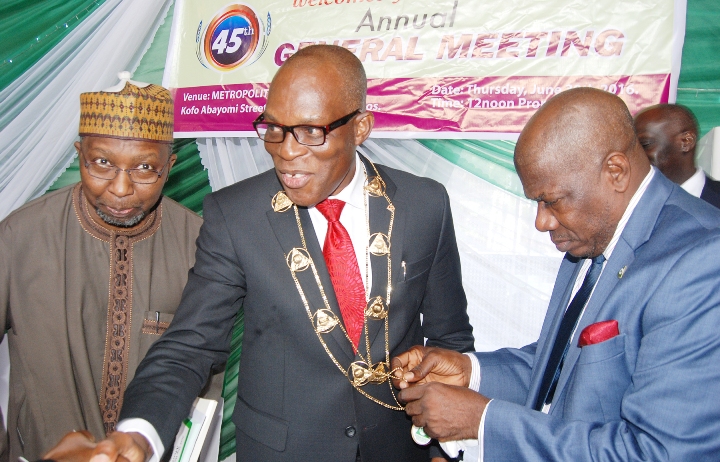
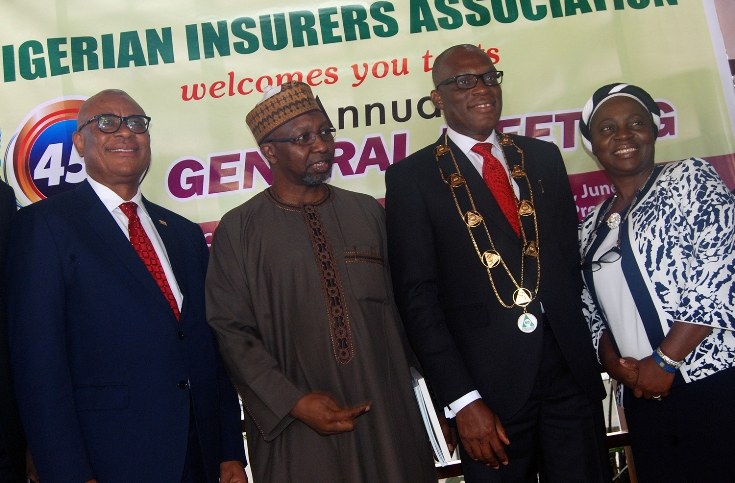
A panel report from the 43rd African Insurance Organisation [AIO] conference held recently in Marrakech, Kingdom of Morocco, says that Nigeria and nine others account for over 92 per cent of written insurance premium in Africa.

Other observations in the report include:
· The African insurance Sector accounts for barely 1.5% of the World Insurance market in 2015, out of a world GDP of 3.2%;

· Over 60% of written premiums on the African continent comes mainly from South Africa;

· The average insurance penetration rate stands at 2.8% as against a world average of above 6%. (1% excluding South Africa)

· A significant improvement observed with regard to the accessibility, regulatory and financial solidity conditions for local actors;

· The sharp growth of African economies over the past decade, in relation to the growth figures of other continents, comprises one of the factors driving the development of African Insurance;

· Sustained developments in the regulatory framework attesting to the awareness of African countries on the need to provide clear and encouraging solutions with respect to investments in African Insurance;

· The strong will of African countries to undertake major infrastructural projects will help make up for the delay in the penetration rate of insurance, in terms of contributions to GDP;

· A marked dominance of written premiums on the South African market;

· 92% of written premiums on the African Continent derive mainly from 10 African countries (South Africa, Morocco, Egypt, Nigeria, Kenya, Algeria, Angola, Namibia, Tunisia and Mauritius);

· The contribution of Insurance to GDP falls slightly below the world average (6.2%); considering that the penetration rate is still below 1% in more than half of the African continent;

The development items produced by this same Barometer are:
· The setting up of efficient oversight and compliance mechanisms for rules and regulations;
· The setting up obligatory insurance cover leads to improvements in the insurance penetration rate in Africa;
· The creation of oversight mechanisms with regard to the celerity in the management and settlement of claims;
· The drafting of prudential and good governance regulations in the sector;
· Improving African skills and know-how on the technicalities and insurance of local risks will provide an adequate response to premium retention and conservation on the continent;
· Improving the accessibility of the population to financial services will serve as a springboard for the development of micro-insurance;
· Increase capitalisation and technicality in a drive to address the threat of premium drain from the continent.

Interswitch Drives Healthcare with Innovative Solution

0
Interswitch new logo

Interswitch Transnational, Africa’s leading digital payments and commerce provider is set to spark off transformation of Nigeria’s health sector with the launch of Interswitch Hospital Management Solutions (IHMS), a shared outsourcing infrastructure to help manage non-core functions such as patient record keeping, Claims Management and other administrative services.

The solution enables Care Providers to focus on their most essential services without being burdened by time-consuming data management tasks, giving them the ability to pay added attention to keeping their patients healthy.

It changes the way Clinicians, Doctors and other medical professionals manage patient information from registration to payment. Other services offered as part of the solution include Claims Processing, Integrated Payments and Reporting, Claims Dispute Arbitration and Settlement, Biometric Patient Identification at hospitals, Capitation Payments Tracking, seamless Patient Eligibility Management and secure patient data hosting and mining with global standards.

Speaking about the benefits offered by IHMS, DCEO Industry Vertical Markets, Interswitch, Chinyere Don-Okhuofu commented, “Healthcare in Nigeria is plagued by severe challenges from lack of adequate technology infrastructure and high operational costs to manual submission and processing of health claims. As it currently stands, Healthcare Providers and Insurers simply do not have the capacity to manage all of these non-core functions, while still giving their patients the proper care they need.

Interswitch Health Management Solution has been developed to address this issue. Patient processing in health facilities is well integrated from front desk to nursing, doctors to diagnostics, inventory to billing, allowing medical entrepreneurs track cost and revenue in real-time.

Patients will enjoy seamless access to quality healthcare and the multiple functionality of their cards, which include care, payments and savings.

With IHMS, Regulators also have access to quality information for policy making, reduced industry fraud rates, effective government interventions and centralized electronic medical records”.

Health Providers registered on the platform will have their patient records transferred and hosted on a secure server, which allows the flexibility of using World Health Organisation’s ICD 9 or 10 coding. Patients visiting the hospital for treatment may opt to be issued a Chip and PIN-based card used for identification, storing medical history and payments for medical services.

The solution makes it possible to submit claims or bills to the HMO and track payment easily after service has been delivered.
Chinyere went further to explain the benefit to Health Insurers saying;

“The several benefits of IHMS to Health Insurers include reduced fraudulent claims, efficient revenue collection & expense management, improved patient satisfaction, streamlined and standardized operations, improved resource planning & allocation and market share growth due to outsourcing of non-core operations. Hospitals also enjoy quick Claims submission process and timely Claims settlement.”

It can be recalled that recently, Interswitch launched Card Transaction Control, which allows Nigerians to take control of their transaction security.

IHMS is another step by the brand that further reinstates its position as a market leader with the interest of Nigerians at heart.