

Ecobank Transnational Incorporated is considering exiting some countries where it is presently facing decline in profit margin as part of holistic review of its business model going forward.
This followed a declaration made by Ecobank’s Chairman, Emmanuel Ikazoboh and reported by Reuters thus: “In the last pocket of least promising countries, we really want to take a decision as to whether we continue to operate in those markets,” said Ikazoboh.
But the bank quickly reacted to the statement of its chairman, saying it does not plan to close any of its subsidiaries. It confirms that “Ecobank is currently reviewing its business model… However, this does not in any way translate to the planned closure of any of subsidiaries.”
Despite the statement, the Group admitted that under its revision process, it could exit some products from its markets or close some branches, but in case would fully exit any country as this is highly complex.
“The closure of any Ecobank subsidiary would require a thorough situation analysis and approval by the Board of Directors and shareholders of Ecobank,” said Uku.
Ecobank is present in 36 African countries and is currently the largest group across the continent.
Ecobank May Exit Nigeria as Group Reviews Business Model
…Ecobank Raises Remuneration of EDs by 9% after Sack of Workers
Meanwhile, in its annual report, Ecobank revealed that while reducing wages of its personnel by 9% in 2015 to $525 million from $576 million, it paid its executive directors $7.3 million. This figure which includes salaries and short-term benefits rose by 9% compared to 2014’s $6.6 million.
Ecobank recently sacked hundreds of staff in Nigeria, claiming it was a cost reduction measure in view of declining profit.
The Group explained the increase by the need to draw more talents, as well as protect its executives against some of the regulations implemented in the markets where it is present. The group takes into account governance regulations that hold Board members individually and collectively responsible for its actions.
“Consistent with Ecobank’s objective of being an employer of choice in our markets and attracting the best talent, Senior Executives are compensated with a mix of fixed compensation (salary, benefits and pension) and variable compensation (bonuses and share options scheme),” said Ecobank in its report.
In opposition to executive directors, non-executive directors of the Board of Administration received a total remuneration of $1.4 million, down 4% compared to 2014. Non-executive directors receive fixed fees of $100,000 per annum for services on the Board of ETI. The Chairman receives $150,000.
In addition, Directors receive sitting fees for attendance at Board and for attendance at Board and Board Committee meetings.
However, the group added “non-executive directors do not receive any short-term or long-term performance incentives”. Some of them which are shareholders will nevertheless receive part of the $48.2 million dividend recommended in 2015.
Let’s recall that the group’s performances, provision excluded and at constant exchange rates, were not strong. Net global profit generated in 2015 across the group’s various representations was $420.3 million against $530.2 million in 2014.
According to its consolidated financial statements, the Group’s profit after tax stood at $107.5 million against $394.7 million the previous year, thus slumping by 73%.
Remuneration should keep decreasing in 2016, as Ecobank plans to, in various markets, close some of its agencies and retrieve some of its products from these markets. This should lead to job cutting.
–Idriss Linge
First Bank, FSDH Merchant Bank Reap $35Om ADB Loan

The Board of Directors of the African Development Bank (AfDB) approved on Monday, June 27, 2016, in Abidjan, US $300-million and US 50-million Trade Finance Loans to First Bank of Nigeria (FBN) and FSDH Merchant Bank Nigeria (FSDH), respectively.
The two facilities are part of the AfDB’s broader efforts to provide countercyclical support to the Nigerian economy at a time of falling commodity prices, which has caused shortages in foreign currency supply and led to unmet demand for trade finance instruments to support Nigeria’s on-going economic transitions. The facilities will support local enterprises involved in import-export activity.
The Project will help address critical market demand for trade finance and dollar liquidity by supporting vital economic sectors such as agri-business, chemicals, construction, engineering, food processing, manufacturing and non-traditional exports.
It will foster financial sector development, enhance regional integration, contributing to increased government revenue generation at a time when the Nigerian economy is facing fiscal pressures and foreign currency liquidity challenges.
It will enhance support to domestic enterprises whose businesses are being hamstrung by shortages in dollar funding. If fully utilised, counting rollovers, the interventions are expected facilitate about US $2.5 billion of export-import related activity in intermediate and finished goods, raw materials and equipment to support economic growth and tax generation over a 3.5-year period.
The facilities will contribute to the attainment of AfDB’s five operational priorities (the High 5s), namely: Light up and Power Africa, Feed Africa, Industrialise Africa, Integrate Africa and Improve the quality of life of the people of Africa.
The project also aligns with AfDB’s Ten Year Strategy, particularly the Bank’s Financial Sector Development Strategy, which seeks to increase access to financial services for the underserved, and broaden and deepen Africa’s financial systems.
It also aligns with the Bank’s Private Sector Strategy by contributing to the improvement of the investment and business climate in Nigeria with medium-term trade finance; promoting enterprise development through increased access to appropriate levels of trade finance for SMEs and local corporates.
Angola: Top Beneficiary of $89.6bn Chinese Loans to Africa
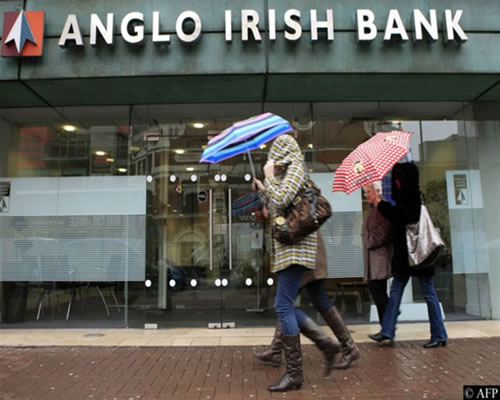
From 2000 to 2014, Angola received 23% of Chinese loans to African governments and public institutions, reveals a study published mid-June 2016 by the John Hopkins University, United States.
Entitled “China Africa Research Initiative (CARI)”, the study is the product of nine years of research conducted by Jyhjong Hwang, Deborah Brautigam and Janet Eom. It shows that out of the $86.9 billion that China lent Africa from 2000 to 2014, Angola received $21.2 billion.
Second oil producer in sub-Saharan Africa, Angola is nipped at the heels by Ethiopia ($12.3 billion), Sudan ($5.8 billion), Kenya ($5.19 billion) and the Democratic Republic of Congo ($4.91 billion).
The study also reveals that out of these loans to Africa, 28% went into transport and infrastructures, 20% in energy, 10% in extractive industries and 8% in the information and telecommunication technologies.
Over the period considered, average Chinese loans to Africa grew significantly from $132 million in 2000 to $1.6 billion in 2003, $5.02 billion in 2007, $9.84 billion in 2011, $26.91 billion in 2013 and $13.59 billion in 2014.
ADB Endorses $400bn Project to Transform Agriculture in Africa
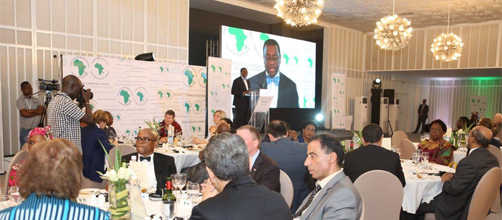
The African Development Bank (AfDB) recently endorsed its “Feed Africa: Strategy for Agricultural Transformation in Africa 2016-2025 project” which aims to develop a competitive agro-food industry in Africa and improve living standards of agriculture-depending populations.
In fact, between 315 and 400 million dollars will be injected in 15 priority commodity value chains in order to achieve self-sufficiency in key commodities and “move up the value chain in key export-oriented commodities cocoa, coffee, cotton, cashew.”
The bank which projects a yearly return on investment of $85 billion in case the project is fully-funded, will directly invest $24 billion and mobilise the remaining funds through diverse mechanisms.
Emphasising on the importance of this program, AfDB indicated that Africa imports every year $35.4 billion of food products while it detains 65% of the world’s unexploited arable lands.
–Aaron Akinocho
Olashore Alumnus, Falana, Wins 2016 BET Awards
An Olashore International School Alumnus, Mr. Folarin Falana, popularly known as Falz, has just won the 2016 Best New International Act for BET Awards under the Viewers’ Choice category.
This was presented at the weekend ahead of the main event which is to take place at the Microsoft Theatre in Los Angeles in the United States of America.
Falz had been nominated earlier in the month of June, amongst peers in South-Africa, France, Australia, and UK. The Nigerian Comic Rapper and fast rising entertainer slugged it out with other talented up and coming artists around the world to emerge the best.
He was nominated at award shows winning Best Actor in a Comedy Movie/Series at the 2016 Africa Magic Viewer’s Choice Awards for his role as ‘Segun’ in Funke Akindele’s TV series ‘Jenifa’s Diary’. The 2016 BETS Award was hosted by Anthony Anderson and Tracee Ellis Ross. The BET Awards recognises artists, entertainers, and athletes across 20 categories.
The nominations are selected by BET’s Voting Academy, which is comprised of fans and an esteemed group of entertainment professionals in the fields of television, film, music, social media, digital marketing, sports journalism, public relations, and the creative arts.
While at Olashore International School, he started out with a music group by friends and released a compilation mixtape titled ‘Shakara’ in 2009. By 2011, he released another album titled ‘Waz Up Guy’, ‘High Class’ and ‘Currency’ which gained him grounds in the Nigerian Music Industry. Later in 2015, he released ‘Stories that touch’.
Recently, Falz also won the award of the ‘Most Influential Personality’ at the Friends of Olashore Event organized by the Alumni of the school and concerned personalities.
He got this award based on the fact that he had shown exemplary strides in his profession and in life generality, and has been able to shape how people act or how things occur in their sphere of influence and beyond.
Receiving the award on his behalf, his father, a legal luminary and Human Rights Activist, Femi Falana (SAN) said: “We are glad our son has carved a niche for himself on the sands of time through passion. We actually sent him to school to study Law but he went ahead to marry his passion with his course having been nurtured to his full potential by the Olashore International School which he attended then. He chose to go into music and today, he is doing well for himself. I’m proud of him. I also appreciate Friends of Olashore for giving him this award.”
Emirates Toys for Kids This Summer Season!
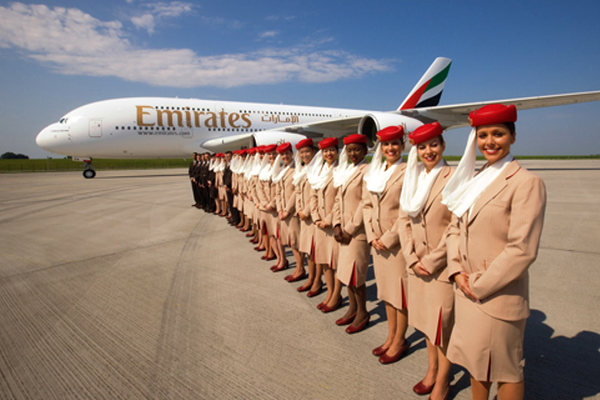
Wow! Just like yesterday, Summer is almost here again. Of course, I know lots of children will love to travel this period, because they will be on long vacation from school.
While on air, they tend to enjoy companion a lot. They love to play and at least have something to play with. To this end, airlines provide companion for kids which ranges from movies to music, and the likes. Toys have also been introduced to keep them busy. That way, they wouldn’t have to disturb their parents or relatives they are travelling with, but rather concentrate on playing with their new found love.
One of Emirates offerings on air is the toy. Emirates has got lots of toys, and now the ‘Fly with me Animal toys’. The toys are light in weight, and soft in nature like a teddy bear, appearing in various shapes and colours as it will appeal to children, with eyes, ears, hands and legs. It’s lovely to behold. It’s soft nature will endear children to want to play with. It’s not harmful either. The blanket located inside is equally soft enough for baby use, thus playing up an added advantage.
In less than a year now, Emirates launched a set of Fly with Me Animal toys, which made their debut on board the Emirates flight as soon as it was launched for use.
The set of toys included, Lewis the Lion from Africa, Peek U the Panda from China, Enrico the Monkey from Latin America, and Leila the Camel from the Middle East.
Appearing in various colours, these newest range of Fly with Me Animal toys were made for infants and toddlers while the Fly with Me Lonely Planet activity was specially designed for those aged between six (6) and twelve (12) years old Emirates’ young flyers have got lots to benefit, as Emirates is out to make their trip a memorable one, given that young travellers are one of the most important customers of the brand.
These toys are made available to kids at the kids play area at both First Class and Business Class lounges in Dubai.
The beauty of these toys is that they come with extra features in it for children’s play time. These toys in have blankets in them for cuddling babies.
However, infants and toddlers when playing with these toys as though they were babies will have something to cuddle their babies while keeping them entertained. Also, parents can make use of this blankets to cuddle their new born babies.
Emirates’ Fly with Me Animals is a replacement of the popular Fly with Me Monsters for both entertaining and educational purposes.
The animals were designed with unique features – The Travel Buddy which comes with a plastic toggle allowing the toy to be hung in the car, on a pram or in the cot; the Carry Buddy, a dual purpose toy and blanket; as well as the Magnetic Sketcher for young ones to express themselves creatively. It is hoped that four new Fly with Me Animals will be introduced every six months.
During this summer, playing with kids toys will certainly be a reality, as they vacate for the long holiday period from school.
MTN Nigeria Wins 2.6 GHz Auction

The Nigerian Communications Commission (NCC) has declared MTN as winner of its latest auction for a ten-year frequency spectrum licence for the 2.6GHz band, which guarantees superior performance for wireless networks, especially 4G LTE services.
The NCC had earlier confirmed that MTN’s bid was in full compliance with the relevant provisions of the Information Memorandum (IM) for the exercise in which MTN emerged as sole approved bidder.
Although Nigeria is one of 28 African countries that currently offer 4G/LTE services, the rate of penetration is restricted to a few major cities.
As such, MTN’s success in this auction is a big boost to its plan to deliver global mobile broadband and LTE 4G services to over 60 million customers in Nigeria.
It also plans to use FDD networks in addition to its existing WIMAX over TDD networks, as this provides for greater consistency with existing 2G and 3G deployments.
MTN Nigeria CEO, Ferdi Moolman stated that “after complying with all the requirements for the 2.6GHz auction and making the licence payment of N18.96 billion to the NCC, MTN has been issued a letter of award. With the 2.6 GHz band, we expect to roll out and provide the full range of LTE services to Nigerians, empowering Nigeria with the latest mobile broadband technology.”
The award of the spectrum by the NCC was further to an open, transparent and competitive process in which all operators – local and foreign; enjoyed equal and unfettered rights of participation in line with the NCC’s desire for transparency and ensuring a level playing field for all.
The NCC has described this spectrum as a significant trigger for a Broadband revolution that will unlock benefits such as greater coverage, access, affordability and innovation, with the customer at the centre of these gains.
Studies by McKinsey have shown that a 10% increase in Broadband penetration is associated with a 1.4% increase in GDP growth in developing markets. As such, the knock-on effect on individuals, businesses and multiple sectors of the economy signal far reaching implications for socio-economic growth and development.
According to MTN’s Ferdi Moolman, “we are very pleased with this development at this time, which is a further step in the right direction for Nigeria. Indeed, MTN is fully aligned and supports the NCC’s objective to deliver Broadband services to present and future generations of subscribers, in line with the National Broadband Plan of 2013.”
He added:
“This license acquisition further demonstrates MTN’s abiding faith in the future of Nigeria and the resilience of the Nigerian economy. MTN continues to believe in Nigeria and we have expressed this belief in the level of our investment, which currently stands at approximately USD 15 billion and counting. We strongly believe that there is need for significant levels of investment in Broadband infrastructure and services to truly launch Nigeria into the information age. We are honoured to be the arrowhead.”
“In addition, we are also delighted that the matter of the fine imposed by the NCC was amicably settled in the interest of all parties. I am pleased to announce that the first payment of N30 billion in the terms of settlement has already been disbursed to the NCC. In addition to the earlier payment of N50 billion which we paid in good faith and without prejudice on February 24, this means we have now paid a total of N80 billion.”
In addition to aggressive investment, MTN has also built the most extensive private fibre Optics superhighway in Africa and the Middle East, covering approximately 16,000 kilometres which is longer than the distance from Indonesia (Asia) to Argentina (South America).
For Ferdi Moolman, the 2.6GHz acquisition has set the stage for the roll-out of 4G LTE Broadband Internet services across the country, starting in the major cities of Lagos and Abuja.
In his words:
“Our subscribers, especially those in clustered areas such as the major cities, can expect distinct improvements in browsing speed, quality and experience. This means that they will have fast access to high definition video streaming, as well as conferencing and calling, lag-free music streaming, and improved data uploads and downloads.”
‘BREXIT Will Worsen Nigeria’s Struggling Economy’

Following the UK’s surprise vote to leave the EU, EXX AFRICA assesses the probable impact such a departure would have on African trade, investment, and security policy. In this SPECIAL REPORT, EXX Africa analyses the impact of an eventual ‘Brexit’ on three of the UK’s most important African markets: South Africa, Nigeria, and Kenya.
The effective implementation of a new foreign exchange mechanism and liberalisation of the fuel sector will face fresh hurdles as the UK withdraws from the EU. Nigeria will also struggle to attract interest in new debt sales aimed at financing its expansive budget.
The main impact of a ‘Brexit’ on Nigeria would be further deterioration of the country’s already struggling economy, which has been caused by the fall in global oil prices and a steep drop in local crude production due to an insurgency in the Niger Delta.
There is extensive trade and security co-operation between the UK and Nigeria that would be likely to face several years of disruption as the UK departs from the EU. Nigeria is the UK’s second-largest export market in Africa. Bilateral trade between the two countries is currently worth $8.3 billion and projected to reach $25 billion by 2020.
The UK is also Nigeria’s largest source of foreign investment, with assets worth over $1.4 billion.
Moreover, UK-Nigerian remittances account for $21 billion a year. The UK is also one of the largest development assistance donors to Nigeria, although Nigeria is not as aid-dependent as most continental counterparts.
A slowing UK economy on the back of a departure from the EU and potential disruption as the UK renegotiates its trade agreements, would be likely to reduce trade flows, foreign direct investment, and Nigerian remittances.
There is also no guarantee that other EU countries will make up the UK shortfall in trade and investment, as other EU countries look to Iran for more reliable access to oil and to Asia for cheaper labour.
On 24 June, Nigerian stocks ended a three-day rally, falling 1.4% over worries of Britain’s vote to leave the EU. Nigerian banks, such as Fidelity Bank and Zenith Bank, recorded the biggest losses. Nigerian stocks had previously rallied 8.5% after the government floated the naira and ended a highly controversial currency peg.
As a result, new portfolio inflows will slow, which will hamper the implementation of the country’s new foreign exchange mechanism. On 20 June, the central bank introduced a more flexible foreign currency policy, removing a de facto peg of around 197 naira to the US dollar.
The Naira’s 16-month peg to the dollar had overvalued the Nigerian currency, resulted in an economic contraction, and harmed investments. The implementation of the fuel sector liberalisation, including the termination of a burdensome state-subsidy scheme, would be likely to face implementation issues.
The sector’s liberalisation will add to fuel importers’ margins and will allow shipments of fuel to resume.
The liberalisation of the fuel marketing sector and the proposed introduction of a flexible exchange rate are both aimed at soothing foreign investor concerns and to attract new fundraising to finance a record budget deficit widened by a fall in oil revenues.
The effective implementation of the new currency regime and establishing its credibility will be key to attracting new foreign direct investment and portfolio flows.
Finance Minister, Kemi Adeosun is due to launch a planned Eurobond sale later in 2016. The government plans to raise $10 billion of new debt of which $5 billion would come from foreign investors. Much of this planning would be delayed as risk averse investors steer away from Nigerian debt.
Beyond trade and investment, the UK is also a key partner in Nigerian security. The UK has been crucial to drawing international attention to the Islamist Boko Haram insurgency in Nigeria’s northeast. There is a risk that the UK would become distracted from international security threats, such as those by Boko Haram, as it negotiates its departure from the EU.
However, the US and France have proven more crucial partners than the UK in combating Boko Haram, thus mitigating the effect on counter-insurgency efforts.
WIMBIZ Co-Founder Charges Olashore School Graduates on Excellence
The Co-Founder of Women in Business, Management, and Public Service (WIMBIZ), Mrs. Ibukun Awosika, has charged Olashore International School graduates for excellence as they celebrated their Valedictory recently in the school premises at Illoko-Ijesha, Osun State.
As a Guest Speaker, and being an Achiever, she spoke to the Year 12 graduands on the expectation from their parents, families, alumni, and society at large.
Her words: “I congratulate you all as you end this phase of life in preparation for another. If you sum up all the school fees your parents paid all through your stay in school, you will understand that you’ve got an inheritance. Your parents have done their parts, now it’s up to you to do yours. It’s all about you, and what you’ll do with the inheritance.
If you’ve written your story up till the end of Olashore, you can as well ask you self the next step to achieve more, such that when you attain the age of 60, you will look back and be proud of yourself. Based on the decision you make each day of your life, your life book will be written. If you understand the value of the cost your parents have bestowed on you, it’s better you turned them into personal decisions to make them proud.”
“Ultimately your association has a way of influencing you. Be nice and tolerant of every person that come across your way in life. Your certificate and future is what you are working for. Times and seasons are different and it doesn’t take so long. Your parents may have achieved much, but you are expected to achieve much more. Your competitiveness is relative to the future of your generation. In the same vein, your relevance in the society is based on your contribution by the competitiveness of your generation, so you can rule and reign.
It’s not about money but doing great and relevant things that can change your life. Whatever position you find yourself to occupy, try to be yourself and make the best out of it. Failure has lessons that success can never teach. When you fail, all you need do is review the circumstances of your failure and continue with your journey of life. Your life is a performance on stage. Don’t change what is wrong to what is right because others are doing it rather make a choice of who you want to be.” She admonished.
The Principal rated the graduating set uniquely.
His words; “The graduating set has been outstanding in their IGSCE exams and in initiating good ideas. They’ve been very good academically. In this graduating set, we have been able to see outstanding leadership skills. Once again, the selected prefects have excelled. They took on the role of leaders in the school and developed new ideas. They initiated the Olashore School Award. The event which they planned and organised allowed students to identify role models within the school and celebrate them.
This commitment to the Olashore Standard is something that has been evident not just in the prefects but across the year group. He commended the graduating students, while reiterating that each graduating set gets better than the other and that this set has done much more than expected.”
In the Euphoria of the Valedictory service, the Best Graduating Student, Miss Mofiyinfoluwa Okupe, an 17 year old lawyer-to-be, explained that Olashore International School has helped her literary and leadership skills to be brought up to date by giving her in the midst of peers the opportunity to be exposed to different scenarios in various leadership positions.
The Ogun State born graduands with awards in nine (9) subjects confessed that hard work, focus, dedication to God, getting priorities right, walking with the right set of people, and maintaining good relationships, are some of the qualities that helped her scale towards greater heights. She however advised her juniors to take same steps in order to climb the ladder of success.
In the same vein the out-going Head Girl, Miss Iremide Arowolo, explained that Olashore International School has taught her time management, responsibility, friendliness, confidence and punctuality, amongst others. She however advised her fellow graduands to keep pushing forward despite challenges, and to her juniors, to keep striving for the best without taking anything for granted.
Finally, the out-going Head Boy, Master Unokiwedi Patrick, pointed out that the school has taught her to be a good leader through the skills instilled in him.
He then advised his fellow graduands never to forget their roots and rather make impacts, while to his juniors, he advised to keep up with hard work as they trust in God.
Buhari to Declare Open National Insurance Conference
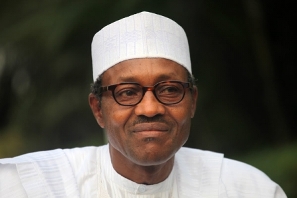
President Muhammadu Buhari will declare open the 2016 National Insurance Conference set for July 10-13 at Transcorp Hilton Hotel, Abuja under the auspices of the Insurance Industry Consultative Council [IICC].
The Theme is: ‘Expanding National Resources & Infrastructure in Challenging Times.’
Mrs. Yetunde ILori, Chairperson, 2016 National Insurance Planning Committee, said the conference will build on the huge success of the maiden event last year, to create an avenue for bonding with various arms of the insurance industry in Nigeria, as well as interact with stakeholders on opportunities and challenges of the market.
llori said the theme of the mega conference reflects the current priority position of the government and more importantly, a desire by operators in the insurance industry to fully complement the efforts of the government for sustainable socio-economic growth of the country.
“The insurance industry is ready to key into various infrastructure projects of the Federal Government, and we need to hear from various stakeholders and make them aware that the industry is ready to partner the government on its development strides.”
She said the organisers deliberately invited professionals from various sectors of the economy as speakers at the conference to broaden the scope of the discussion for deeper penetration of insurance awareness in Nigeria and expanded industry contribution to Gross Domestic Product [GDP].
Some of the confirmed speakers for the mega conference include Mr. Babatunde Raji Fashola, Minister of Power, Works & Housing; Mrs. Kemi Adeosun, Minister of Finance; Mr. Audu Ogbeh, Minister of Agriculture; Mr. Godwin Emefiele, Governor, Central Bank of Nigeria [CBN]; Mr. Ibrahim Idris, Inspector-General of Police, Mr. Mohammed Kari, Commissioner for Insurance, National Insurance Commission [NAICOM] and a host of private sector professionals.
ILori explained that the objective of setting up the IICC is to fast-track collaboration with various arms of the insurance industry, to enable the industry to speak with one voice. It is also a medium for dialogue and a clearing house for vital industry issues.
She commended the support of the media in growth insurance business and awareness in Nigeria.
“I must commend the media for the partnership to take the insurance industry forward. We fully appreciate the support of the media for the success of the event in 2015 and look forward to better result in 2016.”
The IICC is made of critical segments of the industry such as Chartered Insurance Institute of Nigeria [CIIN]; Nigeria Insurers Association [NIA], Nigerian Council of Registered Insurance Brokers [NCRIB]; Institute of Loss Adjusters of Nigeria [ILAN] etc.
It is also supported by the National Insurance Commission [NAICOM}.
Africa Finance Corp Secures $150m Loan from German Bank
In a statement published on June 22, Africa Finance Corporation (AFC) announced it has obtained a $150 million loan from the German bank KfW, to finance infrastructure projects in Africa.
The agreement related to the loan, repayable over 15 years, was signed in London by AFC’s CEO, Andrew Alli, and KfW’s infrastructure division’s head, Jan Martin Witte.
“Not only will this loan facility from KfW add valuable capital to our finance reserves but the 15-year tenor period is particularly suited to funding the long-term, large-scale infrastructure projects that are so needed across Africa,”said Andrew Alli, cited in the statement.
AFC is multilateral financial institution established in 2007 with an initial capital of $1.1 billion and whose mission is to mobilise investments for Africa’s infrastructure sector.
Its shareholders are the Central Bank of Nigeria (42.5%), other African commercial banks like Ecobank, United Bank of Africa and First Bank of Nigeria (47.6%) and other investors (9.8%).
Overall, the institution has mobilised $2.5 billion of investment for Africa.
North African Airlines Control 45% of Africa’s Air Traffic
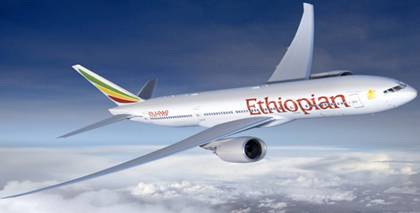
According to the latest edition of Secteur Privé & Développement (Private Sector & Development) published by Proparco, AFD’s arm in charge of private sector, Northern Africa airlines dominate Africa’s air traffic.
Over a total of 44.075 million passengers, these companies namely Egyptair (first with 18 million passengers), Air Algerie (second with 12 million), Royal Air Maroc (third with 11.035 million) and Tunisair (seventh with 2.666 million) grabbed nearly 45% of total number of passengers carried by African airlines, according to the London-based platform OAG, which analyzes the sector.
South African Airlines, which is presently encountering some challenges, Ethiopian Airlines, one of the continent’s most active airlines and Kenya Airways which is also quite present in Africa, despite its financial troubles, are respectively fourth, fifth and sixth.
The growth potential of the inter-African air traffic market is quite significant. Some experts estimate in fact that given Africa’s current communication issues, it is cheaper to build airport infrastructures than roads or railways.
However, according to Jean-Louis Barroux, CEO APG World Connect, cited by Proparco’s magazine, one of the major challenges in the sector is the compartmentalisation of African skies. “It is difficult for most African nations to liberalise air transport as the airspace belongs to them and it holds a strong symbolic and political position for them,” he said.
He added that most public authorities in Africa lack, unfortunately, the skills and resources needed to properly manage this sector. Truly, in many countries are airlines’ directors still appointed due to their ties with the power in place, rather than for their actual skills.
Nevertheless, there are still airlines such as Asky, Rwandair or Air Ivoire that remain the region’s pride as they provide permanent or almost (90%) regular services within Africa.
However, transportation costs are expensive, travelling duration are quite long (it can sometimes take 3 hours to go from Douala in Cameroon to Lagos in Nigeria).
Another challenge is the difficulty for people to move freely between borders in Africa.
‘Govt Alone Cannot Fight Poverty in Nigeria’
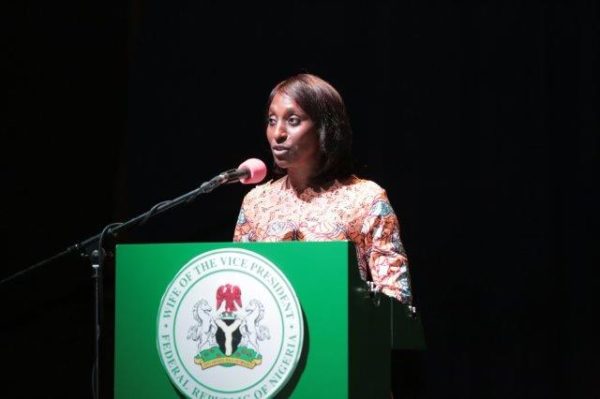
Wife of the Vice-President, Mrs. Dolapo Osinbajo has said that government alone cannot fight poverty and crime in the country, adding that well meaning individuals could also play a major role in the reduction of poverty and crime rates in the society through empowerment programmes.
Mrs. Osinbajo made the remark while speaking at the graduation ceremony of more than eight hundred Imo people who were trained to acquire various skills by the Mrs. Osinbajo Pet Project, “PROJECT AYODELE” at the Imo State International convention Centre, Owerri, stressing that empowering those who need empowerment in our society would definitely reduce poverty and crime in the system.
She said, “the Foundation PROJECT AYODELE was set up in memory of my mother who died four years ago. So, this foundation is an honour to her memory. Training people on skills that can be turned speedily into cash was a move to empower our people and stop poverty and crime in the nation.”
She continued, “I have come to Imo state to celebrate men and women that have graduated today under the auspices of, PROJECT AYODELE. With the training and the skills acquired, those involved can take care of themselves. We did not know many years ago when we started the project, that I will end up as the wife of the Vice-president. And I didn’t know too that I could be in Imo for that.”
According to her, “where you are today have nothing to do with where you are going tomorrow. I pray for the participants. Whatever they have learnt would take them to a higher height. I was just watching the video about the 200 homes built for indigent women by the wife of Imo governor, Mrs. Nkechi Okorocha. I congratulate her for that feat. The Imo governor’s heart is large that it continues to speak so plainly from. ”
Governor Rochas Okorocha in his speech at the colourful event wondered why Nigerians should be singing the song of poverty amidst wealth and knowledge. We have 200 million Nigerians and over one million millionaires and billionaires. If we make a law that every billionaire or millionaire must engage or empower 200 people, one will discover that the 200 million will be self sufficient and poverty will disappear.”
Okorocha continued, “If every bigman in Nigeria builds something that will create Job, there won’t be poverty.” In Nigeria poverty claim does not reflect practical realities. I am happy because the wife of the Vice-president has created more than 800 direct jobs in Imo on her own. If every politician does that, we will be hiring labour from outside. This is why I am not worried about the corruption that is internal but the one that is external because it allows the resources of the land to go to foreign countries.”
His words, “Woe betide all leaders who stock their money abroad to develop other people’s country while they live their people in penury. That is the corruption that is bad for our country. If we can invest the resources in this country, no matter the source, there will be no poverty in the country. I commend the wife of the vice president for the initiative.”
The anchor woman of the programme in the state, and wife of Imo governor, Mrs. Nkechi Okorocha said the wife of the Vice-president had done the state a great favour by training more than 800 indigenes of the state to acquire various skills, adding that the exercise was a direct complement to the Job, Job creation mantra of the Imo state government.
Mrs. Okorocha urged the beneficiaries to also transfer what they have learnt to others so that poverty will be eradicated in the state and the state would be better for it, thanking the wife of the President Aisha Buhari for the support and love she has continued to show the wives of the governors in the country.
The wife of the governor of Abia state, Mrs. Nkechi Ikpeazu and her Enugu state counterpart, Mrs. Monica Ugwuanyi attended the event.
MTN Appoints Awobodu First Nigerian Chief Financial Officer

The appointment of Adekunle Awobodu has been announced as the new Chief Financial Officer (CFO) of MTN Nigeria. He is the first Nigerian to occupy that position, taking over from Ferdi Moolman, who became the CEO of the company in December 2015.
Announcing the appointment, Moolman said as Chief Financial Officer, Awobodu will serve as MTNN’s strategic Financial Business Partner and lead the organisation in facilitating decision-making through sound business insights and analysis that drives business improvement and performance.
Indeed, Awobodu is eminently qualified to do just that. With over 22 years, professional experience and international exposure in Finance, Awobodu holds a Bachelor’s Degree in Finance & Banking from the University of Lagos and a Master’s Degree in Finance from the University of Leicester. He holds several professional certifications such as ACCA UK; CIA (Certified Internal Auditor); CMA (Certified Management Accountant); CertIFR (ACCA’s Certificate in International Financial Reporting) and Associateship of the Chartered Institute of Bankers (ACIB).
Awobodu began his career in 1994 with Procter and Gamble (P&G) Nigeria Ltd. and held various positions – Group Manager, Financial Analysis & Treasury, Lagos; Group Manager, Plant Finance & Accounting, Ibadan and Financial/Senior Financial Analyst.
He then joined MTN Nigeria’s Finance Division in February 2002 as Fixed Assets Manager and rose through the ranks becoming the first Nigerian CFO of MTN Iran.
According to Moolman, “Awobodu’s appointment is indeed a strong reflection of the MTN talent management creed; Management’s commitment to it and the quality and abundance of talent in MTN Nigeria.”