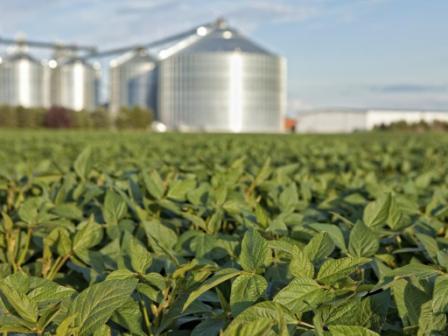

Agriculture is currently standing on the edge of a second green revolution. This revolution will entail fundamental shifts in how the agricultural sector utilises and implements innovative technology to improve output in a sustainable manner and address the need for greater food security globally.
These are some of the highlights of PwC’s latest Africa Agribusinesses Insights Survey 2016. “Currently, there is a second green revolution underway. There is a desperate need for food security and therefore higher agricultural output without compromising resources in the process,” says Frans Weilbach, Agribusiness Industry Leader for PwC Africa.
“Advances in technology and innovation are the key to the future of agriculture as agribusinesses strive to feed an increasing population against a background of climate change, scarcity of water and a host of environmental concerns.
“Innovative technology and advancements in productivity are becoming increasingly important as pressure mounts on food systems,” says Weilbach. “The global population is growing rapidly and the climate is ever-changing.
“Agribusinesses are making changes to go high-tech. From data-gathering drones to artificial intelligence farming, technology is making the agricultural sector more precise and efficient as agribusinesses push for increased profits.”
The agricultural sector is regarded as one of the most critical industries for the African continent due to economic potential and is projected to become a US$1trillion industry in sub-Saharan Africa (SSA) by 2030.
More than half (58.8%) of survey respondents consider investment in Africa as an opportunity for their businesses to expand. The top four countries they are planning to invest in are Zambia, Botswana, Tanzania and South Africa.
PwC’s Agribusinesses Insights Survey 2016 was carried out among a group of African agribusinesses that are mainly focused on delivering agricultural and related services to primary producers.
The survey focuses on the strategic challenges that agribusiness leaders face in their businesses, while on the other hand it highlights areas where technological innovation is already taking place and where it can make a difference in the future. In addition, the survey provides viewpoints on the agricultural sector in Nigeria and Kenya.
Survey respondents, however are less optimistic about revenue growth over the next 12 months compared with their expectations a year ago. The majority of agribusinesses (46.2%) are expecting revenue growth of between 0-5%, and 26.9% of businesses expect it to be between 6-10%.
The biggest challenges to business growth cited by business leaders were access to technology, the scarcity of natural resources and supply-side uncertainties. African agribusinesses also feel that there is a long way to go toward better support from government in the sector.
For example, businesses are of the view that government does not offer sufficient tax incentives to ensure international competitiveness. Furthermore, they say government is not doing enough to develop skilled workers in the sector.
Edward Kerich, PwC Director in Kenya, says: “Kenya relies heavily on the agricultural sector as the mainstay of its economy, with agriculture contributing 29% of GDP. Kenya is SSA’s leading tea exporter and one of the world’s largest black tea producers.
A significant development in the agricultural sector is growth in the number of privately owned tea factories outside of those owned by the KTDA and the large multinationals in the country. The contribution of the tea industry to the Kenyan economy is expected to continue growing, and the benefits realised will be enhanced as some factories move to cheaper renewable energy such as hydropower production.”
Rasheed Rahji, PwC Partner in Nigeria, says: “Agriculture contributed 24.18% to real GDP in Nigeria in Q4 2015. This is mainly due to mechanised farming and to other activities in the agribusiness value chain. It is being fuelled by the Government owing to its focus on agribusiness as a driver for poverty alleviation, and in part by continued investment by commercial farmers.
Given the fall in the international price of crude oil over the past 18 months, the Government has encouraged agricultural exports as an alternative foreign exchange earner. A number of challenges in the agricultural sector remain to be addressed.
These include inadequate infrastructure, access to credit, and the training and education of smallholder farmers in modern farming techniques. Adequate focus on these matters would certainly assist in improving Nigeria’s food security, grow its GDP and increase its foreign earnings.”
African agribusinesses also indicated they have maintained focus on risk management, with the majority of survey respondents (95.2%) periodically conducting a formal risk assessment. It is also positive to note that 53.8% of respondents prepare an integrated report.
Although there is widespread consensus on the reality of global climate change, much uncertainty still exists when it comes to the exact measurable impact of changes in climatic conditions on agriculture and food security.
The majority of agribusinesses are of the view that climate change will have a significant impact on SSA agriculture in the future – 41.2% indicated that there will be a significant impact in the short term and 35.3% that there will be an impact over the next 20 years.
In addition, 35.3% of agribusiness leaders indicated that they are considering investment in renewable energy, while 29.4% have already done so. The main forms of renewable energy that agribusinesses have invested in are solar energy and biogas.
“It is predicted that technological innovation will act as a catalyst in lifting agribusiness to the next level in Africa. The winners will be those agribusinesses that seize the opportunity to create new opportunities through technology – they will be able to reach their strategic goals faster and more efficiently,” concludes Weilbach.