
A new report of the International Telecommunication Union (ITU), has ranked Nigeria very high at 71 per cent, in comparative legal, policy and governance frameworks towards G5 – advanced state of readiness for digital transformation known as G5 with Germany, Finland and Singapore leading the global chart.
In the report conducted by the ITU, the United Kingdom’s Foreign, Commonwealth & Development Office (FCDO) and the Nigerian Communications Commission (NCC), and unveiled by Nigeria’s Minister of Communications, Innovation and Digital Economy, Dr. Bosun Tijani in Abuja on Monday, Nigeria was ranked among Africa’s top seven BEMECS 5G Readiness Index, which represents the country’s readiness to deploy and adopt mass-market 5G networks.
Titled, Collaborative Regulation: Accelerating Nigeria’s Digital Transformation, and presented at the Digital Economy Complex, Mbora, Abuja by ITU’s Kagwira Nkonge, the report, among other things, presented a case study for ‘collaborative regulation review to assess and support Nigeria’s transition towards collaborative digital governance, evidence-based policy making and agile regulation in the digital economy”.
The report, which was presented to a cross section of key industry stakeholders including service providers, government agencies, representatives of multilateral institutions, West Africa Telecommunications Regulators Assembly (WATRA), Africa Telecommunications Union (ATU), among others, was also designed to complement existing cross-country benchmarks in which features of countries policy and regulatory environment are assessed.
The features of countries policy and regulatory environment are assessed according to the pillars of the Generations of Regulation frameworks which tracks telecom regulatory maturity towards digital transformation readiness, designated at G5 Advanced State of Readiness”, and for which Nigeria currently stands at G4.
Advanced State of Readiness is benchmarked against four critical levels of accomplishments which include national collaborative governance, policy design principles, digital development toolbox, digital economic policy agenda, with Nigeria scoring 91 per cent in regulatory capacity; 82 per cent in Market Rules; 81 per cent in Collaborative Governance; 76 per cent in Legal Instruments for ICT/Telecom markets; 69 per cent in National Digital Agenda Policy, among other benchmarks.
Tijani, in his remarks at the event, commended the ITU and partner agencies and consultants that actualised the report; and expressed Federal Government’s commitment “to utilise this report as a navigational aid towards attainment of our regulatory objectives and policies outlines towards achieving a robust digital economy”.
“That is what we will continue to do as a government, ensuring that we can put ourselves in a place to have cutting-edge modern regulations in place to ensure that business is done properly in our sector and to ensure that, where possible, increase the local content of the sector as well,” he said.
Tijani noted that NCC has adapted over the years in response to how its role and mandate have changed. He explained, “Fifteen, twenty years ago, NCC was just regulating the telecommunications sector, today, NCC regulates the foundation for which any economy would be prosperous.”
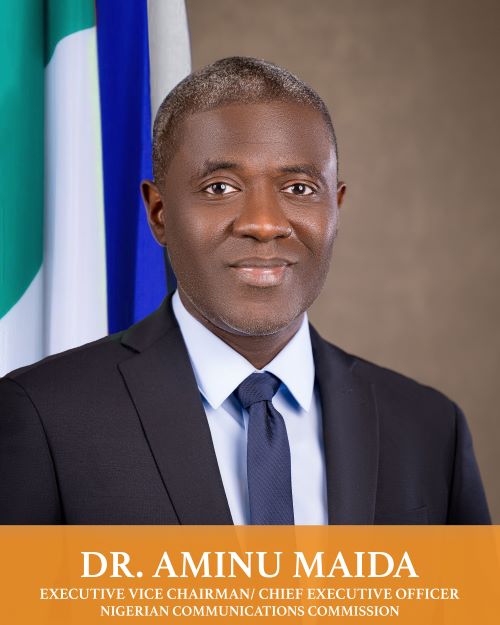
The Executive Vice Chairman of the NCC, Dr. Aminu Maida, who hosted the presentation, welcomed the indicators that promote effective regulation, attraction of greater investment, and development of innovative models for broader digital inclusion.
He emphasised that collaborative regulation would support Nigeria’s transition towards effective digital governance, evidence-based policy making and agile regulation in the nation’s digital economy.
The ITU Report can be accessed through the link: https://www.itu.int/hub/publication/d-pref-them-33-2023/