


As a strategic way to celebrate the October 11 International Day of the Girl Child and for the second year, Rosatom conducted a series of events to bring awareness to the unique challenges girls around the world face.
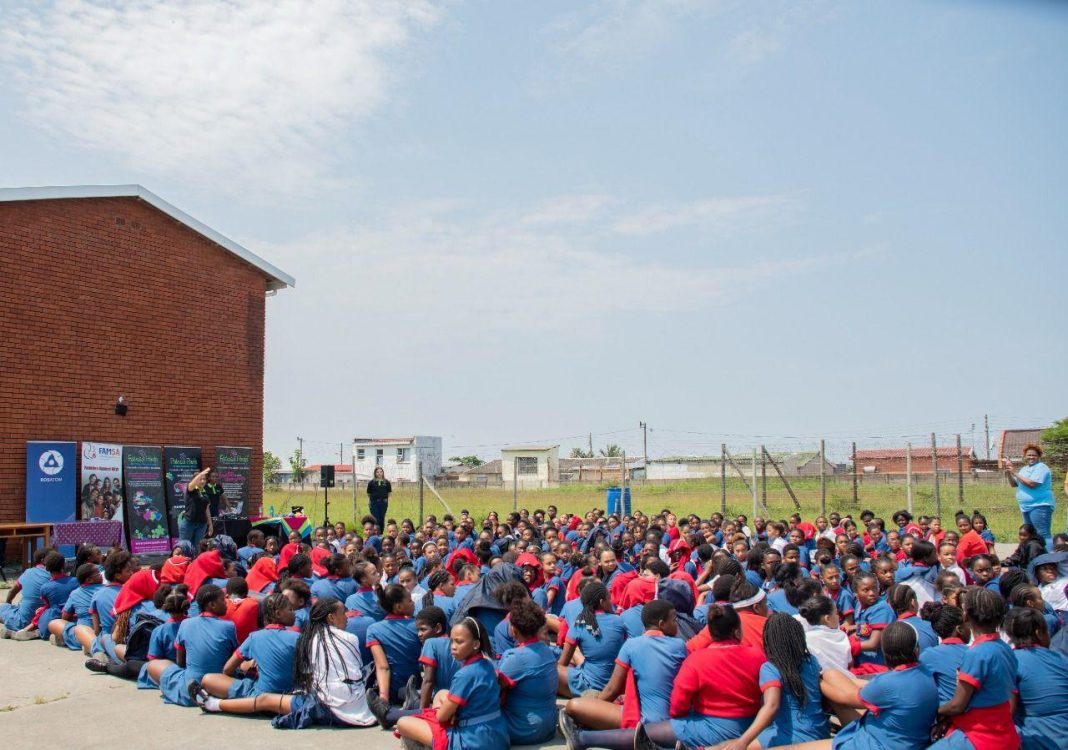
On October 19-20 1,000 girls from four East London’s schools – Aspiraza Primary School, Cranberry Primary School, Nontuthuzelo School and Pefferville School – were provided with personal care products sponsored by Rosatom Central and Southern Africa.
Rosatom along with the Families South Africa, a non-profit organisation specialising in relationship counselling, organised the event.
The hygiene products were supplied by Palesa Pads, which manufacture reusable hygiene pads with a shelf life of up to 5 years providing an affordable, reliable and environmentally friendly long-term solution.
The event was also supported by “Union of Women in Nuclear Russia” – a professional women’s community in the nuclear industry, uniting female specialists and residents of nuclear industry from 18 countries.
Rosatom women’s community promotes opportunities for professional and personal growth of women and girls, deals with career guidance for girls in STEM, provides a motivating environment for self-realisation and opportunities to discover their potential through global partnership, training, support in implementing projects to sustainable development.
The first Rosatom event to commemorate the International Day of the Girl Child took place a year ago, when the company held an inaugural event at Mpuluzi High School in Mayflower. As part of those events Rosatom also organise a discussion on female health and bringing health sustainability to the next level by providing comprehensive sexual and reproductive health and rights (SRHR) talk.
SRHR education is vital in preventing human trafficking, helping girls avoid pregnancy, and teaching young women to advocate for themselves.
Juanita Alexander, a Grade 7 math teacher from Pefferville School shared her thoughts on the concept: “As a school we are very thankful for this donation. I personally think this will make a huge difference especially to the community where we are. It means a lot for these girls and as some of them are coming from disadvantaged areas and they are not able to afford these sanitary products. Palesa Pads is providing sustainable solution that will last years and save those girls a lot of money. This will keep them at school.
“They also learned a lot of information on female health and hygiene today and I think it’s extremely important. We would like to thank the main sponsor Rosatom and Palesa Pads for this donation. We really hope to see more companies join these initiatives to fight period poverty!”
Access to good menstrual health is now recognised as a fundamental human right for the 800 million people around the globe. Not having access to a safe and hygienic way to deal with menstruation can have profound consequences, particularly on a girl’s education.
It is estimated that roughly 7 million South African girls on their period often miss one or more days of school, totaling up to 20 percent of the school year, and some drop out altogether.
“Providing safe menstrual health solutions can directly result in decreasing the dropout rates for South African schoolgirls thus increasing their contributions to the sustainability of their local communities. Most importantly, local communities are empowered to discuss issues around menstrual health without perpetuating harmful stigma. With access to safe hygienic products, they’re able to prioritize their education and focus on their future!” said Evdokia Polyakovskaya, Ambassador of Union of Women in Nuclear at Rosatom Central and Southern Africa.
About Rosatom
Rosatom is a global technological leader, with capacities in the nuclear sector and beyond, and business partners in 50 countries. As one of the pioneers of the nuclear industry, Rosatom has traditionally been at the forefront of the international nuclear market, including nuclear power plant construction, uranium mining and enrichment, and nuclear fuel fabrication and supply. Today, thanks to the unique expertise accumulated over 75 years, the company is conquering the markets of new promising high-tech products. Hydrogen energy, energy storage, nuclear medicine, wind energy, composite materials, logistics business, environmental solutions – in total, more than a hundred new businesses, which cement Rosatom’s standing among the leading tech giants.
The Rosatom business strategy is guided by the international sustainable development agenda. Rosatom makes a significant contribution to the achievement of the UN Sustainable Development Goals as a low-carbon electricity company, developing nuclear, hydrogen and wind energy. Annually, Russian-designed nuclear power plants prevent more than 210 million tons of greenhouse gas emissions, which is the main cause of climate change. The nuclear power plant being built by Rosatom in Turkey is the first nuclear project in history to receive a sustainable loan. In 2021, the company has placed its first issue of green exchange-traded bonds. Since 2020, ROSATOM has been a member of the UN Global Compact Network.