Monday, March 23, 2026
27.3 C
Lagos

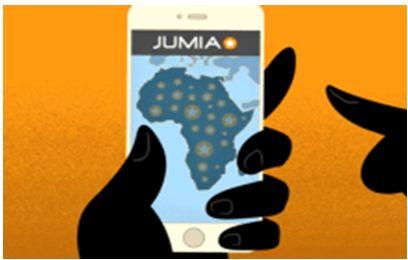
Jumia Launches Jumia Bot, Nigeria’s First E-commerce Bot

True to its mission of expanding horizons, Jumia introduced on 2nd October Jumia Bot, Nigeria’s first e-commerce Bot. Using Jumia Bot, shoppers can order food, find fashion or electronic items and book hotels and flights by simply having an online conversation with the bot.

This innovation, powered and hosted by Facebook Messenger, was officially launched on 2nd October in Nigeria and will offer Nigeria’s 18 Million Facebook users the ability to get their own personal Jumia shopping assistant directly on Facebook Messenger.

The Jumia Bot works by asking customers what they’re looking for, and then using their answers to uncover the best offers. For example, to get access to the best hotel and airfare deals on Facebook Messenger, a user can simply provide his or her preferred date and destination to the bot in order to see the top recommendations.

Once a user’s criteria is selected, Jumia Bot will remember and use the research for his or her next order. The bot, developed by Jumia with support from Facebook, uses Artificial Intelligence (AI) and natural learning process to hone in and learn users’ preferences over time in order to make recommendations that are personalized, timeline and useful to the shopper. The shopper’s post-order experience is also integrated into Jumia Bot. As a result, shoppers can track their orders and contact the Customer Service team for follow-up questions.

“When we launched Bot for Businesses on Messenger, our goal was to help companies make meaningful connections with their customers in order to meet their business goals.” said Emeka Afigbo, Head, Platform Partnerships, Middle East and Africa at Facebook. “We are excited to be part of the story in providing technology solutions to one of Africa’s leading e-commerce websites.”

In a statement on the significance of this new service, Juliet Anammah, CEO Jumia Nigeria said, “Jumia Bot has a very simple yet important objective: to help our customers get to personalized deals on Jumia Nigeria. We are pleased to unveil this new dimension of e-shopping for the Nigerian customer, and excited about helping to pioneer the next wave of local content and tech tools within our ecosystem.”


spot_img
spot_img
spot_img

Hot this week

Alleged Missing N210tn: SERAP Threatens Senate President, Akpabio to Publish Names or Face Legal Action

The Socio-Economic Rights and Accountability Project (SERAP) has urged...

Leadway Spotlights Women Making Waves Through Hersurred Initiative

Leadway, Nigeria’s leading non-banking financial and wellbeing conglomerate, has...

Tinubu Celebrates Nigerian Modernism at Tate Modern: A Historic End to a Historic Visit

L-R: Ofovwe Aig-Imoukhuede; Chairman of Access Holdings and Coronation...

Quest Merchant Bank Named Transaction Advisor for Nigeria’s Landmark Project BRIDGE Digital Infrastructure Initiative

L-R:  Project Lead, PIU Project Bridge, Jumoke Akande; Honourable...

Topics

₦5tn AMCON Debt: Finance Minister, BPP, ICPC Join Recovery Campaign

The Minister of Finance, Mrs. Zainab Shamsuna Ahmed has charged...

Fidelity Bank Set to Host 2 Days of Family Entertainment

In the spirit of the Yuletide, leading financial institution,...

Insurance Group Seeks Media Support for Market Growth

The Chairman of the Governing Council, Insurance Industry Consultative...

NSE Unveils Composition of New Market Indices July 1

The Nigerian Stock Exchange (NSE) will unveil the composition of new market indices on Wednesday, July 1, 2015. This follows the results of the bi-annual review for The NSE 30 and the five sectoral indices of The Exchange - The NSE Banking, The NSE Consumer Goods, The NSE Oil & Gas, The NSE Industrial and The NSE Insurance. The Nigerian bourse began publishing The NSE 30 Index in February 2009 with index values available from January 1, 2007. On July 1, 2008, the NSE developed four sectoral indices with a base value of 1,000 points, designed to provide investable benchmarks to capture the performance of specific sectors. The sectoral indices comprise of the top 10 most capitalised and liquid companies in the Banking, Insurance and Food/Beverage & Tobacco (now Consumer Goods) sectors and the top five most capitalised and liquid companies in the Oil & Gas (Petroleum Marketing) sector.

PenCom, EFCC Partner on Non-Remittance of Pension Funds

The National Pension Commission and the Economic and...

Unity Bank Projects N5.2bn Profit in Q3 2024

Retail lender, Unity Bank Plc has projected a Profit...

FG Plans Development Bank in Jan 2017 to Support SMEs

Nigeria plans to launch a development bank in January...
spot_img

Related Articles

Popular Categories

spot_imgspot_img