Thursday, April 30, 2026
28.7 C
Lagos
Home Blog Page 285

Top 5 Business Risks for West Africa in 2018

0

As Nigeria exits the recession of 2017, investor sentiment across West Africa is likely to experience uplift in 2018. Still, political uncertainty ahead of Nigeria’s 2019 presidential elections and on-going security concerns are among the key risks for businesses operating in the region, says specialist global risk consultancy Control Risks in their annual political and security risk forecast ‘RiskMap’.
Control Risks’ Senior Partner for West Africa Tom Griffin comments:
“2017 has been a tough and turbulent year for businesses in the region, however with Nigeria exiting recession, and foreign exchange shortages easing, we see a strong improvement in investor sentiment emerging. Another major engine of growth will be Cote d’Ivoire, where economic expansion is projected at around 7% next year. There will be only a handful of elections in the region in 2018, meaning continuity will largely prevail with policy decisions having the biggest impact on the business environment.”
“In Nigeria however, although presidential elections are next slated for 2019, campaigning has already started. The uncertainty that generates, as well as the need for cash that an election brings, mean that political instability and regulators whose actions will be difficult to predict remain among our top risks for businesses in the year ahead.”

Control Risks has identified the following as the key risks facing businesses in West Africa in 2018:

  • Terrorism and militancy:Business assets and personnel in West Africa will remain vulnerable to attacks by transnational or domestic militant groups. In particular, al-Qaeda and its affiliates will continue to pose a threat to operators in the Sahel, while the oil and gas industry in Nigeria’s Niger Delta will remain exposed to attacks by domestic militant groups. Failure to resolve the underlying political and socio-economic grievances at the root of these movements will see the threat persist in 2018.
  • Irregular regulators:As countries in the region, notably commodity-dependent economies, face growing fiscal pressures, operators are likely to see regulatory bodies increasingly act as revenue-generating bodies, strengthening local content provisions, introducing stricter fiscal terms, reviewing contracts or erratically imposing fines in companies in the hope of boosting state finances. This will periodically give rise to commercial disputes, legal challenges, and the need for businesses to engage with government stakeholders.
  • Political instability:Protracted political and socio-economic grievances will continue to fuel popular discontent and a desire for regime change in parts of the region. Cameroonian President Paul Biya’s re-election bid amid a continued crisis in the Anglophone regions will exacerbate tensions, while Togolese citizens will continue to protest for the end of the 50-year Gnassingbé dynasty. Protests will pose security threats to businesses, while regime changes would prompt major institutional changes and complicate engagements for operators.
  • New sectors, new risks:From Senegal’s offshore potential to Nigeria’s embryonic mining sector, some countries in West Africa will be making forays into previously-undeveloped sectors in 2018. Prospective investors need to monitor closely how government’s ability to oversee these sectors evolves and what the associated risks around these projects become.
  • On-going operational risks:Many of the major risks and challenges businesses face in West Africa are the on-going practical impediments to day-to-day operations. Shortages of or difficulties in sourcing fuel, foreign currency, equipment and skilled labour; the infrastructure deficits that persist in the vast majority of the region, such as in electricity and transport, will continue to mean higher costs, higher demands on management resources a tougher capital-raising environment, and greater uncertainty for businesses than in other regions.

Many countries in Africa, Nigeria and Cameroon among them, face the prospect of what could become a sovereign debt crisis, a decade after they followed Ghana’s lead in entering the international bond market. The problem is driven by high levels of external debt, persistent uncertainty over the recovery of commodity prices to fund repayments, and borrowing to fund recurrent expenditure. Countries dependent on oil revenues are particularly vulnerable to ballooning debt in 2018.
In Nigeria and Ghana, plans to borrow heavily to finance long-term infrastructure projects will not generate sufficient revenues in the coming year to finance debt repayments. Amid rising inflation and muted oil prices, Nigeria’s debt servicing payments – which in 2016 doubled to 66% of total revenues – are likely to rise further, placing extreme strain on an already stretched budget.

With the government of President Muhammadu Buhari well over halfway through its term, yet to fulfil many of the promises that brought it to power and already entering campaign mode, businesses in Nigeria will remain acutely sensitive to political and operational instability in 2018.

Segun Agbaje: Using Fairs to Redefine Retail Banking, SME Lending – By Adekunle Olushola

0
Segun Agbaje MD/CEO GT Bank Plc

Segun Agbaje, the Managing Director/CEO of Guaranty Trust Bank (GTBank), is not a popular man. To many, he is aloof, too strait-laced, not your typical run-of-the-mill Nigerian.

As one of Nigeria’s foremost bankers, he has a reputation for running a tight and efficient ship, is unflinching in his pursuit and recovery of loans from the country’s systemically chronic debtors who have a sense of entitlement believing that they can borrow depositors’ funds without paying back, and does not give a hoot about those critical of his take-no-prisoners approach to banking.

In the media space, he does not seek publicity, he lets his work speak for itself, could not care less if his story or photograph makes the front page of the newspapers, limits his bank’s advertising spend to what he believes is necessary to market and promote GTBank to a wider audience, and through NdaniTV and Ndani Blog understands the power of the social media in reaching out to youths that make a larger percentage of Nigeria’s and regional demographic where the bank operates.

To me, Agbaje is the ideal banker. He is not my friend and we only interact sparingly and strictly professionally as the need arises. Yet, I cannot help but wish that we had more bankers like him in this country.

If we did, fewer Nigerian lenders would have to make provisions for unpardonable impairment charges on bad loans given to delinquent debtors, fewer banks would engage in reckless insider lending that threaten their capital adequacy and liquidity ratios, more banks would recognise that they have a fiduciary responsibility to manage their customers’ deposits with care, and more banks would know how to sweat their assets in the most cost-efficient manner to make the most attractive returns to their shareholders.

In all the key parameters used in defining the size of banks, GTBank, among the five Tier 1 banks in the country, is not by any stretch of imagination the biggest. In terms of total assets, loans and advances, customer deposits, number of branches, and presence on the African continent and beyond, FirstBank, Zenith Bank and United Bank for Africa (UBA) stand head and shoulders above GTBank.

By Nigerian standards, the “big three” could be called banking behemoths and are very difficult to supplant. Still, GTBank, with its cost optimisation strategy, asset quality and stability ratios, among others, has over time proved to be the most profitable bank in the country. Its stock has remained the bellwether in the banking segment of the Nigerian bourse for years, signposting the confidence institutional and individual investors have in the bank.

But this article is not about GTBank’s financial performance. Its annual and quarterly reports, including those of its peers, are public documents that can be readily accessed for in-depth comparative assessment. What I have found more interesting about the bank is its focus on corporate social responsibility (CSR) and interventions in key economic sectors targeted at strengthening small businesses through not-for-profit fairs and capacity building initiatives.

For two years in a row, GTBank has solely funded and hosted its Food and Drink Fair and Fashion Weekends, making them social and tourist events that feature prominently on Nigeria’s social calendar. That is not to say that the bank has not focused on other areas of CSR. Its 2016 annual report showed that GTBank spent about 58 per cent of the N449.62 million of its CSR funds on education alone while community development accounted for another 30.8 per cent.

But it is GTBank’s focus on food, drink and fashion that have been the most impactful publicly, bringing together scores of promising, talented and recognised local and international chefs and food vendors, drinks makers and merchants, fashion houses, milliners, fashion accessory designers and leather goods makers in a dizzying, well-put together and well-thought out extravaganza that leaves the public yearning for more.

Both events, which are open to the public, have been attended by several thousands of people, including children, for two years running that have left attendees breathless and wondering how the bank manages to package the two fairs in areas where it has no competencies.

The trick, says Agbaje, whom I had to hound to open up on the success behind both fairs, is getting and attracting the best participants and controlling costs by getting the bank to work directly with the contractors who have to build the stalls, decorate the venue, create play areas and cooking classes exclusively for children, and provide the music, etc., during both fairs; no middlemen or consultants are used by the bank. For him, the fairs present an opportunity for GTBank to deepen its footprint in the retail banking space and increase its SME lending from 2 per cent of the bank’s loan book to 10 per cent over the next five years.

With time, he would also rather extend more loans to small and medium-sized businesses that are more impactful on the economy and achieve a loan recovery rate of 70-80 per cent, than pursue Nigeria’s so-called “big men” with woeful credit track records. Although he was demur about what it costs his bank to host both events, he was emphatic that making money at this juncture is not the overdriving objective, at least not in the short-term, but recognises the long-term benefits not just for GTBank but other Nigerian lenders.

Beyond this objective and given the magnitude of both fairs and their potential to grow into annual events that could attract millions from across the global, Agbaje’s vision is not one to be trifled with. Already, the GTBank Food and Drink Fair and the GTBank Fashion Weekend create thousands of direct and indirect jobs and referrals for hundreds of young Nigerians who have to build the stalls, decorate the venue, and provide the music, entertainment, security and other support services to make them a resounding success. And they have the potential to create even more.

Aside the suppliers, vendors and designers that make brisk business and achieve record sales during the fairs, the Master Classes included in both events are helping to build capacity and drive innovation in the creative industry that has proved to be a major magnate for Nigerian and African youths.

By bringing them under one roof, GTBank has also provided a platform for shared services and given them the exposure that help these small businesses to grow and create more employment opportunities.

Without doubt, both fairs are worthy initiatives. But they could be better. In the last two years, GTBank has handled both fairs singlehandedly without support from other institutions and/or the Lagos State government, a direct beneficiary of the events and their spin-offs.

In 2016, the food and drink fair alone attracted 25,000 people; this year, it attracted 75,000 people. I do not have the numbers for the bank’s fashion weekends, but I can imagine that the number of visitors will not be far off from those who attended the food and drink fairs.

Given the swelling numbers, both fairs have already started to cause traffic gridlocks on the days they are held. They are also attracting touts and hoodlums who mill around the roads leading to the venue and try to pounce on unsuspecting visitors as they alight from their cars or walk to the venue.

On a positive note, big and boutique hotels, restaurants and food caterers on the Lagos Island experience an upsurge in occupancy rates and patronage by participants and the international media who have flown in to take part or cover the events. All these translate to more tourist dollars, taxes and revenue generation for the federal and Lagos State governments.

The import of this should not be lost on the federal and Lagos State governments.

They have to do more than just show a passing interest in what GTBank has started. Given the potential for both fairs to become global destinations for tourists and visitors on the African continent, Lagos State in particular needs to improve on its infrastructure in and around the venue where both fairs are held. It must improve on traffic management and security to ensure that visitors can move about with ease and feel secure. According to Agbaje, in terms of support, the state government has not yet stepped up to the plate, nor has his bank sought for any. But he does acknowledge that with time, GTBank will have to reach out to Lagos State because of the interest both fairs are generating in terms of attendance and participation.

Right now, Agbaje appears to be satisfied with what his bank has accomplished in terms of bringing both fairs to the public’s consciousness. But do the federal and state governments understand the roles that they have to play in institutionalising them and ensuring that they outlast his stewardship in GTBank? Cities like Rio de Janeiro, London, Paris, New York and Melbourne that host major sporting, fashion, carnivals, music and film festivals every year, attracting thousands of visitors do not owe their success just to corporate sponsors but to the municipalities, state and federal governments that understand their roles and lend the required support to the private sector.

As such, Lagos State needs to buy into the GTBank fairs as a public-private partnership that can and should work.

Farmcrowdy Secures $1m Funding for Agribusiness in Nigeria

0
Farmcrowdy

Farmcrowdy, Nigeria’s first and leading digital agriculture platform which allows Nigerians to venture in and sponsor agriculture, today announced that it had closed on seed funding of $1 million from international and local investors including Cox Enterprises, Techstars Ventures, Social Capital, Hallett Capital, and Right-Side Capital; as well as angel investors Tyler Scriven, Michael Cohn, Josephine Group, FC Agro Allied SPV and Dr. Christof Walter.

Launched just over 12 months ago, Farmcrowdy, the only African startup from Techstars Atlanta’s 2017 cohort, connects small scale farmers with sponsors, who invest in farm cycles. A farm cycle can be anything from poultry [3-5 months] to cassava [9 months]. The farmers receive on-the-ground advice from  Farmcrowdy’s Technical Field Specialists who also give them training in better agriculture practices and provide them with quality farm input. Prior to harvest, Farmcrowdy works with pre-arranged buyers who assist the farmers sell their yield at harvest and earn a decent margin. The sponsor then gets their original sponsorship +40% of the profit from the harvest, the farmer receives 40% of the profit and Farmcrowdy receives 20% of the profit. Farm sponsors can get between 6-25% returns after harvest depending on the farm type they sponsor.

The brainchild of Nigerian serial entrepreneur, Onyeka Akumah, Farmcrowdy has to-date recorded close to 1,000 unique farm sponsors from Nigerians in Nigeria, the US and UK. The company has aggregated a combined 4,000 acres of farmland across 8 states in Nigeria and worked with more than 2,000 small scale farmers.

Having raised over 250,000 organic chickens on its poultry farm cycles, Farmcrowdy  continues to disrupt the agriculture sector through partnering with Nigerians locally and globally to build a community model for the empowerment of local farmers, and the boosting and production of food for Nigerians, while impacting positively on the lives of farmers and their families.

The seed fund will allow the award-winning startup to scale its operations with plans to expand into a combined 20 states in Nigeria, work with 4,000 additional small-scale farmers and engage a combined 20,000 new farm followers and farm sponsors on it’s platform to learn about the opportunities in Agriculture and partner with farmers.

Onyeka Akumah, Co-Founder and CEO of Farmcrowdy says: “Today’s seed announcement is a remarkable milestone for us and Nigeria’s Agritech industry as a whole – especially having just celebrated

the anniversary of our first year of operations in November 2017. It will allow us to build on our earlier traction as we continue to introduce Nigerians to this exciting new category of partnering with farmers for impact and return. We are happy to amplify our work with the farmers across new states in Nigeria while empowering local farmers by hiring more agriculture technology experts to impart knowledge to ensure best practice in farming methods. We’re thrilled that as a Nigerian startup operating for just over a year, we have a group of investors who share in the vision and mission of Farmcrowdy as much as we do.”

Farmcrowdy recently launched their first mobile app which provides an accessible platform for agriculture enthusiasts to experience, learn, do their farming business with real farmers and appreciate agriculture practice first-hand through regular updates, images and videos from the farms.

There is now the opportunity for Farm sponsors and farm followers to digitally track the progress of their sponsored farms from their mobile devices. The app has seen close to 5,000 downloads in the 3 weeks since launch, positioning the startup to take on more farm followers and sponsors both locally in Nigeria and globally.

According to Cody Simms, Partner, Techstars Ventures, “Onyeka Akumah and the Farmcrowdy team are changing the global dynamics of farming and agriculture.  Techstars is proud and honored to be a continued part of the Farmcrowdy journey via investment from Techstars Ventures, the venture capital arm of Techstars.  We first met the Farmcrowdy team at Techstars Atlanta in partnership with Cox Enterprises and were immediately impressed by their vision, execution, and the vast scope of their potential impact to the world.”

Cox Enterprises Senior Vice President of Corporate Strategy and Investments Duncan O’Brien adds, “From the moment we encountered Farmcrowdy, we were very impressed with the work that the startup is doing to empower Nigeria’s farmers. As our planet faces drastic population growth and manages scarce resources, investing in sustainable agriculture is a venture that will reap long-term benefits for us all.”

MainOne Listed as Microsoft Connectivity Provider for Nigeria

0
mainone

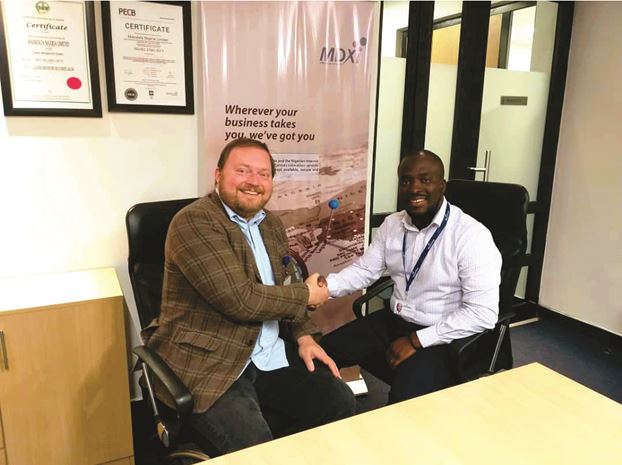
MainOne, West Africa’s leading communications Services Company and operator of the premier Tier III Data Center, has announced its official listing by Microsoft as an ExpressRoute Connectivity Provider for Nigeria.

The listing follows MainOne’s launch of its Cloud Connect product and successful delivery of the Microsoft ExpressRoute service which connects large enterprises in Nigeria to Microsoft’s Azure Cloud. With this recognition, MainOne will continue to offer private, high-speed connections for customers to Microsoft Azure thus improving the performance of their enterprise applications and cloud infrastructure services.
Speaking on the achievement, Funke Opeke, Chief Executive Officer of MainOne says the growing migration towards Cloud services globally informed the company’s Cloud Connect solution which guarantees predictable and reliable private connections ranging from 50Mbps to 10Gbps to Cloud Services.
“We have noted that Nigerian businesses have a lot of their IT workloads in the public cloud offshore due to the agility and ease of on-boarding that it offers. However, unless large Enterprise users put in place private connections, performance suffers over the public Internet. This service directly addresses that connectivity challenge and comes on the heels of MainOne’s earlier selection as a Microsoft Cloud Service Provider.”
MainOne is the first network provider to offer this service in Nigeria through the Equinix Exchange in Amsterdam. Launched in 2010, MainOne is today, the region’s leading provider of innovative telecom network solutions for businesses in West Africa.

MainOne is the operator of West Africa’s premier Tier III Data Center, MDX-I and also provides a range of enterprise solutions from Connectivity, Data Center solutions and Cloud services. These new products reinforce the company’s commitment to putting West African businesses online.

DANGCEM Drags Benchmark Index … NSE ASI Down 1.2%

0

The positive performance recorded on the last trading day of the previous week reversed today as the benchmark index was dragged by sell offs in DANGCEM (-4.2%).

Consequently, the All Share Index lost 1.2% to settle at 37,980.67 points while YTD return reduced to 41.2%. Ex- DANGCEM the ASI would have appreciated. Investors lost N162.1bn as market capitalisation fell to N13.5tn. Similarly, activity level softened as volume and value traded declined 52.5% and 58.4% to 202.0m units and N3.8bn respectively.

Banking Index Emerges Lone Gainer
Performance across sectors was largely bearish as 3 of 5 indices trended southwards, one closed in the green and the other flat. The Industrial Goods index led laggards, down 2.0% consequent on sell offs in DANGCEM (-4.2%).

The Consumer Goods index trailed, falling 0.7% on account of price depreciations in INTBREW (-5.0%), FLOURMILL (-2.7%) and NASCON (-4.9%) while losses in NEM (-2.8%) and AIICO (-3.8%) dragged the Insurance index 0.5% lower.

On the flipside, the Banking index emerged the lone gainer, up 0.4% against the backdrop of price appreciations in UBN (+4.9%), GUARANTY (+0.5%) and UBA (+0.8%). The Oil & Gas Index closed flat.

Investor Sentiment Strengthens
Investor sentiment measured by market breadth (advancers/decliners ratio) improved, albeit still negative, to 0.9x from 0.4x recorded the previous Friday as 17 stocks advanced against 18 decliners. The top performing stocks today were PRESCO (+8.8%), UACPROP (+5.7%) and CHAMPION (+5.0%) while the worst performers were CADBURY (-5.9%), ETERNA (-5.0%) and INTBREW (-5.0%).

Despite today’s negative performance, market breadth strengthened. Hence, we expect a rebound in subsequent trading sessions as investors take position in anticipation of year-end rally.

Market Statistics: Monday, 18th December 2017

0
NSE
Market Cap (N’bn)                13,516.0
Market Cap (US$’bn)                   44.2
NSE All-Share Index              37,957.96
Daily Performance % (1.2)
Week Performance % (2.5)
YTD Performance %                  41.2
Daily Volume (Million)                  202.0
Daily Value (N’bn)                      3.8
Daily Value (US$’m)         12.5


NCC Confirms 5 Bidders for 9Mobile

0
Prof. Umar Danbatta EVC of NCC

Prof. Umar Danbatta, Executive Vice-Chairman, NCC

The Nigerian Communications Commission (NCC) has confirmed the emergence of five bidders to take over 9Mobile, formerly Etisalat Nigeria.

Professor Umar Danbatta, the Executive Vice-Chairman of NCC who confirmed the development named the bidders as Smile Communications, Helios, Globacom, Airtel and Teleology Holdings Limited.

Danbatta said in a statement: “Five bidders have emerged for 9Mobile. They have been allowed to access the data room of 9Mobile in order to enable them access the financial situation of the company and subsequently make bids for the takeover of the company. But the takeover must be in a regulated manner. The CBN and NCC are supervising what is going on through an interim board jointly appointed by the NCC and CBN. We are going to do due diligence on the financial capacity of any potential bidder as well as the technical capacity. In the final analysis, we will like to see a 9Mobile taken over by a bidder who has the financial and technical capacity to improve on the operations of the telco and add value in delivery of qualitative telecom services in the country.”

The crisis in the then Etisalat Nigeria, now 9Mobile emanated from the inability of the company to repay a $1.2 billion loan it sourced from 13 Nigerian banks for purposes of network expansion.

N19.3tr E-Payment Transactions Recorded in Q3

0

Figures from the National Bureau of Statistics and Central Bank of Nigeria revealed that a total volume of 213,693,964 transactions valued at N19.33 trillion were recorded in Q3 2017 as data on Electronic Payment Channels in the Nigerian banking sector.
According to the report, the NIBSS Instant Payment (NIP) transactions dominated the volume of transactions recorded with 97,530,856 volume of NIP transactions valued at N13,963 billon were recorded in Q3 2017.
In terms of credit to private sector, a total of N15.83 trillion worth of credit was allocated by the banks in Q3 2017.

Also, the oil & gas and manufacturing sectors got credit allocation of N3.54trillion and N2.27 trillion to record the highest credit allocation in the period under review.
As at Q3 2017, the total number of banks staff increased by 9.16% from 75,607 in Q2 2017 to 82,531.

Linkage Assurance Initiates New Growth Plan

0

L-R: Dr Pius Apere, MD/CEO;  Dr John Eseimokumoh, Chairman and Mr. Moses Omorogbe, Company Secretary and Mr. Inam Udo Udoma, all of  Linkage Assurance PLC during the 23rd Annual General Meeting of the company in Lagos on Thursday.

Linkage Assurance Plc is embarking on a new phase of growth that guarantees greater returns on investment (ROI) for its teaming shareholders. This is coming from the strategic initiatives of the new management to navigate the organisation towards better performance and profitability even with the challenges of the current market environment.

Speaking at the Company’s 23rdAnnual General Meeting in Lagos, Chairman Board of Directors, Dr. John A. Eseimokumoh (MON), JP said that Linkage is positioning to take competitive advantage of the transformation and regulatory efforts of the National Insurance Commission (NAICOM), which is intended to deepen insurance penetration in the economy, and provide huge growth prospect for underwriting firms.

In addition, the company’s Chairman posited that the company is gradually introducing affordable (or pocket friendly) retail products with superior value propositions to the insurance market via numerous business channels, especially online platforms, to increase insurance acceptability and improve perception by the teaming population.

Dr. Eseimokumoh stated that as part of the firms strategic initiatives “we have developed and launched a number of retail products, including  the Linkage Third Party Plus, which is a budget friendly motor insurance that provides not only the compulsory third party cover but an additional own damage protection to the tune of N250,000. This is only available from your Company Linkage Assurance Plc”.

“We also have the Linkage Purple Motor Plan, an exclusive comprehensive motor insurance for women; Linkage SME Comprehensive; Citadel Shield, which provides compensation as result of injuries from accident for pupils and students in recognized academic establishments; Linkage Events Xclusive Insurance; Linkage Shop Insurance and the Linkage Estate Insurance.

He told shareholders that the company’s online portals would be deployed in due course. This initiative would make products and services more widespread, processed quicker, and readily available to all its customers.

Dr. Pius Apere, Managing Director/CEO of the Company while speaking at the Meeting told shareholders that this is a new era in the life of the company, assuring them that at the next AGM, shareholders would be glad they invested in Linkage.

“We have repositioned the company for growth and stronger returns on investment for shareholders, and this is evidenced in our half year 2017 performance, which is already in public domain”.

Dr. Apere further assured shareholders that the Company will continue to explore new growth opportunities in the economy to increase its market share; reengineered its operations for increased efficiency via state of the art business technology to drive productivity and empowerment of its workforce in its efforts to deepen insurance penetration in the economy.

At the end of 2016 financial year, Linkage recorded Gross Premium Income of N4.03 billion. The underwriting results show a significant growth of 56,773 percent, which is an indication of improved technical efficiency and risk management practices. The profit before tax for the year closed at N942.6million, which represents a 2 percent increase from 2015.

DANGCEM Drags Benchmark Index… NSE ASI Down 1.6%

0

The local bourse sustained a downtrend at the end of today’s trading session as the All Share Index fell 1.6% to 37,933.70 points while YTD return contracted to 41.2%. Notwithstanding, investors gained N76.9bn in value as market capitalization settled at N13.5tn.

The day’s performance is attributed to sell offs in DANGCEM (-1.7%) as ex-DANGCEM, market performed positively (+2.6%). Activity level was also mixed as volume traded fell 10.7% to 289.3m units while value traded inched 41.4% higher to N6.2bn.

Oil & Gas Index Emerges Lone Gainer 2 days in a Row
Performance across sectors was largely bearish as all indices save the Oil & Gas index closed in the red. The Oil & Gas index rose 3.8% largely on the back of a rally in SEPLAT (+7.7%). On the flip side, the Industrial Goods index led losers, down 3.1% on account of  a dip in DANGCEM (-1.7%).

The Banking and Insurance indices followed closely, falling 1.0% and 0.6% respectively as investors booked profit in ACCESS (-3.8%), UBN (-5.0%),CUSTODYINS (-4.8%) and NEM (-4.8%). In the same vein, the Consumer Goods index was dragged 0.4% lower due to sell offs in FLOURMILL (-9.7%) NIGERIAN BREWERIES (-0.5%) and DANGSUGAR (-0.9%).

Market Breadth Weakens Further
Market breadth (advancers/decliners ratio) – which measures investor sentiment – weakened further to 0.3x from 0.8x recorded yesterday as 10 stocks advanced relative to 30 stocks that declined. The top performers were SEPLAT (+7.7%), CAVERTON (+3.8%) and JBERGER (+3.7%) while FLOURMILL (-9.7%), UBN (-5.0%) and NEM (-4.8%) led laggards.

With the ongoing profit taking in the equity market especially in Banking and Industrial Goods counters, we expect a rebound in market sentiment on the last trading day.

Market Statistics: Thursday, 14th December 201

Market Cap (N’bn)                13,497.3
Market Cap (US$’bn)                   44.1
NSE All-Share Index              37,933.70
Daily Performance % (1.6)
Week Performance % (4.0)
YTD Performance %                  41.2
Daily Volume (Million)                  289.3
Daily Value (N’bn)                      6.2
Daily Value (US$’m)         20.3

ADB Delivers $100m Loan to Africa Infrastructure Fund

0

In the bid to reduce the huge infrastructure financing gap in Sub-Sahara Africa, the African Development Bank has approved US $100 million to The Emerging Africa Infrastructure Fund (EAIF), a Public Private Partnership (PPP) company, to reduce gap.
Through a US $325-365m million debt raise, EAIF intends to develop the fund’s strategy of growing its loan portfolio over the next 3-5 years and to become a sustainable and concrete alternative to development finance institutions and commercial banks. Since its inception, the Fund has played a key role in the infrastructure landscape in Africa, investing in structuring and long-term infrastructure projects, to the tune of over US$1.2 billion in about 70 transactions.
Working closely with the African Development Bank since its inception, EAIF plans to reinforce investments in 49 eligible countries and fragile states with a clear focus on crucial sectors for the development of the continent including power, telecommunication, transportation, manufacturing, among other sectors.
The expected outcomes of EAIF business model will be a clear demonstration of how to achieve green and sustainable growth in Africa; it will include the creation of 3,500 permanent jobs, improved or new access to infrastructure services for millions of people in Africa and investments in environmental, social and gender projects.
The Bank’s investment in EAIF is a reflection of its strategic thrust to achieve four of its five operational priorities notably, Light Up and Power Africa, Feed Africa, Integrate Africa and Improve the quality of life for people in Africa.
In addition, EAIF lending strategy is in line with the Bank’s Private Sector Development Strategy for developing infrastructure, supporting regional economic integration, and providing a platform for private sector development. Finally, the Fund’s focus on the infrastructure sector is well aligned with both the Bank’s and Regional Member Countries’ (RMCs) priorities.

African Guarantee Fund Earns AA-Rating from Fitch

0

The African Guarantee Fund for Small and Medium-Sized Enterprises (AGF) which assists financial institutions in Africa to scale up their SME financing through the provision of partial loan guarantees and capacity development assistance has received an Insurance Financial Strength (IFS) rating of ‘AA-‘ (very strong) from the globally renowned Fitch Ratings agency.
“Since our establishment six years ago, AGF’s strategy has been built on implementing a proven business model, leveraging high quality technical expertise and putting in place a strong governance framework. The positive results of this approach speak for themselves, with the most recent example being the ‘AA-‘ rating,” said Mr. Felix Bikpo, Chief Executive Officer of AGF.
In an official statement from Fitch, the highly regarded agency said: “The rating reflects AGF’s financially strong owners, very strong capital position, proven business model as provider of local currency guarantees for small and medium sized enterprises (SMEs) in Africa and low investment risk. These strengths are partly offset by the company’s small size. AGF is backed by public institutions, but it is run on a commercial basis, allowing European countries to support the financing of SMEs in Africa without directly committing their own funds.”
Mr. Bikpo stated, “This is the first time a guarantee fund in Africa has been assigned this status and the second Africa-based Financial Institution – after the AAA of African Development Bank – to be recognized in this way.”
The assignment of a high Fitch rating further acknowledges AGF’s position as a strong Financial Institution. By harnessing public funds for private sector development of SMEs, AGF has also been successful in demonstrating profitability as an institution. “As AGF’s primary objective is to reduce the funding gap for African SMEs, profitability is not the main performance metric. However, the company was profitable in 2015 and 2016 – just four years after its incorporation in 2011 – and has therefore proven its business model. AGF has a long-term return on capital target of 2.5%-5%, which Fitch views as an achievable target,” reads the statement from Fitch Ratings.
In December 2015, the African Guarantee Fund for Small and Medium Enterprises (AGF) completed its first external growth operation with a USD 35 million acquisition of Guarantee Fund for Private Investments in Africa (GARI Fund).

This strategic acquisition was made in order to accelerate AGF’s presence across the continent, strengthening its already robust pipeline, resulting in a real Pan-African guarantee fund. Furthermore, AGF acknowledges the high importance of the Economic Community of West African States (ECOWAS). In 2016, AGF launched a green guarantee facility aimed at unlocking finance for SMEs investing in low carbon, green growth and climate resilient development.

Africa’s Smartphone Market Grows 4.4% in Q3

0

Africa’s smartphone market bounced back from two consecutive declines to post quarter-on-quarter (QoQ) growth of 4.4% in Q3 2017, according to the latest insights released today by International Data Corporation (IDC).

The global technology research and consulting firm’s Quarterly Mobile Phone Tracker shows smartphone shipments for the quarter reached 21.7 million units, spurred by ongoing economic recoveries in some of the continent’s major markets. Year on year (YoY), shipments were down -5.5%, but this still represents an improvement on the YoY performance seen in the previous two quarters.

In the feature phone space, shipments totaled 33.7 million units, down -3.6% QoQ after increasing for the three previous quarters. However, YoY, the feature phone market was up 11.5%. Feature phones still constitute a significant 60.8% share of the total mobile phone market as they adequately address the needs of African consumers that have limited purchasing power and require a reliable long-lasting mode of communication, particularly those in rural areas.

Combining smartphones and feature phones together, the overall Africa mobile phone market saw shipments of 55.4 million units in Q3 2017, which represents a slight QoQ decrease of -0.7% but an increase of 4.2% YoY. There were contrasting fortunes for the continent’s two biggest markets, with Nigeria seeing shipments increase 1.7% QoQ while South Africa suffered a decline of -8.0% over the same period.

“The Nigerian economy is slowly coming out of recession and we’re seeing signs of steady improvement in consumer demand for mobile phones,” says Ramazan Yavuz, a research manager at IDC.

“However, consumer spending remained slow in South Africa during Q3 2017 as many consumers opted to delay their purchases until Q4, when major campaigns take place around Black Friday and the lead up to Christmas. In addition, an unstable currency and challenging economic environment do not present favorable conditions for a surge in mobile phone shipments in the country.”

In terms of the vendor landscape, Transsion brands continued to lead the smartphone category in Q3 2017 with 30.1% share, followed closely by Samsung on 26.1%.

“The Transsion Group maintains its position by engaging in aggressive sales and marketing campaigns, and by designing devices that address the specific needs of each local market,” says Nabila Popal, a senior research manager at IDC.

“Samsung’s success in Q3 2017 was primarily due to its economically priced J series, which helped the vendor post a 0.6% QoQ increase in smartphone shipments for the quarter.” In the feature phone space, Tecno and itel continued to dominate proceedings in Q3 2017 with a combined share of 58.9%.

IDC’s research shows that 4G phones are growing in popularity, with shipments increasing 5.5% QoQ in Q3 2017 to finally account for a majority share of the smartphone market at 52.9%. A drop in prices for entry-level 4G phones and an increase in the number of 4G networks across the continent are driving this growth in 4G devices.

Looking ahead, IDC expects Africa’s overall mobile phone market to grow 6.2% QoQ in Q4 2017, spurred by the increase in demand that typically accompanies the festive season.

However, the forecast for the year ahead is not as positive, with IDC expecting overall shipments to remain relatively flat through 2018, with a decline in feature phone shipments and slower uptake of smartphones causing the market to contract -0.5% YoY.

Equities Market Suffers Dead Cat Bounce… NSE ASI Down 1.0%

0
money market

The gain recorded in the Nigerian equities market yesterday, can be viewed as a “dead cat bounce” as the benchmark index continued on its downward trend today. The All Share Index shed 1.0% to settle at 38,534.64 points while YTD return retreated to 43.4%.

Accordingly, market capitalization fell by N135.8bn to N13.4tn. Price depreciations in large cap stocks – GUARANTY (-4.8%), ZENITH (-3.9%), NIGERIAN BREWERIES (-2.6%) and DANGCEM (-0.5%) were the major drags to market performance. Similarly, activity level waned as volume and value traded declined 30.0% and 83.6% to 323.9m units and N4.4bn respectively.

Oil & Gas Index Emerges Lone Gainer
Sector performance was largely bearish as all indices save for the Oil & Gas index which appreciated 0.1% following gains in MOBIL (+0.9%), closed in the red. The Banking index depreciated the most, down 2.2% on the back of losses in GUARANTY (-4.8%) and ZENITH (-3.9%).

The Industrial Goods index trailed, falling 1.7% as investors took profit in DANGCEM (-0.5%) and WAPCO (-4.3%). Similarly, price depreciations in NIGERIAN BREWERIES (-2.6%) and CADBURY (-5.0%) dragged the Consumer Goods index 0.5% lower. In the same vein, the Insurance index trended 0.1% southwards due to losses in LINKASSURE (-3.2%).

Market Breadth Wanes
Market breadth (advancers/decliners ratio)– which measures investor sentiment – weakened to 0.8x from 0.9x recorded yesterday, as 19 stocks advanced against 24 stocks that declined. The top performers for the day were BERGER (+4.9%), FCMB (+4.9%) and DANGFLOUR (+4.9%) while PRESCO (-5.0%), CADBURY (-5.0%) and GUARANTY (-4.8%) were the worst performers.

Today’s market performance can be largely attributed to sustained profit taking in large cap stocks. However, we expect a kickback in subsequent trading sessions in anticipation of the usual year-end rally.

Market Statistics: Wednesday, 13th December 2017

Market Cap (N’bn)                13,420.4
Market Cap (US$’bn)                   43.9
NSE All-Share Index              38,534.64
Daily Performance % (1.0)
Week Performance % (1.4)
YTD Performance %                  43.4
Daily Volume (Million)                  323.9
Daily Value (N’bn)                      4.4
Daily Value (US$’m)         14.4

The Future of Work in Nigeria: GE Report

0
ge

General Electric Nigeria yesterday released a whitepaper titled “The Future of Work in Nigeria. Bridging the Skills Gap: The Key to Unlocking Nigeria’s Inherent Potential” as part of the company’s global ‘The Future of Work’ series to highlight the need for investment in sustainable skills development.
In this 2017 issue, GE commissioned a survey of four key industries – Oil and Gas, Transportation, Healthcare and Power – for insight from their key leaders, including CEOs, HR and operations directors, on the impact of skills shortage on their businesses, as well as the ways to address skills shortages.
Lazarus AngbazoPresident and CEO of GE Nigeria, added:

“Competing in the 21st century global economy requires advanced skills development strategies and policies robust enough to adjust to changes in the economic landscape and the associated demands for skills. GE is committed to building a world that works better. We are committed to building skills to meet critical needs and fill skills gaps domestically and globally. Our aim is to achieve success by building collaboration, increasing employability, and engaging the public sector and business community. We understand that there is no one-size-fits-all approach to skills development. Indeed, it varies across countries and sectors. However, what is constant is the need for both the public and private sector to come together to ensure that the education system- from traditional structures, to vocational and new approaches are producing the necessary skills for the country’s current needs while anticipating its skills needs in the future.”
The report highlighted quality education as crucial to Nigeria’s future socio-economic development and emphasized the strain as a misalignment between current curriculum and industry needs places on the country’s infrastructural development, while recommending dialogue as a first step and public-private partnerships as a key driver in enhancing the quality of education.
The Vice President of Nigeria, Professor Yemi Osinbajo who wrote the preface for the report stated that, “Nigeria faces a Herculean task in plugging its skills gap. As the economy grows and new technologies emerge, the demand for skilled, competent and technical employees will only grow. Much of the emphasis needs to be placed on educational resourcing and policy reform – issues that sit predominantly with government and donors. But, the private sector has both a vested interest and a role to play in supporting the development of talent and the widening of the skills base in Nigeria.”
A strong example of GE’s commitment to skills development in Nigeria is the Lagos Garage, a hub for advanced manufacturing-based innovation, strategy development, idea generation and collaboration. Co-located with the GE Lagos offices in Victoria Island, the permanent installation of the Lagos Garage, launched in 2016, offers a year-round series of skills training programs focused on building the next generation of Nigerian entrepreneurs.

Till date, 141 entrepreneurs have graduated the program having been trained to use the latest in advanced manufacturing technologies; 3D printers, CNC mills, and laser cutters as well as in business development. 100+ prototypes have been developed at the Garage with over 40 ideas being transformed into practical business models.

About $1m+ in funding has been secured by graduates of the program and 12 alumni businesses have won prestigious awards both home and abroad.