Africa Finance Corporation (AFC), the leading infrastructure development finance institution in Africa, announces its successful acquisition of a loan facility from the Export-Import Bank of China (“CEXIM”) of a US$200m 5-year loan and a US$100m 5-year stand-by facility for general corporate purpose.
The facility from CEXIM marks AFC’s inaugural financing facility from the People’s Republic of China (PRC). This follows the Corporation’s strategic focus to build a broad coalition of investors by diversifying its fundraising activities to include all sources of institutional capital in East Asia, in addition to its existing partners in Europe & North America.
Apart from the medium-term liquidity that this proposed facility will provide, it will also further provide contingent funding support which is particularly important for liquidity risk management as well as opening up other financing and relationships with Chinese entities (both state-owned and private).
It has also been agreed that the signing of the facility agreement shall mark the first step into what will be a long and beneficial relationship with CEXIM, including AFC’s support to CEXIM’s Africa strategy, looking at their portfolio of assets and advising them on how to optimise its loan book on the continent.
Samaila Zubairu, President & CEO at AFC, commented: “In the last two decades, China has grown from a relatively small investor, to becoming one of Africa’s largest trading partners today.
“This facility is therefore not only a milestone for the Corporation and its strategy for the Far East, but also marks a natural evolution in the growing financial sophistication of China in Africa, a necessary development required to accelerate Africa’s journey towards closing the infrastructure deficit.
“Moreover, AFC welcomes CEXIM’s commitment towards its Africa strategy, and we look forward to lending our expertise on how best to deliver sustainable infrastructure investment that should catalyse industrial growth on the continent.”
Africa Finance Corp Announces $300m Loan from EXIM Bank of China
Nigeria, 24 African Countries for ICE Gaming Event
The international gaming industry has shown its support for Clarion’s vision to deliver a stellar business event for the continent, with the inaugural edition of ICE Africa (24 and 25 of October at the Sandton Convention Centre, South Africa) now at 90% capacity with leading brands including Aruze Gaming; BtoBet; Flutterwave; Gambee; GLI; Merkur Gaming; MST Channel; Neosurf; Playtech BGT Sports; Quanta; Superbet; and umAfrika Gaming Technologies supporting the historic event.
Predicted by Michael Collins, General Manager of South Africa based software firm, Betting Entertainment Technology (B.E.T) to join the ‘Premier League of international B2B gaming events’ ICE Africa has attracted delegates from a total of 91 countries including gaming professionals from 25 African countries, comprising: Botswana; Cameroon; Chad; Congo (The Democratic Republic of); eSwatini (formerly Swaziland); Egypt; Gambia; Ghana; Kenya; Lesotho; Liberia; Malawi; Mauritius; Morocco; Mozambique; Namibia; Nigeria; Rwanda; Seychelles; South Africa; Sudan; Tanzania (United Republic of); Uganda; Zambia, and Zimbabwe.
Commenting on the response, Dan Stone, Senior Marketing Manager at Clarion Gaming said “We took the decision to launch following requests from the industry based in Africa for us to produce and organise a professional showcase that the continent could be proud of.
Since making the decision to bring the ICE brand to the continent, we have been really encouraged by the hugely positive response from all parties – manufacturers, suppliers, regulators, journalists and commentators alike. As we edge closer to the first edition of ICE Africa going live, all the metrics we look to are highly positive and we are confident of opening a new chapter in the development of African gaming.”
Delivering much more than a conventional expo, ICE Africa has been curated to bring the gaming community a plethora of engaging content covering thought leadership to training and provided by the industry’s most influential and reputable stakeholders. Dan Stone explained: “Learning and development are at the core of the ICE Africa experience. The advanceAFRICA stream creates time for quality brainstorming around how the future of the African market can be shaped to allow for sustainable growth of the industry. microscopeAFRICA is a series of workshops looking at different facets of the industry and networkAFRICA a series of facilitated networking breaks, unique HIVE sessions and round-tables to forge new connections with colleagues from across the continent. The ICE Africa conference programme will cover a wide range of topics including mobile, lottery, start-ups, investment and regulation all headed up by expert international speakers.”
Nigeria Raised $2.5bn from Bonds in Q3 2018
Nigeria raised over $2.5 billion bond in quarter three of 2018 followed by South Africa with $9.3 billion, Côte d’Ivoire ($8.3 billion) and Angola ($3.5 billion).
In total, Sub-Saharan Africa bond issuers raised a record $30.8 billion during Q3, 2018
This segment of the financial markets involving the sub-region was particularly animated by governments that are primary issuers notably because of liquidity needs to finance budget deficits in a context marked by ever decreasing revenues.
Financial institutions ($5.7 billion) and the energy sector ($2.3 billion) also greatly contributed to that dynamic.
Let’s remind that the presence of Côte d’Ivoire in that list is partly due to its strong economic activity and also to interventions of the African Development Bank (AfDB) which was considered as an Ivorian issuer in the ranking because of the presence of its headquarters there.
With the tightening of borrowing conditions (for Africans) notably on the international bond market, Sub-Saharan issuers’ presence on this market should decrease. Indeed, figures from Q3, 2018 shows that from $13.1 billion in July, the zone’s issuance dropped to $7.2 billion in September.
Idriss Linge
Cryptocurrency Theft Hits $927m in 9 Months
A report by Reuters says the theft of cryptocurrencies through hacking of exchanges and trading platforms soared to $927 million in the first nine months of the year, up nearly 250 percent from the level seen in 2017, according to a report from U.S.-based cyber security firm CipherTrace released on Wednesday.
The report, which looks at criminal activity and money laundering in the digital currency market, also showed a steadily growing number of smaller thefts in the $20-60 million range, totaling $173 million in the third quarter.
Digital currencies stolen from exchanges in 2017 totaled just $266 million, according to a previous report from CipherTrace.
Bitcoin’s popularity and the emergence of more than 1,600 other digital coins or tokens have drawn more hackers into the cryptocurrency space, expanding opportunities for crime and fraud.
“The regulators are still a couple of years behind because there are only a few countries that have really applied strong anti-money laundering laws,” Dave Jevans, chief executive officer of CipherTrace, told Reuters in an interview.
Jevans is also the chairman of the Anti-Phishing Working Group, a global organization that aims to help solve cyber crime.
He said there are likely 50 percent more criminal transactions than those that were traced for this report. For instance, CipherTrace is aware of more than $60 million in cryptocurrency that was stolen but not reported.
The data also showed that the world’s top cryptocurrency exchanges from countries with weak anti-money laundering regulations (AML) have been used to launder $2.5 billion worth of bitcoins since 2009. The top 20 virtual currency exchanges in terms of volume were analyzed for the report.
The CipherTrace report declined to name those exchanges.
These money-laundered funds represent transactions that CipherTrace was able to directly monitor and designate as criminal or highly suspect.
In estimating the $2.5 billion, CipherTrace looked at about 350 million transactions from the 20 exchanges and found 100 million of those with counterparties. From there, the firm was able to cross-check the 100 million transactions with its own data on criminal activity.
At the same time, these exchanges have also been used to purchase 236,979 bitcoins worth of criminal services, equivalent to approximately $1.5 billion at current prices, the report showed.
“All exchanges get these money-laundered funds. You really can’t stop them,” said Jevans.
“And here’s the reason why. We learn about the criminal stuff often times after it actually happened. So there’s no way to know in real time. You can know 80-90 percent of the time, but it’s impossible to know 100 percent,” he added.
FINCA Unveils Platform for African Fintechs, Microfinance Firms
Finca International in partnership with the USAID’s initiative Partnering to Accelerate Entrepreneurship (PACE) announced the launch of a platform named Finca Forward.
The platform is aimed at facilitating collaboration between African fintech companies launching their activities and microfinance institutions that support people on low-revenues around the world.
Finca Forward will allow the microfinance institutions to develop products and services for fintech offering innovative solutions that are attractive to investors.
“By catalyzing support and investment for early-stage fintech enterprises, we aim to help small and growing businesses overcome the pioneer gap and to enable microfinance institutions to bring much-needed financial services to at-risk populations of women, youth and the rural poor”, Rupert Scofield, President of FINCA International, indicated.
Chamberline Moko
Coscharis, Ford Unveil Sponsorship for Season 5 of The Next Titan

(L-R) Mr. Abiona Babarinde, General Manager Marketing and Communications at Coscharis Group; Mr. Mide Kunle-Akinlaja, Executive Producer; Mr. Felix Mahan, Brand Manager, Ford, Coscharis Motors Plc; at the recently held premiere for the Season 5 of The Next Titans held in Lagos.
Coscharis Motors and Ford Motor Company are thrilled to announce their continued sponsorship of entrepreneurial reality TV show The Next Titan for a third consecutive season. The winner of Season 5 will receive a brand new Ford Focus to help them run their business more efficiently.
Coscharis Motors is the sole official distributor of new Ford vehicles in Nigeria. Coscharis Motors and Ford were the official automotive sponsor of The Next Titan in 2016 and 2017. The 2016 winner received a Ford Escape while the 2017 winner received a Ford Ranger.
“Coscharis Motors is pleased to support the reality show once again,” says Abiona Babarinde, General Manager, Marketing and Corporate Communications at Coscharis Motors.
“We are also excited to support emerging entrepreneurs in Nigeria as they resonate with the humble beginning of our company as an entrepreneur’s dream nurtured into a conglomerate. We appreciate our collaboration with Ford, and will continue to promote skills development and training in the automotive industry, and across the board in Nigeria.”
“At Ford we firmly believe in the importance of mobility and freedom of movement in driving human progress. We hold firm to the vision of our founder Henry Ford who strived to put the world on wheels so everyone could enjoy the benefits of mobility. That is why we have continued this partnership, which will help a deserving contestant realise their dream,” said Conrad Groenewald, Director of Marketing, Sales and Service for South Africa and Sub-Saharan Africa at Ford Motor Company.
The Next Titan, now in its fifth season, is a platform for young entrepreneurs to demonstrate their talent in business. The primary purpose of the programme is to challenge the public’s perception of entrepreneurship, to awaken the nation’s entrepreneurial spirit, to inspire contestants and viewers to strive for success in business, and become masters of their own destinies.
Sixteen participants, between the ages of 21 and 40, will battle one another for 10 weeks in various business tasks, such as strategy, sales, marketing, and promotions. During the competition, participants and viewers get exposure to real-life entrepreneurial challenges through informal training, and a chance to learn from top business leaders.
The winner will be announced in December 2018.
“Coscharis Motors wishes all participants the best of luck for the competition,” says Babarinde. “We believe that the current contestants will both inspire young entrepreneurs, and educate society on just how much hard work goes into growing a business.”
About Ford Motor Company
Ford Motor Company is a global company based in Dearborn, Michigan. The company designs, manufactures, markets and services a full line of Ford cars, trucks, SUVs, electrified vehicles and Lincoln luxury vehicles, provides financial services through Ford Motor Credit Company and is pursuing leadership positions in electrification, autonomous vehicles and mobility solutions. Ford employs approximately 202,000 people worldwide.
NSE Bloomberg CEO Roundtable 2018

L – R: Oladele Afolabi, Director, Portfolio Management, Debt Management Office; Titi Odunfa Adeoye, Chief Executive Officer, Sankore Investments; Oscar N. Onyema, Chief Executive Officer, The Nigerian Stock Exchange (NSE); Nnamdi J. Okonkwo, Managing Director/Chief Executive Officer, Fidelity Bank Plc and Jubril Enakele, Chief Executive Officer, Zenith Capital Plc during NSE Bloomberg CEO Roundtable at the Exchange yesterday.
Africans Risk Poverty, Hunger from Rising Temperature
Yesterday, the Intergovernmental Panel on Climate Change released a report detailing progress and pathways to liming global warming to 1.5 degrees Celsius.
Responding to the report, Mr. Apollos Nwafor, Pan Africa Director of Oxfam International said:
“Climate change has set our planet on fire, millions are already feeling the impact, and the IPCC just showed that things can get much worse. Settling for 2 degrees would be a death sentence for people in many parts of Africa. The faster governments embrace the renewable energy revolution and move to protect communities at risk, the more lives and livelihoods that will be spared.
“A hotter Africa is a hungrier Africa. Today at only 1.1 degrees of warming globally, crops and livestock across the region are being hit and hunger is rising, with poor small scale women farmers, living in rural areas suffering the most. It only gets worse from here.
“To do nothing more and simply follow the commitments made in the Paris Agreement condemns the world to 3 degrees of warming. The damage to our planet and humanity would be exponentially worse and irreparable.
“None of this is inevitable. What gives us hope is that some of the poorest and lowest emitting countries are now leading the climate fight. We’ve moved from an era of ‘you first’ to ‘follow me’ – it’s time for the rich world to do just that.
“Oxfam calls for increased, responsible and accountable climate finance from rich countries that supports small scale farmers, especially women to realize their right to food security and climate justice.
“While time is short, there is still a chance of keeping to 1.5 degrees of warming. We must reject any false solution like Large Scale Land Based Investments that means kicking small scale farmers off their land to make way for carbon farming and focus instead on stopping our use of fossil fuels, starting with an end to building new coal power stations worldwide.”
Climate Impact in Africa:
Natural disasters such as droughts and floods have been thwarting development in the African continent. Fluctuations in agricultural production due to climate variations along with inefficient agricultural systems cause food insecurity, one of the most obvious indicators of poverty.
The 2016 El Niño phenomenon, which was super charged by the effects of climate change, crippled rain-fed agricultural production and left over 40 million people foods insecure in Africa. Without urgent action to reduce global emissions, the occurrence of climate shocks and stresses in the Africa region are expected to get much worse.
- On 5 July this year, Africa is likely to have registered its hottest reliable record temperature in Ouargla, northern Algeria, of 51.3C (124.3F).
- There is mounting evidence that higher temperatures linked to climate change have worsened drought and humanitarian disaster in East Africa, including last year’s drought which left over 13 million people dangerously hungry.
- Even at 1.5 degrees of warming, climate impacts in West Africa would be devastating. Wheat yields could fall by up to 25 percent, and at 1.5 degrees Lagos in Nigeria could become a newly heat stressed city like Delhi in India.
- In sub-Saharan Africa 1.5 degrees warming by the 2030s could lead to about 40 percent of present maize cropping areas being no longer suitable for current cultivars, and significant negative impacts on sorghum suitability are projected. Under warming of less than 2 degrees by the 2050s, total crop production could be reduced by 10 percent.
- At 2 degrees of warming heat extremes never experienced before could affect 15 percent of sub-Saharan Africa’s land area in the hot season, causing deaths and threatening farmers’ ability to grow crops.
If global temperature rises by more than 2 degrees by the end of the century, by 2050 this could see daytime temperatures in North Africa (and the Middle East) rise to 46 degrees on the hottest days, which can be deadly.
Francophone Africa: The Continent’s Hottest Hospitality Market
Identified as a strategic growth point for major international hotel brands, Francophone Africa has become one of the world’s most competitive and lucrative deal making environments.
In a market first, the FrancoReal Summit taking place in Dakar, Senegal on 16 and 17 October 2018, will provide the platform for hospitality leaders from the Radisson Hotel Group, Mangalis Hotel Group and Accorhotels to engage with regional investors and developers.
According to global authority, Horwath HTL France’s managing partner, Philippe Doizelet, there has been a measurable uptick in activity due to the historically low penetration of international operators in the market.
“Investment opportunities within the hotel sector in French-speaking Africa are on the rise. This rise in sentiment is predominantly explained by the lack of quantitative and qualitative supply in some regions, with many hotels not being able to respond to the increasing demand.”
With 50 % of its Africa deals in 2018 taking place in the Francophone Region, one international operator focussed on the region is the Radisson Hotel Group, as its director of business development, Erwan Garnier explains.
“The Radisson Hotel Group has identified Francophone Africa as a key market, and we’re aggressively expanding within the region to become the market leader. Our objective is to double our current Francophone presence to 40 hotels with over 9,000 rooms in the market by 2022.”
Currently operating in 12 markets, Radisson’s growth strategy is matched by AccorHotels and Mangalis and other international and regional chains, who are upping the ante in the region says Doizelet.
“The market is currently dominated by Accor and the Radisson Hotel Group which continue their development in the region. Other international groups actively looking for new development opportunities in the region, are namely Hyatt, Hilton, Marriott, Kempinski, as well as regional groups including Azalaï, Mangalis and Onomo.”
Considered a regional specialist brand, but with a robust international management team, the Mangalis Hotel Group hopes to become the preeminent brand in the region says its chief executive officer, Olivier Jacquin.
“By 2022, Mangalis will be the regional hotel operating leader with 20 properties in operation and under development offering 2 600 over rooms in the various segments of the industry.” And with such ambitious plans to scale, 2019 is set to be a significant year for the nimble and fast-growing brand as they launch four of their Noon branded hotels in Benin, Niger and Ivory Coast.
With a significant number of brands entering the market, growth at this juncture remains constrained to the midscale pricing bracket, as there remains only a few locations for high-end developments says Doizelet.
“So far, only a handful of destinations in French-speaking Africa are suitable for top end hotel development, such as Ivory Coast or Senegal.”
The major international groups seem to agree with Doizelet’s assessment especially in Senegal – with Radisson Hotel group particularly active in the Dakar market and using the city as a launchpad for regional growth.
As Garnier explains, “Senegal is the number one market for international investors because of its long-term economic stability. We already have two of the country’s leading internationally branded hotels; Radisson Blu Hotel, Dakar Sea Plaza and Radisson Hotel Dakar Diamniadio, however, we now want to introduce the rest of our African brands to Senegal, i.e. Radisson Collection, Radisson RED and Park Inn by Radisson.”
And while competition grows daily in the market, Jacquin believes the scale of the opportunity in the market provides room for all operators.
“There is still room for all of us. The presence of a variety of suppliers gives the international and regional travellers choice of products in a market which is still growing. Mangalis like any other brand has its own DNA and signature, in addition, we are African rooted hotel operator and developer.”
The annual Francoreal Summit for Garnier is a strategic fit for the Radisson Group, especially as they seek to identify strong local partners to match their Africa business plan and introduce new products to the market.
“We plan to present the new Radisson Hotel Group brand architecture, which includes the introduction of two new brands to the African Market; Radisson Collection positioned as the premium lifestyle and affordable luxury and Radisson as the upscale hotel brand.”
Moreover, as the Radisson’s brand continues to expand across the market – this rapid growth is dependent on developing strong local ties which are the foundation of their Africa strategy.
“We have an asset light strategy in Africa, providing our expertise from managing almost 90 hotels and partnering with local developers, making local connections to create successful projects.” This investment light strategy relies on a robust local foundation and partners explains Garnier.
“We are always looking for local partners that have the long-term vision of developing hotels with an international partner like the Radisson Hotel Group, financial muscle to leverage the equity needed to kickstart the project, financial partners to raise the debt to complete the project. However, more importantly, they must have the local connections to navigate the local administration to obtain construction permits and local legalities.”
With more than 150 senior executives from across the region and from South Africa and internationally, providing the platform for delegates to conduct business deals and gather insights is a crucial focus for the FrancoReal Summit says it host, API Events’ Kfir Rusin.
“Francophone Africa is growing in interest for our African and international stakeholders, many of whom have expressed a keen interest in the market across all sectors. From a hospitality perspective, we have Mangalis Hotel Group’s CEO Olivier Jacquin, the Radisson’s Erwan Garnier, Accor Hotels’ Redah Faceh, and Horwath HTL France’s managing partner Philip Doizelet, who are the region’s most active dealmakers and analysts speaking at the Summit.”
Mangalis Hotel Group’s Olivier Jacquin believes the Francoreal Summit will bring the key property stakeholders together. “Such an event is not only the opportunity to showcase the region, but it is also a platform to bring all the key stakeholders together (investors, operators, buyers etc.). So, needless to say, that FrancoReal Summit is very welcomed, especially in Dakar, as one of the fast-moving Francophone Africa capitals.”
Hayford Alile: ‘Great Loss to Capital Market in Nigeria’
The Nigerian Stock Exchange (NSE) mourns the loss of its erstwhile Director-General, Apostle Hayford Alile at the age of 80.
Apostle Alile was the Director-General of NSE from 1976 to 2000. Apostle Alile’s outstanding achievements at The Exchange include the physical movement of The Exchange’s operations to its current location in the hub of the Nigerian financial district; trading automation, which significantly improved international access to the Nigerian capital market; and the launch of the All Share Index (ASI).
Even in retirement, Apostle Alile constantly made himself available to The Exchange. Most recently, we remember his wise counsel and measured contributions during his meritorious service as a Member of The Exchange’s Membership Verification Panel, whose activities assisted the National Council in finalising The Exchange’s Membership Register.
Commenting on the development, the Chief Executive Officer, NSE, Mr. Oscar N. Onyema, said: “This is a great loss to the Nigerian capital market and the country at large. Apostle Alile’s contributions to the capital market and organised private sector will continue to be referenced. He was indeed a visionary leader, whose foresight and impact on the operations of the NSE remain evident several years after the end of his tenure as Director-General of The Exchange”.
Also commenting, Mr. Abimbola Ogunbanjo, President, National Council of the NSE said, “Nigeria has lost one of its most patriotic and visionary corporate leaders. Apostle Alile was an outstanding authority on the stock market and its operations and he rightfully laid a solid foundation for The Nigerian Stock Exchange. As an Exchange, we shall remain grateful to him for providing the inspiring leadership required at the formative stage of the Exchange”.
In mourning his passing, the NSE observed a one-minute silence in his honour during the trading hours of Tuesday, October 2, 2018. The thoughts of the National Council, Management, Staff and indeed the capital market ecosystem are with the entire Alile Family.
17 States Owe Pensions, Salaries Despite N1.8tr Bailout
BudgIT, worried that some states are yet to fully offset the outstanding amount owed pensioners and civil servants despite series of bailouts aimed at offsetting the liabilities, recently conducted a survey. The survey aimed at ascertaining the frequency and magnitude of challenges civil servants and pensioners are encountering.
The survey focused on three different categories of workers in all 36 states namely: primary and secondary school teachers, state midwives and state secretariat workers. Also, attention was paid to ascertain if retirees at the state level are receiving pensions as at when due.
From the survey carried out, we discovered that 12 states are yet to offset the amount owed secondary school teachers fully and many states are threatening workers to keep the information away from public domain.
Notable among states with outstanding liabilities to secondary teachers is Osun and Kogi state. Osun State has been paying secondary school teachers above level 8 only a fraction of their salaries and entitlement for the last 30 months.
Cumulatively, Osun State is owing secondary school teachers above level 8 about 15 months’ salary. Other states with outstanding liabilities to states include Abia, Benue, Bayelsa, Kwara, Imo, Ekiti, Oyo, Ondo and Zamfara. Kogi State, for instance, are owing teachers about 13 months of salaries according to the response given by secondary school teachers during the survey.
Midwives, whose responsibility includes attending to issues around pregnancy, childbirth, postpartum, women’s sexual and reproductive health and newborn care – are also bugged down by issues including failure of some state to pay salaries and emolument as at when due. Midwives were questioned during the survey across the 36 states. BudgIT discovered that 10 states are owing midwives salaries as at close of business on September 24, 2018.
Delta, Imo, Abia, Osun, Plateau, Bayelsa, Ekiti and 11 other states owe Pensioners entitlement ranging from 1 month to 36 months. Almost all pensioners expressed how unhappy they are, their dissatisfaction with the government and how hard it has been for them to survive despite years of hard work up into service
BudgIT hereby ask States to offset outstanding liabilities to its workers and pensioners as funds in form of bailout estimated to be in the region of N1.8 trillion have been issues to states to offset all outstanding liabilities owe workers.
NSE, Bloomberg Holds 4th CEO Roundtable Oct 9
The Nigerian Stock Exchange
The Nigerian Stock Exchange (NSE) in collaboration with Bloomberg will hold the fourth edition of the NSE-Bloomberg CEO Roundtable on Tuesday, October 9, 2018 at Stock Exchange House, Lagos.
The event themed, “Reshaping the Nigerian Economy for Sustainable Growth: Leveraging the Fourth Industrial Revolution as a Catalyst for Advancement”, will focus on the topical issue of the fourth industrial revolution and its implication for the Nigerian economy.
This edition of the NSE-Bloomberg CEO Roundtable will bring together business leaders across multiple sector as well government officials to examine the present state of the Nigerian economy in light of the unfolding fourth industrial revolution and chart a way forward.
Speaking on the event, Oscar N. Onyema, Chief Executive Officer, NSE, said that “Nigeria’s dependence on commodities production as the mainstay of its economy has historically proven to be the source of its high risk exposure to global shifts in commodity demand. With the unfolding fourth industrial revolution which has seen the embedment of technology across all aspects of society, I believe we can accelerate the unlocking of untapped value across all sectors of the economy through the disruption of existing industries and creation of entirely new ones. As with previous editions, I expect the forum to be highly interactive with robust engagement.”
Confirmed speakers for the event include: Oscar N. Onyema, CEO, NSE, Patience Oniha, Director General, Debt Management Office; Herbert Wigwe, Chief Executive Officer, Access Bank Plc; Mark Bohlund, Africa Economist, Bloomberg Economics (BE); Fikayo Akeredolu, Country Manager, Bloomberg L.P; Charles Anudu, Chief Executive Officer, Swift Networks; Jubril Enakele, Managing Director, Zenith Capital Limited; Shola Akinlade, CEO/Co-Founder, Paystack; Paul Wallace, Africa Emerging Markets Reporter, Bloomberg News and Tony Ibeziako, Acting Divisional Head, Listing Business, NSE.
The annual NSE Bloomberg CEO Roundtable is a platform that ensures continuous dialogue with key stakeholders and provides strategic solutions to economic issues for follow up implementation by The Exchange in its capital market advocacy role.
Almond Set for Insurance Forum, Industry Nite
Almond Productions Limited, promoters of the Annual Insurance Consumers’ Forum (ICF) is set to host the event once again this year in Lagos.
The Insurance Consumers’ Forum (ICF) which started in 2013 provides a robust platform for interaction between Insurers and the Insuring Public in a No-Holds-Barred atmosphere, on issues that bothers on excellent customer service delivery. Following the success of the previous editions, the stage is now set for the 2018 edition.
The forum with the theme: Relieving Customers Pain Points in Insurance through Exceptional Service Delivery will hold on Friday 16th of November at NECA House, Ikeja by 9:30am.
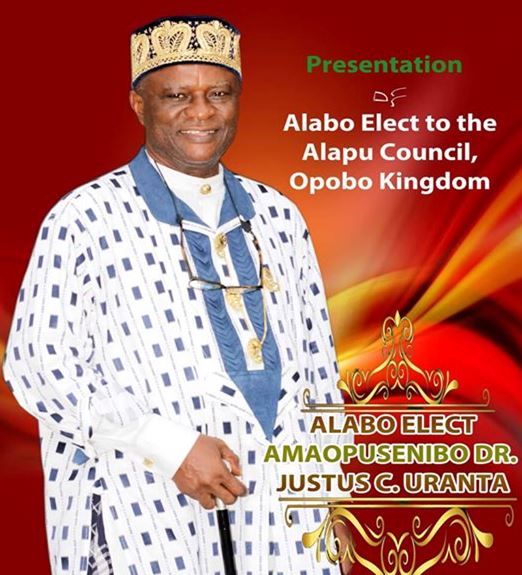
The forum this year will be chaired by Dr. Justus Uranta, former Group Managing Director, Niger Insurance Plc.
Guest Speaker this year is Chief Chris Uwadiegwu Obi, former Manager in-Charge of Training, Personnel and Human Resources, Exxon Mobil Nigeria and now Managing Director, Blue Pearl Konsult Limited while the discussant is Mr. Tunde Oshadiya, Managing Director, Guinea Insurance Plc.
The focus this year would be on the following issues but not limited.
(1) What part of insurance transaction do customers experience the most pain or stress?
(2) What kind of products do you want from insurance companies and at what price?
(3) Digital Insurance: What social media platform will you buy insurance from?
(4) What do you want insurance companies to do differently to interest you as a customer?
The forum according to Faith Ughwode, CEO Almond Productions Limited, is bigger and better this year because of the scope of participants who are drawn from trade groups, formal and informal, federal and state government agencies and parastatals and officers of various law enforcement agencies who have dealings with the enforcement of insurance in Nigeria.
In addition to the Consumers’ Forum this year, Ms Ughwode said they are also hosting another major event in the evening on the 16th of November at Shell Hall Muson Centre, tagged ‘Insurance Industry and Consumers’ NITE.’
This event is a platform for insurance operators, be it underwriters or brokers to reward their loyal customers/clients.
“Insurance companies are generally perceived by the insuring public as people who just collect premium but don’t give anything back if you don’t suffer a loss. That is what we want to change with this Platform. It is also to open up the insurance industry to the entertainment or creative sector who appeal to the critical mass of the Nigerian population today through their huge followership on social media.” Headlining the maiden edition of the Industry NITE are Ace Comedians: Ay, Akpororo, Seyi Law, Ushbebe and a host of others.
“We at Almond Productions Limited believe strongly in the growth potential of the insurance industry. Social events like these are the positive forces that will open up the industry to the Nigerian public.
Insurance practitioners and their customers are in for a good time at these epoch-making events.”
Enhanced Pension: Means of Cushioning Effect of Non Implementation of Guaranteed Minimum Pension under PRA 2014
Introduction
Nigerian Pensioners have two basic expectations under the Defined Contributory Scheme (CPS), namely“ to have sustainable standard of living in retirement and their benefits paid as at when due”.
The above expectations cannot be fully met for all pensioners without the implementation of the guaranteed minimum pension (GMP) as stated in section 84(1) of Pension Reform Act (PRA) 2014.This is true particularly for those retirees with small Retirement Savings Account (RSA) balances because they have not accumulated enough as at the date of retirement to have a decent standard of living in retirement.
The delay in the implementation of GMP(by PENCOM for more than 10 years after the CPS was established in 2004) have resulted in growing sense of disenchantment among current pensioners with relatively small RSA balances at retirement. This is because of the small monthly pension they have been receiving over the years relative to the huge gains (from investment returns and/or dividends) the Pension Fund Administrators (PFAs) are currently making. The GMP (if implemented) would have eliminated the disenchantment among the current pensioners.
The recent implementation of Enhanced Pension (EP) programme by PENCOM effective from December 2017 is aimed at providing sustainable standard of living in retirement for the Programmed Withdrawal (PW) pensioners and therefore it could be seen as cushioning the effect of the non-implementation of GMP for these PW pensioners.
This paper highlights the rationale and implications for introducing the Enhanced Pension (EP) programme for only the Programmed Withdrawal (PW) pensioners.
- The Rationale for Enhanced Pension (EP) Programme
The guaranteed minimum pension (GMP) is usually to protect the RSA holders against some of the risks of low investment returns and the erosion of pensioners’ incomes by inflation during a period of economic down turn leading to having a low standard of living in retirement. Thus, it could be seen as a redistribution of resources to act as a safety net for pensioners.
The delay in the implementation of GMP could be considered to be the main reason for PENCOM’s attention being drawn to the “clamouring for periodic enhancement of the pension for retirees on Programmed Withdrawal (PW) under the CPS”. The grumbling may arise mainly due to the contributors and/or new retirees demanding for huge initial lump sum payment, leaving them with reduced RSA balances for investment which in turn has reduced the monthly income to live on in retirement.
The PENCOM’s framework on Enhanced Pension (EP) provides that “only retirees on Programmed Withdrawal (PW) under the CPS with appreciable growth in their RSAs are entitled to receive enhanced pensions”. Furthermore, the framework also stated that:(a)“PFAs shall continue paying current pensions to retirees that have insufficient growth to be considered for enhancement”.(b) “PFAs shall continue paying pensions to retirees that have fully exhausted their RSAs from their statutory reserve pending implementation of Minimum Pension Guarantee (MPG)”.
The implementation of EP is a welcome development but the fact that it is applicable to only Programmed Withdrawal (PW) pensioners has great concerns and far-reaching implications to other stakeholders.
- The Funding of Enhanced Pension (EP) Programme
Indeed, the funding of Enhanced Pension (EP) is the responsibility of the PFAs, as stated in PENCOM’s framework on EP that “PFA shall use the surplus [generated from Return on interest (ROI)]”and/or“statutory reserve Fund” to enhance the pensions of eligible retirees.
Section 81 of PRA 2014 required that “every PFA shall maintain a Statutory Reserve Fund as contingency fund to meet any claim for which the PFA may be liable as determined by the Commission. The Statutory Reserve Fund shall be credited annually with 12.5 percent of the net profit after tax or such other percentage of the net profit as the Commission may, from time to time, stipulate”.
- The Implications for Enhanced Pension (EP) Programme
Pension Products – Basically there are two main pension products being used at the de-accumulation phase to provide retirement benefits for the RSA holders in the CPS(as stated in section 7(1) of PRA 2014), namely Life Annuity(LA) and Programmed Withdrawal (PW) products.
Briefly, life annuity provides a regular income for life with a minimum guaranteed period of 10 years. Where the retiree dies within the guaranteed period the income for the unexpired period is paid in lump sum to the estate of the retiree or named beneficiary. On the other hand, the retiree under Programmed Withdrawal (PW) receives a regular income from his/her RSA (with the balance being invested continuously) over an expected lifespan until the RSA balance runs out.
The Programmed Withdrawal (PW) and Life Annuity (LA) products are being marketed separately by PFAs and Life Insurance Companies (Life Insurers) respectively. On the other hand, the marketers of these products (PFAs and Life Insurers) are regulated separately by PENCOM and NAICOM respectively.
However, the guidelines for Life Annuity (LA) product are jointly issued by the two regulatory bodies (as specified in section 7(1) (c) of PRA 2014). The framework on Enhanced Pension (EP) applies to only the Programmed Withdrawal (PW)product and PW pensioners being regulated by PENCOM. It is obvious that the pensioners under Life Annuity product are also clamouring for either guaranteed minimum pension (GMP) or Enhanced Pension (EP), having considered the economic hardship facing Nigeria pensioners.
New Retirees’ Preferred Choice of Pension Benefit Options– The PFAs (being the first point of contact with new retirees) and Life Insurers had been de-marketing each other in the past in order to gain undue business patronage under the CPS.
The lack of professional advice (i.e. not based on individual circumstances and/or risk profile) had been given to new retirees to freely choose suitable pension products (i.e. pension benefit options) at retirement.
The above has led to more retirees still opting for Programmed Withdrawal (PW) product (142,742retirees) than Life Annuity (LA) product (34,876 retirees), showing that 80.36% and 19.64% of the retirees were under PW and LA products respectively in December 2016.
The recent implementation of Enhanced Pension (EP) for only Programmed Withdrawal (PW) pensioners would no doubt create a natural tendency for more new retirees to choose Programmed Withdrawal (PW) product rather than the life annuity (LA) product in the future without the PFAs deliberately de-marketing the Life Insurers. Thus, the number of retirees under Programmed Withdrawal (PW) is likely to increase exponentially over time than those retiring as annuitants.
The Statutory Reserve Fund – The Statutory Reserve Fund (SRF) of PFAs (i.e. an annual accumulation of a percentage of net profit after tax of PFAs over the time) used in the funding of Enhanced Pension (EP)do not arise only from the management of RSAs of current Programmed Withdrawal (PW) pensioners over the years but also from the management of RSAs of current and past contributors (who have actually or may eventually become annuitants at retirement).
Thus, annuitants whose RSAs have contributed to the Statutory Reserve Fund (SRF) of PFAs in the past should have (a lien in EP) been considered in the implementation of Enhanced Pension (EP).The implementation of Enhanced Pension (EP) using the SRF suggests that a claim has arisen for which a PFA is liable as determined by PENCOM (section 81(1) of PRA 2014).
The above also suggests that the clamouring for Enhanced Pension (EP)that cut the attention of PENCOM would not cease until the guaranteed minimum pension (GMP)is implemented for the benefit of all eligible pensioners (both Programmed Withdrawal and Life Annuity retirees) living in poverty. For the Programmed Withdrawal (PW) Pensioners, the Enhanced Pension (EP)is akin to the guaranteed minimum pension (GMP)as the principle and concept of payment are more or less the same.
The implementation of Enhanced Pension (EP) would put an undue strain on a PFA’s Statutory Reserve Fund and hence on the PFA’s cash-flows. This will be the case when the number of Programmed Withdrawal (PW) pensioners would increase significantly since the PW product is more likely to be the new retirees’ preferred choice than the Life Annuity (LA) product, as explained above.
The original aim of maintaining the Statutory Reserve Fund would not be met as the Fund is likely to be depleted to a level below the acceptable threshold already set by PENCOM.
Pension Protection Fund– PFAs has been contributing towards the Pension Protection Fund (as required by section 82 of PRA 2014) to be utilised for any purpose deserving protection as determined by PECOM including the funding of GMP.
Thus, the implementation of Enhanced Pension (EP) using Statutory Reserve Fund maintained by PFAs is an extra burden placed on PFAs.
Conclusion
It is clear that Enhanced Pension (EP) is not a substitute of guaranteed minimum pension (GMP) and therefore, there is an urgent need to implement the GMP for the benefit of all eligible pensioners (not only the Programmed Withdrawal (PW)pensioners) in order to have a decent standard of living in retirement, particularly in this period of serious economic hardship facing the country.
AccorHotels: A Record Year of Growth, Development in Africa
Straight from the African Hotel Investment Forum (AHIF) in Nairobi, AccorHotels, the world’s leading travel & lifestyle group, announced a record year of development in Africa.
Beginning with the 50% stake in the Mantis Group in April, followed by the announcement in late July of a dedicated Investment Fund with a targeted reach of USD $1 billion devoted towards sustainable development in Sub Sahara Africa, the journey continued with the acquisition of Mövenpick Hotels & Resorts in September.
All this culminated with the very recent announcement of hospitality stalwart Mark Willis, to take the helm of the Middle East and Africa as the Group continues to set the pace and grow from strength to strength.
AccorHotels is the largest operator in Africa with a network of over 150 hotels in operation, representing close to 27,000 rooms across 23 countries. Moving forward the Investment Fund, in partnership with Katara Hospitality, will underscore growth and development for the region, providing a platform for a combined network of organic and acquisition reach of 250 hotels by 2025.
Following the acquisition of Mövenpick Hotels & Resorts, which added over 50 hotels to the Group’s Middle East and Africa portfolio, including the Mövenpick Ambassador Hotel Accra and Mövenpick Hotel & Residences Nairobi, C-suite leadership was announced with Mark Willis as the Chief Executive Officer (CEO) for AccorHotels Middle East & Africa.
With more than three decades of operational experience with leading hospitality groups, Willis spent over 12 years in the Middle East and Africa.
Speaking at the Regional Leaders panel at AHIF, Willis outlined the Group’s vision for Africa based on organic growth and development and a renewed focus on rebalancing AccorHotel’s presence in Africa with a focus on key cities and destinations in East and Southern Africa.
He drew emphasis on the need for collaboration with local partners and to mobilize their expertise, intuitive knowledge and passion for community outreach, citing the Mantis Group as the perfect example of a hospitality leader in South Africa with genuine credentials in eco-tourism combined with wildlife conservation.
Over the course of the year, the Group also opened flagship properties and signed key projects, including the first Fairmont flag in Morocco with the opening of the Fairmont Royal Palm Marrakech and the conversion of the Ibis Styles Nairobi, complete with energetic design and a vibrant open-air rooftop lounge.
Key signings included the combination of Novotel and Adagio residences in Abidjan, Novotel Algiers, and two strategic projects in Lagos with the MGallery Ikoyi and Pullman Ikoyi. The Group also announced the first Pullman brand in Ghana to open in 2021 – Pullman Accra Airport City – a mixed use complex with Pullman Living, a compelling extended stay solution in the premium market
Hand-in-hand with these achievements is a dedicated team of operators located across regional offices in Johannesburg, Dakar, Cairo, Dubai and Casablanca ensuring the success of each opening.
From Design & Technical Services, Talent and Culture (Human Resources), Operations, Food and Beverage, Sales and Marketing to a fully-fledged pre-opening team and task force, AccorHotels builds confidence with owners by delivering the brand successfully to the market.