
The African Development Bank (AfDB) and the Government of Japan announced today they have set a joint target to provide US$ 3 billion for private sector development in Africa during the next three years, substantially increasing the resources devoted to boosting economic growth and fighting poverty in the region. The resources will be provided under the third phase of the Enhanced Private Sector Assistance for Africa (EPSA) initiative.
Japan will target to provide US$ 1.5 billion over 3 years through the Japan International Cooperation Agency (JICA). The AfDB expects to finance at least an equal amount. On top of this, Japan is ready to provide an additional special allocation of US$ 300 million for co-financing with the AfDB to help African countries access the best low emitting clean coal technologies available.
“AfDB and Japan have agreed today to upgrade the joint EPSA initiative, which has been at the core of our long-standing partnership, helping boost private sector-led growth in Africa”, said Japan’s State Minister of Finance Taku Otsuka. “We look forward to continued close collaboration with the AfDB so as to further accelerate the development of the African private sector, by delivering resilient and high-quality infrastructure and strengthening the health system.”
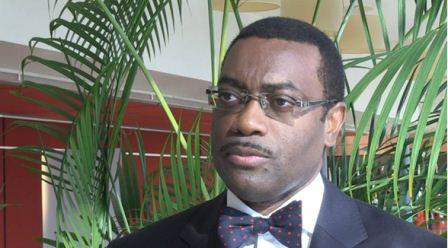
“This is a significant expansion of our support to the private sector, which will play a critical role in Africa’s economic transformation,” said AfDB President, Akinwumi Adesina.
“The scaling up of the Enhanced Private Sector Assistance for Africa Initiative will help increase access to electricity, boost the industrialization of the continent and improve the quality of millions of lives in Africa. These are all key components of our High 5s. We are proud to partner with Japan, one of our key strategic partners, in this endeavor.”
The High 5s are the Bank’s five areas of focus to advance the agenda of Africa’s economic transformation over the next 10 years: Light up and Power Africa, Feed Africa, Integrate Africa, Industrialize Africa, and Improve the quality of life for the people of Africa.
Announced at the first-ever TICAD Summit held on African soil, the third phase of EPSA will focus on economic infrastructure (transport, energy, etc.) as well as social infrastructure (health, education, nutrition). EPSA was launched at the G8 Summit in Gleneagles in 2005.
Its scope has been expanded to include sectors such as education and health, which also contribute to promoting private sector development. Japan provided the equivalent of US$ 1 billion of concessional loans under EPSA-1 (2005-2011) and is providing US$ 2 billion under the current EPSA-2 (2012-2016).
The Enhanced Private Sector Assistance for Africa Initiative has played a key role in the development of regional infrastructure. It has helped increase the AfDB’s private sector operations, which have expanded nearly ten-fold over the lifespan of the first phase and almost doubled since the start of EPSA 2.
Background
The Enhanced Private Sector Assistance for Africa (EPSA) Initiative is a framework to support implementation of the AfDB’s Strategy for Private Sector Development. Designed in partnership with the Government of Japan, it draws on successful experiences in Asia and around the globe. It is built around three components:
- The Accelerated Co-Financing Facility for Africa(ACFA) is a sovereign co-financing arrangement between AfDB and JICA, where JICA lends on preferential terms to borrowers under this scheme.
- The Non-Sovereign Loan (NSL) is a line of credit from JICA to AfDB on concessional terms to help fund the Bank’s private sector operations.
- The Fund for African Private Sector Assistance(FAPA) is a Multi-Donor Trust Fund for technical assistance and capacity building for the Bank’s public and private sector clients. The Government of Japan is the major contributor to the Fund, which is managed by the AfDB.