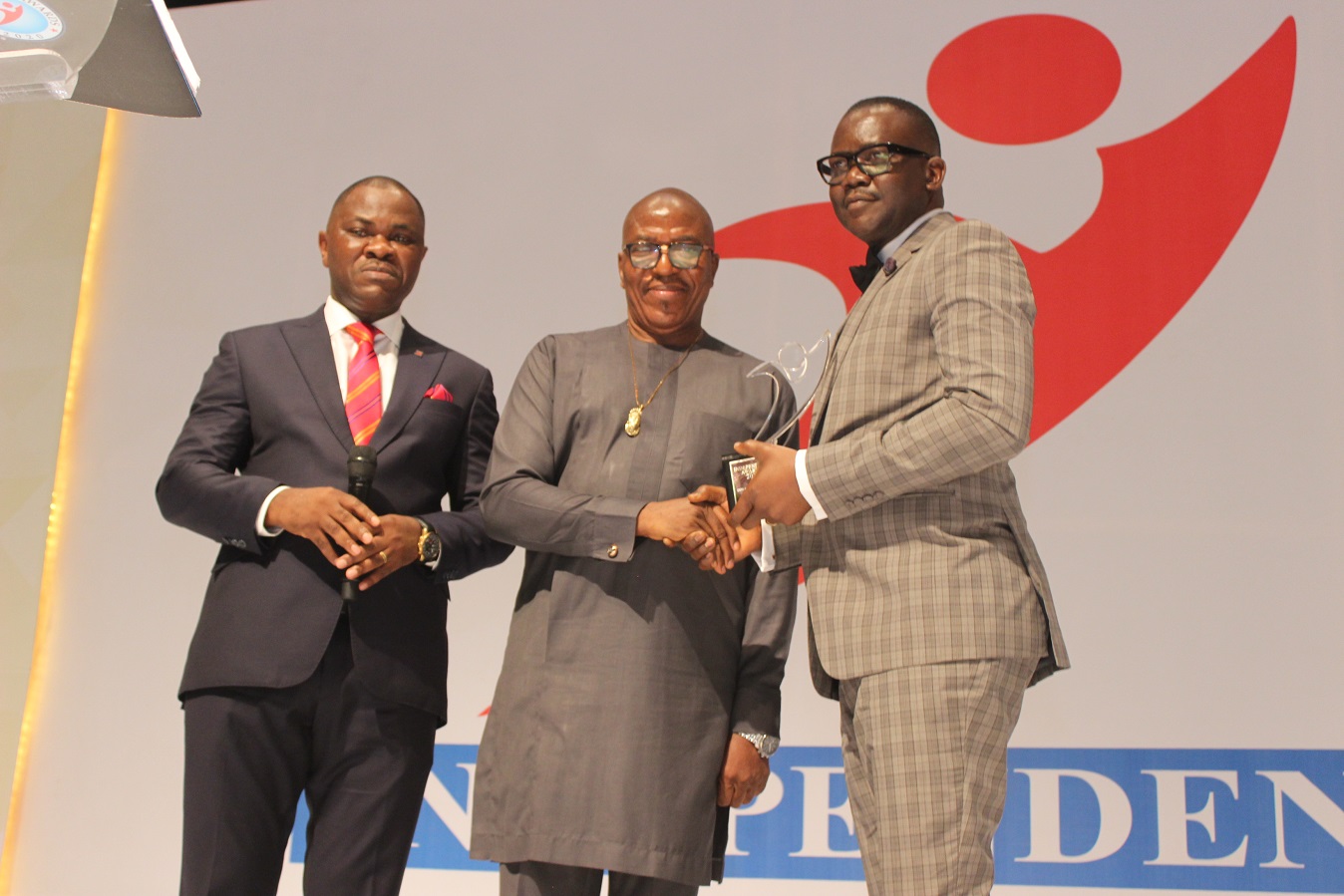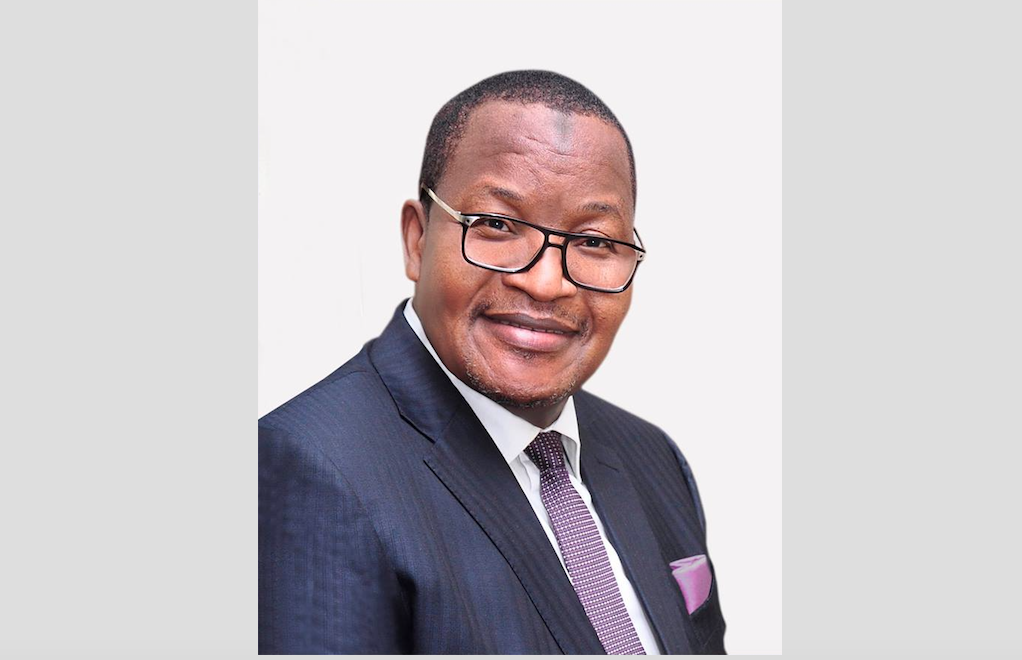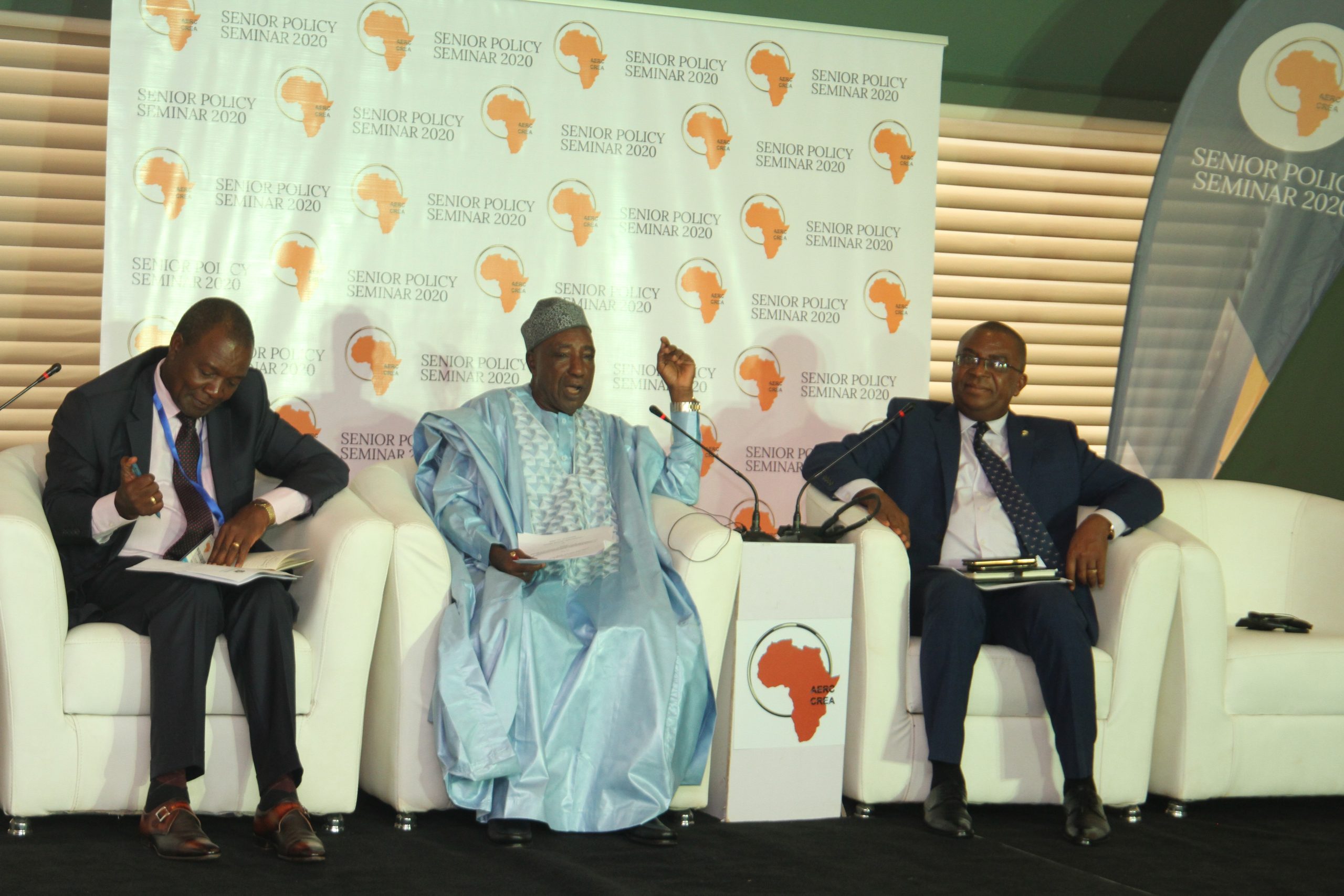

(L-R) Prof. Njuguna Ndung’u, Executive Director, African Economic Research Consortium; Alhaji Sani Nanono, Honourable Minister of Agriculture and Rural Development and Mr. Isaac Okoroafor, Director, Corporate Communications, Central Bank of Nigeria at the opening session of the 22nd Senior Policy Seminar in Abuja.
Food and nutrition security dominated discussions at the just concluded Senior Policy Seminar hosted by the African Economic Research Consortium (AERC), in partnership with the Central Bank of Nigeria (CBN).
The two-day conference which held from March 9 to 10, 2020 and was supported by the Bill and Melinda Gates Foundation, had the theme: ‘Agriculture and Food Policies for Better Nutrition Outcomes in Africa’.
Prof. Njunguna Ndung’u, the Executive Director of AERC, in his opening address, emphasised that the seminar focused on Agriculture, Food Security and Nutrition Outcomes in Africa because agriculture is the main stay of most economies and contributes to wealth, economic activity, employment and nutrition welfare outcomes. He added that most policies and initiatives in this area have tended to focus on, and to target, agricultural production metrics, and do not directly relate to nutrition outcome and targets or actual food consumption.
“Global Panel of Agriculture and Food Systems for Nutrition points out that there is a dearth of quality data to properly inform policies on nutrition. This has tended to limit the effectiveness of agricultural policies in improving nutrition outcomes. In addition to data challenges, there has been lack of high-quality policy analyses that explore the effect of agricultural policies on nutrition. We need now to combine forces to achieve the best nutrition outcomes,” he said.
Ndung’ualso reiterated that AERC will continually focus on quality research and strengthen policy influence. The AERC, known for training policy makers across Africa, is dedicated to strengthening capacity building for conducting policy-oriented research, policy analyses and informed policy. Currently, the organisation has select universities that run their programmes in Policy Making for students at both Masters Degree and PhD levels. Some of these partnering institutions are University of Ibadan, University of Benin, University of Dare Salaam, University of Cape Town and University of Nairobi.
There were various paper presentations, discussions and floor discussions on relevant topics such as agricultural growth patterns, nutrition transitions, the triple burden of malnutrition in Africa, diet diversity and how to combat malnutrition through food policies.
Although it was agreed that Africa was not yet winning the war against acute hunger and malnutrition, the policy makers commended governments across Africa for realizing the importance of increasing shares of national budgets to agriculture, health and nutrition.
There was also a Policy Roundtable where it was resolved that increasing household income can help address malnutrition. It was also said that science, technology and innovation were key in improving malnutrition.
The Senior Policy Seminar had in attendance senior policy makers and thought leaders from around the continent. They included: Alhaji Sani Nanono, Honourable Minister of Agriculture and Rural Development; Otunba Adeniyi Adebayo, Honourable Minister of Industry, Trade and Investment; Mr. Isaac Okoroafor, Director, Corporate Communications, CBN; Hon. Issa-Toure Salahaddine, Deputy Speaker, National Assembly, Togo; Hon. Onyoti Adigo Nyikwac, Minister of Agriculture and Food Security, South Sudan and Hon. Marcos Alexandre Nhunga, Minister of Agriculture and Forestry, Liberia.
Others were Prof. Osita Ogbu, former Minister for Planning and National Development; Hon. Lucious Kanyumba, former Minister for Education, Malawi; Ms. Barbra Barungi, former Lead Economist, AfDB and Dr. Esi Colecraft from the University of Ghana.