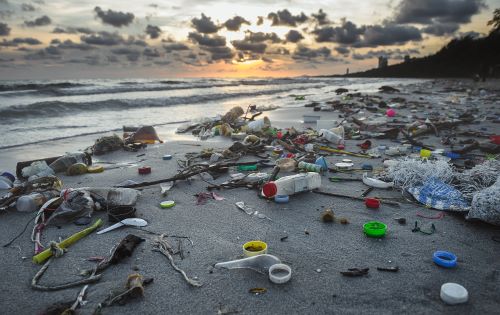

Environmental activists and climate change advocates seized the opportunity of a webinar hosted by Unity Bank to call for urgent and coordinated action to tackle Nigeria’s growing plastic pollution crisis, describing it as one of the greatest environmental threats facing the country today.
The call was made at the event marking this year’s World Environment Day facilitated by Unity Bank’s Sustainability Team to fashion out innovative strategies to curb plastic pollution in Nigeria in line with this year’s global theme: “Ending Plastic Pollution.”
In his remarks, Mr. Usman Abdulkadir, Executive Director, Risk Management, Unity Bank Plc, reaffirmed the Bank’s commitment to sustainability, adding that issues like plastic pollution carry deep risk implications for businesses and communities.
“Environmental degradation is increasingly a business risk, not just a corporate social concern,” Mr. Abdulkadir stated. “We must all begin to view environmental stewardship as a duty that cuts across sectors – finance, government, industry, and civil society. Unity Bank remains committed to integrating ESG principles into its risk frameworks and sustainability agenda.”
Guest speakers included leading waste management entrepreneurs and environmental activists such as Sunday Kolawole Sholanke, Co-founder/CEO of PETsPoint Recycling Nigeria, and Omoh Alokwe, Co-founder/CEO of Street Waste Company Limited.
Speaking at the Webinar, Mr. Sholanke decried the alarming volume of plastic waste in Nigeria, putting estimates on the country’s waste generation to about 596 million metric tonnes annually, with 88% of it neither reclaimed nor recycled.
“Nigeria ranks as the 9th highest contributor to global plastic pollution. Much of Nigeria’s plastic waste ends up in landfills, drainage systems, and water bodies, causing extensive environmental damage and posing serious health risks,” he explained.
He also shared startling global statistics: “Over one million plastic bottles and 10 million plastic bags are produced every minute. In 2020 alone, eight million tons of plastic bottles were produced globally, with less than 30% collected and under 10% recycled. The rest is dumped, burned, or abandoned in the environment, worsening risks of flooding, climate disruption, and disease.”
He identified poor waste management culture, low public awareness, and lack of community collection infrastructure as major factors aggravating the Nigeria’s plastic waste crisis.
Calling on the financial services sector to be more proactive, Sholanke urged Banks to invest in green financing by increasing access to affordable credit for green businesses and eco-friendly initiatives.
Also speaking, Omoh Alokwe emphasised the role of regulators in strengthening enforcement and updating policy frameworks to reduce harmful practices that fuel the global plastic crisis.
Also speaking in the same vein, Mr. Ibukun Coker, Head of Strategy and Innovation at Unity Bank Plc emphasised the Bank’s commitment to sustainable practices and environmental protection, highlighting the role of the financial sector in driving meaningful change.
“Plastic pollution is not just an environmental issue, it is an economic and public health crisis,” said Mr. Coker. “At Unity Bank, we believe that sustainability should be more than a policy; it must be embedded in how we operate, the projects we finance, and the partnerships we build.”
The webinar offered a platform for robust dialogue around sustainable actions and innovative solutions that can mitigate the escalating threat of plastic pollution and promote environmental protection.
Unity Bank has consistently championed environmental causes, including its annual Earth Day partnerships with non-profits such as RESWAYE to clean the Royal Beach in Elegushi, Lagos, part of its mission to protect marine ecosystems.
In its most recent Earth Day campaign, the Bank challenged every staff member across 32 states to plant a tree in their locality, driving a grassroots reforestation movement and reinforcing environmental awareness.