Friday, March 13, 2026
32.5 C
Lagos

Unilever Nigeria Plc: Keeping Shareholders Smiling with N5.29bn Dividend

Following 2011’s impressive business results, Unilever Nigeria Plc’s shareholders received a dividend of N1.40 per share at the Company’s 87th Annual General Meeting held in May 2012.
The dividend payout amounted to N5.29billion (about €24million).
According to the Chairman of Unilever Nigeria Plc, His Majesty Nnaemeka Achebe, the Obi of Onitsha, he was pleased with the Company’s results despite the very challenging operating environment in 2011.
“I am pleased to announce that your company has fared well despite daunting global and local economic circumstances, which were further compounded by the resurgence of violence and insecurity, especially in the northern parts of Nigeria,” he stated at the occasion.

Unilever Nigeria grew Turnover by 16.9 per cent compared to 5.2 per cent in 2010 while earnings per share increased by 31 per cent from N1.11 per share in 2010 to N1.45 per share in 2011. Operating margin also improved from 14.5 per cent in 2010 to 15 per cent in 2011.
Also delighted by the results, the National Chairman of the Progressive Shareholders Association of Nigeria, Mr. Boniface Okezie, noted that Unilever Nigeria had done well despite the socio-economic challenges, adding that he was excited to see the company making further investments to position it for better results in 2012.
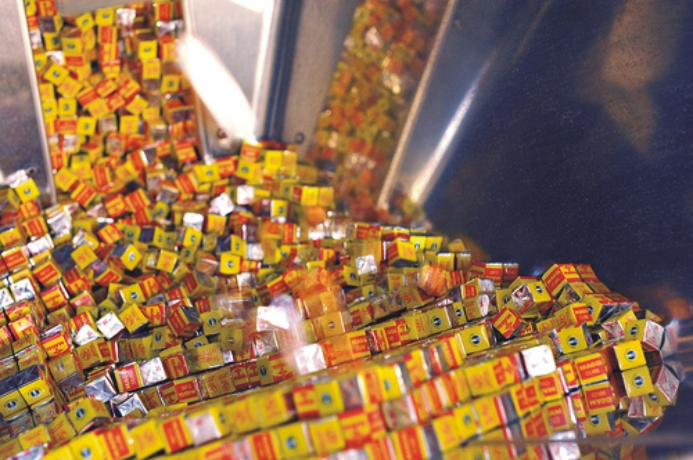
The Unilever Commitment: “Millions of people choose our brands. Our challenge is to offer consumers the healthy choice without compromising taste, convenience and affordability.
From sumptuous soups to sensuous soaps, our products all have one thing in common. They help you get more out of life.”
Unilever Sustainable Living Plan aims to help everyone enjoy a good quality of life while respecting the Planet.
The three big goals to achieve by 2020:
• Halve the environmental footprint of our products
• Help more than 1 billion people take action to improve their health and well-being
• Source 100 per cent of our agricultural raw materials sustainably

spot_img
spot_img
spot_img

Hot this week

NGX Group, IFC, CSCS, WIMBIZ Convene Leaders to Advance Gender Equality at 2026 Ring the Bell Ceremony

Nigerian Exchange Group Plc (NGX Group), in collaboration with...

Union Bank of Nigeria Marks Int Women’s Month 2026 with Inclusion-First “Give to Gain” Campaign

L-R: Chief Talent Officer, Union Bank of Nigeria, Omayuli...

NAICOM: 20 Insurance Firms Seek Capital Verification Ahead July 31 Recapitalisation Deadline

The National Insurance Commission (NAICOM) says 20 operators in...

FG Inaugurates Committee on Grid Asset Management Company to Boost Power Sector

President Bola Tinubu has constituted an 11-member committee to...

Tinubu Approves Posting of 31 Career, 34 Non-Career Ambassadors

President Bola Ahmed Tinubu has approved the postings of...

Topics

Nigeria’s Headline Inflation Rate Drops to 15%

According to Cordros Capital, Nigeria’s headline inflation rate commenced...

Global Airlines Financial Monitor: February 2018

The latest airline financial results indicate that the...

NCDMB Builds Capacity in Health Sector, Donates Hi-tech Equipment, Simulators to Bayelsa Medical University

A state-of-the-art Clinical Skills and Simulation Laboratory, fully equipped...

Linkage Assurance Names Daniel Braie Acting MD/CEO

The Board of Directors, Linkage Assurance Plc has named...

Why NCC Approved 50% Tariff Adjustment Request by Operators

The Nigerian Communications Commission (NCC), pursuant to its power...

Linkage Assurance Staff, Coker Aderonke-Faidat is CIIN’s Ambassador 2023/24

  L-R: Mr. Edwin Igbiti, President, Chartered Insurance Institute of Nigeria (CIIN)...

HEREL Partners Africa Creative Market to Empower African Creatives

L-R: Olaposi Lawore, Yetty D Ogunnubi, Deola Aromiwura, and...

Banks Have Low Expertise in Oil & Gas Business

Nigerian banks have limited k n o w l e d g e and understanding of oil and gas business, thus making it difficult for financial institutions in the country to tailor the right financing model for operators in that sector of the economy. That was a crucial point from the Nigeria Oil & Gas (NOG) 2015 communiqué issued over the weekend According to the communiqué, the restricted lending capacity of indigenous banks and rate disadvantage cannot compare to various money lenders elsewhere while poor credit rating also affect money lenders’ ability to support indigenous companies operating in oil and gas business.
spot_img

Related Articles

Popular Categories

spot_imgspot_img