

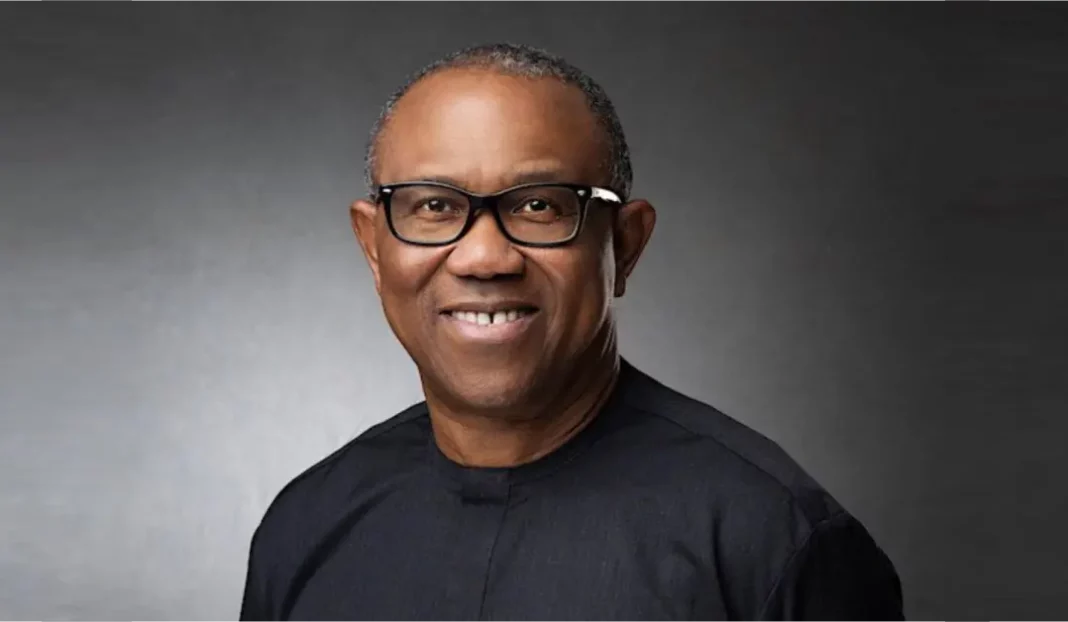
Obi: Competence is Key in 2023, Not Tribe

Mr. Peter Obi, Presidential Candidate of the Labour Party (LP) in the February 25, 2023 presidential election says that competence and energy to perform in office is more important than tribe in 2023. He added that nepotism is a higher level of corruption in Nigeria than stealing public money.

Obi said at a Forum organised by the Nigerian Guild of Editors (NGE) in Lagos that character, competence, ability and commitment to deliver should be the guiding principles for the presidential election next year.

He declared himself ready to provide good governance from day one if given the opportunity to serve the country as president.

“We must get the country to work. Nigeria is not a productive country. That is the result of leadership failure. What we do in this country is sharing. We have revenue sharing formula. We must replace it with production formula. I want to put Nigeria into production which is the foundation for the country to be able to feed herself.”

On the rising debt profile of the country, the LP Presidential Flagbearer said there was really nothing wrong with borrowing but the purpose and management of such borrowing.

“There is nothing wrong with borrowing. Every nation borrows. Every business also borrows. The problem is what you do with the borrowing. We shall borrow for production and we must tell our people the need for the borrowing. A leader must talk to the people. Communication is key. We shall renegotiate the debt if we win the election.”

Obi said the way forward is for the country to maximise generation of revenue by rethinking the annual N6 trillion subsidy regime, which he described as organised crime and then stop the stealing of oil in the creeks.

He promised to actively involve women and youths in his administration if elected.
spot_img
spot_img
spot_img
spot_img
spot_img

Hot this week

CBN Grants JPMorgan Approval-in-Principle to Establish Merchant Bank in Nigeria

The Central Bank of Nigeria (CBN) has granted Approval-in-Principle...

Cardoso Engages Business Leaders on Strengthening Nigeria–China Financial Corridor

The Central Bank of Nigeria (CBN) convened a high-level...

UBA Commences Contempt Proceedings Against WEMPCO Directors over Alleged Disobedience of Court Order

Mr. Lewis Tung and his brother, Robert Tung The Federal...

$242m Petroleum Products Diversion Claim: UBA Secures Court Order Against Vitol, Four Others

A Lagos State High Court has granted interim preservative...

Heirs Insurance Group Wins Prestigious Financial Times–World Bank Group Africa Sustainable Futures Award

L-R: Chinwe Binitie, Co-Head of Partnerships, World Bank Group’s...

Topics

NDIC Appointed Official Liquidator as CBN Revokes Licenses of 46 Microfinance Firms

Following the revocation of the operating licenses of 46...

Fidelity Bank Enhances Maternal and Child Healthcare Delivery at ESUTH

L-R: Public Relations Officer, Enugu State University Teaching Hospital...

NNPC Shares Update  on Northern Oil Exploration Strategy

The Nigerian National Petroleum Company Limited  (NNPC) has provided...

Stanbic IBTC Tops Media Exposure in Oct 2021at 35%

The P + Measurement #MediaIntelligence and Performance Audit Report...

El-Rufai Commends Olam on Agric Investment, Reforms

El-Rufai Commends Olam on Agric Investment, Reform Olam Nigeria,...

WAICA 2025 Confab on Climate Change Set for Nigeria October 12

  The Nigerian insurance industry is set to host the...

IMF Seeks Increase in Banks’ Capital Requirement in West Africa

Citing rising level of non-performing loans at 15.7 per cent and commercial banks’ borrowing from their central banks at nine per cent of liabilities in the West African Economic and Monetary Union (WAEMU), the International Monetary Fund (IMF) has strongly advocated increase in banks’ capital adequacy requirements to maintain sound financial stability for regional economic growth. The Fund observed that while the average capital adequacy ratio of banks (9.3 percent) was above the minimum required (8 percent) at the end of June 2014, it was however lower than the minimum required in half of the countries in the region, just as the level of non-performing loans reached 15.7 percent of total loans.

‘Recapitalisation will Strengthen Banks in Nigeria’

  The International Monetary Fund (IMF) says recapitalisation will strengthen...
spot_img

Related Articles

Popular Categories

spot_imgspot_img