
 The Nestle Brands
The way a product or service is designed determines its use of resources and can help to minimise waste throughout its lifecycle.
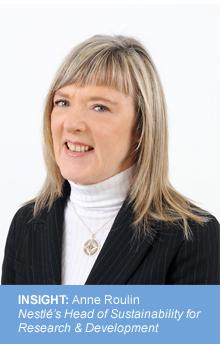
As Head of Sustainability for Research and Development at Nestlé, I recognise the important role good design can play in the preservation of our natural environment.
We’re the world’s largest fast-moving consumer goods company and a sizeable part of our contribution to environmental sustainability depends on our ability to evaluate the impacts of our products from the moment we begin to design or redevelop them.
This means going far beyond simply looking at a product’s packaging and how it is disposed of. It’s about examining everything from agricultural production to ingredient sourcing, processing, manufacture, and the product’s use by consumers.
Faster and More Economic
Life-cycle assessments are the most widely-used methodology for achieving this kind of in-depth evaluation, but they can be costly and take several months to complete.
That’s why we’ve been working hard to find quicker and more economic ways of analysing environmental impacts much earlier in the design process.
We recently made a significant step forward with the development of a new web-based tool called Ecodex, which we’re just starting to roll out across our worldwide business.
We’ve been working consistently to reduce the environmental impact of our products since 1990, but this new development will allow us to make even more progress.
Complex Data
Ecodex was created by our own life cycle assessment experts in partnership with an information technology company called Selerant.
The tool uses information specific to the food and beverage industry to provide rapid and accurate data that allows our product development teams to assess sustainability performance across multiple product lines.
Importantly, it presents complex results in a simple, user-friendly format, so you don’t have to be a life cycle assessment expert to use it.
We’ve helped Selerant to make Ecodex commercially available to other companies because we think it can add considerable value to our industry as a whole.
Sustainable by Design
In parallel with the development of Ecodex, we’ve also reinforced the way we train our product developers to encourage them to take a holistic approach across all the different stages of the value chain.
Over the past two years we’ve set up and trained a global community of sustainability champions within our worldwide research and development network. Part of their role is to support the introduction and deployment of Ecodex.
Moving forward, we’ll continue to educate our teams involved in different stages of product development. This will include holding specific ‘design for sustainability’ sessions, led by our designers, to help the teams think about where the key opportunities are in our value chain to reduce environmental impacts.
These sessions will allow our designers to help solve problems in areas that their work would traditionally not touch.
We’ve already made substantial improvements to the environmental performance of many of our popular products and systems, such as Nescafé Dolce Gusto, and this new approach should enable us to go further, and faster.
By linking our designers to the life cycle assessment process, and providing them with superior tools and a more flexible way of working, I believe we’re putting them in a better position to create even more efficient, lower-impact products for our consumers.