Global Air Freight Growth Slowed to 2.2% in 2015

The International Air Transport Association (IATA) released figures for global air freight markets showing cargo volumes measured in freight tonne kilometers (FTKs) expanded 2.2% in 2015 compared to 2014. This was a slower pace of growth than the 5.0% growth recorded in 2014. The weakness reflects sluggish trade growth in Europe and Asia-Pacific.

After a strong start, air freight volumes began a decline that continued through most of 2015, until some improvements to world trade drove a modest pick-up late in the year. Cargo in Asia-Pacific, accounting for around 39% of freight traffic, expanded by a moderate 2.3%.

The key markets of Europe and North America, which between them comprise around 43% of total cargo traffic, were basically flat in 2015. Latin America suffered a steep decline (-6.0%) while the Middle East grew strongly, up 11.3%. Africa also saw modest growth of 1.2%. The freight load factor (FLF) was at times the lowest for some years, falling to an average 44.1% compared to 45.7% in 2014, driven down by weak demand and capacity expansion.

“2015 was another very difficult year for air cargo. Growth has slowed and revenue is falling. In 2011 air cargo revenue peaked at $67 billion. In 2016 we are not expecting revenue to exceed $51 billion. Efficiency gains are critical as the sector adjusts to shortening global supply chains and evermore competitive market conditions.

We have to adjust to the ‘new normal’ of cargo growing in line with general rates of economic expansion. The industry is moving forward with an e-freight transformation that will modernize processes and improve the value proposition. The faster the industry can make that happen, the better,” said Tony Tyler, IATA’s Director General and CEO.

The industry’s key challenges will be discussed in detail at the World Cargo Symposium (WCS) in Berlin, 15-17 March. The world’s largest gathering of air cargo professionals, the 10th WCS will bring together 1,000 delegates under the theme of ‘The Value of Air Cargo’ to debate solutions for strengthening air cargo and the vital service it performs for the world economy.

Dec 2015 vs. Dec 2014
FTK Growth
AFTK Growth
FLF
International
0.7%
6.6%
47.4%
Domestic
1.4%
6.2%
30.8%
Total Market
0.8%
6.5%
43.9%
 
YTD 2015 vs. YTD  2014
FTK Growth
AFTK Growth
FLF
International
2.5%
6.4%
47.6%
Domestic
0.1%
4.6%
29.6%
Total Market
2.2%
6.1%
44.1%
 
Regional analysis in detail
The global freight growth rate in December was 0.8% compared to December 2014. Within that range there were considerable regional fluctuations.

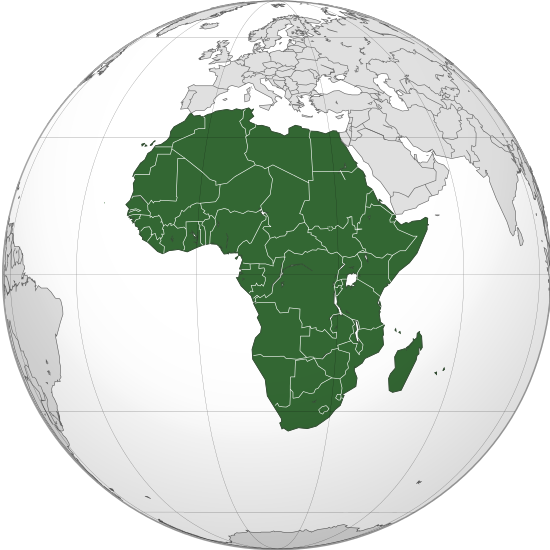
· African airlines FTKs declined by 8.4% in December although for 2015 as a whole the region grew by 1.2%. The FLF in 2015 was 29.7%, the lowest of any region. The under-performance of the Nigerian and South African economies was a challenge throughout the year, but trade growth to and from the region was sufficient to drive a modest expansion in FTKs.
· Asia-Pacific carriers were basically flat in December, expanding just 0.1%. For the whole of 2015, the region grew 2.3%. The FLF for 2015 was 53.9%, the highest of any region. Cargo expansion in the region has been hampered by a shift in Chinese economic policy to favour domestic consumption. A mid-year fall of 8% in trade to/from emerging Asia also led to declines but this appears to have bottomed out, with a rebound in the second half of the year.
· European airlines grew by 1.2% in December but the performance for 2015 in total was a fall of 0.1% compared to 2014. The FLF in 2015 was 44.9%. Economic conditions in the Euro-zone have been subdued, leading to suppressed demand for air freight, but imports have improved in recent months.
· Latin American carriers continued the weak performance of recent months, declining by 6.2% in December and by 6.0% for 2015 as a whole. This was the weakest performance of any region. The average FLF for 2015 was 38.3%. Economic and political conditions in Brazil have worsened, and regional trade activity has been volatile.
· Middle Eastern carriers grew 4.0% in December and for 2015 in total the region expanded 11.3% compared to 2014. The FLF was 42.8% for 2015. The region enjoyed a strong year as network expansion into emerging markets was supported by economic growth in local economies. Political instability and the fall in the oil price may impact on some economies in the region but growth as a whole remains robust enough to support further expansion in 2016.
· North American airlines saw FTKs expand 1.4% in December compared to December 2014. For the year as a whole, North America grew just 0.1%. The 2015 FLF was 34.3%. Growth in 2015 faded after a strong start that was flattered by the West Coast ports strike. Recently there have been mixed signals from economic data, indicating an uncertain outlook for air freight in the coming months.
spot_img
spot_img
spot_img
spot_img
spot_img

Hot this week

Guinea Insurance Completes Recapitalisation, Positions for Market Leadership, Next Phase of Growth

Guinea Insurance Plc has successfully completed its recapitalisation exercise,...

AXA Mansard’s New Digital Tool to Make Vehicle Inspection Fast and Easy

AXA Mansard Insurance, a member of the AXA Group,...

AXA Mansard Health’s WhatApp ChatBot, Karis, to Reduce Waiting Time at Hospital

In an attempt to reduce waiting time and ensure...

AXA Mansard, Lagos DSVA Intensify Campaign Against Domestic, Sexual Violence

AXA Mansard has partnered with the Lagos State Domestic...

Topics

PNC 2024 Ends as NCDMB Commits to Deeper Community, Industry Engagements

The Executive Secretary, Nigerian Content Development and Monitoring Board...

Five Personal Technologies That Will Disrupt Your Business

Personal technologies such as wearables, immersive virtual and augmented...

NSPM Assures Nigerians on New Bank Notes, Debunks Lack of Capacity Claim

The Nigerian Security Printing & Minting Plc (NSPM) has...

Leadway Group Graduates Young Developers to Boost Nigeria’s Tech Talent Pool

Leadway Group, Nigeria’s leading non-banking financial services group, has...

AN EXPOSE ON THE IMPACT OF CLIMATE CHANGE IN NIGERIA- Effects and Preventions-

By Esohe Braimah Africa is the most vulnerable continent to...

Mobile Phones Fast Track Financial Inclusion in Sub-Saharan Africa

Even as mobile money services become part of daily...

Ebola: The Insurance Effect

The Ebola Virus Disease (EVD) pandemic has gripped the...

NCC Rallies Stakeholder Support to Protect Telecom Infrastructure 

The Nigerian Communications Commission (NCC) has reiterated its commitment...
spot_img

Related Articles

Popular Categories

spot_imgspot_img