
By Olawale Rasheed
History is replete with judges who shaped their days and nations, judicial officials who imprinted their footprints in front pages of national archives.
In uncertain times, the nation needs an activist reformer, a man ready to crusade for a transformative judiciary, issuing federalist corrective landmark rulings, focussing on unanimity in apex court decisions and deploying the bench as a weapon of national restructuring.
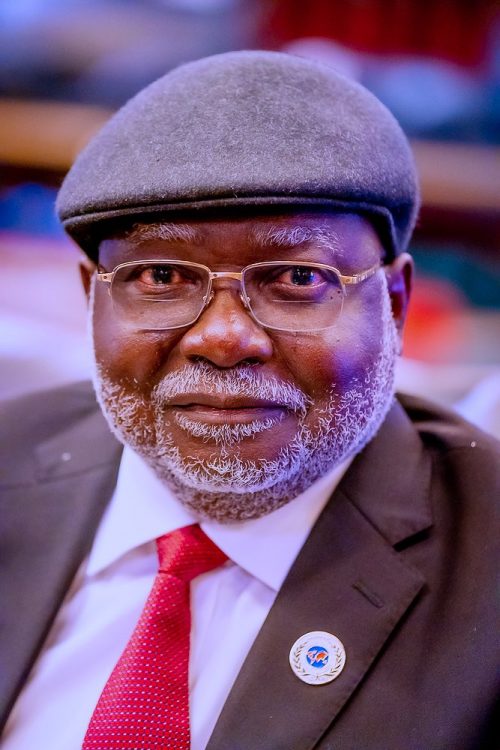
Is Justice Olukayode Emmanuel Ariwoola that man to remake the judiciary for this sacred national tasks?
Bernard Schwartzt in his “Supreme Court Superstars: The Ten”, listed John Marshall, Joseph Story, Roger Brooke Taney, Stephen J. Field, Oliver Wendell Holmes, Louis D. Brandeis, Charles Evans Hughes, Hugo Lafayette Black, Earl Warren and William J. Brennan, Jr as top judges in American history.
Justice Marshall was my favourite as a student journalist especially as he was responsible for constructing and defending both the foundation of judicial power and the principles of American federalism. I read through many of his judgements. His erudition on the bench serviced federalist reform, united the apex court and consolidated the powers of the Supreme Court as a respected equal arm of Federal Government.
In times of uncertainty about American governance modelling, an activist Judge helped a struggling nation out. As Encyclopaedia Britannica put it, ” His (Marshall) own mind had apparently a clear and well-organised concept of the effective government that he believed was needed and was provided by the Constitution.
He wrote with a lucidity, a persuasiveness, and a vigour that gave to his judicial opinions a quality of reasoned inevitability that more than offset an occasional lack in precision of analysis. His tenure gave opportunity for the development of a unified body of constitutional doctrine”. I am of the view that Abuja has among the 13 Supreme Court Justices great minds with such capacities as Marshal.
Strangely, Nigeria is in need of a Justice Marshall who will re-assert the potency of the top court to checkmate the cabal of influence peddling legal practitioners, who will serve as agent of devolution of powers and who will re-instil the culture of incorruptibility within the judicial process.
While Justice Marshal strengthened Federal Government, our own Marshall must empower the states for national survival. His task must entail that of sacrificial patriot who eyes the greatness of great juries in history, whose names remain indelible in national history.
Or let turn to the United Kingdom. Beyond UK judge, William Blackstone who was reputed to have influenced prominent American personalities like Abraham Lincoln, James Kent, Alexander Hamilton, and even John Marshall among others, Lord Denning stands out as the greatest British judge according to former Prime Minister Margret Thatcher.
His judicial activism and extensive judicial pronouncement across all sub-sector of the legal field are breath taking. Even when controversial, Lord Denning remains a guiding light in judicial administration. Again, the Nigerian apex must produce her own Lord Denning in contemporary setting. Nigeria has had many great judges of immense accomplishments.
Late Justice Fatai Williams, the suave scholar judge, was my favourite as a politics writer, going by his expansive contribution to jurisprudence. In Nigeria of today, we need an integrated reincarnation of a Lord Marshal, Lord Denning and Justice Williams to salvage the judiciary and weaponised it as a platform for national political, economic and social reform.
At a time all the leading presidential candidates are pro-restructuring, an activist CJN is imperative to navigate the hurdles of reforms, to speed up slimming down of the over-bloated centre, entrench a culture of fair and just justice administration and to fight corruption in leaps and bound.
As the sitting president aspires to deliver, judicial stumbling blocks won’t be on his way as no agent of status quo would get a cover from the bench. If the fear is about self-preservation and post-service survival, a pro-reform president may actually consider extending tenure of a Supreme Court collective which commit to a new Nigeria. Apex court justices can then be guaranteed of adequate funding for judicial reform especially the modernisation and digitisation of the court processes.
My intention is pontification. I watched the confirmation hearing of the new CJN. His answers to questions from distinguished senators were quite refreshing. With his immaculate style, he advanced a new vision of Nigerian judiciary where administration of justice will be seamless, fast and just. His take on digitisation of court procedures was a 21st century postulations, positioning the apex court as a potential beneficiary of donor funded justice sector reform.
Fluent and passionate, his immediate creation of an inclusive leadership through a committee system signals likelihood of unanimity judgement going forward within the court. His idea of a collaborative agenda among the three arms of government indicates interest to contribute to the question of federalist reform.
Based on the confirmation hearing and recent development at the apex court, Nigeria appears to have a reformer on the revered seat of Chief Justice of the Federation. While the extent of his reformist mind can’t be fully determined now, his inclination towards a robust internal reform, especially of court procedures is reassuring.
The Kenyan Supreme Court used only a week to hear and deliver judgement in the Presidential election disputes. The new CJN looks strongly like a thinker along a faster pace of court hearings even though he hinged his plan on judicial technological innovations and applications.
If Justice Ariwoola is not aspiring to be a ‘table shaker”, historical necessity may force him to have a rethink. If he is not a Justice Marshal known for his federalist advocacy, imperative of the time imposes a responsibility to safe the troubled federation from falling apart.
As things stand, history beckons on him and his colleagues that time is now for a bailout to Nigeria from the judiciary. The moment is now to remake the recent dark past where some lord justices are dragged and humiliated for being part of the national rot.
Nigeria needs landmark rulings to set the tone for national restructuring. Unanimous judgements in service of federalist reform are much needed impetus a President needs to foster life-saving changes. In this delicate time, lord justices must wear the activist robes in a conservative institution, to write their names in gold and to provide urgently needed national direction in this era of political emergency. Our justices must put an end to majority and minority judgements as much as such judgements are tailored towards serving national interest especially restructuring of the lopsided federation.
Several nations experience national emergencies; such turmoil throw up new leaders; heroes are made and history are written. What is to be feared? What should one be scared of?
The call to national duty is a sacred task; embracing it is a consecrated imperative. After all, at the apex of one’s career, what is compelling is the urge to leave an enduring legacy.
Oyo Yoruba CJN is on the threshold of history. His agenda from the confirmation hearing confirms a leader ready to innovate for a new bar and bench. What legacy will he bequeath on the Supreme Court, the Judiciary and the nation at large?
- Olawale Rasheed, CEO, Sahel Consulting and a public affairs analyst, writes from Abuja. He can be reached on [email protected]