Thursday, June 11, 2026
25.2 C
Lagos
Home Blog Page 366

Banks ‘Cooking’ Books for 2O15 Annual Report

0

Some banks are alleged to be manipulating their 2O15 financials to cover up negative indices arising from a difficult business environment last year.

A prominent financial analyst told Business Journal in Lagos that some banks are currently applying soothing balm on their result by way of revising some critical figures to highlight the ‘bright spots’ and downplay the negative angles.

He said: “Without mincing words, 2O15 was a difficult year for the business community in Nigeria. From pre-election, election and post-election uncertainties, to lack of policy direction for over six months from the Buhari administration and continued fall in oil prices that created attendant squeeze on government revenue, the year, to put it mildly, was difficult.

But banks have a special problem because of intense competition amongst the players and no bank wants to declare a loss publicly to avoid negative perception by the banking public. Even the banks that went under recently were still declaring billions of Naira in profit until they descended into the grave.

And that clearly explains the ‘financial engineering’ and ‘performance consolidation’ going on in some banks today to cover up the losses arising from a difficult 2O15 financial year. It is important for regulators and shareholders to keep their eyes open before we beat a return to the dark era of ‘paper profit’ in the sector.”

He said once a bank declares “billions upon billions of profit for 2O15, it should automatically become a red flag to guide regulators to further scrutinise the audited accounts of such a bank. We must differentiate between real profit and manipulated figures.”

However, in a quick reaction, the Central Bank of Nigeria [CBN] debunked the allegation as baseless.

Mr. Ibrahim Muazu, Director, Corporate Communications of the CBN told Business Journal: “It [allegation] is baseless and l do not expect any bank and their external auditors to allow such.”

Market analysts listed other challenges faced by banks in 2O15 to include unstable forex regime and illiquidity, rising cost of operation, declining margins, bearish capital market and dwindling investor confidence in the economy.

Survey Projects Nigeria as Key Consumer Market in Africa

0
Nigerian economy

Consumer spending by a fast-growing middle class is as important a growth driver for Africa as mineral and resource demand, according to a new survey of global logistics executives.

In the survey, which is part of the 2016 Agility Emerging Markets Logistics Index, industry executives rank South Africa, Nigeria, Kenya and Ghana as the most promising markets in Sub-Saharan Africa.

Poor infrastructure, lack of power generation and corruption continue to pose the most risk to African economies, according to the more than 1,100 executives responding to the survey.

Despite recent growth and surging foreign investment, Sub-Saharan Africa remains a challenging frontier for many. Only 21.2% of logistics industry executives surveyed said their companies have operations there. Another 12.7% said they are in the planning stages to enter African markets. More than 43% said they have no plans to set up in Africa.

“The results show a serious disconnect between the perception of the market and actual opportunities. These are some of the world’s fastest-growing economies. Africa’s requirement for logistics services and supply chain expertise is huge and growing every day. At the same time, many of the companies that need logistics to enter the market don’t know how to get started in Africa or aren’t willing to take the risk,” said Geoffrey White, CEO of Agility Africa.

“The market is open for first movers who can navigate risk and nurture African talent. The opportunity is for those seeking to build long-term, sustainable businesses that bring world-class practices and adapt to local conditions.”

The Agility Emerging Markets Logistics Index, now in its 7th year, offers a snapshot of logistics industry sentiment and ranks the world’s 45 leading emerging markets based on their size, business conditions, infrastructure and other factors that make them attractive to logistics providers, freight forwarders, shipping lines, air cargo carriers and distributors.

China, the world’s second-largest economy, remains the leading emerging market by a large margin. Among the countries at the top of the Index rankings this year, UAE (No. 2), India (3) and Malaysia (4) leaped over the commodity-dependent economies of Saudi Arabia (5), Brazil (6) and Indonesia (7). Rounding out the top 10 are Mexico (8), Russia (9) and Turkey (10).

The leading markets in Sub-Saharan Africa are South Africa (No. 16) and Nigeria (17). South Africa has Africa’s most advanced logistics industry and transport infrastructure, but its economy has been hobbled by chronic power shortages, slumping commodity prices, a plunging currency and labor unrest.

Nigeria climbed 10 spots in the 2016 Index, tying Egypt (No. 22) for the biggest gain by any country in the seven years since the Index was first published. Nigeria’s enormous potential has become clearer since its recent decision to update the methods by which it collects economic data. Even so, its economy is heavily reliant on oil and has been hurt by low energy prices.

Other countries in the region fall toward the bottom of the rankings: Ethiopia (37), Tanzania (40), Kenya (43) and Uganda (45). Among countries in North Africa, Morocco ranked No. 20, trailed by Egypt (22), Algeria (30), Tunisia (36) and Libya (41).

Nigeria’s size and growth suggest it should rank near Brazil (No. 6) or Mexico (8) in the overall Index. But Nigeria is no more business-friendly than Venezuela and Uganda, and its weak infrastructure, transport links and customs regime puts it with Bangladesh, Ethiopia and Tanzania in same category.

ITU Unveils Global Platform for Smart Cities

0
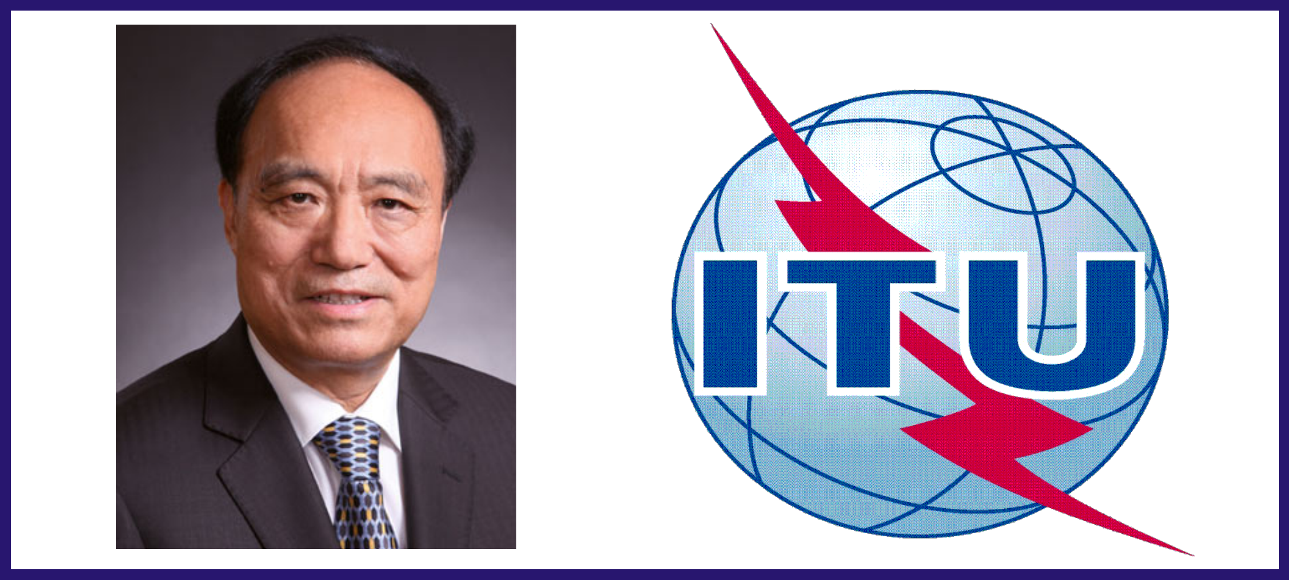
Houlin Zhao
Houlin Zhao

The International Telecommunications Union [ITU] has launched the first World Smart City online community was launched to assist city stakeholders in their efforts to develop Smart Sustainable Cities.

The new community aims to identify the top ‘pain points’ presenting challenges to city development.

The community launch is part of the build-up to the first World Smart City Forum, organised by IEC in partnership with ISO and ITU. The Forum will be held in Singapore on July 13, 2016, co-located with the World Cities Summit.

“The development of Smart Sustainable Cities has become a key policy point to administrations around the world as well as to UN organisations,” said ITU Secretary-General, Houlin Zhao.

“The recognition of the potential of smart cities comes in parallel with recognition that building smartness into an existing city, or developing a smart city from the ground up, is a complex undertaking, calling for improved cooperation and more integrated decision-making by a variety of city stakeholders and global standards bodies, such as ITU, IEC and ISO.”

By year 2050, an estimated 66 per cent of the world’s population will live in urban areas. City leaders face a major challenge in the need to supply these populations with basic resources, such as safe food, clean water and sufficient energy, while ensuring overall economic, social and environmental sustainability. Cities need to achieve substantial improvements in the efficiency with which they operate and use their resources.

Frans Vreeswijk, IEC General Secretary and CEO: “Cities are giant systems with countless subsystems. All of them depend on electricity and hardware to move people and things, collect data and exchange information. Already now, IEC work impacts all of them. More than ever before, many different organisations will need to collaborate to help make cities smarter; technology integration is a special challenge that requires partnerships and alliances. That’s what the online community and Forum is trying to achieve.”

Kevin McKinley, Acting ISO Secretary-General: “Smart cities make sense: they waste less, offer better quality of life and ensure a brighter future for the next generation. But cities face many challenges in their quest to improve. ISO Standards help cities measure and improve their performance, for example with standards for city indicators, sustainable communities and city infrastructures. These Standards provide best practices and harmonised solutions that can be used everywhere, and allow city planners and decision-makers to benefit from global expertise.”

Oxfam Report: 62 People Richer Than Half of World Population

0

The richest 62 people in the world control more than half of the world’s money, according to a new report.

That means that those 62 people have the same collective wealth as the world’s poorest 3.6 billion people, and the gap between rich and poor is growing wider, the report released by Oxfam states.

The report was released Sunday in the lead up to the World Economic Forum in Davos, Switzerland, which is scheduled to start on Wednesday.

“While such extreme inequality is bad for all of us, it’s the poorest among us who suffer the grimmest consequences,” President of Oxfam America Raymond C. Offenheiser said in a statement.

The report released by Oxfam, an organisation dedicated to fighting poverty, states that the poorest 50% of the world’s population is worth an estimated $1.76 trillion, which is also the estimated net worth of the richest 62 people in the world. Their report did not name names, but based their selection on reporting by Forbes.

One of the biggest areas of concern in the report is that the group of the ultra-wealthy are getting wealthier, making the gap between rich and poor more distinct.

Just five years ago, the majority of the world’s wealth was controlled by 388 people. That means that in those five years, the majority of the world’s wealth has been consolidated into the hands of less than one sixth of the number of people who used to control it.

MTN Will Not Pay N1.O4O Tr NCC Fine

0
MTN

MTN Nigeria says it will not pay a dime or penny to the Nigerian Communications Commission [NCC] in respect of the N1.O4 trillion fine imposed on the telecom operator by the industry regulator for failing to deactivate unregistered SIM cards on its network.

A top official of MTN Nigeria confided in Business Journal that the telecom operator has perfected two grand strategies to avoid paying the fine to NCC.

“I can tell you that MTN Nigeria will not pay a single penny or dime to the NCC. We have already instructed the seven Senior Advocates of Nigeria [SANs] handling our legal action against NCC to keep the matter perpetually in court, up to the Supreme Court, by all means necessary until Buhari leaves office or Danbatta, Executive Vice-Chairman of NCC completes his five-year term.

Now, even if Buhari and Danbatta secure a second term, that would be eight and 1O years respectively, but we can keep the case in court beyond 1O years.”

The MTN official insisted that the operator cannot pay such huge fine without going under, arguing that what the NCC did was clearly in bad faith, not what they expected from a regulator.

He said the second strategy is to withdraw from Nigeria and expand to more African nations to make up for any revenue shortfall in terms of the Group.

“Our second strategy is to leave the Nigerian market entirely and expand into other territories in Africa and probably, the Middle East, to cushion the expected revenue gap from Nigeria.”

He called on Nigerians to prevail on the NCC to soft pedal on the fine, which he described as an attempt by the industry regulator to kill MTN Nigeria.

Mutual Benefits Assurance, PZ Partner on Product Insurance

0
Insurance

Mutual Benefits Assurance Plc has initiated a partnership with Coolworld, a subsidiary of PZ Nigeria Plc to provide Product Insurance on Coolworld products.

Mr. Akin Opeodu, Chairman of Mutual Benefits Assurance Plc, described the partnership with Coolworld as one of the ways the company is entrenching and deepening insurance business and penetration in Nigeria.

“This is a mutually beneficial relationship between the two firms and is extremely important for both. There is insurance factor in everything we do. This relationship is one of the ways that Mutual Benefits Assurance Plc is entrenching and deepening insurance in Nigeria.”

Dr. Aking Ogunbiyi, Group Managing Director/CEO of Mutual Benefits said. “This collaboration is not a new journey for us. We have made a strategic decision to deepen insurance in Nigeria and take insurance to the grassroots.

The customers of Coolworld and PZ would be happy to associate with Mutual Benefits Assurance Plc, being the Most Innovative Insurance Company in Africa. Going forward, we would extend such partnerships across West Africa.”

Explaining the details of the partnership, Mr. Segun Omosehin, Managing Director of Mutual Benefits Assurance said. “Today, we are celebrating a special marriage between two great brands. It is our way of redefining the landscape of insurance business in Nigeria to reach the common man in the street.

Mutual Benefits will provide insurance cover to all products purchased from Coolworld nationwide. We would also adopt flexible handling of claims in respect of products purchased through Coolworld.”

Mr. Kolawole Olugbenga, Commercial Director of Coolworld said. “This collaboration between Coolworld and Mutual Benefits Assurance Plc will generate value for customers. The partnership is in terms of product insurance, apart from warranty. It represents a radical change in today’s retail environment.”

Iran’s Return Poses New Questions for Oil Price

0
Oil Rig

Free of international sanctions, unfettered Iranian oil exports might be expected to drive prices further below $30 a barrel.

A report by Reuters says market participants argue that the removal of trade restrictions was so well trailed that price moves on Monday should be limited.

On Saturday, the U.N. nuclear watchdog said Tehran had met its commitments to curtail its nuclear programme, and the United States, European Union [EU] and United Nations [UN] immediately revoked sanctions that had slashed the OPEC member’s oil exports by around two million barrels per day (bpd) since their pre-sanctions 2011 peak to little more than 1 million bpd.

Growing signals from around a month ago that the move would occur earlier than traders initially expected fueled a selloff which sent Brent crude tumbling 24 percent since the beginning of the year, the biggest such fall since the financial crisis of 2008.

Iran has said that it hopes to increase its post-sanctions crude exports by around 1 million bpd within a year, with most analysts expecting an increase of 200,000-500,000 bpd within six months of restrictions ending.

“Iran is now free to sell as much oil as it wants to whomever it likes at whatever price it can get,” said Richard Nephew, Programme Director for Economic Statecraft, Sanctions and Energy Markets at Columbia University’s Center on Global Energy Policy.

“The Iran deal should not be a surprise to the market and has been expected for a long time. I’d argue this is priced in and already reflected in prices. May be there is a small knee jerk reaction and the market opens lower given the pervasive bearishness at the moment but I’d find it hard to believe it has a bigger effect than that,” said Amrita Sen of Consultancy Energy Aspects.

But some market analysts were also worried on the imminent injection of as much as 500,000 bpd of extra Iranian crude into a global market that is already running a surplus of some 1 million bpd.

Iran’s OPEC representative, Mehdi Asali said the country would not hesitate to ramp up production, appearing to contradict comments from other senior Iranian oil officials that Iran would not flood the market at a time of global oversupply.

“We have not moderated our plans regarding increasing output when sanctions are lifted. It will be increased by 500,000 bpd, and by another 500,000 bpd shortly after that,” state news agency IRNA reported.

“I anticipate they will be able to add anywhere from 300-500 thousand barrels per day to the market, probably with an up-front spike as inventories are depleted,” said Nephew, referring to unsold Iranian oil stored on over a dozen Very Large Crude Carrier (VLCC) super-tankers.

Dell Unveils New Latitude Portfolio for Business Professionals … Unveils New Collection of Monitors at CES 2016

0

Dell has announced an expanded portfolio of award-winning Latitude commercial devices that combine industry-leading security, manageability and reliability features with stunning design, infinity edge display and premium materials.

Adapted from the company’s successful line of XPS consumer devices, the new additions across the Latitude and UltraSharp display lines represent the most comprehensive commercial products redesign in company history.

Unveiling the new product range at CES 2016 in Las Vegas, Vice President and General Manager, Commercial Client Solutions at Dell, Kirk Schell, observed that “For more than 20 years, Latitude products have been a leading choice among commercial customers worldwide for their unmatched security, manageability, reliability and support.”

“With the new Latitude line, we are delivering commercial devices employees will desire for being thinner, lighter and more capable than many of the most popular consumer products without compromising on the security and manageability requirements of IT”. Schell added.

The new Latitude portfolio comprises the Dell Latitude 13 7000 Series Ultrabook which is described as the world’s thinnest and lightest 13-inch business-class notebook; The Latitude 12 7000 Series 2-in-1, which provides the full functionality of a laptop and the flexibility of a tablet and also the Latitude 11 5000 Series 2-in-1 built with the world’s best security and manageability features.

Dell also unveiled a new collection of CES Innovation Award-winning monitors, including a stunning OLED monitor, two new InfinityEdge monitors that offer a virtually bezel-less display and a wireless monitor that allow mobile users to connect directly to the display without cables.

The Dell UltraSharp 30 OLED monitor is Dell’s first OLED monitor, bringing together the advantages of OLED display technology to PC professionals working in color-critical environments such as graphic arts and photography.

The Dell UltraSharp InfinityEdge monitors feature the world’s first InfinityEdge displays with ultra-thin borders on all sides.

Designed with a complementing arm that offers greater adjustment flexibility and integrated cable management, this recipient of 2016 CES Awards in Innovation and Eco-Design helps maximise workspace and minimise desktop clutter, while the Dell UltraSharp 24 Wireless monitor is packed with the latest technology allowing users to display and manage content from a Windows laptop and Android smartphone, concurrently.

Air Cote d’Ivoire to Commence Abuja Flights from February 1

0
Aeroplane

Air Côte d’Ivoire just announced that direct flights from Abidjan to Abuja would be possible–starting from February 1, 2016, on a three-time per week basis (Mondays, Wednesdays and Saturdays).

The airline is already operating flights to Nigeria, notably from Abidjan to Lagos.

The Abidjan-Abuja flight costs FCFA183, 000 without tax while that to Lagos costs FCFA220,000, VAT included.

Air Côte d’Ivoire currently operates flights to 23 African countries and has in its fleet three Airbus A319 and an Airbus A320 for the regional network, whereas two bombardiers Dash 8 Q400 serve the domestic network. Nigeria is the Cote d’Ivoire’s first commercial partner since 2008.

Africa Could Record 4.2% Growth by Overcoming Power Sector Challenges

0

Sub-Saharan Africa should prioritise the development of its power industry if it wants to overcome the internal challenges to its development.

This is what emerged from World Bank’s latest report of global economic perspectives.

“Solving the problems of the power sector should be a priority,” the report said. “The implementation of appropriate conditions for a competitive industrial sector mainly depends on the adequate supply in power, it adds.

World Bank projects a growth of 4.2% in 2016, higher than the 3.5% recorded in 2015.

However, it says this will be achieved only if prices of commodities stabilise and power limitations are overcome.

“Concerning these limitations, the report is less optimistic. The power crisis could worsen due to the lack of necessary reforms in many countries,” the institution warns.

The analysis arises in a situation whereby most sub-Saharan countries currently suffer from a severe power crisis. Drought, lack of investment in the energy sector and that of reforms to make it more attractive for private investors are the main reasons for this deficit.

Despite all these challenges, the World Bank is optimistic about the thriving of this sector considering the various efforts made by various countries in order to change the situation.

Unilever, Stallion Group Storm Lagos Shopping Festival 2015

0
lagos shopping festival

Unilever Nigeria Plc, Stallion Group, STACO Insurance Plc and Accion Microfinance Bank Limited have joined a long list of other firms to confirm participation at the maiden Lagos Shopping Festival 2O15 set for December 17, 18 and 19 at Tafawa Balewa Square [TBS], Lagos.

Strategic International Communication of President Buhari’s Agenda

0
Chinedu Moghalu

“Fellow Africans have become even more important publics of Nigeria’s international public relations.”

There is an on-going makeover of the international reputation of Nigeria since President Muhammadu Buhari came into office on May 29th. He has brought credibility to the governance of the country. The immediate implication is that the international community is now better disposed to working with Nigeria, especially with regard to enhancing security.

Lekki Miami Beach Resort Celebrates One Year Anniversary

0

Set out to provide alternative holiday resort in Nigeria for Nigerians and foreigners alike, Lekki Miami Beach Resort (LMBR) Limited has continued to expand, offering value that could be comparable to its peers in other parts of the world.

Olashore Signs MoU with Ireland on Pre-Medical Programme

0

Olashore International School (OIS) recently signed an MoU with the Institute of Education in Ireland to offer foundation courses that will serve as a platform for Olashore Students who wish to study Medicine to easily transit into Medical Universities in Ireland and UK. This was signed during the recent visit of some of the Irish government to Lagos, Nigeria.

Union Bank Donates Two Vehicles to Ogun Govt

0

As part of its Corporate Social Responsibility (CSR) initiatives, Union Bank has donated 2 hilux vehicles to the Ogun State board of internal revenue to boost the agency’s effort in generating internal revenue for the State.