Sunday, November 30, 2025
25.7 C
Lagos
Home Blog Page 264

Global Airlines Financial Monitor: December 2018

0
IATA
  • The industry-wide EBIT profit margin remained broadly unchanged in Q3 relative to a year ago, at a robust 14.7% of revenues. A decline in the margin in the North American region was partly offset by increases elsewhere.
  • Global airline share prices ended 2017 almost 29% higher than where they started, with sizeable gains for European and Asia Pacific airlines. Airline shares outperformed the global equity market by 7 percentage points.
  • Industry-wide passenger yields are currently broadly unchanged from where they were a year ago. Against a backdrop of robust global economic growth, and rising input costs, we forecast yields to rise modestly in 2018.

FG to Obasanjo: “Buhari Has Performed Creditably”

0
Buhari (left) and Obasanjo

Buhari (left) and Obasanjo

The Federal Government has replied former president Olusegun Obasanjo, insisting that President Muhammadu Buhari has indeed performed creditably in office despite dwindling resources as a result of falling oil prices.

Alhaji Lai Mohammed, the Minister of Information and Culture said in a statement in Abuja yesterday that while the FG respects the personal opinion of Obasanjo as contained in his letter of Tuesday to Buhari, the current administration has recorded tremendous achievements within a short period of time in office.

The minister reeled out some of the achievements thus:

This Administration is making steady progress in its determined effort to revamp the economy, and the results are showing:

* Foreign Reserves have peaked at $40b, the highest level in about four years, and up from $24 billion just a year ago, even though when we came in, the price of oil had crashed woefully.

* According to the National Bureau of Statistics (NBC), headline inflation has fallen for 11 consecutive months, standing at 15.37% as at Dec. 2017. This is the lowest inflation rate since Jan 2017, and it has met and surpassed the target set for inflation in the Administration’s Economic Recovery and Growth Plan (ERGP).

* Our determined implementation of the Treasury Single Account (TSA) has stopped the hemorrhaging of the treasury. Some 108 billion Naira has been saved from removal of maintenance fees payable to banks, pre-TSA. The nation is being saved 24.7 billion Naira monthly with the full implementation of the TSA.

*The elimination of ghost workers has saved the nation 120 billion Naira

*At about 1.8 billion dollars, the capital inflows in the second quarter of 2017 were almost double the $908 million in the first quarter.

* In the wake of a stable Naira and increased investment inflows, Nigeria’s stock market emerged one of the best-performing in the world, delivering returns in excess of 40 percent.

* Nigeria rose 24 places on the World Bank’s Ease of Doing Business ranking, and earned a place on the List of Top 10 Reformers in the world.

* According to Q3 2017 figures, agriculture export is up year-on-year by 25%, solid minerals exports are up year-on-year by 78%, raw materials exports are up 70% year-on-year and manufactured goods exports are up 22% year-on-year.

* Government agencies such as the Nigeria Customs Service are reporting highest-ever revenue collection, while JAMB, under the new management appointed by President Buhari in 2016, remitted N7.8 billion to the coffers of the federal government. The total amount remitted by JAMB between 2010 and 2016 was a paltry N51 million!

NIGERIA in 2018: Looking Beneath The Surface

0

The global economy outperformed most predictions in 2017, and the momentum is expected to continue in 2018. Interestingly thus far, the recovery is broad-based across most advanced, emerging, and developing economies.

Back home, Nigeria’s economy has recovered from the recession of 2016, and is forecast to grow at its fastest pace in two years in 2018. All economic indicators point to positive direction and the sound of downside risks is barely perceptible.

While we share consensus view of broadly better economic prospect, we should also mention, in Nigeria’s case, the strong commodity risk factor backing the outlook. As a result, in this edition of our report on Nigeria and its markets, we discuss the outlook for 2018 in three different scenarios and specifically, the implications of each scenario. We believe this is the best course to take during recovery in a sub-optimally diversified economy, with weak stabilizers.  This is the year to look beneath the surface!”

We base the scenarios on developments that are familiar with Nigeria, and hence, consider each of them a likely occurrence. But on balance, we rank the scenarios 2-3-1 in order of likelihood.

Market Statistics:  Wednesday, 24th January 2018

Market Cap (N’bn)                15,759.6
Market Cap (US$’bn)                   51.5
NSE All-Share Index              43,963.40
Daily Performance % (1.0)
Week Performance % (2.1)
YTD Performance %                  15.0
Daily Volume (Million)                  536.4
Daily Value (N’bn)                      5.2
Daily Value (US$’m)        16.9


Equities Market Extends Losses to Third Consecutive Session… NSE ASI Down 96bps
Losses in the equities market were extended into the third consecutive trading session as the All Share Index fell 96bps to close at 43,963.40 points while YTD return further moderated to 15.0%. Accordingly, market capitalization fell to N15.8tn as investors lost N143.0bn.

Although sell pressure was recorded across board, sustained profit taking in banking stocks – GUARANTY (-2.1%), ZENITH (-3.1%) and FBNH (-4.0%) – was the major drag to today’s negative close. Likewise, activity level softened as volume and value traded declined 27.3% and 32.4% to 536.4m units and N5.2bn respectively.

Mixed Sector Performance
Sector Performance was mixed as 3 of 5 indices closed in the red. The Banking index led laggards, closing 3.1% lower following declines in GUARANTY (-2.1%), ZENITH (-3.1%) and ACCESS (-3.9%). Similarly, the Insurance index lost 1.9% on price depreciation in CONTINSURE (-4.7%) and CUSTODIAN (-1.3%) while sell-offs in ETERNA (-4.9%) pulled the Oil & Gas index 0.1% lower.

On the flip side, the Consumer  and Industrial Goods indices appreciated 0.5% apiece, buoyed by buying interest in NIGERIAN BREWERIES (+2.1%),NESTLE (+0.3%) and WAPCO (+1.0%).

Investor Sentiment Stays Flat
Investor sentiment as measured by market breadth (advance/ decline ratio) stayed flat at 0.3x – same as yesterday – consequent on 11 stocks advancing against 43 decliners. Today’s best performing stocks were MAYBAKER (+4.9%), TRANSEXPRESS (+4.0%) and WAPIC (+3.6%) while the worst performers were FCMB (-9.7%), DIAMOND (-9.6%) and FIDELITY (-9.5%).

Following three consecutive days of sustained profit taking by investors, we do not rule out the possibility of some bargain hunting in subsequent trading sessions.

Global Fund to End Modern Slavery Seeks $1.5bn War Chest

0

Speaking at a press conference during the World Economic Forum Annual Meeting in Davos-Klosters, United States Senator Bob Corker of Tennessee, Monique Villa, Chief Executive Officer, Thomson Reuters Foundation, and Gary Haugen, Chief Executive Officer, International Justice Mission, spoke of the urgent need for coordinated global action to end slavery.
Corker highlighted the creation of the Global Fund to End Modern Slavery (GFEMS), a public-private partnership, which will fund programmes to combat modern slavery in the countries where it is most prevalent.

With initial funding from the United States and the United Kingdom, the GFEMS is a bold public-private partnership seeking to develop a $1.5+ billion fund and coordinate a coherent, global strategy to address modern slavery.
Faced with the unprecedented challenge of 40 million people living in modern slavery, GFEMS will collaborate across sectors and geographies with a focus on three core programmatic pillars: rule of law, business engagement and sustaining freedom.

“The United States is grateful to join the UK and other governments around the world who are committed to a comprehensive approach to end modern slavery,” Corker said. “I look forward to engaging other international partners as we embark on what we hope will be a game-changer in this fight.”
In a statement, Jean Baderschneider, Chief Executive Officer of the new Global Fund, emphasized the critical role of business:

“Modern slavery is a crime of economic opportunity. Addressing it in a sustainable way requires a coherent global strategy and mobilisation of resources commensurate with that strategy. This includes close engagement with the private sector as allies and partners. We believe that sustainably ending modern slavery will require market-based solutions and proactive business leadership. There is potential for businesses and investors to drive change like we have never seen before.”
“Effective partnerships are essential to eradicate forced labour,” said Monique Villa, Chief Executive Officer, Thomson Reuters Foundation.

“The Stop Slavery Award, created by us with Anish Kapoor, is a good example of how bold initiatives are able to galvanize corporate engagement. From Adidas to Apple to Walmart, the number of companies applying for the award demonstrates that big corporations are taking action in the fight against slavery and this is very encouraging. To continue bolstering this momentum, we are now partnering with Humanity United to rank the world’s top 300 companies based on their efforts to eradicate forced labour. The index will be called the Know the Chain – Stop Slavery Index.”
“The creation of the Global Fund to End Modern Slavery is an historic opportunity to equip global good intentions with a coherent strategy that could actually end slavery in our lifetimes,” said Gary Haugen, Chief Executive Officer, International Justice Mission.
“We now know that effective law enforcement, excellent survivor services and energized business engagement is necessary to end impunity and put the $150 billion slavery industry out of business for good. Working together we have a unique opportunity to provide freedom to more than 40 million women, men and children currently living in slavery. Now is the time.”
Modelled on the Global Fund to Fight Aids, TB and Malaria, this new initiative provides a vehicle for effective collaboration between the private sector, governments and NGOs to face new global challenges in the Fourth Industrial Revolution.
The World Economic Forum’s 48th Annual Meeting is taking place on 23-26 January 2018 in Davos-Klosters, Switzerland. More than 3,000 leaders from around the world are gathering in a collaborative effort to shape the global, regional and industry agendas, with a commitment to improve the state of the world.

Mutual Benefits Assurance Celebrates 22nd Anniversary

0
Mutual Benefits Assurance

Mutual Benefits Assurance Group last weekend celebrated its 22nd anniversary at a colourful event in Lagos.

Dr. Akin Ogunbiyi, Chairman, Mutual Benefits Assurance Group, described the annual thanksgiving as the most important event for the company as a corporate institution.

He said the event which is held annually is designed to appreciate God for his wonders towards the company since inception.

Mr. Segun Omosehin, the Managing Director of the Group said the thanksgiving is a day set aside by the company to give praises to God for his support towards the organization.

“We appreciate our various stakeholders for honouring us today with their presence.”

The company used the occasion to present long service awards to its employees, ranging from five to 20 years of service to the company.

NSE Records N1.27tr Market Turnover in 2017

0
nse

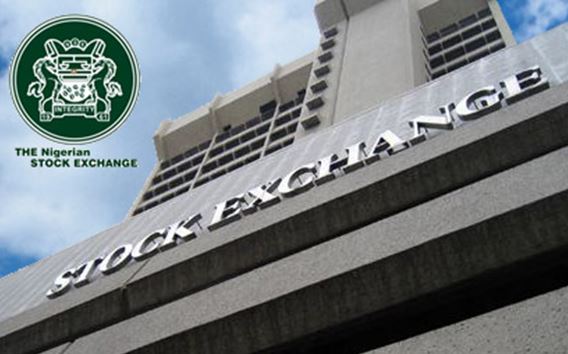
L – R: Tony Ibeziako, Ag. Head, Listings Business Division, The Nigerian Stock Exchange (NSE); Bola Adeeko, Head, Shared Services Division, NSE; Oscar N. Onyema, Chief Executive Officer, NSE; Tinuade Awe, Executive Director, Regulation, NSE and Ade Ewuosho, Ag. Head, Trading Business Division, NSE during the presentation of 2017 Market Recap & Outlook for 2018 at the Exchange.

The Nigerian Stock Exchange (NSE) held its 2017 Market Recap & Outlook for 2018  Lagos. This annual event is a forum for the Chief Executive Officer of NSE, Mr. Oscar N. Onyema, to brief the stockbroking community, analysts, media and other stakeholders, on the performance of the market in the preceding year and give prognosis for the market for the New Year, 2018.

In his presentation, Mr. Onyema noted that NSE recovered from the macroeconomic overhang of the commodity down cycle to become the third best performing market in 2017 globally, with a 42 percent return in the NSE ASI index. He attributed this performance, in part, to Central Bank’s monetary policies that resulted in increased liquidity in the foreign exchange market.

According to Onyema, the equity market activity skyrocketed from 2016 levels, as market turnover increased by 121% to N1.27 trillion from N0.58 trillion. He stated that “IPO activity in the year remained mute, however, there were several other positive indicators.

The value of supplementary listings increased by 27%, bringing the total value of equity issues in 2017 to N408 billion.” On bonds, Onyema remarked that the NSE fixed income market recorded mixed performance. “New bond issuances increased over the previous year, while bond yields gradually moderated from 2016 levels amidst easing inflation and greater FX stability. Yields across various tenors declined between 0.4% and 1.5%, and market turnover declined by 24% in 2017, as investors sought higher returns in alternative product classes.

However, supplementary issuances by the Federal Government saw bond market capitalization increase by 34% year-on-year”. “The NSE’s ETF market witnessed increased activity across key metrics in 2017, recording a 272% year-onyear growth in trade volumes, 33% growth in turnover and a 40% year-on-year increase in market capitalization to close the year at N6.69 billion” he added.

Onyema also noted that NSE made steady progress on its strategic focus areas set out at the beginning of 2017.

“Demutualization remained a key strategic focus in the year under review. Through targeted engagement efforts with our members, Securities and Exchange Commission (SEC), the National Assembly (NASS), NSE members including Association of Stockbroking Houses of Nigeria (ASHON), Corporate Affairs Commission (CAC) and other key stakeholders, we achieved the broad-based support required to secure approval for demutualization from The Exchange’s members and successfully progressed the Demutualization Bill through the first and second reading and public hearing stages of the law making process”.

“In 2017, we amplified our efforts to establish West Africa’s first derivatives market and achieved a number of key milestones during the year. These include the: (i) completion of draft rules; (ii) development of product specifications; and (iii) market-wide trainings on derivatives and Clearing Counterparty (CCP) transactions. We also worked to create and enhance legal and regulatory frameworks which support derivative instruments, and have made significant progress towards securing approvals to operationalize these frameworks”, he said.

In keeping with its objective of taking a vigorous and adaptive approach to strategy execution, Onyema stated that NSE re-assessed its strategic agenda in light of changing dynamics in both the operating environment and the global exchange landscape against the backdrop of the fourth industrial revolution. This culminated in a new corporate strategy for the 2018 – 2021 period.

“Our efforts will be geared at satisfying our customers, boosting our domestic retail segment, and enhancing our organization for a demutualized structure”. Speaking on the prognosis for 2018, Onyema noted that the outlook for the Nigerian capital market is encouraging.

“Indeed, to some extent, political activities and currency movements will have some effect on the market, but we expect that such impacts will be short lived and the performance of the underlying business activities will ultimately determine market performance.”

On its part, the NSE is on track to become a more agile and flexible demutualized securities exchange. “We are hopeful that the Demutualization Bill will be signed into law in 2018, and are working assiduously with our Advisers to fine-tune outstanding aspects of the demutualization project as well as providing clarity and transparency on the process via regular engagement with all our valued stakeholders”.

“In 2018, NSE will launch Exchange Traded Derivative instruments and continue to engage with the government on privatization and listing of state owned enterprises in collaboration with the private sector. We also plan to maintain our role as an advocate for the adoption and implementation of market friendly policies.”

Africa, ME ICT Industry Meets in Dubai for ‘IDC Directions 2018’

0

The most influential technology vendors, telecommunications operators, and IT service providers from across the Middle East, Turkey, and Africa (META) will gather in Dubai this week as International Data Corporation (IDC) hosts ‘IDC Directions 2018’, an event specially tailored for the region’s leading ICT players to explore the challenges and opportunities that lie in wait for the coming 12 months.

Taking place at The Address Dubai Marina on Tuesday, January 23, ‘IDC Directions 2018’ has been designed to provide senior executives, regional leaders, and strategists from across the ICT industry with a unique platform for engaging with respected global and regional IDC thought leaders as they examine the latest developments in various key markets and outline their predictions for the year ahead.

Running under the theme ‘Digital Economy at a Tipping Point: ICT Market Outlook for META in 2018’, the event will feature insights from IDC’s Chief Research Officer and Executive Vice President for Worldwide Products, Mr. Crawford Del Prete, as he presents his outlook for the global ICT industry and examines the role that “multiplied innovation” will play in furthering the development of the region’s digital transformation (DX) economy.

“The ICT industry is entering the 2nd chapter of the 3rd Platform era, built on technologies and business models that will dramatically accelerate – and scale – digital innovation,” says Del Prete. “The META region finds itself at the DX tipping point and is well poised to accelerate its adoption of 3rd Platform technologies like cloud and big data analytics, as well as highly disruptive innovation accelerators such as the Internet of Things, artificial intelligence/cognitive systems, robotics, augmented/virtual reality, 3D printing, and Blockchain. The emergence and widespread adoption of these technologies will accelerate innovation and transform the ICT landscape as we know it.”

With five individually themed technology tracks to choose from, the event’s fine-tuned agenda will explore the major drivers of this transformation, while also zooming in on the latest developments in Saudi Arabia, Sub-Saharan Africa, Turkey, the UAE, and the rest of the Middle East via a series of sessions that will contextualise the technology-led innovation and entrepreneurship taking root in many cities and countries across the region.

“The next two to three years are expected to be dynamic, disruptive, and laced with innovation,” says Jyoti Lalchandani, IDC’s Group Vice President and regional managing director for META, who will also be speaking at the event.

“Rapid change will present significant opportunities for technology providers across the industry landscape. However, in order to effectively tap into these opportunities, they will be required to make several smart bets on the country markets they target, the products and services they provide, and the go-to-market campaigns they put into place.”

‘IDC Directions 2018’ will provide all the background required to help shape these decisions, while senior IDC analysts will also be available throughout the event to discuss individual situations, challenges, and opportunities with attendees.

Corruption: A Burden on Nigerian Businesses—Allianz Report

0

The Allianz Risk Barometer 2018 report reveals theft, fraud and corruption as the top risk in Nigeria with 38% of responses, up from #4 in 2017. Market developments remains unchanged at #2 at 36% of responses and changes in legislation & regulation also remains unmoved at #3 with 33% of responses. Fire, explosion and power blackouts(both #7 with 16% of responses) emerged as two new risks in the top 10.

Cyber incidents remains at #5 at 29%, political risks and violence is unmoved at #6 with 24%, macroeconomic developments is #4 at 31% of responses down from #1 in 2017, business interruption moves down slightly from #8 to #9 with 16% responses and new technologies maintains the 10th position at 11%. The report is published annually by Allianz Global Corporate & Specialty (AGCS), and is based on the insight of a record 1,911 risk experts from 80 countries.

Studies[1] show that corruption is a significant obstacle to business in Nigeria. Companies are very likely to encounter bribery and other corrupt practices. Corruption also features as a top 10 risk in West African countries, Togo and Ivory Coast, which participated in the survey for the first time. To provide financial protection for managers against the consequences of actual or alleged “wrongful acts” when acting in the scope of their managerial duties, companies may consider taking up Director & Officers (D&O) insurance. The D&O policy will pay for defense costs and financial losses. In addition, extensions to many D&O policies also cover costs for managers generated by administrative and criminal proceedings or in the course of investigations by regulators or criminal prosecutors.

The market and economic conditions are improving. “Recently, Nigeria resolved a six-quarter recession and an exchange rate crisis. A better business environment, as well as the recovery of oil prices should help accelerate growth in 2018 to over 2.5% from 0.8% in 2017. However, the inflation persistence to around 12.9% in 2018 may well trigger another depreciation pressure on the Naira,” says Stéphane Colliac, Senior Economist from AGCS sister company, Euler Hermes.

Businesses’ perception of the threat posed by political risks and violence remains relatively unchanged year-on-year. However, respondents are more worried about terrorism. Businesses do not have to be the direct victim to feel the effects. If an attack occurs nearby, the surrounding area may be closed, impacting operations. Globally, a general trend of increased political activism can be anticipated, causing further disruption.

Business interruption (BI) can have a tremendous effect on a company’s revenues. Yet its impact is one of the hardest risks to measure. “No business is too small to be impacted,” says AGCS Africa CEO Thusang Mahlangu, “A severe interruption can even have a terminal impact, particularly for smaller companies. But as many businesses transition from being rich in physical assets to deriving more value from intangibles and services, increasingly, BI is being triggered by non-traditional risk exposures which don’t cause physical damage but result in lost income – so-called nondamage business interruption (NDBI).”

Fire, explosion, which is a major source of BI, is a serious concern for Nigerian businesses, especially considering the many incidents that occurred in 2017. As one of the world’s largest oil and gas producers, the country is highly susceptible to accidental fires that may interrupt power supplies. It is a known fact that power blackouts are prominent in the region. In fact, in a recent outage across the country, the ministry of power blamed it on a fire at a gas pipeline system that interrupted gas supply and affected the national transmission grid. Local businesses should ensure they have a sufficient backup or risk management plan for the production halt.

Cyber incidents through events such as WannaCry and Petya ransomware attacks brought significant financial losses to a large number of businesses. Cyber threats also vary according to company size or industry. “Small companies are likely to be crippled if hit with a ransomware attack, while larger firms are targets of a greater range of threats, such as the DDoS attacks which can overwhelm systems,” says AGCS Cyber Insurance Expert Nobuhle Nkosi.

New technologies rank as the second top risk for the long-term future after cyber incidents globally, with which it is closely interlinked. Vulnerability of automated or even autonomous or self-learning machines to failure or malicious cyber acts, such as extortion or espionage, will increase in future and could have a significant impact if critical infrastructure, such as IT networks or power supply, are involved.

“Although there may be fewer smaller losses due to automation and monitoring minimizing the human error factor, this may be replaced by the potential for large-scale losses, once an incident happens,” explains Michael Bruch, Head of Emerging Trends, AGCS. “Businesses also have to prepare for new risks and liabilities as responsibilities shift from human to machine, and therefore to the manufacturer or software supplier. Assignment and coverage of liability will become much more challenging in future.”

AMCON Donation to IDPs Wins USAID-ECR Award

0

R-L: Senior Vice President, Creative Associates International USA, Mr. Earl Gast; Head, Corporate Communications, Asset Management Corporation of Nigeria (AMCON), Mr. Jude Nwauzor; Senior Associate, Creative Associates International USA, Mrs. Susan Ayari; Technical Manager, Creative Associates International USA, Mr. Jake Thomsen; Head, General Support Services, AMCON, Mr. Usman Abubakar and Project Director, USAID-Nigeria Education Crisis Response Project, Mr. Ayo Oladini at the Close-out-Ceremony of the programme in Maiduguri, Borno State…recently. AMCON earlier donated relief materials to IDPs in some affected northeastern states in the course of the programme.

The Asset Management Corporation of Nigeria (AMCON) during the week received yet another award in Maiduguri, the Borno State capital from USAID-Nigeria Education Crisis Response Project. The event was the Close-Out-Ceremony of the programme jointly organized by the ministries of Education in Adamawa, Bauchi, Borno, Gombe and Yobe States in collaboration with USAID- Nigeria Education Crisis Response Project at the government house, Maiduguri.

A citation read on behalf of the organisers at the event, which was chaired by the Deputy Governor of Borno State, Alhaji Usman Mamman Durkwa stated that AMCON was selected for the award in recognition of its contribution to the educational development and wellbeing of out-of-school internally displaced and host community children in Adamawa, Borno and Yobe States under the auspices of the USAID-funded Nigeria Education Crisis Response project 2014 – 2018.

The Deputy Governor, who stood in for the Governor, Alhaji Kashim Shettima at the event thanked AMCON and other individuals and organisations that received awards at the close-out-ceremony for coming to the aid of the governments and people in the affected states in the northeast, especially Borno State, where he disclosed that he incidentally flagged-off the programme when the American agency kick- started the project.

Recall that AMCON last year showed heavy support to some affected children and families that were traumatized and distabilised by the mindless insurgence in the northeast, where violent attacks by extremists forced more than 2.2 million people to flee their homes including over one million children who are presently out of school.

AMCON donated scholastic materials to mainstreamed learners and parents caregivers; starter packs for small scale businesses as well as food items such as rice, beans, semovita, groundnut oil, cooking utensils and salt, among others to the families of Internally Displaced Persons (IDPs) in the northeast.

Between the months of November and December, the donated items were duly distributed to the beneficiaries by a team from USAID-Nigeria Education Crisis Response (USAID-ECR) led by its Project Director, Mr. Ayo Oladini.

The distribution activities was closely supervised by officials of AMCON who irrespective of the dangers in the affected states traversed the length and breadth of the affected states to ensure that the items got to all the beneficiaries.

The organisers stated that such rare commitment AMCON showed to the whole project as well as the human and material resources they committed to the distribution exercise against all odds prompted the organisers to recognize AMCON as a dependable partners and supporter at the close-out-ceremony that was attended by the Education Commissioners from the affected states as well as the top echelon of Creative Associates International USA including Mr. Earl Gast, the Senior Vice President; Mr. Semere Solomon, Senior Director; Mrs. Susan Ayari, Senior Associate; Mr. Jake Thomsen, Technical Manager, and Mrs. Nafisa Ado, the Regional Coordinator, Department of International Development, UKAID and a host of others.

NIA Visits NAICOM in Abuja

0

R-L: Mr. Mohammed Kari, Commissioner for Insurance, NAICOM; Mr. Eddie Efekoha, Chairman, Nigerian Insurers Association (NIA); Mr. George Onekhena, Deputy Commissioner for Insurance and Mr. Valentine Ojumah, MD/CEO, FBN Insurance during the courtesy visit of NIA to NAICOM in Abuja.

NITDA Reworks Certification of Indigenous OEMS

0
nitda

The management of the National Information Technology Development Agency (NITDA) would like to bring to the attention of all Information Technology (IT) Indigenous Original Equipment Manufacturers (OEMs), Ministries, Departments and Agencies (MDAs), other government establishments, the organised private sector and the general public that it has reorganised the process of registering and certifying indigenous IT OEMs.

This reorganisation became necessary considering the incessant complaints received from consumers of indigenous IT devices. It is also aimed at facilitating and ensuring adherence to world class standards. This will guarantee the quality and durability of locally assembled devices. NITDA will henceforth mandate quality after-sales-support as a significant part of the registration and certification process and as mandatory part of the operations of all indigenous OEMs.

All previously registered indigenous IT OEMs whose certifications have expired should note that continuance of sale of machines and equipment not tested and certified by NITDA is a violation of existing rules and procedures of the Agency. They are therefore advised to initiate the recertification process with immediate effect. We also call on all customers to demand current certification of NITDA before devices are purchased from indigenous OEMs.

All other entities desirous of assembling and selling IT devices in Nigeria should also apply to the Agency for registration and certification, Interested entities should note that only NITDA registered indigenous OEMs are entitled to the reliefs and incentives as contained in the Regulatory Guidelines for Nigerian Content Development in ICT 2013. The certification process of OEMs and the Regulatory Guidelines for Nigerian Content Development in ICT 2013 are issued and implemented pursuant to Section 6 of the National Information Technology Development Act 2007.

The National Information Technology Development Agency (NITDA) was created in April 2001 to implement the Nigerian Information Technology Policy and co-ordinate general IT development and regulation in the country.

Specifically, Section 6(a & c) of the Act mandates NITDA to create a framework for the planning, research, development, standardization, application, coordination, monitoring, evaluation and regulation of Information Technology practices, activities and systems in Nigeria; and render advisory services in all information technology matters to the public and private sectors.

BPE: ‘NIPOST Will Return to Profitable Path’

0

The planned restructuring and modernisation of the Nigerian Postal Service (NIPOST) will lead to its unbundling to have stand-alone business components that will project the NIPOST brand, provide efficient service and be put on a profitable path.

This was disclosed by the Director General of the Bureau of Public Enterprises (BPE), Mr. Alex A. Okoh on Tuesday, January 16, 2018 when the Postmaster General of the Nigerian Postal Service (NPS), Mr. Bisi Adegbuyi led the management team of the Postal Service on a courtesy visit to the BPE.

He noted that NIPOST has great potentials and that given the right incentives and business strategy, it would become efficient, profitable and provide value for money.

Okoh said that the final decision on the restructuring would be dependent on the outcome of the work of the Advisers engaged for the transaction. He further stressed that although the Bureau has the mandate for such reform, “we are collaborating with all the critical stakeholders to ensure that the reform in NIPOST is carried out without hitches”.

The DG allayed fears of job cuts and pledged to work with the management of NIPOST to accommodate their views to transform “NIPOST into a viable entity.”
He maintained that the Bureau is always conscious of the macroeconomic impact in carrying out its mandate of reform and privatisation, stressing that “the thinking in the Bureau is that we reform responsibly with the overall value delivered for the economy”.

In his response, the Postmaster General of NIPOST, Mr. Bisi Adegbuyi said that the organisation has braced up for the reform and had begun restructuring in readiness for it.

He said NIPOST has been re-engineered to carry out certain services, among them E-commerce, E-insurance, rural banking and a Post Youth Engagement Strategy, aimed at engaging the youth who form the vast population of Nigeria.
Adegbuyi announced that in line with the new services it plans to offer to the Nigerian public, NIPOST’s Electronic Money Order will debut in Nigeria in February this year.

Royal Exchange Prudential Life Targets Customer Service for Growth

0
Mr. Wale Banmore MD/CEO Royal Exchange Prudential Life

Royal Exchange Prudential Life Assurance (REPLA) has been urged to focus on customer service excellence, among other major initiatives, in its quest for market leadership and enhance the company’s status as a dominant player in the life insurance industry in the next three years.

This statement was made by Alhaji Auwalu Muktari, Group Managing Director, Royal Exchange Plc during a strategy and budget retreat session of the company which held in Lagos recently. Alhaji Muktari also encouraged staff of Royal Exchange Prudential Life Assurance, especially those in customer-facing departments, to make service excellence their watchword and guiding principle in their interactions and dealings with clients of the company.

According to Alhaji Muktari, “the customer is at the heart and soul of every organization’s growth and success and it is very important to keep them satisfied if one wants to remain in operation. If the customer is treated well, he/she stays with you, but if they receive shabby and unsatisfactory treatment, they (customers) will take their business elsewhere”.

In his remarks, Mr. Wale Banmore, Managing Director of the company said in addition to service excellence, his company’s focus is also on the deployment and upgrade of a robust retail marketing strategy to take insurance to the grassroots, as well as training/upgrading of its marketing personnel, in line with current realities.

“The future of insurance in Nigeria is the life business, which has not been fully tapped into and for Royal Exchange Prudential to seek market leadership, an effective and efficient policy of customer service, loyalty and retention must be in place in the organisation”, Mr. Banmore added.

“The attainment of these goals, amongst others in the current financial year, will impact positively on the fortunes of the company, increase profitability in the years ahead, improve service delivery to our existing clientele, enable the company to win new retail and corporate accounts and at the same time, boost our premium income and market share”, Mr Banmore added.

He further added, “Management believes strongly in the Royal Exchange brand and its people, it’s most important resource, are more than capable of delivering outstanding service to existing and potential clients, nationwide”.

Mr. Banmore further commended all staff of Royal Exchange Prudential, for their drive and resourcefulness, which has resulted in ‘winning ways’ for the company. He further challenged them to “work even harder in the years ahead, in order to achieve our objective of becoming a world class company by within the next three years”.

The 2-day strategy and budget session had in attendance, all the executive management staff of the company, including the regional and branch managers from the over 20 branches of the company.

Royal Exchange Prudential Life Assurance Company is one of the leading life insurance companies operating in Nigeria, regulated by the Nigerian Insurance Commission (NAICOM) and has consistently maintained all regulations and minimum reporting requirements set by the regulators.

Royal Exchange Prudential Life Assurance Company is a wholly owned subsidiary of Royal Exchange Plc, licensed by the National Insurance Commission to offer the full range of life and endowment insurance products.

With years of experience in the Nigerian insurance market, Royal Exchange Prudential Life Assurance has an enviable reputation for reliability, integrity, professionalism, technical competence and financial strength.

African Energy Stakeholders Plan Investment Partnerships

0

The Powering Africa: Summit will return for a fourth year to the Marriott Marquis Hotel in Washington D.C. from 28 February to 2nd March 2018 to discuss opportunities to develop and invest in power projects on the African continent.
US inter-governmental agencies confirmed for the summit including OPIC, Power Africa and USAID are increasing their objectives for the African continent as well as their involvement in the development of projects from a more varied mix of technologies.
In numerous conversations with EnergyNet, Department of State and Department of Energy communicated a clear determination to play a greater role in Africa, promoting commercial partnerships and progressing deals at an increased pace which will be measured to help navigate bottlenecks more effectively.
Whilst the market has hesitated in some key economies, the likes of Uganda, Cote D’Ivoire, Senegal, Zambia and Ghana are booming with projects including the multibillion dollar Uganda-Tanzania Oil Pipeline, which has investors buzzing.
Simon Gosling, Managing Director of EnergyNet comments:
“South Africa has struggled over the last 24 months to finalise the renewable IPPs, these projects are now progressing because of increased localisation and BPE engagement which will allow these PPAs to finally be signed in the coming weeks. This will trigger the Gas IPP Programme which will be a huge opportunity for foreign investors and gas providers as well as being transformative for the development of the country.”
“On a recent trip to South Africa, U.S. Secretary of Energy Rick Perry noted how energy increases security for the young. An obvious corollary is how increased security increases confidence which enables better learning, stronger ideas and employment, and in the end a more ready and able consumer – which will really turn the lights on across the continent.”
From these perspectives, Africa should be emboldened to negotiate a greater volume of deals and at the 4th Powering Africa Summit a significant number of these conversations will commence.

Analysts Predict Bullish Future for Nigeria’s REITs Market

0

The globally recognised real estate-focused West African Property Investment (WAPI) Summit which recently took place between the 28th and 29th of November 2017 provided delegates with insight into a real estate sector that is set to rebound strongly in 2018.
During the summit, two of the continent’s foremost real estate analysts presented a collaborative white paper: Nigeria’s Real Estate Investment Trust (REITs) market, which provides cause of optimism in one of the most underinvested and marginalised markets of the Nigerian stock market.
The white paper is authored by Stanbic’s head of real estate finance for West Africa, Adeniyi Adeleye, and global commercial real estate provider JLL’s advisory head for Sub-Saharan Africa, Thomas Mundy. It provides an analysis of underlying structural weaknesses that have contributed to the historical negative performance of this market.
Despite its existence for more than ten years, the Nigerian REITs market is underdeveloped with only three established and with a combined market capitalisation of $151 million, or 0.36% of the local stock market.
This low investment is a result of Nigeria’s deficit of A-grade real estate compared to similar urbanising environments combined with an inherently volatile and non-diversified economy overly reliant on crude oil. These factors have created cycles of boom and bust which have negatively impacted the real estate sector and crucially investor confidence. An additional factor cited was a lack of assurance on ambiguous ‘tax pass through’ laws, that have not provided comfort to institutional investors, both local and foreign, resulting in a REITs market that has failed to develop to its potential, which new reforms hope to address.
Mundy and Adeleye predict that an evolving and reformed REITs market will strengthen and deepen capital markets. It will also assist in providing greater transparency and data to a traditionally opaque market, which has resulted in mispricing and undermining confidence in real estate assets. Additional benefits stated include greater diversification of portfolios to help break concentration risk and result in increased exposure for Nigeria’s pension funds to the property market. Currently, the pension fund exposure is 0,36% compared to South Africa’s pension fund exposure to REITs which stands at 2.6%.
Provided that regulatory improvements take place coupled with the sustainable creation of assets to reduce the supply gap in Nigeria, Adeleye and Mundy are optimistic that these changes will lead to a vibrant REITs market, which will transform the real estate sector and the larger economy.