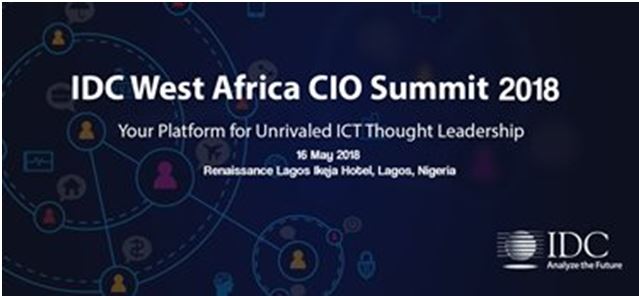

International Data Corporation (IDC) hosted the sixth annual edition of its West Africa CIO Summit in Lagos, Nigeria.
Running under the theme ‘Enabling a Blueprint for Thriving in the Digital Economy’, the Summit attracted more than 100 of the region’s most prominent ICT leaders and showcased innovative strategies for embracing the disruptive power of digital transformation.
Targeted exclusively at C-level executives and above, the event combined thought-provoking presentations with interactive workshops, panel discussions, and case studies, all while facilitating one-to-one meetings between the providers of cutting-edge technology solutions and the influential decision makers responsible for driving their implementation.
“As the digital revolution continues to gather pace, traditional business models are undergoing unprecedented levels of disruption,” said Mark Walker, associate vice president for Sub-Saharan Africa, as he opened the day’s proceedings. “This has triggered a wave of digital transformation across the region, and we are delighted to be here in Lagos today to provide West Africa’s ICT leaders with the expert guidance required to navigate the numerous challenges and roadblocks that lie in wait.”
The Summit’s agenda had been tailored to help CIOs rethink the way they leverage information, implement emerging ICT solutions, and facilitate organisation-wide innovation, with the ultimate aim of making their enterprises more agile, efficient, and productive than ever before. The rise of disruptive automation featured prominently, while in-depth insights were provided into a broad range of pressing issues such as driving digital business at scale, harnessing the power of enterprise mobility, building a resilient cybersecurity strategy, and empowering innovation with cloud.
Delivering the Summit’s keynote address, IDC’s group vice president and regional managing director for the Middle East, Turkey, and Africa, Jyoti Lalchandani, offered compelling advice on breaking through the digital deadlock and identifying inherent organisational weaknesses.
“By 2018, 75% of CIOs will put experiential engagement, data monetisation, or digital business at scale at the top of their agenda,” he said. “However, some 59% of organisations are at a digital impasse today, either running ad hoc digital transformation initiatives or — if they have gained traction in their efforts — the changes are not universally applied across the enterprise. Various factors are holding these companies back, including ineffective organizational models, underdeveloped digital capabilities, outdated KPIs, overly tactical digital roadmaps, and the sheer absence of an enterprise digital platform.”
As well as the numerous ICT industry experts speaking at the event, a number of respected end-user thought leaders were on hand to provide invaluable demand-side perspectives on the latest technology trends that are transforming the region’s organizations. These included the likes of Uchechi Edosomwan, head of IT services at the Nigeria Airtime Management Agency; Esomchi Nwafor, chief technology officer at Custodian & Allied Insurance; Oladimeji Kazeem, general manager of ICT at Pal Pensions; and Samuel Menyah Asah-Kissiedu, head of IT at Millennium Insurance.
IDC’s valued partners for the West Africa CIO Summit 2018 included CSEAN as Affiliate Partner; FABS, VMware, and Schneider Electric as Platinum Partners; Veeam and Fortinet as Gold Partners; and BlueSPACE Africa as Exhibit Partner.