Monday, December 1, 2025
31.7 C
Lagos
Home Blog Page 257

Equities Market Extends Bearish Performance… NSE ASI down 12bps

0
Equities Market Extends Bearish Performance… NSE ASI down 12bps
The bearish performance of the domestic bourse was sustained as the All Share Index (ASI) fell 12bps to settle at 40,763.93 points today while YTD return moderated to 6.6%. Consequently, investors lost N18.4bn as market capitalization declined to N14.7tn.

Yesterday’s negative performance was largely on account of sell-offs in market bellwethers – DANGCEM (-2.1%), GUARANTY (-0.6%) and WAPCO (-5.1%). Despite the bearish performance, activity level strengthened as volume and value traded appreciated 27.7% and 148.3% to 309.4m units and N7.5bn respectively.

The top traded stocks by volume were ZENITH (76.7m), FBNH (24.3m) and NIGERIAN BREWERIES (21.0m) while NIGERIAN BREWERIES (N2.7bn), ZENITH (N2.1bn) and INTBREW (N760.1m) were the top traded stocks by value.

Oil & Gas and Consumer Goods Indices Trend Northwards amidst Bearish Sector Performance
Performance across sectors was broadly bearish as 3 of 5 indices under our coverage closed southwards save the Oil & Gas and Consumer Goods indices.

The Industrial Goods index depreciated the most, shedding 2.7% due to selloffs in DANGCEM (-0.6%) and WAPCO (-5.1%). The Banking and Insurance indices also lost 0.6% and 0.4% respectively on account of profit taking in GUARANTY (-2.1%), WEMA (-3.2%) and CONTINSURE (-5.1%). On the flip side, the Oil & Gas index gained 0.6% following buying interest in FORTE (+4.9%) and ETERNA (+3.4%) while the Consumer Goods index inched 0.3% higher, as a result of bargain hunting in NIGERIAN BREWERIES (+2.9%).

Investor Sentiment Strengthens
Investor sentiment measured by market breadth (advance/decline ratio) improved from 0.7x recorded in the previous session to 0.8x as 19 stocks advanced against 24 stocks that declined.

The top performing stocks were LEARNAFRCA (+9.2%), TRANSCORP (+8.0%) and GLAXOSMITH (+5.6%) while CONTINSURE (-5.1%), UNITY (-4.7%) and FLOURMILL (-4.7%) were the least performing stocks.

Following the bearish performance in yesterday’s session albeit the improvement in investor sentiment, we expect bargain hunting to continue to drive positive market performance in the near term as Q1:2018 earnings reports roll out.

Shared Value Shift: Time for Business to Take the Lead in Africa

0

The business world is changing, and those who do not stay ahead of the curve are sure to be left behind. It is no longer sufficient to take a profit-first business approach: not only is it not sustainable for the long term, but consumers at all levels are now demanding that the business world develop a conscience. Government regulations are slowly following suit, outlining development criteria to begin this critical shift – but is this enough?
The Shared Value business model is the key to unlocking the business growth and profit in addressing social issues. By identifying challenges that intersect with the business’ purpose and then integrating solutions into the business’ operations at every level of the value chain, doing good becomes part and parcel of doing good business. In essence, Shared Value reconnects the business agenda and the social agenda, intertwining profit and progress.
Corporate social responsibility has become entrenched in our public mindset. Business, having played a role in creating some of the challenges faced by society and the environment today, is now expected to lead the charge in facing and solving them.

The instinctive response is often external policies – good works that rely on allocated resources, often as ephemeral as the feel-good PR they generate. This has its place, of course, but in order to make a real change, business must rewrite its strategic DNA.
This is not about ticking a box, doing just enough to get by. This is about going above and beyond to set new standards, and embedding the profit with purpose model in the core business strategy.
This approach is at the centre of the 2018 Africa Shared Value Summit taking place from 24-25 May 2018 at The Maslow conference centre in Sandton, Johannesburg. The Summit brings together business thought leaders, executives and changemakers, including keynote speaker and co-author of the ground-breaking Harvard Business Review article that first outlined the Shared Value strategy, Mark Kramer, to share insights from their business’ Shared Value journey.
Headline sponsor Absa is just one of the notable businesses throwing their weight behind the Summit – other sponsors are Nando’s, Old Mutual, Enel, Discovery, Woolworths and the World Food Programme. Tiso Blackstar, JCDecaux and SAfm are media partners, while OneTravel and The Maslow are travel partners.

The programme (which can be found on the Summit website) features highlight speakers from across the African continent, sharing insights and case studies that focus on the implementation and impact of Shared Value – and how it can align business to the achievement of the UN Sustainable Development Goals.

NIA Raises over N500m for Building Project

0

Mrs Bola Omole, Controller IT,  Research & Statistics, Chairman of the Nigerian Insurers Association, Mr. Eddie Efekoha and Director- General, Mrs. Yetunde Ilori during the chairman’s interactive session with the press on Friday.

Mr. Eddie Efekoha, Chairman, Nigerian Insurers Association (NIA) says the Association has raised over N500 million as initial funding towards the construction of the 7-storey NIA Tower, a new secretariat building for the body.

Efekoha said the Association is sourcing funding for the building project through compulsory levy on member companies and soft loans to ensure immediate commencement of the project which is expected to be completed in a period of two years.

The NIA chairman also said the body has engaged the services of KPMG to develop a 10-year agenda for

rapid and sustainable development of the insurance industry in Nigeria in harmony with the various segments of the market.

On the issue of multiple taxation on the insurance industry, Efekoha said: “We are trying to intervene on behalf of our members that have one or two issues with the Federal Inland Revenue Service (FIRS) to avoid disruption of their day-to-day operations. We have equally reached some level of understanding with the leadership of FIRS to reduce the friction between them and some of our members.”

Going forward, the NIA chairman added: “Our target is to seek amendment of the necessary tax laws to avoid multiple taxation which affects what accrues to our stakeholders. We need to tackle it to enable us to make profit and remain in business. We are also working with the firm of KPMG on the taxation issue.”

Efekoha assured interested stakeholders that the insurance rebranding project will take off very soon.

“We are on course. Member companies are still contributing towards the rebranding project. The National Insurance Commission (NAICOM) has already paid its own portion. We are ready for the rebranding project. Very soon, we shall commence the process.”

World Bank Endorses $13bn Package for Transformational Growth

0

Despite expectations that growth will be robust in the near term, developing countries face challenges to keep up the pace of progress and ensure inclusive, sustainable growth amid structural changes to the global economy.

The World Bank Group is uniquely placed to address global challenges and help countries achieve their goals in today’s increasingly complex development landscape.

This was a key message from the Development Committee, a ministerial-level forum of the World Bank Group and the International Monetary Fund, in a communiqué issued at the close of the institutions’ Spring Meetings in Washington.

The committee reiterated its support for the Bank Group’s twin goals of eliminating extreme poverty and boosting shared prosperity, while recognizing that the Bank Group must strengthen its financial capacity to meet the aspirations of its shareholders, mobilize capital at scale, and respond to global development challenges.

The committee agreed to a capital increase for the International Bank for Reconstruction and Development (IBRD) and the International Finance Corporation (IFC) as part of a package of fundamental reforms that will allow the Bank Group to deliver development results more effectively while becoming more financially sustainable and efficient. It will help the Bank Group continue to lead on global public goods and scale up its support in fragile and conflict-affected situations.

World Bank Group President Jim Yong Kim, in his remarks at the press conference that opened the Spring Meetings, also highlighted the financial strengthening of IDA, the World Bank’s fund for the poorest countries, through an inaugural bond issue that raised $1.5 billion from investors around the world this week.

“IDA’s entry to the global capital markets is historic – the latest transformational shift in how we approach development finance,” he said, adding that “IDA will be able to dramatically scale up financing to help countries meet the 2030 development goals, and deliver greater value to shareholders.”

Both the committee’s communiqué and Kim’s speech at American University prior to the meetings emphasized that the Bank Group must continue to crowd in private sector resources for development, as the main driver of investment, innovation, and jobs. The committee called on the World Bank, IFC, and MIGA to work closely together to mobilize private investment as part of maximizing finance for inclusive growth and poverty reduction.

Kim also underscored the importance of building human capital as the foundation for long-term development progress in the Bank Group’s client countries. At the upcoming Annual Meetings, scheduled for October in Indonesia, the Bank Group will release an index measuring countries’ human capital to help inform government leaders’ decisions on investments in health and education.

While acknowledging a range of pressing challenges for developing countries – a rise in public debt levels for low-income countries, climate and disaster risks, and major gaps in gender equality, among others – the committee reiterated its support for the Bank Group’s role in building global solutions. The committee’s communiqué also noted that the capital increase is tied to adjustments that will update the balance in shareholding among the Bank Group’s member countries.

In his speech, Kim noted that optimism has defined the vision of the World Bank Group from the outset. He quoted U.S. Treasury Secretary Henry Morgenthau, who stated the new organization’s objective at the Bretton Woods Conference in 1944: “A dynamic world economy in which the people of every nation will be able to realize their potentialities in peace, to raise their own standards of living and enjoy increasingly the fruits of material progress. For freedom of opportunity is the foundation for all other freedoms.”

NAICOM Approves Guinea Insurance 2017 Account

0

The National Insurance Commission (NAICOM) has approved the 2017 audited financial statements of underwriting firm – Guinea Insurance Plc.

The approval was granted after a confirmation that Guinea Insurance had substantially complied with the Commission’s regulatory requirements as stated in its letter dated 11th April 2018 and captioned: Approval for Publication of Year 2017 Audited Financial Statements.

In what could better be described as a continuous streak of good performance, the company recorded a marked shift of positive results as at the year ended December 31, 2017

Gross Premium Written grew by 7% from N906.7 million in 2016 to N967.1 in 2017. Net Premium Income also grew by 15% from N649.5 million in 2016 to N747.1 in 2017. Underwriting Profit grew from N453.4 million recorded in 2016 to N501.1 in 2017 representing a growth rate of 11%.

Claims Paid by Guinea Insurance on various classes of insurance decreased by 47% from N304.9 million in 2016 to N161.5 million in 2017, due to operational efficiency in terms of people, processes, technology and communications, the underwriter had said.

However, the period under review was characterized by the whole shooting match of the Monetary Policy Committee holding interest rate at a record high of 14% while the Central Bank had kept the monetary policy rate unchanged since July 2016 with the aim of balancing the need to fight inflation and also stabilising the naira in order to support an economy emerging from its worst slump in 25 years. In spite of these headwinds, the underwriter’s Investment Income recorded a marginal decline of 3% from N215.5 in 2016 to N208.3 in 2017.

Howbeit, a remarkable performance was delivered as the underwriter posted a Profit Before Tax increase of 35% from N176.3 million in 2016 to N237.8 million in 2017; better still, it recorded a whopping Profit After Tax increase of 518% from N40.6 million in 2016 to N251.0 million in 2017.

The underwriter’s zest to be over and done with the challenge of solvency margin, was further consolidated during the year under review as its Solvency Margin grew by 13% from N3.0 billion in 2016 to N3.4 billion in 2017, while increase in Shareholders’ Fund as recorded in its books stood at 16% from N2.9 billion in 2016 to N3.4 billion in 2017.

As evident in Guinea Insurance 2017 Year-end Audited Financial Statements; its Management has been true to its pledge of returning the company on the path of profitability and has further reaffirmed its commitment to continuously deliver values that will positively affect the lives of its stakeholders and leverage best practices.

Chinedu Moghalu Appointed Snr Comm Specialist by UN Body

0
Chinedu Moghalu

Chinedu Moghalu

Chinedu Moghalu, a Nigerian, has been appointed the Senior Communications Specialist / Head, Communications & Advocacy for the Africa Risk Capacity / United Nations World Food Programme, based in Johannesburg, South Africa.

The African Risk Capacity is a Specialised Agency of the African Union that provides African sovereigns with capacity building services for early warning, contingency planning and risk finance towards protecting the livelihoods of their vulnerable citizens against the impact of natural disasters through home-grown, innovative, cost-effective, timely and sustainable solutions.

In this position, Mr. Moghalu will be leading efforts to ensure that the work of ARC in responding to the challenges of climate change and natural disaster risk management is strategically communicated to the Member States and the international community in a way that secures commitment and boosts resource mobilisation.

Prior to this position, Mr. Moghalu, at various times, served as the Regional Head of Nigerian Export-Import Bank (NEXIM) for the Southeast and Delta states in Nigeria; as well the Head of the Corporate Communication Division at its headquarters in Abuja.

Before joining NEXIM Bank, Mr. Moghalu had more than 10 years career with various United Nations agencies, including the ILO and the Global Fund for AIDS, Tuberculosis and Malaria.

Chinedu Moghalu holds a M.Sc. degree in Communications for Development, and other degrees in Political Science, and Law from University of Nigeria, Nsukka and University of Lagos, in Nigeria.

Moghalu is a member of the Nigerian Bar Association, International Bar Association, International Public Relations Association (IPRA), and sits on the Board of the Chigari Foundation.

Ocean & Cargo Wins Warri Port B Concession Bid

0

From Left: Director of Transport in the Bureau of Public Enterprises (BPE), Mallam Aliyu Maigari (who represented the Director General of BPE, Mr. Alex A. Okoh); Chairman of the Technical Committee (TC) of the National Council on Privatisation (NCP), Alhaji M.K Ahmed and a  representative of the Nigerian Ports Authority (NPA), Dr. Sokonte Davies (Executive Director, Marine Operations)  at the Financial Bids  Opening  for the concession of Terminal ‘B’ Warri Port in Abuja.

Ocean and Cargo Terminal Services Limited has emerged the preferred bidder for the concessioning of Terminal B Warri Old Port in Delta State.

At the financial bids opening for the Port Terminal held by the Bureau of Public Enterprises (BPE) in Abuja on Wednesday, April 18, 2018,Ocean and Cargo offered the sum of USA $25, 510,000.64 to emerge the preferred Concessionaire after its rival-Ecomarine Consortium- was disqualified for improper submission of its bidding documents.

Consequently, Ecomarine’s bid price was not announced. However, Ocean and Cargo Terminal Services Limited emergence is subject to the approval of the National Council   on Privatisation (NCP).

The event which was chaired by Alhaji M. K Ahmed,Chiarman of the Technical Committee of the National Council on Privatisation (NCP  was attended by many stakeholders, including the Nigerian Ports Authority (NPA) which was represented by Dr. Sokonte Davies (Executive Director, Marine Operations) who stood in for the Managing Director, Ms. Hadiza  Bala Usman.

Ecomarine had scored 87.84% and Ocean and Cargo Terminal Services Limited, 82.70% in the evaluation of the technical proposals of the prospective bidders.

Speaking at the occasion, Director General of the Bureau of Public Enterprises (BPE), Mr. Alex A. Okoh, who was represented by the Director, Transport Department, Mallam Aliyu Maigari, noted that modest achievements have been recorded at the ports since the port concession programme commenced in 2005, hence the Government’s determination to concession the Terminal ‘B’ Warri Old Port.

He said the objectives of the port concession are to, among others:

  • Increase the efficiency of ports operations;
  • Reduce cost of doing business for ports users;
  • Reduce dependence on the treasury for support to an otherwise economically viable ports sector; and
  • Boost economic activity, increase the GDP and accelerate development to make the Nigerian ports the hub of international freights in west and Central Africa.

Okoh maintained that Government expects much from the preferred bidder for the Terminal “B” Warri Old Port and urged it to focus on the objectives of the port reforms as it goes about its businesses.

He commended the bidders who by their participation in the privatisation programme up to the point of the financial bids opening have demonstrated unalloyed faith in the economic reform programme of the present administration; and by extension, strengthened the Bureau’s resolve to see the bidding process to its conclusion.

The Director General apologised to the bidders for the unduly and unintended long process it took to get to the stage of the financial bid opening and noted that the  terminal has a new quay wall, fenders and apron with a backup space where the concessionaire will develop other infrastructural facilities for efficient port operations.

He thanked all the investors that expressed interest in the Terminal ‘B’ Warri Old Port for their belief and interest in the concession process and pledged to work with the preferred bidder to help create a more broad-based, private sector-led and a prosperous Nigeria.

In his speech, the Chairman of the occasion and Chairman, Technical Committee (TC) of the National Council on Privatisation, Alhaji M. K Ahmed, said that the reform and restructuring of the Transport Sector which commenced in 2000, led to the concession of 26 ports terminals out of the 28 in 2006.

He said the NCP advertised for Expressions of Interest (EOIs) from prospective concessionaires interested in taking over and managing Terminal B Warri Old port on June 23, 2014 and at the deadline for the submission of EOIs, 13 applications were received, out of which seven were pre-qualified for the issuance of bidding documents.

It would be recalled that Associated Maritime Services Limited (AMS) was the concessionaire that won the Warri Old Port Terminal B in 2006. However, when AMS took over the terminal in 2007, it could not operate the facility because the entire terminal was in total disuse. The quay wall had collapsed; the stacking/operation areas caved in and were unable to withstand any crane. All the warehouses and stalls were in bad state.

On 25th April, 2008, NPA temporarily relocated AMS to Warri New Port to enable it undertake the necessary repairs, rehabilitation and reconstruction of the facilities at the terminal. However, this did not materialise as NPA did not have the necessary funds.

Consequently, AMS applied to NPA to convert its stay at the new terminal to a permanent one. BPE and NPA jointly considered the application and with the approval of the NCP, AMS was relocated to the New Warri Terminal ‘A’ to complete the remaining period of its 10 – year concession.

Nigeria Loses N2.5bn to Gas Flaring Yearly

0

BudgIT advises the Nigerian government against the effects of gas flaring, which continues to contribute to irreversible environmental degradation, posing hazards to human health and loss of revenue in the country.

Although, we observed some progress in the fight against routine gas flaring over the last 20 years, analysis by BudgIT’s Extractives team revealed the volume of gas produced increased by 91.13% while the volume of gas flared reduced by only 38.06% between 2001 and 2016.

This implies that oil companies invested more money in gas production activities and are less concerned about sufficiently investing in technologies and infrastructure to control gas flaring.

Research revealed that Nigeria has a potential for the consumption of un-flared gas. BudgIT urges all stakeholders to commit towards putting in place the supply-framework, infrastructure and market systems necessary for un-flared gas to reach its end users needs.

BudgIT urges the government to explore existing technologies and strategies to reduce the amount of gas flared into the atmosphere, though, some irresponsible oil companies are unwilling to make the investment necessary to deploy the right technologies and infrastructure in Nigeria.

Also, the guiding legal framework for deterring gas flaring must be reviewed to prevent companies from taking advantage of inherent loopholes.

Quoting the Finance Minister, Kemi Adeosun: “In current documents that cover the gas flaring penalty, the penalty was drafted as a charge. A charge is tax deductible; so when international oil companies flare the gas, they pay the charge on which they get tax relief.”

BudgIT Team visited communities in the Niger Delta in April 2017 and observed several cases of gas flare near residential neighbourhoods, specifically Polaku and Ogu communities in Bayelsa and Rivers States respectively. The effects of gas flaring are not limited to deformity in children, lung damage, pneumonia, asthma, bronchitis, blood disorders and a host of other fatal health conditions.

According to the Oluseun Onigbinde, BudgIT’s Lead Partner, “BudgIT is calling on the Federal Government to muster the political will necessary to execute Nigeria’s gas master plan and to enforce regulations aimed at tangibly achieving Zero Routine Gas Flaring. Also, proceeds from gas flare penalties can be channelled towards funding health-related research in the Niger Delta region, to protect the residents and improve their living conditions.”

About BudgIT

BudgIT is a civic organisation that applies technology to intersect citizen engagement with institutional improvement, to facilitate societal change. A pioneer in the field of social advocacy melded with technology, BudgIT uses an array of tech tools to simplify the budget and matters of public spending for citizens, with the primary aim of raising the standard of transparency and accountability in government.

NGE Strongly Condemns Mace Whisking Incident in Senate

0
Funke Egbemode President Nigerian Guild of Editors

Funke Egbemode
President
Nigerian Guild of Editors

On Wednesday, April 18, 2018, Nigerians watched in shock as yet another charade unfolded in the Senate with the snatching of the Mace in the Senate, the symbol of authority from the Red Chamber,  by alleged thugs.

Even more reprehensible is the confirmation by the Nigerian Senate that this dastardly act was perpetrated on the instruction of an elected representative of the people.

The Nigerian Guild of Editors (NGE) condemns in very strong terms, any and every act that constitutes an affront to or assault on our fledgling democracy!

Such brigandage and acts akin to hooliganism, as was witnessed on Wednesday, run contrary to the concepts and tenets of the democracy that the Fourth Estate of the Realm struggled to enshrine in our country!

The NGE, like other law-abiding organisations, agencies and persons across all strata, demand that the perpetrators be tracked, arrested and tried in accordance with the country’s constitutional provisions.

The NGE notes and commends the Nigeria Police for swiftly responding to the emergent crisis. However, all security agencies are again enjoined to as a matter of urgency, renew their commitment and restrategise to forestall a recurrence, not only in the National Assembly but throughout the country.

The NGE also reminds all officials, elected or appointed and across all tiers of government, to remember their oath of office, as well as the confidence and trust reposed in them by the Nigerian people.

At all times, their words and deeds must exemplify the highest level of decency, decorum, responsibility and stewardship, in order to remain worthy of the people’s faith and trust.

The NGE restates it’s commitment to promote issues that will deepen sustainable democracy in Nigeria. In this regard, NGE calls on all other constitutional realms to diligently and selflessly play their parts to achieve this goal for our fatherland.

NSE Employees Donates to SOS Children’s Village

0

 L – R shows Temitayo Ade-Peters, Team Lead, CSR, The Nigerian Stock Exchange (NSE); Mr. Gboyega Fadowole-Aje, National Fund Development & Communication Coordinator, SOS Children’s Villages Nigeria and Olumide Orojimi, Head, Corporate Communications Department, NSE during the presentation of cheque to SOS Children’s Village yesterday in Lagos.

L – R shows Mrs. Temitayo Ade-Peters, Team Lead, CSR, The Nigerian Stock Exchange (NSE); Mr. Gboyega Fadowole-Aje, National Fund Development & Communication Coordinator, SOS Children’s Villages Nigeria; Mr. Olumide Orojimi, Head, Corporate Communications Department, NSE and Mr. Ayodeji Adelopo, Programme Director, SOS Children’s Villages Nigeria, Lagos Programme during the presentation of cheque to SOS Children’s Village yesterday in Lagos.

As part of its Employee Give-Back Drive, during the last Easter celebrations, employees of The Nigerian Stock Exchange (“NSE” or “Exchange”) came together to donate money to fund medical bills for 10 children in SOS Children’s Village, Lagos, an initiative which aligns with the Exchange’s Corporate Social Responsibility strategy.

The SOS Children’s Village was established in Nigeria in 1970.The villages are uniquely set-up to provide a home setting for orphans and vulnerable children. An SOS Children’s Village in Nigeria has 10 -12 family houses, each with a mother. Other amenities include medical facilities, kindergarten and primary schools, as well as vocational training centers that offer courses in various educational and vocational skills.

While presenting the cheque to SOS Children’s Village, Mr. Olumide Orojimi, Head, Corporate Communications, The Nigerian Stock Exchange said:

“This gesture is part of the annual employee give-back initiative of the NSE. Giving of money, time and other essentials to the less-privileged is a culture at NSE. Just as the Exchange, promotes the welfare of the people in its host communities, our employees are always very willing to do the same. We are very happy to support SOS and we believe this gesture will assist to improve the total wellbeing of the children and specifically, the provision of medical service for an entire year.”

The Exchange, as part of its Corporate Social Responsibility (CSR) strategy instituted an Employee Volunteering Scheme and Employee Give-Back Initiative in 2015, to encourage employees to give back to the community whilst providing them with hands-on experience and the opportunity to make worthwhile difference to their operating community. For the flagship scheme, the Pacelli School for the Blind and Partially Sighted Children, Lagos, Heart of Gold Children s Hospice, Lagos and Regina Mundi Home for the Elderly, Lagos were chosen as beneficiaries.

In 2017, under this scheme, NSE employees donated various food and household items to charities across the country including The Lagos Food Bank Initiative, Agege, Lagos, Total Parental Guidance Orphanage, Ibadan, Oyo State and Christian Relief Fund Motherless Babies Home, Obosi, Anambra State, all selected based on employees nomination and were selected via a random ballot system

Also in line with the Exchange’s commitment to Financial Literacy, employees volunteered their time teaching students financial matters both at the Exchange, during school excursions and at different learning centres including Wesley School for the Hearing Impaired Children

The Exchange continues to build a sustainable capital market by championing sustainability along four key impact areas of Marketplace, its platform for promoting market-based approach to Environmental, Social and Governance (ESG) imperatives; Community, where the NSE makes contributions to positively impact lives; Workplace, through which the Exchange facilitates diversity, wellbeing and harness the talent and skills of its people; and the Environment as it focuses on reducing its environmental impact.​

Pension Operators, PenOp, Elects New EXCO

0
Members of PenOp Executive Committee

Members of PenOp Executive Committee

L-R: PenOp Executive Secretary, Susan Oranye and PenOp President, Aderonke Adedeji (Leadway Pensure M/D).

The Pension Fund Operators Association of Nigeria (PenOp) held its 6th Annual General Meeting in Lagos on the 13th of April.

During the AGM, the results of the recently held elections were announced and a newly elected Executive Committee was ushered in.

The new members of PENOP EXCO are as follows:

  • PenOp President – Mrs. Aderonke Adedeji (Leadway Pensure)
  • Vice President – Mr. Akeeb Akinola (Shell CPFA)
  • Head, Branding Committee – Mr. Wale Odutola (ARM Pensions)
  • Head, Legal & Regulatory Committee – Dr. Hamza Sule Wuro Bokki (NPF Pensions)
  • Head, Technical Committee – Mr. Dapo Akisanya (AxaMansard Pensions)
  • Treasurer – Mr. Chinedu Ekeocha (Diamond PFC)

This is the first time PenOp is having a Female President and we are proud to showcase this, especially in light of the recent focus on gender issues globally.

We have great confidence that the new EXCO will carry on the excellent work done by past EXCOs of the Association in driving the growth of the Nigeria pensions industry.

Sterling Bank: N133bn Earning Caps Impressive 2017 Performance

0
Sterling bank
  • Sterling Bank Plc released its FY-2017 results, which showed growth across major line items, save for the Net interest income which recorded a decline in the full year. Gross earnings grew by 19.79% to NGN133.49 billion, while PBT and PAT increased by 43.47% and 65.12% to NGN8.61 billion and NGN8.52 billion respectively. Gross earnings and PBT were largely in line with our expectation, albeit with marginal deviations of 4.40% and 6.70% from our estimates, while the PAT was 16.06% higher than our expectation. Against polled estimates by Bloomberg, pre-tax profit was 1.62% lower, while post-tax profit came in 10.68% higher.
  • The 19.79% upturn in Gross earnings   was largely driven by the 87.84% surge in NIR, which muted 10.37% decline in net interest income. A faster pace of increase in the interest expense (+39.48%) to NGN60.14 billion, than in interest income (+11.32%), drove the decline in Net interest income. Interests paid on customer deposits and on debt securities and borrowed funds were 30.43% and 205.35% higher than the previous year. As a result, NIM dropped by 251 bps to 2.51%, with yield on interest bearing assets lower by 196 bps to 14.30% and cost of funds 106 bps higher at 7.39%.
  • Growth in the NIR stems from the significant increase in the Net trading income to NGN4.67 billion, from NGN235 million in 2016. Gains on foreign exchange trading were 3.10x the value in the previous year, while loss on bond trading was reduced to -NGN0.58 billion (vs. -NGN3.31 billion). On the flip side, gains on T-bills instruments were lower by 26.43% at NGN1.78 billion. NGN4.66 billion was reported as cash recoveries on previously written off accounts, from NGN447 million in 2016, significantly buoying the growth recorded in Other income.
  • Loan and Impairment charges inched 4.72% higher than the NGN11.71 billion in 2016, to NGN12.27 billion, while loans to customers increased by 27.73% to NGN598.07 billion. As a result, cost of risk dipped 47 bps to 2.09%.
  • OPEX remained tapered in the year, with 3.69% (2016: +1.92%) increase to NGN52.48 billion, following 19.04% increase in depreciation and amortization charges, as well as marginal upticks by 0.20% and 2.99% in personnel and other operating expenses respectively.
  • Tax charge in the year was significantly lower by 89.86%, buoying growth in the bottom line, with pre and post-tax profits higher by 43.47% and 65.12% respectively.
  • In Q4-2017, Gross earnings grew (+3.44% q/q, +22.19%y/y) to NGN38.84 billion, as the 33.50% q/q (-8.49% y/y) growth in net income muted the 20% q/q (+353.71% y/y) decline in NIR. Contrary to the full year’s performance, the net trading income dropped by 51.92% from the previous quarter, and 294.55% lower from the previous year.
  • Loan impairment charges (+30.59%q/q, +2.66%) in the quarter increased to NGN4.64 billion. Total opex also grew by 4.84% q/q and 18.21% y/y to NGN13.72 billion in the period.
  • The bank recorded a pre-tax profit of NGN2.04 billion in the quarter, from a loss of 73 million in the same period of 2016. A tax credit of NGN573 million was recorded in the quarter, driving the 24.44% growth of PAT in the quarter to NGN2.62 billion, loss of NGN377 million in the previous year.
FY:2017 FY:2016 YoY Growth Q4 2017 Q4 2016 Q4 q/q % Q4 y/y %
GROSS EARNINGS 133,490 111,440 19.79% 38,841 31,788 3.44% 122.19%
Interest income 110,318 99,104 11.32% 31,686 30,211 10.77% 104.88%
Interest expense (60,137) (43,115) 39.48% (18,443) (15,740) -1.29% 117.17%
Net interest income 50,181 55,989 -10.37% 13,243 14,471 33.50% 91.51%
Fee and commision income 12,876 10,788 19.35% 3,840 2,559 22.53% 150.06%
Net trading income 4,669 235 1886.81% 2,249 (1,156) -51.92% 194.55%
Other income 5,627 1,313 328.56% 1,066 174 -5.83% 612.64%
Non-interest income 23,172 12,336 87.84% 7,155 1,577 -20.00% 453.71%
Total Operating Income 73,353 68,325 7.36% 20,398 16,048 8.13% 127.11%
Loan impairment charges (12,267) (11,714) 4.72% (4,636) (4,516) 30.59% 102.66%
Personnel expenses -11,545 -11,522 0.20% -2,885 -2,828 -0.89% 102.02%
Depreciation and amortization -4,995 -4,196 19.04% -1,368 -1,100 0.74% 124.36%
Other operating expenses (35,939) (34,894) 2.99% (9,465) (7,677) 7.36% 123.29%
Total Operating Expenses (52,479) (50,612) 3.69% (13,718) (11,605) 4.84% 118.21%
Profit before Income tax 8,607 5,999 43.47% 2,044 (73) -8.30% 2800.00%
Income tax expense (85) (838) -89.86% 573 (304) -554.76% -188.49%
Profit after Tax 8,522 5,161 65.12% 2,617 (377) 24.44% -694.16%

Siemens, Anglo American Partner on Digital Skills Development in Africa

0

Currently, one of the most debated topics influencing innovation is digitalization and its impact on the future of employment. It is met with equal parts excitement and trepidation. No matter how you look at it, digital transformation and a truly connected global economy is already upon us.
Siemens has provided automation equipment and industrial networks to assist Anglo’s Engineering Skills Training Centre (ESTC). One of the pillars of Digitalization is industrial networks and security and it is crucial that these engineers understand the role of this technology in the future of mining.
As a leader in automation we are continuously expanding our leadership role in Industrial Digitalization. There is an opportunity, especially in Africa to embrace new and exponential technologies combined with human talent to accelerate industrialization and drive economic growth. “We are proud to be supporting Anglo American Platinum to advance skills and opportunities in Africa,” explains Sabine Dall’Omo, CEO for Siemens Southern and Eastern Africa.
Gary Humphries, Anglo American Platinum’s Executive Head for Processing was appreciative of Siemens completion of yet another skills project at the ESTC. In his address, Gary said, “Siemens and Anglo American Platinum have been in partnership since 2010 and we have seen approximately 298 artisans successfully trained and qualified at this centre. This vital contribution by Siemens to ESTC will significantly contribute towards the development of the human resource capabilities of our artisans and will help broaden the thinking of the students to explore new career capabilities.  We celebrate the handover of the Siemens Simatic Wall and look forward to the role it will play in training the current and next generation of skilled artisans.”
We are ramping up our commitment to the region to meet our customer’s needs, expanding our portfolio for digital enterprises, supporting our customers in the manufacturing and process industries with digitalization, customization and efficiency improvements and investing in equipping our future generation with the right skills,” ends Sabine.

Bargain Hunting in Bellwethers Buoys Market Performance… ASI up 63bps

0

The local bourse posted a bullish performance yesterday as the All Share Index (ASI) rose 0.6% to 40,788.68 points while YTD return increased to 6.7%. As a result, investors gained N92.2bn as market capitalisation increased to N14.7tn. Price appreciations in bellwethers – SEPLAT (+4.0%), ZENITH (+1.7%) and UBA (+3.3%) – accounted for yesterday’s bullish performance.

Similarly, activity level strengthened as volume and value of shares traded surged 732.4% and 248.9% to 1.6bn units and N10.9bn respectively.

The top traded stocks by volume were FCMB (952.6m), UBA (382.5m) and ZENITH (65.2m) while the top traded stocks by value were led by UBA (N4.2bn), FCMB (N2.4bn) and ZENITH (N1.8bn).

Bullish Sector Performance
Sector performance was largely bullish across 4 of 5 indices that we track. Only the Insurance index recorded a bearish performance, down 0.7%, due to losses in EQUITYASSURE (-2.1%). On the other hand, the Oil & Gas index appreciated the most, up 2.0% as investors took position in SEPLAT (+4.0%) and OANDO (+9.3%).

Similarly the Banking and Consumer Goods indices advanced 1.3% and 0.6% respectively on account of gains in ZENITH (+1.7%), UBA (+3.2%), NESTLE (+0.9%) and NIGERIAN BREWERIES (+0.7%). Likewise, the Industrial Goods index rose 0.1% due to price appreciation in WAPCO (+3.6%).

Investor Sentiment Strengthens
Investor sentiment as measured by market breadth (advance/decline ratio) strengthened to 1.8x from 1.3x recorded yesterday as 34 stocks advanced against 18 stocks that declined. The top performing stocks were UNITY (+9.5%), OANDO (+9.3%) andSKYE (+9.1%) while FIDSON (-5.0%), CILEASING (-5.0%) and AGLEVENT (-4.8%) led laggards.

In line with our projection, we expect market performance to remain buoyed by increased bargain hunting as investors take advantage of attractive entry prices in the market.

Global Airlines Financial Monitor: March 2018

0
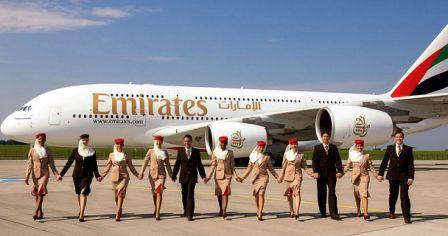
emirates
  • The final data for Q4 2017 confirms the stabilisation in airline financials in 2H17. The industry-wide EBIT profit margin was a robust 8.7% of revenues in Q4 2017 – effectively unchanged from Q4 2016.
  • The broad-based global equity market sell-off in March also impacted airline shares, although the 2% decline for airlines was less than the market generally (down 2.4%). Looking through the monthly volatility, airline shares have risen by 22% over the past year, easily outpacing the overall equity market (up almost 13%).
  • Oil prices rose in March, recovering some of the ground lost in February. Although jet fuel prices were largely unchanged this month, both oil & jet prices are currently around 30% higher than their level of a year ago.
  • As the 2018 Lunar New Year disruption in the data clears, both passenger and freight demand remains robust. Industry-wide capacity is now growing broadly in line with the pace of demand growth.
  • The premium cabin accounted for 5.3% of total international origin-destination passenger traffic but almost 30% of revenues in January, highlighting the importance of the premium cabin for airline finances.