
Firmly established as Africa’s most progressive business orientated jurisdiction, Mauritius’ forward-thinking and nimble policies have resulted in the island nation riding the wave to the centre of investment and development in Africa.
While its business-friendly framework and investment orientated tax policies are firmly established, the growing multi-sector opportunities for developers on the island are increasingly attractive for investors, developers and property professionals.
Chief among these primary opportunities is the country’s Smart City Scheme which has caught the eye of developers, policy experts, investors and city planners across the world says Kfir Rusin, the host of the Africa Property Investment (API) Summit, the continent’s largest property investment and development conference taking place on the 20 and 21 September 2018 in Johannesburg, South Africa.
“We have more than 600 delegates from 35 countries attending this year, and more than 50 delegates from Mauritius alone, which is proof that it has become a prime hub for investment in Africa and also provides unique opportunities.”
While the definition of what is a smart city varies depending on geography and policy, in Mauritius’ case – a Smart City can be described as: A concept of urban development focused on improving the quality of life of city dwellers by making the city more attractive, adaptable, efficient and resilient to change, using new technologies that rely on an ecosystem of objects and services.
In comparison to other smart city projects – a Mauritian Smart City is a privately funded new project and not a redevelopment of an existing city or neighbourhood says Olivier Desvaux de Marigny of Medine, whose Uniciti Smart City sits on 350 hectares, and is particularly geared towards higher education.
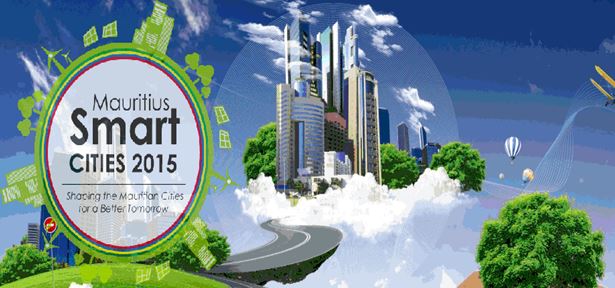
Officially launched in 2015, the scheme currently consists of ten focused cities, which have attracted an estimated $3.5 billion in investment. The rapid advancement of the cities from concept to investment are of significant interest to international and regional investors and developers seeking to use the Mauritius smart city concept as a blueprint for Africa future developments, comments Rusin.