Wednesday, March 4, 2026
27.6 C
Lagos
Home Blog Page 242

Nigeria Shines in Latest Emirates Brand Campaign

0

The talent, energy, creativity and global appeal of Nigerian and African artistes is being celebrated by Emirates in its new pan-African brand advertising campaign.

The world’s fastest growing airline is taking the message of ‘New Africa’ to the world. The campaign video highlights the achievements of Nigerian-born, Abiola Oke and amplifies the energy and rich potentials of Africa.

The campaign also features an original song with energy-filled music and inspiring lyrics that reflects the beats of contemporary African electronic club music. Produced by Blinky Bill, the song has popular sounds and rhythms that are currently dominating the radio, blasting out of taxicabs and on the dance floors across the continent.

Music is a unifying language not just across Africa, but around the world. The song does away with cultural clichés and instead celebrates the vibrant energy of contemporary Africa.

Abiola Oke left New York and a career on Wall Street at the age of 31 to return to his hometown Lagos, Nigeria, as the CEO and Publisher of OkayAfrica – a digital media platform. His business is dedicated to African music, film, culture and entertainment.

Paying tribute to a new generation of African disrupters who are making their mark globally across music, fashion, literature and the arts, the campaign celebrates the cultural renaissance taking over Africa.

The short films produced by the BBC (British Broadcasting Corporation) for Emirates, tells the stories of unique individuals from different parts of the continent. Poised to become cultural ambassadors for Africa to the world, they share a common passion to bring their global exposure and influences to their own local journeys, as they discover what it means to be ‘home’.

“It is impossible to ignore the energy and talent coming out of Africa today, whether in music, fashion, sport or art. We’re seeing a greater awareness of a strong, proud African identity – while being very connected to a broad, global culture. We wanted to join the conversation and celebrate amazing, inspiring stories of people constantly pushing boundaries and challenging African stereotypes. To us, that is what travel is about, to find a common ground that helps us connect, to question, to be curious, and I believe this campaign does just that in taking Emirates closer to the heart of our audience in a way that is authentic,” said Boutros Boutros, Divisional Senior Vice President – Corporate Communications, Marketing and Brand, Emirates.

Richard Pattinson, Head of BBC StoryWorks said, “This new series taps into the deep creative strength of the BBC to deliver a campaign that will capture the attention of our extensive and premium audiences in a way that no other publisher can.”

The series gives us a closer look at the inspiring stories of pioneers who represent today’s Africa.

Abiola Oke left New York and a career on Wall Street to return to his hometown Lagos, Nigeria, as the CEO and Publisher of OkayAfrica – a digital media platform – at the age of 31. His business is dedicated to African music, film, culture and entertainment.

Nairobi-based “Blinky” Bill Sellanga – Kenyan musician, producer and DJ is the embodiment of a renaissance in African music. As part of the Kenyan art and music collective ‘Just A Band’; he has been redefining the modern African musical identity and has performed his music all over Africa, Europe and the rest of the world.

Shanelle Nyasiase is a 21-year-old South Sudanese model who was born in Ethiopia and raised in Kenya. She had dreamt of becoming cabin crew but her journey took her to international catwalks in Milan and New York instead, where she has worked with some of the biggest international fashion brands.

Buhari, PenCom Launch Micro Pension Plan for Informal Sector

0
National Association of Tricycle & Motorcycle Owners & Riders at the event
National Association of Nigerian Traders, Abuja Branch
National Association of Textile & Garment Workers
National Association of Tricycle & Motorcycle Owners & Riders at the event

President Muhammadu Buhari launched the Micro Pension Plan yesterday in Abuja, ably supported by Mrs. Aisha Dahir-Umar, Acting Director-General, National Pension Commission (PenCom).

The event was witnessed by various relevant associations and trade groups in the country to herald the emergence of a pension plan for Nigerians working in the informal sector of the economy.

Below is the welcome address by Mrs. Aisha Dahir-Umar, Director-General of PenCom at the event:

  • It is my honour and privilege to welcome Mr. President and other distinguished personalities to this historic event for the formal launch of the Micro Pension Plan. This is the first time such window of opportunity is being opened to self-employed Nigerians and those working in the informal sector, to participate and enjoy the benefits inherent in the Contributory Pension Scheme.
  • As you might have observed, the Contributory Pension Scheme has been very impactful in Nigeria since the commencement of its implementation in 2004. The formation of long term domestic capital, represented by the over N8.74 trillion worth of pension assets as at January 2019, belonging to 8.46 million formal sector participants, is slowly but surely changing Nigeria’s financial landscape. This, by extension, is also transforming the course and pace of our socio-economic development. For instance, N6.51 trillion, representing 73% of the total pension assets is invested in Federal Government Securities issued to finance various activities of Government. Thus, in the area of infrastructure alone, the pension funds invested about N95.31 billion in the N200 billion Sukuk issued by the Federal Government. Similarly, out of the N10.67 billion Green Bond issued by the Federal Government, pension funds invested N7.19 billion. Consequently, we believe that the enlistment of the informal sector into the pension savings net would boost the quantum of available long term investible funds that would galvanize national development efforts.


  • Today’s event is, therefore, remarkable because it unveils a unique financial product, which democratizes the savings culture in Nigeria in a systematic and efficient manner. The product also perfectly aligns with the current social empowerment prgrammes of the Federal Government as it seeks to ensure, in the long term, the sustainability of the benefits of the empowerment programmes for the participants, who may seize this opportunity to save for their old age.


  • Your Excellency, other distinguished guests; Micro Pension Plan targets the significant majority of Nigeria’s working population who, incidentally, operate in the informal sector. Participants are expected from various informal sector workers including market women, members of the National Union of Road Transport Workers (NURTW), members of Textile, Garment and Tailoring Associations, Keke Napep and Okada Riders Associations, Butchers Associations, workers in the Movie and Performing Art industry, mechanics and other workers in the automotive industry and single professionals like lawyers, accountants and many others.


  • Micro Pension Plan is designed to fit the peculiarities of these informal sector groups. The National Pension Commission had extensively engaged all relevant stakeholders and obtained their inputs before the product was developed to suit their requirements. The product is flexible with respect to contribution amount and the channel of remittance of contributions to the respective pension accounts. Access to accumulated contributions is also flexible, seamless and facilitated by technology through varied payment system platforms.


  • The National Pension Commission has issued a robust Guideline on Micro Pension Plan pursuant to the provision of Section 2(3) of the Pension Reform Act 2014. The Guideline spelt out detailed legal, institutional and operational frameworks for the administration of the product by licensed pension operators from the point of enrolment to the point of accessing benefits from the pension account by participants. Already, the licensed Pension Fund Operators have, pursuant to the Guidelines, put in place appropriate structure, infrastructure and trained manpower to ensure adequate coverage and the provision of excellent customer service to the Micro Pension Plan participants.


  • Thus, a prospective Micro Pension contributor is required to open a Retirement Savings Account (RSA) by completing a physical or electronic registration form with a Pension Funds Administrator (PFA) of his/her choice. The contributors may make contributions daily, weekly, monthly or as may be convenient to them. Every contribution shall be split into two, comprising 40% for contingent withdrawal and 60% for retirement benefits. The contributor may, based on his/her needs, periodically withdraw the total or part of the balance of the contingent portion of his/her RSA, including all accrued investment income thereto. The contributor may also choose to convert the contingent portion of the contributions to the retirement benefits portion. The remaining balance in the RSA shall be available to the contributor upon retirement or attaining the age of 50 years.


  • Pursuant to its regulatory and supervisory mandate, the Commission had established a separate Department dedicated to the supervision of all matters relating to Micro Pension Plan, including enforcement of compliance with the Guidelines and customer complaint handling and resolution. Our objective is to ensure efficiency and effectiveness in service delivery as well as transparency and accountability in the administration of the product by licensed pension operators.


  • With the formal launch today and subsequent successful implementation, the Micro Pension Plan is expected to significantly expand pension coverage to greater number of Nigerians and further generate additional long term funds for Nigeria’s economic development. The Commission would collaborate with relevant stakeholders to sensitize and enlighten the target participants and members of the public on the features and benefits of the Micro Pension Plan.


  • Once more, I welcome one and all to this momentous event for the formal launch of the Micro Pension Plan. I would like to specially thank Mr. President for graciously taking out time to perform this function. Indeed, the Commission remains eternally grateful to you for your consistent support to the pension industry and the practical steps taken since coming into office to address the plights of pensioners in Nigeria.

Emirates Celebrates the Spirit of Africa with Latest Brand Campaign

0
emirate

Emirates has launched a pan-African brand advertising campaign that celebrates the talent and achievements of young Africans, taking the message of ‘New Africa’ to the world.

The campaign also features an original music video produced by Kenyan musician and DJ Blinky Bill, inspired by contemporary African electronic club music.

Paying tribute to a new generation of African disrupters who are making their mark globally across music, fashion, literature and the arts, the campaign celebrates the cultural renaissance taking over Africa.

The short films produced by the BBC (British Broadcasting Corporation) for Emirates, tells the stories of unique individuals from different parts of the continent. Poised to become cultural ambassadors for Africa to the world, they share a common passion to bring their global exposure and influences to their own local journeys, as they discover what it means to be ‘home’.

“It is impossible to ignore the energy and talent coming out of Africa today, whether in music, fashion, sport or art. We’re seeing a greater awareness of a strong, proud African identity – while being very connected to a broad, global culture. We wanted to join the conversation and celebrate amazing, inspiring stories of people constantly pushing boundaries and challenging African stereotypes. To us, that is what travel is about, to find a common ground that helps us connect, to question, to be curious, and I believe this campaign does just that in taking Emirates closer to the heart of our audience in a way that is authentic,” said Boutros Boutros, Divisional Senior Vice President – Corporate Communications, Marketing and Brand, Emirates.

Richard Pattinson, Head of BBC StoryWorks said, “This new series taps into the deep creative strength of the BBC to deliver a campaign that will capture the attention of our extensive and premium audiences in a way that no other publisher can.”

The series gives us a closer look at the inspiring stories of pioneers who represent today’s Africa.

Nairobi-based “Blinky” Bill Sellanga – Kenyan musician, producer and DJ is the embodiment of a renaissance in African music.

As part of the Kenyan art and music collective ‘Just A Band’; he has been redefining the modern African musical identity and has performed his music all over Africa, Europe and the rest of the world.

Shanelle Nyasiase is a 21-year-old South Sudanese model who was born in Ethiopia and raised in Kenya. She had dreamt of becoming cabin crew but her journey took her to international catwalks in Milan and New York instead, where she has worked with some of the biggest international fashion brands.

Abiola Oke left New York and a career on Wall Street to return to his hometown Lagos, Nigeria, as the CEO and Publisher of OkayAfrica – a digital media platform – at the age of 31. His business is dedicated to African music, film, culture and entertainment.

The campaign also features an original song with energy-filled music and inspiring lyrics that reflects the beats of contemporary African electronic club music. Produced by Blinky Bill, the song has popular sounds and rhythms that are currently dominating the radio, blasting out of taxicabs and on the dance floors across the continent.

Music is a unifying language not just across Africa, but around the world, and the song does away with cultural clichés, instead celebrating the vibrant energy of contemporary Africa.

Africa Bancassurance MasterClass 2019 Holds April 16 in Lagos

0

The Africa Bancassurance Academy would like to notify the financial media and the business community that the 4th Africa Bancassurance Masterclass, the flagship bancassurance training programme of the Africa Bancassurance Academy Limited a.k.a. School of Bancassurance will hold in Lagos Nigeria on 16 – 18 April 2019.

In the post universal banking era and precisely in 2018, the Central Bank of Nigeria (CBN), in exercise of its power under section 33(1)b of CBN Act 2007 including its provision of part 2 section 3(1) of the CBN scope, condition and minimum standards for commercial banks regulation no. 1, 2010, issued some revised guidelines on the operation of bancassurance between Nigerian money deposit banks and insurance companies.

In confirmation of this scheduled revise guidelines, the National Insurance Commission (NAICOM) which regulate insurance practices in Nigeria, had also in the same year re-issued the CBN‟s guidelines for use by insurance companies.

These two new policy releases from the insurance and banking sector regulatory institutions, thus marked the formal commencement of the practice of bancassurance in Nigeria and the month of April 2019 makes it full one year of regulated bancassurance operation in the country.

One key pertinent question to be answered at this event is – how has bancassurance business fared in Nigeria after one year? The Africa bancassurance masterclass is a professional meeting place for senior executives and bancassurance practitioners in insurance and banking industry across the region.

It provides a platform for insurers, banks, policy makers, risk managers, and financial services intermediaries to connect and develop their knowledge, build valuable networks, explore emerging trends as they relate to the bancassurance market, and map out actionable initiatives that will drive sustainable development of our bancassurance market.

The masterclass is organised to provide the enabling environment for key stakeholders in the financial services industry to network and brainstorm on the future of Bancassurance in the continent.

Globally, one of the most significant changes in the financial services sector over the past decade has been the appearance and development of bancassurance. Banking institutions and insurance companies have found bancassurance to be an attractive – and often profitable – complement to their existing activities.

The successes demonstrated by various bancassurance operations, although not all of them have been successful, have attracted the attention of the financial services sector, and new operations continue to be set up regularly.

Banks are constantly looking for ways to supplement their core earnings and insurance companies are also driving to increase their premium income. Bancassurance, the distribution of insurance products and services by banks, is one way. Banks see this model as a sure step in the financial market where one institution serves all the financial needs of its customers.

This naturally was a positive development for insurers as they see bancassurance as a strategic distribution channel that will help them increase insurance penetration in the economy and achieve the much-needed financial inclusion agenda.

Addressing financial correspondents at a news conference in Lagos organised by the Africa Bancassurance Academy (ABA), the Founder & President of the Academy, Chief Obasi Ngwuta, said the program, which forms the basis of the Africa Bancassurance Masterclass 2019, has been under continuous development for almost 10 years now.

In that time, hundreds of Banking and Insurance company management and staff from all across the Asia-Pac, Middle East and African regions have participated in the program. Consistent feedback from attendees is that the program exceeded their expectations and has undoubtedly helped them to improve the performance of their Bancassurance channel.

The Africa Bancassurance Masterclass is a rich blend of strategy, practical knowledge, tips and tactics, hands on activity and best practice lessons from across the globe. Since its inception, the program has grown to become what is arguably the best short course of its kind. Chief Obasi Ngwuta, said the 2019 Africa Bancassurance Masterclass is in 2 parts.

The first day is exclusively for CEO’s, their direct reports, Board members and other selected senior staff. The sessions will focus on the ‘big picture’ and key strategic issues. The subsequent 2 days are for the practitioners and those responsible for the success of Bancassurance in your organisation.

The Africa Bancassurance Masterclass 2019 is proudly sponsored by Old Mutual South Africa as an initiative that supports the growth of Bancassurance in Nigeria.

The three-day intensive learning session, will look at product innovation and distribution strategies that will enable banks and insurers reap the maximum benefits from bancassurance partnerships

Stock Market Slightly Upturns After Bearish Run… ASI Up 1bp

0

The local bourse slightly upturned at the close of trade yesterday following price appreciation in GUARANTY (+2.5%), PRESCO (+9.7%) and NASCON (+9.9%).

As a result, the All Share Index (“ASI”) rose 1bp to 30,833.5 points, YTD return stagnated at -1.9% while market capitalisation increased by N1.5bn to N11.6tn. In the same vain, activity level improved as volume and value traded advanced 1360.2% and 99.8% to 1.9bn units and N2.8bn respectively.

The most active stocks by volume were WEMABANK (1.7bn units), CHAMS (99.5m units) and UBA (17.3m units) while WEMABANK (N1.3bn), GUARANTY (N349.0m) and NESTLE (N219.3m) led stocks by value.

Banking Index Emerges Lone Gainer
Across sectors, market performance remained bearish as 4 of 5 indices under our coverage trended southward.

The Banking index emerged the lone gainer, up 0.4% due to buying interest in WEMABANK (+9.6%), GUARANTY (+2.5%) and ETI (+1.2%). On the flip side, the Industrial Goods index shed the most, down 1.4% due to sell offs in CCNN (-5.0%) while the Oil & Gas index trailed declining 13bps on the back of losses in OANDO (-0.9%).

Similarly, the Insurance index fell 12bps following price depreciation in CUSTODIAN (-0.8%) and AIICO (-5.3%) while sell pressures in DANGFLOUR (-4.6%), NIGERIAN BREWERIES (-0.4%) and PZ (-5.0%) dragged the Consumer Goods index down by 8bps to close the trading session.

Investor Sentiment Strengthens
Investor sentiment as measured by market breadth (advance/decline ratio) strengthened to 0.8x, a mild improvement from the 0.6x recorded yesterday as 14 stocks advanced against the 17 stocks that declined. The best performers were CILEASING (+9.9%), NASCON (+9.9%) and PRESCO (+9.7%) while SOVREININ (-9.1%), UBN (-7.0%) and AIICO (-5.3%) were the worst performing stocks. Despite yesterday’s mild uptick in performance, we maintain a conservative outlook for tomorrow’s trading session as investor sentiment remains weak.

However, we opine that the lingering bearish sentiment continue to present attractive opportunities for investors to take position.

‘IFRS 9 Will Enhance Transparency of Financial Transactions in Insurance Sector’

0
Mr. O.S. Thomas Deputy Commissioner (Technical) NAICOM

Mr. O.S. Thomas, Deputy Commissioner (Technical), National Insurance Commission (NAICOM) says the adoption and effective implementation of the International Financial Reporting Standards (IFRS 9) will ultimately enhance transparency in financial transactions in the insurance industry in Nigeria.

Thomas said in Lagos that the Commission has already issued a guideline on IFRS 9 to operators in the insurance market and is waiting for their feedback on the measure. He added that NAICOM also had one-on-one dialogue with operators as well as engaging the Chief Financial Officers (CFOs) in the sector in terms of implementation of the financial model.

The NAICOM Deputy Commissioner said: “Operators need to do more to incorporate the tenets of IFRS 9 into their annual financial returns. And because of late adoption of the measure, we have reached out to The Nigerian Stock Exchange (NSE) and Securities & Exchange Commission (SEC) for one month extension on behalf of quoted insurance companies in terms of financial fillings to avoid fines.”

Mr. O.S. Thomas Deputy Commissioner (Technical) NAICOM
Mr. O.S. Thomas
Deputy Commissioner (Technical)
NAICOM

He listed the role of insurance operators in the implementation of IFRS 9 to include:

  • Awareness training for senior management and members of the board of directors
  • Develop roadmap for adoption and follow-up action
  • Develop policies, procedures and governance structure for implementation
  • Perform an impact assessment to determine the high level implications of applying the new C&M requirements, including potential accounting mismatches and resulting volatility of IFRS 9 and 17
  • Carry out predominance test and present result to the board of directors for decision on choice of option
  • Develop, test, apply and validate new impairment model based on expected credit losses rather than incurred losses
  • Appraise new hedge accounting criteria, expected to be of limited interest to insurers. 8. Address organisational responsibilities aligning actuaries, risk and accounting Identify shared risk and actuarial data Conduct parallel testing and pilot phases for increased efficiency
  • IT architecture and infrastructure harmonization for valuations and impairment calculations
  • File relevant report with the regulator for review and assessment

Apple Takes a News Bite: Blue Ocean Strategy in Action or Red Ocean in Motion?

0

By Dr. Phil Osagie
Global Lead Strategist
Jsp Communications

Apple launches news subscription service.  Photo: New York Times

Given Apple’s sound reputation monopoly and its insanely legendary sense of innovation, when Apple sneezes, the competition catches a cold! With the latest launch of a News Subscription service in a fiercely competitive news market, it is not so clear which side will catch the cold this time around!

Strategy Professors W. Chan Kim and Renée Mauborgne in their best-selling book, Blue Ocean Strategy How to Create Uncontested Market Space and Make the Competition Irrelevant describe two types of market playing fields: Red oceans, where competition is fierce in bloody waters, strategy centers around beating rivals, and wins are often zero-sum. The cutthroat competition often results in nothing but a bloody red ocean of rivals fighting over a shrinking and shark-infested profit pool

Blue oceans, on the other hand, is where a market space is new and uncontested, and strategy is built around creating a leap in consumer value, thereby making the competitors irrelevant. It is about unlocking new demand and outperforming rivals in a whole new level.

Apple, in an expansive effort to build more services to run on its various devices, has just rolled out a subscription service for news featuring some of the biggest newspapers and magazines.

The company said its Apple News+ (Plus) subscription will include access to 300 magazines, including The New Yorker, National Geographic and InStyle. It will also feature newspapers like The Los Angeles Times and The Wall Street Journal. The subscription will cost $9.99 a month and will start out from the United States and Canada.

Apple describes the new service as News you can trust- All in one place. Apple News promises to “provide the best coverage of current events, curated by editors and personalized for you. Dive into your favorite topics or discover new ones. And stay up to date with rich videos, breaking news notifications, and subscriptions to some of your favorite publications.”

The subscription service builds on a free news app that the company released in late 2015 that comes installed on the company’s iOS software. Apple said about five billion articles are read monthly on Apple News.

The news subscription is part of a series of announcements of Apple’s new services, including a streaming video offering.

The New York Times reported that the new services represent an evolution of Apple’s business model. For years, Apple focused mainly on selling hardware products, counting on consumers to upgrade phones and tablets every few years. But as technology and design improvements have become less apparent, demand for the iPhone, the company’s flagship product, has flattened.

The company is now shifting its focus to selling content and services for Apple’s roughly 1.4 billion active devices, which include Apple TV boxes, Apple Watches, Mac computers and iPads.

Apple already has 56 million subscribers to its streaming music service and it generated $10.9 billion from services in the last quarter of 2018, compared to $73.4 billion of hardware sales.5 billion articles are read on the current Apple News app each month.

Spotify and some other competitors in the streaming business are already screaming foul at Apple’s dominant strategy of stifling competitive services and .abusing the marketplace power of its App Store.

The question is will this News subscription service be another money spinner for Apple or will it eventually end up as another me-too news outlet?

The news segment is already a bloody red ocean with many entrenched players including Google News, Microsoft News, HuffPost, Flipboard, Reuters News, CNBC and hundreds of others.

Apple is however expected to leverage the Apple brand name, pedigree and psychology marketing to change the rules of the game and redefine the market.

”This Is How We Do It” was the monster hit song by Montell Jordan some years ago. Will Apple soon be singing this song loud and clear over its latest News Service or will Apple quietly bite the dust this time?

Africa’s Digital Economy Needs Cross-border Co-operation to Succeed

0

Africa still lags behind the rest of the world in its digital transformation, and in spite of a growing number of innovative solutions, the on-going lack of adequate infrastructure and connectivity is preventing the continent from realising its true economic potential.

The best and fastest way to overcome these barriers may lie in heightened cooperation between countries and their various regulators.
This is according to James Claude, CEO of Global Voice Group (GVG) (www.GlobalVoiceGroup.com) – a provider of IT solutions to governments and regulatory authorities – who says that while many countries in Africa are individually working to increase their infrastructure and digital capabilities, the most effective solution will be to approach these challenges from a regional perspective.
While attending the 5thCrans Montana Forum in Dakhla, Morocco in March of this year, Claude noted that African governments have a crucial role to play in taking the continent to the next stage in its digital evolution.
“Businesses, universities and young entrepreneurs are increasingly contributing to the digital economy and fostering innovation in Africa. Governments now need to work towards helping these private sector players to grow their solutions more rapidly and affect real change on the continent. This will require harmonising regulations that allow businesses and services to expand beyond country borders.”
Africa’s potential as a global leader in the world’s digital economy grows significantly with each passing year. Africa’s population is increasing exponentially, and is expected to reach between 1.379 billion and 1.486 billion by 2025. In addition to this, the market penetration of digital technology is accelerating. Importantly, it is predicted that half of Africa’s entire population is expected to own smartphones by 2020, which already goes a long way towards overcoming infrastructural barriers to digital transformation and connecting people and services online.
“Building on this, mobile money platforms such as M-Pesa have fundamentally changed the way that money is circulated on the continent. E-commerce is also growing rapidly as a result of mobile money, with online retailers that accept mobile money payments even providing people without bank accounts access a greater variety of goods. Similarly, small and medium businesses are able to increase sales and overcome many infrastructure restraints.”
Claude explains that governments across the continent must build on this by creating more digital services based in Africa, facilitating more local tech companies, and continuing to invest in education and incubators that allow citizens to fully access and benefit from digital transformation.
“Equally vital, is to ensure that regulators in every region and country have the visibility, transparency and the necessary data to make informed decisions that will help the digital economy across the different jurisdictions. This is an area in which GVG already has a lot of experience, having pioneered the regulatory technology solution, RegTech on the continent.”
GVG has been helping regulators and government agencies to play a proactive and relevant role in developing their digital agenda.

“Our solutions provide key data that help regulators to migrate from paper-based institutions to digital ones. We will continue to play this role and focusing on Big Data for better regulation, compliance monitoring, revenue assurance, fraud prevention and also Digital Identity. We believe that these will be the key enablers allowing Africa’s citizens to become active participants in the digital economy instead of mere consumers of imported digital goods. Digital ID will also be key to improve better government services delivery,” Claude concludes.

SIM Boxing: Threat to Govt, Telecom Operators’ Revenue

0

In 2016, it was estimated that telecom companies in Uganda on annual basis were losing about $60 million due to illegal redirection of international calls traffic.

The amount in part led to revenue from voice services to remain flat or grow sluggishly in 2015, 2016 and 2017 – according to telecom revenue analysis in those three years. The illegal redirection is known in technical terms as SIM boxing.
SIM boxing is a practice in telecommunications whereby a person or group of people set-up a device that can take up several SIM cards (a SIM box) and use it to complete international calls it receives from the Internet as voice over IP (VoIP) and in turn serve them to the in-country mobile network subscribers as local traffic.

The SIM boxer thus bypasses the international rates and often undercuts the prices charged by local mobile operators.

How Does it Work?
Normally, for example, if you are making a call from the United Kingdom to Uganda, the subscriber will call via their operator (provider A – i.e. Vodafone) that has an International Gateway (e.g. BICS, TATA, etc.) and has termination agreements with operators in Uganda including network X (could be MTN or Airtel). They send the call via their connections to Network X that looks for its subscriber and terminates the call.
In this scenario, all operators – A, BICS, X and the government receive their fees as per set agreements and taxation laws.
This is the legal mode of operations and guarantees revenue for all parties involved.  However, some unscrupulous individuals have found a way around this. The time this issue became rampant or visible, was when the One Area Network (OAN) was launched in 2015, which unfortunately became the transit route for calls originating from other countries.
If someone made a call from the UK to Uganda, on your phone it would be displayed as a call from Kenya because it would have been diverted by some unscrupulous individuals.
The SIM Box has several SIM cards of operators and could also take advantage of any existing on-net (same network) voice bundles and thus ends up paying very little or nothing for the termination of the said call – that is disguised as a local call.
In this scenario, the interconnect operator C undercuts the market interconnect rates and offers cheap rates by spoofing quality. The GSM operator in Uganda (Network X) is cheated of charging the call at premium international rates but rather gets local rates or even earns nothing (if already purchased voice bundles are utilised). The government is also cheated of the USD $9 charged on international calls per minute.
This route is also sometimes referred to as the “Gray Route”.
So, the telecom companies do witness an increased number of calls due to bundled offers but then this doesn’t translate into increased revenue. That means, there is someone else benefiting by rigging the system.

Government Revenue Affected
As stated, the telecoms were estimated to be losing about $60m annually as a result of the gray routing. A loss to the telecom means that they will also be unable to remit the excise duty charge on calls to the government.

With the excise duty charge at about 36 percent, that means government revenue loss of about $21.5m annually. These are amounts that can help the government continue to provide services for Ugandans.
As the telecom operators and the government are counting their losses, the unscrupulous individuals that have only spent a meagre amount to acquire a SIM box machine are reaping at the expense of legitimate business and causing financial loss to government in the form of lost tax revenue.

These SIM boxers can breakeven in less than 1 month and continue to rake in profits for years. There is no deliberate under declaration of telecom revenue because of the investment made in order to be compliant with the tax authorities.
The efforts to reduce this vice has led to some arrests. In 2017, six individuals were arrested, and some convicted in court after they were found to have SIM box devices. They had up-to 250 SIM cards that they used to re-route the calls.

Increased surveillance by all the telecom companies and the Uganda Communications Commission (UCC) played a role in having these individuals arrested, however the problem persists.
UCC did recommend that operators have SIM box detection tools that need to be updated often because the SIM boxers keep finding new ways of bypassing the traditional operators.
This vice affects the quality of international calls of subscribers and is a threat to both telecommunication companies and government – they should work together to keep ahead or altogether eliminate this ever-evolving criminality.

About the Author
Derrick is an independent ICT consultant offering services to government entities, individuals and private companies. He is a seasoned telecoms Executive with, over 16 years’ broad expertise in the set up and operations of 2G, 3G and 4G Telecommunications networks right from network design, rollout, to operations.
He has previously worked as Chief Technical Officer responsible for the Technology strategy and Technical Regulatory matters in two international companies and is passionate about driving technological innovations that change the way businesses are run and increase efficiencies across the organisations.

By Derrick Sebbaale
Independent ICT Consultant

MTN Partners Clickatell to Launch Chat Commerce on WhatsApp

0
MTN

MTN South Africa has partnered with global customer engagement company, Clickatell to launch MTN Chat, enabling its customers to engage with the telco over WhatsApp.
MTN Chat will enable customers to initiate purchase of airtime and data bundles within their WhatsApp chat session. Over time customers will be able to also access customer support and self-service options, including performing upgrades, managing their accounts, and receiving low balance alerts.

MTN Chat is part of the MTN vision to significantly enhance its digital business offering to boost its customer base through advanced services.
“Clickatell understands that mobile operators are under increasing pressure to deliver excellent customer service over the digital channels their customers prefer. By offering convenient services over a secure, convenient channel, MNOs can both increase their transactional volume and attract and retain customers – something that is paramount in an age of continuous digital transformation and growing competition,” explains Pieter de Villiers, Clickatell Founder & CEO.
Clickatell has already helped Absa Bank, GTBank, First Bank of Nigeria and United Bank of Africa successfully deploy chat banking capabilities on WhatsApp across Africa.
Clickatell is a WhatsApp Business solution provider. The WhatsApp Business API provides brands the ability to send out notifications and conduct two-way conversations with consumers within WhatsApp once they have opted in. Clickatell’s Touch Flow and Connect platforms gives MTN the capability to unify its communications channels, customise user workflows and connect to internal systems.
“It is imperative that companies focus on improving their self-service experiences in order to retain and grow customers. The Clickatell offerings provides an easy, secure and convenient way of giving users control over their accounts through WhatsApp, a platform they already have an affinity for,” comments says Jacqui O’Sullivan, Executive for Corporate Affairs at MTN SA.
De Villiers says Clickatell’s low effort, high return offerings can propel mobile network operators onto a digital transformation road that differentiates them from their competitors.
“Clickatell has worked hard to ensure that its solution deployments are far less challenging than typical enterprise platform integrations. With over 1.5 billion people in 180 countries using WhatsApp every month, delivering chat commerce experiences on WhatsApp is one of the most efficient ways to reach a majority of consumers who can immediately benefit from the services offered on the channel. There is no doubt this solution is perfect for MNOs around the world where WhatsApp is frequently used.”
There is no doubt this solution is perfect for MNOs around the world where WhatsApp is the dominant social engagement channel.”

Africa in the Digital Era – Hype or Reality? The Adebayo Adedeji Annual Lecture

0

Former Nigerian Minister for Communications Technology, Dr. Omobola Johnson, delivered the UN Economic Commission for Africa’s (ECA) annual Adebayo Adedeji at the on-going Conference of Ministers in Marrakech, Morrocco.
Held in memory of the Nigerian scholar, Adebayo Adedeji – arguably one of Africa’s leading proponent of regional integration – the lecture focused around the question of digital transformation in Africa: Hype or Reality? “There is enough evidence that Africa can be digitally transformed. But what is holding us back? asked Dr Johnson when she delivered the lecture to ministers and a host of experts attending the Economic Commission for Africa (ECA) Conference of Ministers.
As the world-wide-web celebrates 30 years, its inventor Tim Berners-Lee told a Nigerian audience recently that the country represents both the present and future of the web, when you look at how it is impacting lives in Nigeria, but also across the continent.
Adedeji was the ECA’s 3rd and longest serving Executive Secretary (1975- 1991). He was renowned and admired for his relentless calls for Africa to move away from conventional ideas of international trade and economic development.

He is also credited for championing calls that led to the creation of ECOWAS. It is also widely accepted that his ideas form part of the pillars on which the African Continental Free Trade Area (AfCFTA) is anchored.
Economic experts agree that, in the currently environment, the success of this continental trading bloc, will hugely depend on digital technology, tools and skills. Johnson cited a number of success stories across the continent and how they have used technology to provide services to the hitherto uncatered for or under served, but said that many challenges remained.
“Affordability is an issue: the internationally agreed target is for 1gb of data to cost no more than two percent of the average national monthly income. In Africa this currently stands at 8.76%, compared to 3.5% in Latin America or 1.54% in Asia. And the latest affordability reports show that this has increased over the past year,” she said.
She also noted disturbing tax trends, both on digital infrastructure and utilization taxes, which although seductive, can often have unintended consequences, such as increasing the cost of digitisation and curbing its transformative impact.
She called for an urgent need to strengthen the infrastructure and fibre network.
Currently when connecting Cape to Khartoum, she said, the connection will take them via London, New York, San Jose and Tokyo to arrive in Khartoum 409milliseconds later.
She also decried how most of Africa’s connections are via undersea cables connecting via Europe or elsewhere. “It is the private sector that can solve this issue,” she said, “…but they also need to be supported and incentivized.”
“When you recognize these challenges and accept that there is a lack of scale amongst our start-ups it could be argued therefore that this digital transformation we speak about might be hyped. But the increased ownership of mobile phones and those that have access to it is having a true impact.,” she stated
She added that many companies across different sectors using tech to transform their sectors from energy, to agriculture to healthcare. “But it’s work in progress,” She further urged governments to be more supportive and develop a long-term digital strategy. “We also need to be more innovative in our financing mechanisms to allow VC to borrow at low rates and help scale up innovators.”
She mentioned the urgent need to develop a pool of skilled talent that can turn the continent into the world’s digital talent pool in the same way that China became the world’s factory, through a large labour force and targeted government policy.
Invited to respond to the lecture, Tawanda Sibanda, partner at global consultancy McKinsey, looked back at the predictions they made in their Lions Go Digital report to assess progress. In the 5 years since the report was released the results have been mixed, he said.

They had estimated that by 2025 digital transformation could raise GDP by 8% by 2025 and make $300billion of economic impact across health, education, retail, agriculture and financial services.
Despite certain metrics being ahead of schedule – smartphone penetration for example – this has not translated into macro-economic numbers as would have been expected. The percentage of banked for example, has only increased from 26% to 33% in those five years.

‘Digitalisation Will Enhance African Economies’

0

The annual Economic Commission for Africa Conference of African Ministers of Finance, Planning and Economic Development – COM2019 – kicked off recently in Marrakesh, Morocco with emphasis on the importance of digitalisation in enhancing African economies as the continent celebrates the first anniversary of the highly hailed and historic signing of the Africa Continental Free Trade Area – (CFTA).
The weeklong event, which has also drawn various seasoned experts and policy-makers from inside and outside Africa, will weigh and evaluate this year’s theme – Fiscal Policy, Trade and the Private Sector in the Digital Era: A strategy for Africa – against the backdrop of recent economic and social development on the continent.

With the value of the global digital economy estimated at over $11.5 trillion and set to rise to over $23 trillion by 2025, according Vera Songwe – ECA Executive Secretary– the effects of digital trade and economy in Africa are points of key debate.
“The potential of Africa is, and has always been, promising… the continent has all the pre-requisites for rapid economic transformation in the next decade…[but] the importance of digitalization and the digital economy in driving growth and structural transformation, as well as optimizing fiscal performance in Africa cannot be overstated,” she said adding:
“It is currently estimated to represent 15.5 per cent of global GDP and is expected to reach 25 per cent of global GDP in less than a decade [and] there has been a rise in the digital innovation hubs on the continent, such as the Silicon Savannah in Nairobi and the Kumasi Hive in Ghana, not to mention more solution-oriented technologies such as Flutterwave which has enabled global payment processing in Nigeria through a single, seamless platform. In 2018, this application was reported to have processed $1 billion worth of transactions.”
“Such digital developments can have a transformative effect across the economy by reducing barriers to entry and expanding market reach for businesses, creating jobs, and boosting both domestic and foreign trade in goods and services,” she emphasised.
Zouhair Chorfi, secretary general at Morocco’s Ministry of Finance Morocco and incoming chair of the Committee of Experts of the CoM, adds further “Digitalisation is a great opportunity for Africa. It can transform Africa by increasing competitiveness, promoting strong integration, reducing the cost of doing business. Morocco is ready to play its part.”

His predecessor, lsadig Bakheit llfaki Abdalla also proffered on the issue: “With the advent of digital age, Africa can leapfrog and use new technologies to push the continent’s drive for sustainable development.
The conference commenced with the official opening of 38th Meeting of the Committee of Experts deliberating on the 2019 theme itself amongst other statutory issues.

This set the tone for the week’s discussions, which will center on leveraging digital technologies to mobilize Africa’s domestic resources, strengthen competitiveness and speed up growth in all developmental sectors.
The conference will also provide a platform for delegates to review fiscal policies for the implementation of the CFTA.

Adopted on 21 March 2018, the agreement is now 2 ratifications away from 22 member countries needed to enforce the trade bloc that envisages, among much more, a gross domestic product of more than $3trillion and the creation of 300,000 direct and more than 2 million indirect jobs. Africa’s largest economy, Nigeria and the host country Morocco are among those yet to ratify.
The week will also see a broad array of sessions and side events. Some highlights will include the launch of the ECA 2019 Economic Report on Africa – which assesses performance of fiscal policy and analyses both challenges and opportunities in Africa.

There will also be the launch of the African Fintech Network and a roundtable on trade and private sector development in the digital era.
Gender, youth, and climate change are also among other key issues in the spotlight as well as a special focus on the United Nations’ support to the African Union’s Year of Refugees, and Internally Displaced Persons.

NCC to Subsidise InfraCos for Broadband Penetration

0
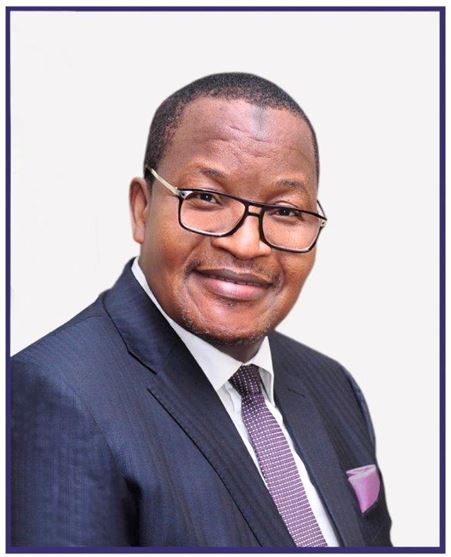
Prof. Umar Danbatta Executive Vice-Chairman Nigerian Communications Commission

As part of its plans to boost broadband penetration and make it pervasive nationwide, the Nigerian Communications Commission (NCC) has concluded process leading to the disbursement of subsidies to the six licensed Infrastructure Companies (InfraCos).

This is part of the digital transformation agenda which the NCC has put in place for actualisation. The subsidy will augment the InfraCos’ capital expenditure (CAPEX).

Prof. Umar Garba Danbatta, Executive Vice Chairman (EVC) of the NCC dropped the hint at the weekend when he received a delegation from the United States Trade and Development Agency (USTDA) at the Commission’s headquarters in Abuja.

The USTDA team led by its Acting Country Director, Mr. Thomas Hardy, was received at the instance of the NCC Board members and senior management of the Commission, where Chairman, NCC Board, Senator Olabiyi Durojaiye called on USTDA to work with the Commission towards addressing deployment challenges being faced by some InfraCo licensees in the South-South geo-political zone due to the riverine, swampy nature of the region.

While providing updates on the Commission’s broadband infrastructure development project, especially the licensing of InfraCos each in the six geo-political zones and Lagos, which is carved as the seventh zone, Danbatta said InfraCo scheme has a public-private partnership (PPP) arrangement with a subsidy component that is being worked out for the licensees to fast-track deployment in their respective zones.

“The licensees are expected to play some roles and NCC too is to play some roles to encourage broadband infrastructure deployment by the licensees. Currently, we have seen the licensees’ CAPEX, we have negotiated the CAPEX and we have arrived at percentage of subsidies based on the negotiation that we have had with them. However, the subsidy will be paid to them by the Commission upon attainment of reasonable milestones by the licensees in their zones of deployment,” he said.

The already licensed six InfraCos include MainOne Limited for Lagos Zone, Raeana Nigeria Limited for South-South Zone, O’dua Infraco Resources Limited for South-West Zone, Fleek Networks Limited for North-West Zone, Brinks Integrated Solutions for North-East Zone, and Zinox Technologies Limited for the South-East Zone while the remaining seventh licence for North Central Zone is being processed.

Danbatta told the USTDA team that the idea of InfraCo is an auspicious initiative of the Commission, as it will see licensees deploy their infrastructure for a period spanning five years and providing wholesale services to other licensees to drive last-mile connectivity to people in the rural, under-served and unserved areas of the country.

“We are trying to build an intra-city and inter-city networks that will be able to connect citizens all over the country irrespective of where they are and what their circumstances are. To that extent, we have decided to provide access points in all the 774 local government areas in the country, trying to provide access to close to 190 million Nigerians, a lot of whom live in rural communities,” he said.

The EVC, however, emphasised that while the Commission is adopting fixed and wireless broadband approaches to its broadband infrastructure development, InfraCo model is open to the use of combination of terrestrial, sub-terrestrial and aerial fibre optic deployment options and the use of television white space (TVWS) spectrum to provide connectivity in rural areas.

Earlier, USTDA team leader, Thomas Hardy, who commended the NCC for achieving and surpassing the country’s broadband penetration target of 30 per cent in 2018, said the agency’s mission was to see areas where the agency can help to support the digital transformation goals of the country, by working with the NCC and other organisations “to open up opportunity for greater trade, greater economic development and closer bilateral cooperation.”

“As a small foreign sister agency of US with a long-standing history in Nigeria, we support economic infrastructure projects; help in the telecoms, energy and transport sectors where countries have identified their priority development goals in the area of infrastructure development and through US companies, we develop an independent analysis of ways to meet your infrastructure goals,” he added.

Ecobank Wins CBN/NIBSS Award for Data Integrity

0

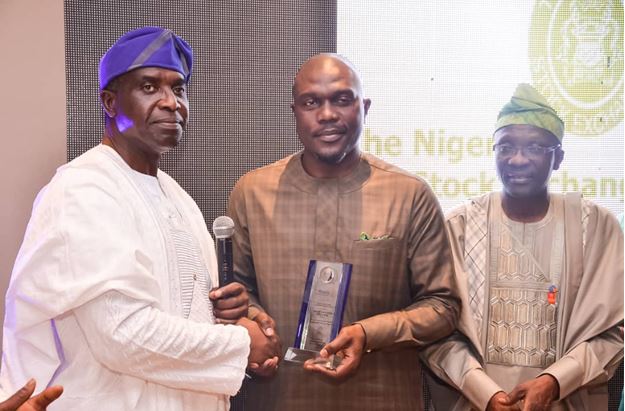
Left: Deputy Governor,  Financial Systems Stability, CBN,  Mrs. Aishah Ahmad, Managing Director,  Ecobank Nigeria,  Patrick Akinwuntan and Head,  Consumer Distribution, Ecobank Nigeria,  Stanley Jacobs displaying the Electronic Data Rendition and Integrity  award won by Ecobank at the 4th Electronic Payments Incentive Scheme Efficiency awards organised by CBN/NIBSS in Lagos on Friday.

Ecobank Nigeria has been named winner of Electronic Data Rendition and Integrity award in the Platform Efficiency award category at the 4th Electronic Payments Incentive Scheme Efficiency awards organised jointly by CBN/NIBSS in Lagos last Friday.

The prestigious award is for Ecobank”s outstanding performance in ensuring customer data integrity and compliance to CBN mandated data and accuracy of data submissions through NIBSS for 2018.

OneFi Acquires Amplify to Reshape Nigeria’s Fintech Infrastructure

0

Amplified Payments Limited, a fintech company that builds and facilitates payment solutions and digital financial transactions in Nigeria, has announced its acquisition by One Finance Limited.

The deal, completed for an undisclosed fee, took effect as of March 1st, 2019, and sees OneFi boost its financial services offering, as the company adds Amplify’s assets, tradements and flagship products, AmplifyPay and mTransfers, to its growing portfolio.

Conceived in 2015 by co-founders Segun Adeyemi and Maxwell Obi, who first met as Entrepreneurs-in-Training at MEST Africa’s Entrepreneurial Training Program in Accra, Ghana, Amplify has scaled quickly to become one of Nigeria’s leading online recurring payment processors, supporting over 1,000 merchants and facilitating digital transactions for four of the country’s largest banks.

The company’s core products, AmplifyPay – a payment gateway specialising in recurring transactions – and mTransfers – a keyboard banking solution that enables consumers to conduct bill and P2P payments in any chat app – have propelled the three-year-old start-up to a market-leader in Nigeria’s financial processing space.

As a result of the acquisition, Amplify co-founder and CTO, Maxwell Obi, will join the OneFi team to oversee the payments direction of the company, whilst co-founder and CEO, Segun Adeyemi, will depart as he pursues new ventures.

Commenting on the acquisition and his new role, Maxwell says, “The key factor which stood out in our decision to work with OneFi was that we saw them as an extension of our vision. We stepped into this industry to use our payment solutions to facilitate a growing economy, and OneFi’s focus on financial inclusion feeds well into this. It’s a real example of a collaborative effort, and I’m excited to see the next chapter of our development.”

Paylater, OneFi’s consumer-facing lending platform, was launched in 2016 by Nigerian finance entrepreneurs Chijioke and Ngozi Dozie, and provides hassle-free loans without the need for human intervention or bias in decision making.

Through its app, which has been downloaded over one million times, Paylater has deployed over $50M across 750,000 loans, approving over 1,500 loans a day at an average of $80 per loan. In late 2018, the company became the first African fintech platform to secure a credit rating.

The acquisition of Amplify is the next step in the company’s journey, seeing the platform pivot to a one-stop-shop offering additional products such as savings, bill payments and credit reporting.

Chijioke Dozie, OneFi Founder and CEO, adds, “The announcement signals OneFi’s first acquisition; a strategic decision that kicks off our transformation from a digital lender to a diverse digital financial services platform focused on transactions, payments and loans and will ensure we meet our ambitious goal of doubling our size in Nigeria this year. We have long respected the Amplify team for their ability to provide innovative solutions under adverse conditions, and we look forward to blending our expertise to power the future of fintech infrastructure and digital payments in Africa.”

Amplify also secured their first investment from MEST Africa, the Pan-African incubator, training program and seed fund, in 2016, when Adeyemi and Obi graduated from the program and the company officially launched. Amplify is the 5th MEST Africa company to be acquired and the first in the fintech space.

MEST Managing Director, Aaron Fu, concludes, “Seeing Amplify exit to such an established and well-known player in Nigeria’s fintech sector is a really significant moment in MEST Africa’s 11-year history. Watching Segun and Maxwell develop Amplify into a market leader in just three years has been thrilling to see, and we expect to see many more African tech start-ups take this route to market. Our hope is that the Amplify journey will be an inspiration to thousands of entrepreneurs in the making.”