Saturday, May 23, 2026
25.1 C
Lagos
Home Blog Page 2

Repton CEO Calls for Digital Skills Acquisition at Lagos Career Fair

0

Otunba Odeyeyiwa Kazeem Olayemi, GMD/CEO, Repton Group, Keynote Speaker (2nd left), receiving a plaque at the recent 2026 Lagos Career Fair. With him from left are Dr. Oladapo Akinloye, Convener, Lagos Career Fair and two others.


By Goke Ilesanmi

Otunba Odeyeyiwa Kazeem Olayemi, GMD/CEO of Repton Group has stressed the need to acquire technology skills, especially Artificial 1ntelligence (AI) skills, for career advancement in the digital age. Odeyeyiwa said building a successful career in today’s technology-driven global economy requires a strategic blend of continuous technical upskilling, adaptability and emotional intelligence.

The CEO of Repton Group, a conglomerate with subsidiaries such as Kazab Heritage Limited (for distribution); Defrost Ventures Limited (for haulage and logistics); Kazab Oil and Gas; Heritage Engineering Services Limited, and Kazab Homes and Properties, made the disclosure at the recent Lagos Career Fair 2026 where he was the Keynote Speaker.

Odeyeyiwa who spoke on the theme, “Building a Winning Career in Today’s Technology- and AI-Driven Global Economy” said as AI, automation and digital platforms transform industries, workers must change or pivot from routine tasks towards roles that require human-AI collaboration.

According to the Repton CEO, “This step becomes imperative because research confirms that by 2030, nearly 90% of jobs will require digital skills. The emerging trends clearly show that new technologies, including AI, will definitely have both positive and negative impacts on career in the digital age of global economy.

“A recent research report by the Nexford University says anyone who does know that artificial intelligence will affect jobs and careers between 2026 and 2030 must definitely be living under a rock. One major recurrent question is whether or not AI will enhance careers and global economy or disrupt them. This is a controversial subject that has proponents and opponents on both sides of the divide.”

Odeyeyiwa explained that many market research analysts say AI has the potential to bring about numerous positive changes in society, including enhanced productivity, improved healthcare and increased access to education but calls for immediate adaptability.

The Repton CEO added that others, especially those working in human work types of jobs that are manually repetitive, assert that AI and robotics technologies are a disruptive force when it comes to the future of jobs or careers because they are merely set to steal jobs and disrupt careers.

In his own submission, Odeyeyiwa said: “Building a winning career in today’s technology- and AI-driven global economy requires a deliberate and strategic transition from viewing AI and other technologies as competitors to treating them as collaborative partners. In 2026, AI is transforming roles across all sectors rather than just eliminating them, with a shift from ‘human vs machine’ to ‘human x machine’ orchestration.

“In other words, it will be wiser to embrace AI and other technologies as powerful tools that can both enhance and elevate your talents rather than completely replace them, and to stop being afraid of them. The people whose professions are genuinely future-proofed are those who understand how to collaborate with AI. Thriving in this environment demands a combination of technical fluency, uniquely-human skills and continuous rapid learning.”

He said to be able to strategically build a future-proof winning career in today’s technology-driven global economy, people need to be proactive to technological change, build a “T-shaped” career profile, embrace continuous learning, engage in self-positioning and master essential high-impact skills.

The Repton CEO stressed the importance of soft skills such as interpersonal skills, emotional intelligence, analytical skills, effective communication, negotiation skills, self-development, creativity and innovation, self-awareness, self-motivation, etc., even in the digital age.

He said soft skills become imperative in the digital age because general intelligence, emotional intelligence, creativity and higher-order reasoning are still areas in which AI falls short as it is not endowed with human intuition, interpersonal abilities or broad mental flexibility.

In the Repton CEO’s words: “This reality simply implies that even after having mastered AI and other technological skills, soft skills are still largely required in building a winning career in the digital age. Soft skills are capable of setting you apart from your tech-savvy peers who have only mastered technical or other technological skills, but lack them (soft skills).”


NEM to Unveil Life Assurance Firm, Reports N167 bn Premium Income in 2025

0

Mr. Tope Smart, Group Chairman, NEM Insurance Plc, said at the 56th Annual General Meeting (AGM) of the company in Lagos that NEM Insurance Plc will soon unveil a life assurance firm as part of its expansion strategy.

Smart stated that “our Group recorded N166.8 billion gross premium income while the parent company recorded N157.8 billion during the year under review, as against N110.7 billion and N108.3 billion for group and parent respectively in 2024. Though profit after tax declined from N29 billion in 2024 to N24 billion during the year under review, this was due to foreign exchange losses we experienced during the period.”

Other key performance indices include: insurance revenue grew from N97.9 billion in 2024 to N152.3 billion in 2025, an increase of 56% over the previous year; (investment income) an increase of 70% recorded in 2025 against 130.3% achieved in 2024. The total investment income in 2025 was N12.9 billion while that of 2024 was N7.6 billion; claims paid during the year was N49.8 billion against N31.3 billion in 2024. The claims ratio for 2025 was 29.8% while 2024 was 28%; the Group’s Profit before Tax (PBT) was N27.9 billion and N33.6 billion in 2024, a decrease of 17% because of the fluctuation in foreign exchange gain; the position of the Group’s financial assets between 2025 and 2024 increased by 38% while Total Assets and Total Equity also improved by 49.8% and 29% respectively.

The Board recommended a dividend of N1.50 kobo per N1 ordinary shares amounting to N7,524,716,650.50 payable to shareholders and subject to deduction of withholding tax at the appropriate rate.

He lamented that the operating environment was volatile and challenging because of the insecurity in the country and high cost of living.

“As we continue to experience the impact of ongoing war in the Middle East which accounted for the recent additional increase in oil prices and its effect on goods and services, presently, fuel pump price fluctuates between N1250 and N1,400 as against N890. Exchange rate is becoming stable at an average of N1,378.13 per Dollar. Nigeria is ranked 52nd largest economy globally, against 53rd in the preceding year based on nominal GDP in 2025 and fourth largest in Africa against the sixth largest in Africa in the preceding year. The country’s GDP growth rate reached 3.90% in 2025, a notable increase from the 3.40% recorded in 2024.”

The NEM chairman said the growth and recovery in the economy should be improved upon by government at all levels, as there is need for urgent measures to produce more goods locally and create enough job opportunities for the unemployed populace.

“Despite all the challenges, our company maintained its leadership position in general business. This trend of excellent performance is expected to be sustained with the right form of support from all stakeholders, expectations from the government at all levels and other concerned parties to improve the security architecture in our country, tackle unemployment, diversify the economy, enhance climate resilience, and boost the living standard of citizens.”

A Toast to MTN Nigeria at 25: The Network That Redefined a Nation

0

By Elvis Eromosele

Twenty-five years is a long time in any industry. In telecommunications, it is an entire lifetime of disruption, reinvention, regulatory tension, and relentless technological acceleration. In Nigeria, it is also a story of national transformation told through a yellow brand that became more than a network; it became infrastructure, culture, economy, and identity.

As MTN Nigeria marks its 25th anniversary, it is impossible to separate its corporate journey from Nigeria’s digital evolution. The company has not only witnessed the country’s shift from analogue isolation to digital integration; it has actively engineered much of it.

When MTN entered Nigeria in 2001 following the landmark GSM liberalisation by the Nigerian Communications Commission (NCC), mobile telephony was still a luxury reserved for the privileged few. Landlines were unreliable, and communication in general was an exercise in patience and privilege.

The NCC’s reform opened the door, but MTN walked through it with scale, ambition, and speed. In those early days, it did not merely compete; it created a market.

The now-iconic “Everywhere you go” slogan was more than branding; it was a promise of reach in a country where geography had long dictated exclusion. For millions of Nigerians, MTN became the first real bridge to modern communication.

From modest beginnings, the network has now grown to over 90 million active subscribers. It is today a dominant player in a market it helped build. In the quarter of a century of operations in Nigeria, MTN has evolved from a voice-centric operator into a digital infrastructure giant. Its investments in 3G, 4G LTE, fibre networks, and early 5G deployment have fundamentally reshaped consumption patterns.

Nigeria today is a data-first society. Social media drives commerce, streaming defines entertainment, fintech powers financial inclusion, and remote work is no longer an exception but an emerging norm. MTN sits quietly beneath this ecosystem as one of its most critical enablers.

Yet, its impact extends beyond connectivity. The company has catalysed entire value chains, SIM registration agents, tower contractors, retail distributors, fintech partners, and digital developers, forming a vast ecosystem that supports millions of livelihoods.

In many ways, MTN did not just connect Nigeria; it industrialised communication. The telecom giant’s contribution to Nigeria’s economy is both direct and multiplier-driven. Thousands are employed directly, but millions more are supported indirectly through its expansive ecosystem.

Billions of dollars in infrastructure investment have gone into base stations, fibre rollout, data centres, and rural expansion projects. This has helped to shrink Nigeria’s digital divide, though gaps remain in rural broadband access.

The MTN Nigeria Foundation, funded through a portion of profits, has also become a significant force for social impact, supporting healthcare upgrades, scholarships, digital skills training, and women empowerment programmes across the country.

It is estimated that tens of millions of Nigerians have benefited directly or indirectly from its interventions. This social footprint reinforces MTN’s position not just as a commercial entity but as a development partner.

No honest assessment of MTN Nigeria’s journey can ignore its controversies and operational challenges. The most defining moment remains the 2015 SIM registration crisis, when the NCC imposed a record-breaking fine over compliance failures. The episode exposed the tension between regulatory enforcement and operational realities in a complex, fast-growing market.

Beyond regulatory issues, consumer frustrations persist. Nigerians continue to experience dropped calls, inconsistent data performance, congestion in urban areas, and perceived rapid data depletion. Despite massive infrastructure investments, the gap between expectation and experience remains a recurring issue.

There are also structural challenges: multiple taxation, vandalism of fibre infrastructure, high diesel costs due to unstable power supply, and foreign exchange volatility, all of which strain operations.

The next phase of MTN’s journey will not be defined by traditional telecom competition alone. The battlefield is expanding.

Fintech companies, over-the-top (OTT) platforms, satellite internet providers, and digital-native startups are redefining connectivity and value creation. MTN is increasingly operating in a space where it is no longer just a telecom operator but a digital platform company.

Beyond the balance sheets and base stations lies a more personal reflection. Many professionals who have passed through MTN Nigeria carry with them a deep understanding of its role in shaping modern corporate Nigeria. This writer spent nearly a decade within the ecosystem, witnessing firsthand how the company’s internal discipline, innovation culture, and market aggression helped define the standards of the Nigerian telecom industry.

MTN Nigeria’s story is ultimately a paradox. It democratised communication but still struggles with perception gaps in service quality. It built digital highways but still battles congestion on those roads. It enabled Nigeria’s digital economy but now faces rising expectations from a more demanding, digitally savvy population.

Yet, this paradox is also its strength. It reflects a company that operates at scale in one of the most complex markets in the world.

As MTN Nigeria turns 25, it stands at a crossroads of maturity and reinvention. The easy gains of market expansion are behind it. The next phase will be defined by intelligence, trust, efficiency, and inclusion.

Nigeria’s digital future will demand more than connectivity. It will demand reliability, affordability, security, and fairness. MTN will remain central to that journey, but under sharper scrutiny and higher expectations.

In truth, MTN Nigeria’s story is also Nigeria’s story: ambitious, uneven, resilient, and still unfolding.


Elvis Eromosele, a corporate communications professional and sustainability advocate, wrote via [email protected]


NEM Insurance Rewards Shareholders with N7.52bn Dividend amid 56% Revenue Growth

0

L-R: Idowu Semowo, Executive Director, Finance and Investment, NEM Insurance Plc; Ifunanya Iwuagwu, Company Secretary/Legal Adviser; Andrew Ikekhua, Managing Director/CEO, NEM Insurance Plc; Tope Smart, Group Chairman; Daphne Dafinone, Director, and Kelechi Okoro, Non-Executive Director, during the 56th Annual General Meeting (AGM) of NEM Insurance Plc held in Lagos on Thursday, May 14, 2026.

Shareholders of NEM Insurance Plc have commended the company’s board and management following the recommendation of a N7.52 billion dividend payout for the 2025 financial year amid strong growth across key financial indicators.

The commendation came at the company’s 56th Annual General Meeting in Lagos where the Group Chairman, Tope Smart, presented the Annual Report and Financial Statements for the year ended December 31, 2025.

The board recommended a dividend of N1.50 per ordinary share amounting to N7.52 billion, subject to shareholders’ approval and deduction of withholding tax at the applicable rate.

Shareholders at the meeting expressed satisfaction with the company’s consistent returns and resilient performance despite the challenging business environment, noting that the proposed dividend demonstrated management’s commitment to rewarding investors.

Speaking on the company’s performance, Smart disclosed that insurance revenue grew by 56 percent from N97.9 billion in 2024 to N152.3 billion in 2025, while Investment income also rose significantly by 70 percent to N12.9 billion from N7.6 billion recorded in the previous year.

He added that the company’s subsidiaries, NEM Asset Management Company Limited and NEM Health Limited, did quite well and made positive contributions to the Group’s earnings during the year under review.

On claims settlement, Smart stated that claims expenses increased to N49.8 billion in 2025 from N31.3 billion in 2024, reflecting the company’s commitment to meeting obligations to policyholders promptly.

According to him, the Group recorded a profit before tax of N27.9 billion. He, added that the company maintained a strong financial position as financial assets increased by 38 per cent, while total assets and total equity rose by 49.8 per cent and 29 per cent respectively.

As part of its expansion drive, Smart revealed that plans to establish a life assurance company were at an advanced stage and would soon be unveiled.

Also speaking at the AGM, the Managing Director of NEM Insurance Plc, Andrew Ikekhua, said the company’s balance sheet remained robust, reflecting strong capitalisation and preparedness to operate effectively under the new regulatory capital regime introduced by the Nigerian Insurance Industry Reform Act 2025.

He noted that the company also received several awards and recognitions in 2025, including Best General Insurance Company of the Year; Outstanding Performance in Claims Settlement Award by Risk Analyst; and the Pearl Award in the Financial Services (Insurance Sector) for the year 2025.

Leadway Assurance Partners FRSC to Reward Safety-Compliant Motorists Through ‘Arrive Alive Campaign’

0

L–R: Team Lead, Reinsurance, Specialty Risk & Global Client Services, Leadway Assurance, Lawal Bello; Acting Chairman, Kosofe Branch B/PRO, Biode Motor Park, Ojota, Comrade Adewale Olawale; Lagos Sector Commander, Federal Road Safety Corps (FRSC), Corps Commander, Kehinde Ganiyu Hamzat; and Head, Technical Risk Management, Leadway Assurance, Otuyemi Olatunde at the Arrive Alive road safety sensitisation initiative organised by Leadway Assurance in partnership with FRSC at Biode Motor Park, Ojota, Lagos.

Leadway Assurance, Nigeria’s leading insurance services provider and a subsidiary of Leadway Group, a foremost non-banking financial services and wellbeing conglomerate, has partnered with the Federal Road Safety Corps (FRSC) to promote road safety advocacy and reward safety-compliant motorists through the Arrive Alive campaign.

Leadway Assurance and the FRSC have worked together on road safety advocacy for years. The partnership has been further strengthened with the launch of the Arrive Alive campaign, which aims to deepen public awareness of responsible driving, promote safer road behaviour, and encourage better compliance with road safety regulations among motorists. The initiative also aims to reduce preventable road accidents and reinforce a stronger culture of safety among road users across Nigeria.

As part of the campaign, a webinar titled “Arrive Alive Because Life is Priceless” was held on May 6, 2026. The session featured the FRSC Lagos State Sector Commander Corps Commander, Kehinde Hamzat, and Leadway’s Head of Technical Risk Management, Otuyemi Olatunde, who shared practical insights on essential vehicle safety items every motorist should have, including first aid kits, fire extinguishers, and discussed major causes of road accidents such as driver distraction, negligence, and unsafe road behaviour.

The speakers also addressed common misconceptions among motorists and emphasised the importance of proactive safety measures to prevent avoidable road traffic incidents.

The webinar was followed by live sensitisation engagements at the FRSC office in Ojota and the Ojota Motor Park in Lagos on 7 May 2026. During the engagements, private and commercial motorists were educated on safe driving practices, compliance with traffic regulations, and responsible road use.

Motorists who demonstrated compliance with safety requirements, including seat belt use, possession of complete vehicle documentation, and availability of required safety equipment in their vehicles, were recognised and rewarded as part of the campaign’s behavioral reinforcement strategy.

Executive Director, Technical & Operations, Leadway Assurance, Olufunmilayo Amanwa, commenting on the campaign, said, “The ‘Arrive Alive’ initiative reflects our long-standing commitment to protecting lives beyond insurance coverage.”

According to data released by the Federal Road Safety Corps (FRSC), Nigeria recorded a total of 10,446 crashes across the country in 2025, an increase of 9.2 percent from 9,570 in 2024, with deaths resulting from last year’s crashes put at 5,289 persons.

She added that “These data points reinforce the urgent need for sustained road safety awareness and behavioural change among motorists and commuters alike. By promoting safer driving habits, we are contributing to the reduction of preventable road traffic accidents and supporting the development of a more responsible road culture in Nigeria.”

Also, The FRSC Lagos State Sector Commander, Corps Commander, Kehinde Hamzat, commenting on the partnership, said, “Our collaboration with Leadway Assurance on the ‘Arrive Alive’ initiative strengthens ongoing efforts to improve compliance with road safety regulations across Nigeria. We continue to emphasise that most road traffic crashes are preventable when motorists make responsible decisions on the road. This initiative reinforces our shared commitment to saving lives and promoting safer road use nationwide.”

The partnership reflects strengthened collaboration between the private sector and regulatory authorities to address road safety challenges in Nigeria. It underscores a shared responsibility to promote road discipline, deepens public awareness of safe driving practices, and encourages sustained compliance with traffic regulations. It is expected to contribute to a reduction in preventable road traffic incidents, improved road user behaviour, and a stronger culture of accountability among motorists in Nigeria.


About Leadway Assurance

Leadway Assurance is one of Nigeria’s foremost non-banking financial services groups, offering a diversified range of solutions across insurance, pensions, health, and asset management. Founded in 1970, the company has built a legacy of trust and innovation, serving millions of individuals and businesses across Nigeria and West Africa.

AIICO Insurance Delivers Stellar FY 2025 Results, Solidifying Position as Nigeria’s Premier Insurer

0

In a year filled with economic twists and turns—like rising prices and global uncertainties—AIICO Insurance Plc has emerged as a beacon of stability and growth.

Imagine a company not just surviving tough times, but thriving like a well-rooted tree pushing through rocky soil.

For the full year ended December 31, 2025, AIICO’s audited financial results paint a picture of remarkable success: insurance revenues jumped 26.5% to ₦137.0 billion from ₦108.4 billion in 2024, while gross premiums written—essentially the total value of policies customers signed up for—rose 20.2% to ₦191.7 billion.

Even better, the company’s “normalised” profit after tax, which strips out one-time surprises like currency fluctuations, soared an incredible 195.4% to ₦23.7 billion. This means AIICO didn’t just meet expectations; it smashed through them, exceeding forecasts by 23.1% despite slower customer demand due to inflation.

For everyday Nigerians, this translates to a trusted partner that’s growing stronger, ready to protect families, homes, and businesses when it matters most.

Everyday Wins Across All Fronts

Think of AIICO’s business like a bustling family with different siblings each excelling in their own way. The life insurance arm, which covers things like savings plans, pensions, and family protection, stole the show. Revenues here grew 34.1% to ₦69.6 billion, with normalised profits exploding 221% to ₦16.6 billion—driven by popular products like ordinary life policies and annuities that help people build secure retirements. It’s like watching your savings grow steadily, even as life’s storms brew.

General insurance, protecting cars, homes, and businesses from accidents or disasters, turned a corner too. From a loss in 2024, it posted a healthy ₦3.7 billion insurance service result, up 171.2% year-on-year, thanks to smarter risk-picking and underwriting—basically, choosing the right customers and pricing policies fairly to avoid big payouts.

Meanwhile, AIICO Multishield, the health maintenance side, saw profits leap 414.2% to ₦144.3 million, fuelled by more people signing up for prepaid health plans amid rising medical costs. And AIICO Capital, the investment experts, boosted results 108.6% to ₦15.4 billion in investment income, proving their knack for growing money wisely even in shaky markets.

These aren’t just numbers on a page; they’re real stories of resilience. Despite Nigeria’s headline inflation hovering around 15% and global jitters from Middle East tensions pushing fuel prices over ₦1,100 per litre, AIICO’s insurance service margin flipped to a healthy 9.1% from a negative 2.8% last year. Net investment income hit ₦61.2 billion, up 45.9%, showing smart money management that cushions against economic bumps.

Leadership That Lights the Way

At the helm is Managing Director and CEO Babatunde Fajemirokun, whose visionary guidance has been the secret sauce.

“In a year shaped by macroeconomic transition and evolving policy reforms, AIICO delivered solid performance across our businesses, reflecting steady execution of our strategy and our continued commitment to serve our clients with excellence,” Fajemirokun said.

He highlighted how insurance margins recovered dramatically and noted the team’s focus on “disciplined execution, prudent risk management, and targeted investments” for 2026.

Under his watch, AIICO achieved a stellar 31.2% normalized return on equity—a measure of how efficiently the company turns shareholder investments into profits—and proposed a 12 kobo dividend per share, payable June 5, 2026, rewarding loyal investors.

Fajemirokun’s approach feels like a captain steering a ship through choppy waters with a clear map: prioritising client needs, adapting to changes like Central Bank efforts to tame inflation toward single digits, and building buffers against forex volatility. This isn’t flashy hype—it’s proven strategy that positions AIICO ahead of the pack.

Why AIICO is Your Smart Choice Today and Tomorrow

For existing customers, these results mean peace of mind: a company with deep pockets (total comprehensive income up 89% to ₦33.5 billion) that’s less likely to falter when claims roll in.

Prospective policyholders see an insurer that’s diversified, innovative, and customer-focused—offering everything from whole life policies to auto coverage and wealth-building mutual funds. Investors, take note: in a market where others wobble, AIICO’s normalised profits outshone one-off FX gains from 2024, signalling sustainable strength.

Looking ahead, as global growth moderates and Nigeria navigates reforms with $49.53 billion in reserves bolstering stability, AIICO is geared up. Their “disciplined asset-liability management” framework acts like a safety net, mitigating market swings for clients and shareholders alike.

Founded over 50 years ago, AIICO isn’t chasing short-term wins; it’s crafting a legacy as Nigeria’s insurance powerhouse.

In simple terms, while others tighten belts, AIICO is expanding horizons—delivering protection you can count on and growth you can believe in. Whether safeguarding your family’s future or growing your wealth, AIICO stands tall as the brand of choice, today and for the years ahead.


Chess in Slums Africa, Platform School Emerge Champions at 3rd Ecobank National Schools Team Chess Championship

0

The 4th edition of the Ecobank National Schools Team Chess Championship came to a successful conclusion in Lagos, with Chess in Slums Africa winning the Primary Category, while Platform School reclaimed and retained the Secondary Category title after two days of intense and inspiring competition.

The prestigious championship, sponsored by Ecobank Nigeria, supported by SchoolMate, Newcross, Exploration & Production Limited, GZI Limited and Frutta and organised by the Nigeria Chess Federation (NCF), attracted over a thousand students from schools across the country to the Ecobank Pan African Centre (EPAC), Victoria Island, Lagos.

In the Primary Category, Chess in Slums Africa delivered a dominant performance, winning all six matches to finish with a perfect score of 18 match points.

First Baptist Group of Schools also finished with a perfect win record but settled for second place on tiebreaks, while Jareb Private School, Ogun finished third.

The event witnessed remarkable performances from young players, further highlighting the rapid growth of grassroots chess development in Nigeria.

The Primary Category title was especially significant for Chess in Slums Africa, as the team received celebrations and support on-site from Tunde Onakoya, whose presence added excitement and inspiration to the young players during the close of the championship and the closing ceremony.

In the Secondary Category, Platform School successfully defended their title to become back-to-back champions of the Ecobank National Schools Team Chess Championship.

Platform School finished first after six rounds with 16 match points, edging longtime rivals Dayspring School, who also finished unbeaten but settled for second place on tiebreaks. Kings College Lagos claimed third position after an impressive campaign.

The result further strengthened the growing rivalry between Platform School and Dayspring School. Platform School won the maiden edition of the Ecobank-sponsored championship before Dayspring School emerged as champions in the second edition.

Platform School, however, bounced back strongly by reclaiming the title in the third edition and have now secured back-to-back titles after winning the fourth edition. Meanwhile, Dayspring School have now recorded consecutive second-place finishes following their triumph in the second edition.

Head of Educational and Social Services of Ecobank, Kunle Adewoyi, urged the students to strive hard to become Grand Masters in the near future.

“There are Grand Masters in Kenya, Rwanda and some other African countries, but, sadly, we don’t have any in Nigeria at the moment. It is our prayer that some of these students will become one in the near future,” he stated.

Adewoyi said that Ecobank was particular about chess sponsorship because it helps in the development of the kids.

The Vice President of the Nigerian Chess Federation, Adeyinka Adewale, was full of praise for Ecobank and other partners for sponsoring the tournament, just as he promised that next year’s edition will be bigger and better.

The championship once again showcased the educational and developmental value of chess, with students displaying exceptional concentration, discipline, teamwork, creativity, and resilience throughout the tournament.

Ecobank Nigeria’s continued investment in scholastic chess, alongside the support of SchoolMate and the organisational efforts of the Nigeria Chess Federation, continues to position the championship as one of Nigeria’s premier school sports events.

The 4th Ecobank National Schools Team Chess Championship once again reinforced chess as a powerful tool for education, leadership development, and youth empowerment in Nigeria, while also providing a platform for discovering the country’s next generation of chess stars.


Mutual Benefits Delights Customers with ₦5.5bn April Claims Payout

0

Mutual Benefits Assurance Plc has announced the payment of over ₦5.5 billion in claims to policyholders in April 2026, reaffirming its long-standing reputation as one of Nigeria’s most dependable and customer-focused insurance brands.

The claims payout, which cuts across both General and Life businesses, underscores the company’s unwavering commitment to fulfilling its promises to customers promptly and consistently, even as Nigeria’s insurance industry continues to evolve amid recapitalisation and increased market scrutiny.

A breakdown of the claims settlement shows that the sum of ₦3,668,742,117.69 was paid under the General Business portfolio, while ₦1,914,029,614.93 was disbursed under the Life Business portfolio, covering Group Life and Retail Life policies. The payouts covered a broad spectrum of claims including motor, engineering, marine, life protection, death benefits and other insured risks.

Equally important, Mutual Benefits has consistently earned commendation from policyholders for its responsiveness during difficult moments.

A retail customer whose motor insurance claim was recently settled by the company described the experience as reassuring: “You never truly know the value of insurance until something goes wrong. What stood out for me was how quickly Mutual Benefits responded and resolved my claim without unnecessary stress.”

Another Group Life beneficiary noted: “At a very difficult time for our family, Mutual Benefits came through professionally and compassionately. The support made a real difference.”

Speaking on the development, Managing Director, Mutual Benefits Assurance Plc., Olufemi Asenuga described the payout as more than a financial transaction.

“Insurance is ultimately about trust. At Mutual Benefits, we understand that our relevance is not measured merely by policies sold, but by our ability to stand by customers when they need us most.”

He noted further that the consistent settlement of genuine claims reflects the company’s strong operational structure, disciplined underwriting approach and enduring commitment to policyholders across Nigeria.

Industry analysts have continued to emphasise the importance of prompt claims settlement in deepening insurance penetration and restoring public confidence in the sector.

A Lagos-based insurance and financial services analyst, Chinedu Okafor, stated that: “In a market where customers are increasingly demanding accountability and proof of value, insurers that consistently pay claims promptly will continue to earn long-term trust and market relevance. Claims payment is the strongest form of marketing any insurance company can undertake.”

The latest payout comes at a critical period for Nigeria’s insurance industry, as operators continue to position for stronger financial capacity, operational efficiency and increased consumer confidence in line with ongoing recapitalisation conversations across the sector.

Mutual Benefits noted that while financial strength remains important, long-term sustainability in insurance is ultimately built on trust, service delivery and the ability to honour obligations consistently.

The company reaffirmed its commitment to improving customer experience, accelerating digital transformation, deepening insurance awareness and delivering innovative products tailored to the realities of individuals and businesses.

With over three decades of operations and a growing footprint across Nigeria, Mutual Benefits continues to position itself as a reliable partner for protection, wealth creation and peace of mind.


Pleias, GSMA Launch ‘CommonLingua’, Open Source Language Identification Model Supporting 61 African Languages

0

Pleias and the GSMA have announced the release of CommonLingua, an open-source language identification (LID) model purpose-built to unlock African language data at scale.

It is delivered under the GSMA’s AI Language Models in Africa, by Africa, for Africa initiative, a coalition dedicated to closing the African language gap in AI.

Africa is home to more than 2,000 living languages, many of which remain underrepresented in AI training data. As a result, language identification systems often perform less reliably on African-language content, particularly when distinguishing between closely related or code-mixed text.

Before a Swahili, Yoruba, or Wolof language model can be built, the underlying text must first be correctly identified by language – a step where existing tools currently often fail on African content.

This is because leading LID systems such as fastText, GlotLID, and OpenLID were built around European and Asian high-resource languages and frequently mislabel African-language text as English or French. Even state-of-the-art frontier models drop roughly 30 points in accuracy on African languages compared to major world languages.

CommonLingua is designed to fix this first step of the pipeline. On the new CommonLID

benchmark, CommonLingua achieves 83% accuracy and a macro score F1

of 0.79, outperforming leading LID models by more than 10 percentage points under comparable evaluation conditions, while using roughly one three-hundredth of the parameters.

The model is lightweight at 2 million parameters and shipping as an 8 MB checkpoint, and is designed for efficient deployment, running approximately 20 texts per second on CPU and up to 3,000 texts per second on a single GPU.

CommonLingua covers 334 languages in total, including 61 African languages across eight language families: Bantu (21), Niger-Congo / West African (18), Afro-Asiatic and Semitic (7), Cushitic and Chadic (4), Berber (3), Nilo-Saharan (3), and pidgins, creoles, and other (5).

The model operates directly on UTF-8-byte sequences rather than relying on a language-specific tokenizer, enabling consistent handling across scripts including Latin, Arabic, Ethiopic, N’Ko, and Tifinagh.

“African languages are not an edge case. They are the working languages of hundreds of millions of people, and they deserve AI infrastructure built with the same care as any other language. CommonLingua is deliberately the first brick we are laying: you cannot curate what you cannot identify” said Pierre-Carl Langlais, Co-founder and Chief Technology Officer, Pleias.

The model is trained exclusively on open-licensed and public domain content aggregated through the Common Corpus project, including Wikipedia, Scientific publications in OpenAlex, VOA Africa, WaxalNLP, Cultural Heritage, and Pralekha. All datasets are released under permissive licenses.


Louis Powell, Director of AI Initiatives at GSMA added: Closing the gap in African-language AI is fundamental to digital inclusion and unlocking economic opportunity. Progress has long been held back by the lack of foundational infrastructure, beginning with something as essential as language identification. CommonLingua addresses this critical gap, enabling the development of richer datasets and more representative AI systems at scale. Through our initiative, the GSMA is bringing partners together to move beyond fragmented efforts towards shared infrastructure that can power Africa’s digital ecosystem.

This conversation will continue at MWC26 Kigali, where GSMA and partners will bring together industry leaders to accelerate progress on African-language AI. Register now to be part of the discussion.


About Pleias

Pleias is a research lab and AI company specialising in open, auditable language models trained exclusively on permissively licensed data. 

Pleias develops the Common Corpus, the largest fully open multilingual pretraining dataset, and the Pleias family of small language models optimised for retrieval, reasoning, and low-resource languages. 


About the GSMA 
The GSMA is a global organisation unifying the mobile ecosystem to discover, develop, and deliver innovation foundational to positive business environments and societal change. Our vision is to unlock the full power of connectivity so that people, industry, and society thrive. 

Representing mobile operators and organisations across the mobile ecosystem and adjacent industries, the GSMA delivers for its members across three broad pillars: Connectivity for Good, Industry Services and Solutions, and Outreach.

This activity includes advancing policy; tackling today’s biggest societal challenges; underpinning the technology and interoperability that make mobile work; and providing the world’s largest platform to convene the mobile ecosystem at the MWC and M360 series of events. 

Unity Bank Disburses Over N500m Through SHOCOF to Support Traders

0

As part of efforts to promote SMEs and strengthen support for operators in the informal sector, Unity Bank has continued to empower small-scale traders and shop owners across Nigeria through its initiative called Shop Collateralised Facility (SHOCOF).

SHOCOF is an innovative loan product, and Unity Bank has disbursed over N500 million to beneficiaries, significantly improving access to financing, and further driving financial inclusion.

Originally introduced as a targeted intervention for traders in South-East Nigeria, SHOCOF quickly gained traction and broad acceptance for its flexibility and tailored structure, prompting the Bank to expand the product nationwide.

Under the initiative, eligible customers can use their shops as collateral to access financing. The product simplifies access to credit by leveraging the commercial value and stability associated with fixed business locations, enabling traders to secure funds without the stringent collateral requirements associated with traditional lending structures.

The facility provides working capital support that enables beneficiaries to restock goods, increase inventory turnover, improve cash flow, and respond more effectively to market demand.

Recent reports indicate that more than 80 per cent of Nigeria’s small businesses operate informally, with many relying on personal savings and informal borrowing channels due to limited access to Bank credit. SHOCOF was developed to bridge this gap through a lending model tailored to the realities of market traders and small shop owners.

Speaking on the impact of the product, the Group Head, Risk Management, Unity Bank, Olusegun Oladipo, said the Bank recognised the need for financing solutions aligned with the realities of informal sector businesses.

“SHOCOF was created to address a critical gap within the small business ecosystem by providing access to credit through a structure that traders can satisfactorily meet without much ado,” Oladipo said.

He added: “By recognising the value and stability embedded in their businesses, we have been able to support traders with the capital required to sustain and grow their operations.”

Also commenting, Divisional Head, SME & Retail Banking, Unity Bank, Adenike Abimbola, said the nationwide adoption of the product reflects proper market segmentation to meet the growing demand for accessible financing among small business owners.

“What started as a targeted intervention in the Southeast, which quickly gained momentum because the product directly addressed the realities of everyday traders,” Abimbola said.

Over the years, Unity Bank has continued to introduce targeted solutions aimed at empowering entrepreneurs, including its flagship Yanga account package developed to support female entrepreneurs.

The Bank reaffirmed that expanding access to capital for underserved business segments remains critical to boosting trade, strengthening local economies, and driving sustainable economic growth.

CBN Engages Sub-national Govts, Reaffirms Commitment to Inflation Targeting

0

The Central Bank of Nigeria (CBN) has emphasised the critical role of State Governments in ensuring a successful transition to an Inflation Targeting (IT) monetary policy framework, stressing that sustained price stability can be achieved only through coordinated fiscal discipline across all tiers of government.

Speaking during an engagement with sub‑national stakeholders, facilitated through the Nigerian Governors Forum Secretariat, the Deputy Governor in charge of the Economic Policy Directorate, Dr. Muhammad Sani Abdullahi, described the move toward inflation targeting as a shift to a more rule‑based, transparent and forward‑looking monetary framework that demands close collaboration with state authorities.

According to him, while the Central Bank retains responsibility for deploying monetary policy tools to control inflation, fiscal actions, particularly at the sub-national level, play a significant role in shaping inflation outcomes within a federal system such as Nigeria’s.

Dr. Abdullahi explained that inflation targeting is fundamentally about managing expectations, warning that uncoordinated or expansionary fiscal actions by State Governments could either reinforce or undermine monetary policy signals.

He noted that States influence inflation through multiple channels, including borrowing decisions, domestic debt accumulation, expenditure patterns, wage bills, capital project execution, salary arrears, overdrafts, contractor financing, and weak co-ordination on the Federation Account Allocation Committee (FAAC) receipts, cash management and debt servicing.

“In an inflation‑targeting regime, persistent, unpredictable or expansionary fiscal behaviour at the sub‑national level can significantly undermine price stability,” he said.

The Deputy Governor emphasised that the absence of fiscal dominance, where government borrowing pressures compel the central bank to monetise deficits, is a core prerequisite for successful inflation targeting. He noted that this principle applies not only at the federal level but equally to State Governments.

He urged States to reduce reliance on overdrafts and short‑term financing, ensure that borrowing decisions align with debt sustainability thresholds, improve budget realism and revenue forecasting, prioritise expenditure, and better synchronise fiscal calendars with prevailing macroeconomic conditions.

Under the inflation‑targeting framework, Dr. Abdullahi outlined four key responsibilities for State Governments: maintaining fiscal discipline and predictability; pursuing responsible borrowing aligned with medium‑term fiscal frameworks; strengthening coordination on cash and debt management; and enhancing internally generated revenue mobilisation. He warned that unplanned expenditures, excessive supplementary budgets and unsustainable debt accumulation could trigger liquidity shocks and elevate inflationary risks.

He reiterated that inflation targeting is a collective national commitment to stability, credibility and long-term prosperity. While the CBN remains accountable for delivering price stability, he said the framework’s success ultimately depends on disciplined fiscal behaviour across all tiers of government.

By strengthening coordination and embedding price stability as a shared objective, he added, State Governments would support the new framework and lay firmer foundations for growth, job creation and improved social welfare.

Earlier, in his opening remarks, the Director, Monetary Policy Department, Dr. Victor Oboh, described inflation targeting as a “win‑win framework” that benefits households, businesses and governments by anchoring inflation expectations, enhancing policy credibility and reducing macroeconomic uncertainty.

He stressed that price stability cannot be achieved through monetary policy alone, particularly in a federal system, noting that sub‑national fiscal operations, especially spending, borrowing and cash‑flow decisions have direct implications for liquidity conditions and inflation outcomes.

According to Dr. Oboh, the engagement was designed to foster mutual understanding, promote open dialogue and deepen collaboration between the apex bank and State Governments on the roles, expectations and coordination mechanisms required for the success of inflation targeting.

He further noted that sub‑national governments play a pivotal role in Nigeria’s macroeconomic landscape, as decisions on wage policies, capital spending, debt accumulation and revenue mobilisation directly shape aggregate demand and inflation dynamics.

The Director reaffirmed that the engagement forms part of the bank’s broader partnership with the Nigeria Governors’ Forum (NGF) and State Governments, anchored on a shared commitment to embedding macroeconomic stability as a collective national objective.

Delivering a goodwill message on behalf of the Director-General, NGF, Dr. Abdullateef Shittu, the Executive Director, Policy, Strategy and Research at the NGF, Prof. Olalekan Yunusa, commended the Governor of the Central Bank of Nigeria and the Bank’s leadership for what he described as the strategic foresight behind the engagement, particularly the decision to involve sub‑national fiscal authorities at an early stage of the transition process.

He noted that the shift from a monetary-targeting framework to inflation targeting reflects a deliberate commitment to price stability as the central anchor of economic policy. He added that sustainable macroeconomic stability cannot be achieved through monetary policy alone and requires disciplined coordination across all tiers of government.

The engagement featured a detailed presentation on Nigeria’s transition to inflation targeting. Participants drawn from over 20 states of the Federation, comprising Commissioners of Finance and Economic Planning, Accountant Generals, Permanent Secretaries, State Statistician-Generals and Directors amongst others, commended the CBN’s reform agenda, particularly the transition to inflation targeting, and reaffirmed their commitment to supporting the Bank’s efforts.

Guinness Nigeria CEO Attributes Strong 2026 Start to Operational Efficiency, Localised Decision-Making

0

The Managing Director/CEO of Guinness Nigeria Plc, Girish Sharma has attributed the company’s strong start in 2026 to a blend of operational efficiency, localised decision-making, and expanded market reach – factors he says have fundamentally repositioned the business for sustained growth.

Speaking in an interview with CNBC Africa, Sharma said the results reflect not only financial resilience but the strength of a deliberately re-engineered operating model.

“We grew distribution, we’ve become far more efficient today, and we were able to make our people more agile because we brought decision-making down to Nigeria,” he said. “The past year has been a year of reset, but expecting 144 per cent revenue growth might not be what we should be looking at. However, I don’t see why we’d not be growing by double digits at the very least.”

His comments come as Guinness Nigeria Plc opened 2026 on a notably strong footing, delivering a performance that underscores financial resilience and strategic discipline in a challenging operating environment.

The company reported a 48 per cent year-on-year increase in Profit After Tax to ₦10.39 billion, alongside a 4 per cent rise in revenue to ₦122.77 billion. Earnings per share improved, while net finance costs declined significantly, signalling tighter cost management and improved capital efficiency.

In a strong show of confidence, the Board approved an interim dividend of ₦2.00 per share, amounting to approximately ₦4.38 billion in total payout.

The results position Guinness Nigeria among a select group of consumer-facing firms sustaining shareholder returns despite macroeconomic pressures, including inflation and currency volatility. More broadly, the performance reflects disciplined execution, a strengthened balance sheet, and a business increasingly optimised for long-term value creation.

Beyond the topline figures, Sharma emphasised that the company’s performance is rooted in a deliberate strategic reset executed over the past year. According to him, the leadership team developed a structured blueprint anchored on four key pillars.

“From a strategy perspective, I spent the first 100 days drawing the blueprint,” he explained. “At the end of it, we actually broke the strategy into four pillars. First was culture; we needed to make people feel more empowered, more than anything else. Second was operational excellence by localising what we do; we wanted to achieve more efficiency with this.”

He added that consumer-centric innovation remains central to the company’s growth ambitions. “Thirdly, we are very obsessed with the consumers, so we had them at the centre of our strategy – we took out a few products and became a lot more innovative in adding some. And finally, is the financial performance.”

Looking beyond the numbers, Sharma pointed to a portfolio strategy increasingly shaped by Nigeria’s cost-of-living realities.

While premium brands will continue to receive investment, he noted that future growth is likely to be driven by value-led innovation tailored to pressured consumer wallets, pointing to the recent launch of Orijin Beer in PET format as an early example of how pack sizes and propositions are being reworked to meet shifting demand.

He also mentioned that he sees growth opportunities across several categories over the next two to three years, including ready-to-drink beverages, mainstream spirits, beer, and malt.

“Consumer tastes are evolving quickly,” he said, “and our job is to stay close to those shifts and respond with the right products.”

For Guinness Nigeria, the reset year has cleared the pathway to a sharper phase of execution, one focused on translating operational discipline into category leadership and durable consumer relevance.

Stanbic IBTC Reinforces Leadership in Trade Finance at GTR West Africa 2026

0

L–R: Seun Ogundolapo, Head, Trade, Transaction Banking, Stanbic IBTC Bank; Bukola Arabome, Lead Thinker, Targfit Experiential Limited; Jesuseun Fatoyinbo, Head, Transaction Banking, Stanbic IBTC Bank; Victory Olumuyiwa, Global Head of Treasury & Investor Relations, Sun King; Yinka Ogunnubi, Group Treasury Manager, Corporation for Africa & Overseas; and Joyce Dimkpa, Head, Client Coverage, Corporate & Investment Banking, Stanbic IBTC Bank, at the 2026 Global Trade Review (GTR) West Africa Conference, held recently in Lagos.

Stanbic IBTC Bank, a subsidiary of Stanbic IBTC Holdings and a member of Standard Bank Group, has reaffirmed its commitment to advancing trade and economic growth in West Africa following the successful conclusion of GTR West Africa 2026, where the Bank served as lead sponsor. The two-day conference, which was held on 22 and 23 April 2026 at the Eko Convention Centre, Lagos, brought together policymakers, financial institutions, corporates and fintech players to discuss the evolving landscape of regional and global trade.

The event attracted over 400 delegates from more than 200 organisations, spanning sectors including banking, fintech, agribusiness and logistics; underscoring its position as a critical platform for shaping trade finance dialogue in the region.

The conference opened with a keynote address by Tedd George, Founder & Chief Narrative Officer, Kleos Advisory Ltd, focused on harnessing improving macroeconomic stability to drive sustainable trade growth across West Africa. Subsequent sessions explored export diversification, supply chain finance and agribusiness-led trade, supported by practical case studies highlighting real-world applications.

Day two centred on digital trade and financial inclusion, with discussions on Africa’s mobile-first economy and contributions from the International Chamber of Commerce (ICC) Digital Standards Initiative, which emphasised the importance of accelerating the digitisation of global trade finance.

Stanbic IBTC Bank’s participation followed closely on the heels of Standard Bank Group’s engagement at the GTR Africa Conference in Cape Town, reinforcing the Group’s pan-African approach to advancing trade and financial integration across key markets.

Commenting on the Bank’s role at the conference, Jesuseun Fatoyinbo, Head of Transaction Banking at Stanbic IBTC Bank, said the institution remains focused on delivering innovative solutions that respond to the shifting needs of businesses engaged in trade.

“At Stanbic IBTC Bank, we are steadfast in our commitment to driving economic growth through innovative transaction banking solutions. The trade finance landscape is evolving rapidly, and it is our responsibility to continuously adapt and strengthen our offerings to support our clients,” Fatoyinbo said.

“We understand the unique challenges faced by exporters and importers, particularly within agribusiness, and provide tailored solutions that simplify trade finance, enabling businesses to focus on growth and productivity.”

Also reflecting on the conference, Eric Fajemisin, Executive Director, Corporate and Transaction Banking, Stanbic IBTC Bank, highlighted the strategic importance of GTR West Africa to the region’s trade ecosystem.

“We leave this year’s GTR even more inspired as always, by the quality of engagement and the opportunities identified; and more committed than ever to enabling trade and economic development across Nigeria and the wider West African region. Trade finance is not peripheral to development, it is fundamental to it,” Fajemisin said.

Delegates from Stanbic IBTC Bank and Standard Bank Group contributed actively to the programme. Adedayo Adesanmi, Senior Vice-President, Structured Trade Finance, Standard Bank Group, shared insights on scaling supply chain finance and strengthening domestic value chains, while identifying cross-border growth opportunities.

In a dedicated agribusiness case study session, Seun Ogundolapo, Head of Trade Transaction Banking, Stanbic IBTC Bank, alongside Sreenivas Alagonda, Chief Financial Officer, Robust International Commodities, examined the practical delivery of structured commodity trade finance solutions.

The conference also welcomed senior trade finance leaders from across the Group, including Prince Baffour Agyei, Acting Head, Trade Working Capital, Stanbic Bank Ghana; Shunker Amish, Head, Transaction Banking Trade Distribution & Syndication, Standard Bank Group; and Joseph Anagblah, Head, Sales, Transaction Banking, Stanbic Bank Ghana; reinforcing the Group’s strong pan-African collaboration and continued support for the GTR platform.

As lead sponsor, Stanbic IBTC Bank hosted clients and stakeholders throughout the conference, facilitating high-level engagement, knowledge sharing and cross-sector networking. Through thought leadership panels and practical case studies, the Bank demonstrated its continuing focus on expanding access to trade finance and supporting businesses of all sizes.

Stanbic IBTC Bank remains committed to strengthening the trade finance ecosystem in Nigeria and across West Africa; helping businesses navigate complexity, unlock new opportunities and thrive in an increasingly interconnected global economy.


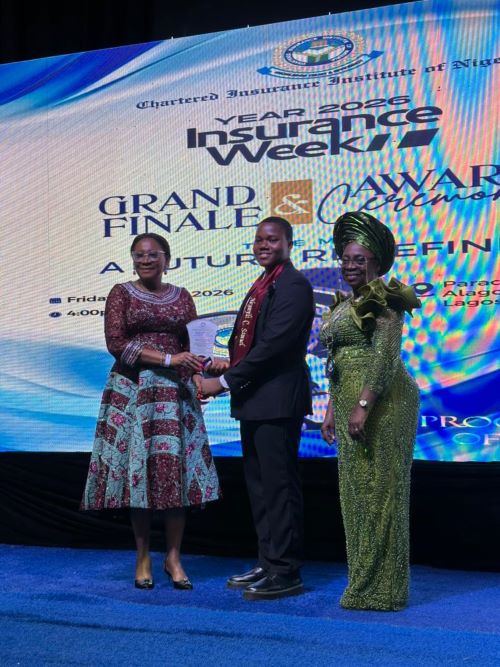
CIIN Unveils Programme for Insurance Week 2026

0

The Chartered Insurance Institute of Nigeria (CIIN) has rolled out activities for the 2026 Insurance Week to build on the success story of Insurance Week 2025.

Mrs. Yetunde llori, the President/Chairman of Council of the CIIN said at a media engagement that the purpose of the annual insurance week remains to increase the awareness and penetration of insurance across the nation and demographics.

“We want everyone to be educated about insurance for financial stability and economic growth to counter the misconceptions out there about insurance. We cannot counter such misconceptions in our offices. The purpose also is to introduce insurance to the younger generation as well as develop talent for the nation and the West African region.”

llori listed some of the programmes for the week-long Insurance Week 2026 to include wellness and awareness walk; unveiling of two books on insurance for elementary schools; panel discussion by non-insurance persons on their perception of the industry; individual and corporate recognitions; appointment of industry ambassadors; engagement with schools and MSMEs and demo day for hackathon.

“We cannot do it alone. We appreciate the support of the media for the success of the first insurance week last year. We also need your support and engagement as partners in progress for the success of the 2026 edition. Last year was a great success. For instance, film makers requested for a special insurance product tailored to their business. The hackathon was also a great idea that brought inclusivity. And companies and micro-insurance agents recorded tremendous sales.”

The CIIN boss added that Insurance Week 2025 was unique because it brought the entire insurance together in terms of participation and funding.

“All the CIIN chapters will anchor the programme this year as a mark of improvement from the programme of 2025.”

The Machine Era of Spam: Nigeria is Africa’s Most Spammed Country

0

A phone call used to mean a person on the other end. In Nigeria, that is no longer a safe assumption.

Nigeria is the most spammed country in Africa. In 2025, 51% of all unknown calls received by Nigerians were identified as spam or fraud, more than one in every two.

Nigeria ranks 8th globally and sits at the top of the African league table, ahead of South Africa (30%), Kenya (around 15%), Ghana (around 11%), and Ethiopia (around 9%). The data is drawn from Truecaller, the leading global platform for verifying contacts and blocking unwanted communication, with over 500 million users worldwide.

What makes Nigeria’s story different is who is making the calls. In Indonesia and Mexico, financial services impersonation is the dominant lure, accounting for over 40% of spam. In Chile, automated debt collection drives 38% of all spam.

In Nigeria, the dominant category is Telecom and operator-linked outreach, which accounts for 35% of all spam, the highest single-category concentration of any African market in the report. Sales and telemarketing follow at 10%, with scams at 6%.

The implication for Nigerian users is sharp. When automated outreach from carriers and unverified third-party agents dominates the calls landing on a Nigerian SIM, the lines between a legitimate service update, a promotional push, and outright fraud begin to collapse.

A user can no longer reliably tell whether an unknown call is the network confirming a data plan, a third party selling a loan, or a scammer wearing a familiar operator’s face. The same pattern shows up in Brazil, the only other major market where operator-linked calls dominate the spam landscape.

The Nigerian numbers sit inside a larger global story. Indonesia is the most spammed country in the world, with 79% of unknown calls flagged as spam in 2025. Chile follows at 70%, up from 51% in just six months. Vietnam, Brazil, and India round out the global top five.

Across South America and Southeast Asia, automated systems now drive more than 70% of unknown calls in some markets. In late 2025, the combined Middle East and Africa region crossed 100 million monthly active users on Truecaller, with Africa representing one of the platform’s fastest-growing communities.
The cost of this saturation is rarely a single fraudulent transfer. It is a slow erosion of trust in the phone itself. When most unknown calls are spam, people stop answering.

Doctors, schools, dispatch riders, banks, and legitimate Nigerian businesses then compete for attention on a device that experience has trained users to ignore. Missed calls become missed appointments, delayed information, dropped revenue, and customer relationships that quietly fade away.
“The scale of what this data shows should concern everyone. Fraud, impersonation, and scams are affecting people’s daily lives in a way we have never seen before. In some countries, most unknown calls are now spam, that is a fundamental breakdown in how communication works. Our mission is to build trust in communication, and in 2026, we are focused on stopping fraud before it reaches people,” said Rishit Jhunjhunwala, CEO of Truecaller.
On March 31, 2026, Truecaller crossed 500 million monthly active users, with more than 150 million outside India. The full Spam and Fraud Report, including the complete top 10 ranking and regional breakdown, is available at the Truecaller Insights page.

About Truecaller
Truecaller is an essential part of everyday communication for 500 million active users worldwide, with more than one billion downloads since launch and 68 billion spam and fraud calls identified in 2025 alone. The company is headquartered in Stockholm and has been publicly listed on Nasdaq Stockholm since October.