Home Blog Page 14

CBN: N4tn Capital Raised, Verified in Sector Recapitalisation as at Feb 19

0

The Governor, Central Bank of Nigeria (CBN), Mr. Olayemi Cardoso, says the apex bank as of February 19, 2026 has verified and approved capital raised under the recapitalisation programme to the tune of 4.05 trillion.

He provided a breakdown showing that 2.90 trillion (71.67%) was mobilised domestically, while US$706.84 million, estimated at 1.15 trillion (28.33%), reflected foreign participation.

According to the Governor, this balanced mix signals broad investor engagement and growing confidence in the sector.

Cardoso stated that the banking sector recapitalisation programme is progressing in accordance with the approved regulatory timetable, with activity accelerating as the March 31, 2026, deadline nears.

He disclosed that 20 banks have fully met the new minimum capital requirements, while a further 13 banks are at advanced stages of their capital-raising processes and are expected to conclude within the stipulated timeframe.

He explained that institutions still finalising their plans were assessing a variety of strategic options, including consolidation where suitable, as part of efforts to meet compliance within the remaining timeframe.

Governor Cardoso also discussed the status of institutions currently under regulatory intervention, noting that specific legal and structural factors influence the order of recapitalisation measures for these banks.

He said the CBN remains actively engaged with relevant stakeholders to ensure orderly and credible outcomes while maintaining financial stability.

In this context, he reassured stakeholders that depositor funds in those institutions remain secure and that operations continue under strict regulatory oversight.

Based on the current pace of compliance and ongoing capital-raising activity, Gov. Cardoso expressed optimism that the market would see substantial alignment with the new capital requirements by the cut-off date.

Under the CBN framework, minimum capital thresholds include: 500 billion for commercial banks with international authorisation, 200 billion for national authorisation, 50 billion for regional commercial banks, 50 billion for merchant banks, and 20 billion/10 billion for national/regional non-interest banks.

Tinubu: Oyedele In, Uzoka-Anite Out as Minister of State for Finance

0

President Bola Ahmed Tinubu has nominated Mr Taiwo Oyedele as the Minister of State for Finance, replacing Dr. Doris Uzoka-Anite.

Uzoka-Anite will now move to the Ministry of Budget and National Planning, as the Minister of State, her third portfolio in the administration.

President Tinubu has today conveyed the nomination of Oyedele to the Senate for confirmation in a letter to the Senate President, Godswill Akpabio.

Until President Tinubu nominated him as a minister, Oyedele from Ikaram, Akoko, Ondo State, was the chairman of the Presidential Committee on Fiscal Policy and Tax Reforms, which overhauled Nigeria’s tax system.

Oyedele, 50, is an economist, accountant and public policy expert.

He attended Yaba College of Technology, where he obtained a Higher National Diploma (HND) in accountancy and finance. He attended Oxford Brookes University and earned a BSc in applied accounting.

He also completed executive education programmes at the London School of Economics, Yale University, the Gordon Institute of Business Science, and the Harvard Kennedy School.

Oyedele spent 22 years of his working career at PwC, joining in 2001 and rising to become the Fiscal Policy Partner and Africa Tax Leader.

Oyedele is also a professor at Babcock University in Ogun State and a visiting scholar at the Lagos Business School.

FG, ENI, NAEL Resolve OPL 245, Unlocks Major Deepwater Investment

0

Chief Executive Officer Eni, Claudio Descalzi and President Bola Tinubu during a meeting with the President on final resolution of OPL 245.

President Bola Tinubu has announced successful conclusion of a historic settlement agreement between the Federal Government of Nigeria, ENI, and Nigerian Agip Exploration Limited (NAEL) at a meeting in his office attended by the Chief Executive Officer of Eni, Claudio Descalzi, Chief Operating Officer of Eni Guido Brusco, Head of Sub-Saharan Region, Mario Bello, Managing Director of Nigerian Agip Exploration, Fabrizio Bolondi and Special Adviser to the President on Energy, Olu Verheijen.

The agreement brought to a close the long-standing dispute over Oil Prospecting Licence (OPL) 245, paving the way for the development of one of Nigeria’s most significant deepwater resources.

The agreement, signed in Abuja, marks the resolution of a dispute spanning more than 15 years and restores clarity and stability to an asset widely recognised as one of Nigeria’s most commercially promising deepwater blocks.

With the dispute now settled, the pathway is clear for Final Investment Decision on the Zabazaba–Etan development, a project capable of adding approximately 150,000 barrels per day to Nigeria’s production capacity and strengthening the country’s long-term energy outlook.

President Bola Ahmed Tinubu described the agreement as a strategic milestone in Nigeria’s economic reform agenda, reaffirming the administration’s commitment to resolving legacy disputes, restoring investor confidence, and ensuring that Nigeria’s natural resources deliver sustainable value to the Nigerian people.

“This resolution sends a clear signal to global investors that Nigeria is prepared to address legacy issues transparently, uphold the rule of law, and create a stable environment for long-term capital,” the President said.

“The settlement also represents a significant improvement on the 2011 Resolution Agreement, reflecting the policy framework established under the Petroleum Industry Act (PIA) and the administration’s broader fiscal and governance reforms in the energy sector”, said Olu Arowolo-Verheijen, Presidential adviser on energy.

“The revised terms strike a balanced outcome providing investors with the clarity and predictability required to proceed with major deepwater investments, while ensuring stronger value accretion and safeguards for the Federation”, Arowolo-Verheijen added.

The agreement is part of a wider programme of reforms undertaken since 2023 to restore Nigeria’s competitiveness in global energy markets. These reforms, anchored in the Petroleum Industry Act and supported by targeted executive actions, have already contributed to renewed investor interest and significant capital inflows into Nigeria’s oil and gas sector.

“By resolving the OPL 245 dispute, the Federal Government has removed one of the most prominent legacy risks in Nigeria’s upstream sector and reinforced its commitment to predictable regulation, transparent governance, and commercially viable investment frameworks”, Arowolo-Verjeihen further said.

President Tinubu commended all institutions and stakeholders who contributed to achieving the settlement, including the Office of the Attorney General of the Federation, the Ministry of Petroleum Resources, the Special Adviser to the President on Energy, the Nigerian Upstream Petroleum Regulatory Commission (NUPRC), NNPC Limited, and the leadership of ENI.

The successful resolution underscores the Tinubu Administration’s determination to unlock Nigeria’s strategic energy assets, attract responsible investment, and ensure that the nation’s resources translate into growth, jobs, and long-term prosperity for Nigerians.


FG: Tax Reforms Will Improve Lives, Not Impoverish Nigerians

0

Vice President Kashim Shettima said on Wednesday in Abuja, that the implementation of new tax reforms will eliminate the burden of multiple levies and charges on small businesses and low-income earners in Nigeria, thereby helping to reduce poverty.

Shettima noted that the planning and implementation of the tax reforms were carefully designed to improve livelihoods, contrary to the claims of political detractors.

The Vice President spoke on behalf of President Bola Tinubu at the interfaith breaking of fast for Ramadan and Lent held at the State House. Attendees included members of the Federal Executive Council, the Central Bank governor, special advisers, senior special assistants and heads of agencies and parastatals.

Shettima urged them all to remain champions of the government’s reforms.

He said the government is genuinely concerned about Nigerians’ plight and is releasing policy instruments to lift many out of poverty without adding to their burdens.

“The same people who are shouting hoarse that the tax reform is meant to pulverise further and pauperise the poor are far from the truth, but we have to go out and tell the truth to the people.

“We have to educate them. We have to mount the pulpits and take our government to the Nigerian people and tell them the truth,” he said.

Shettima highlighted some of the gains of the economic reforms, including an increase in the nation’s foreign exchange reserves, streamlining of the exchange rates and the removal of a subsidy that had favoured only a few for many years.

He said President Tinubu should be commended for the courage to address the issues that past administrations avoided.

The Vice President explained that the removal of the fuel subsidy was not mentioned in the President’s 2023 inaugural speech. Still, the President had to announce it, knowing that the system was draining the economy of resources for development.

“Three years down the road, the economy has bounced back,’’ he added.

“On behalf of the President, I want to thank you all for comradeship, support and partnership,’’ he stated.

Shettima advised government officials to be more active in sharing facts about the administration’s achievements and to be ready to counter falsehoods propagated by the opposition parties.


Nigeria to Unveil National Single Window Platform March 27

0

Nigeria will launch the highly anticipated National Single Window (NSW) platform on March 27, a move described by the Chief of Staff to the President, Femi Gbajabiamila, as a “monumental” step in transforming the country’s trade ecosystem.

Gbajabiamila disclosed this during a stakeholders’ meeting at the State House, Abuja, attended by ministers, agency heads, and key officials.

He said the initiative, first launched by President Bola Ahmed Tinubu nearly two years ago, is a far-reaching fiscal reform that will streamline trade procedures, improve efficiency, and enhance Nigeria’s competitiveness.

“We are about to launch yet another reform, fiscal reform by this administration, which in its nature will be very transformational.

“As the name suggests, it is a single national window as opposed to multiple single windows.

“This meeting is to review the progress we have made and get your commitment that we will manage this transition smoothly.

The Chief of Staff commended the dedication and professionalism of the Central Bank, the Nigeria Revenue Service, the Nigeria Customs Service and other agencies involved.

Earlier in his presentation, the NSW Co-ordinator, Mr Tola Fakolade, urged agencies to intensify support in the final 23 days before the “go-live” as scheduled.

According to him, the first phase will enable online processing of import permits, electronic submission of cargo manifests, and the introduction of a centralised risk management system.

He added that nationwide user training is ongoing, and pilot testing will soon be conducted to ensure a smooth rollout.

Fakolade added that cargo manifests would be submitted electronically and transmitted automatically to relevant agencies without human intervention.

“The support that we need from each of the agencies is even more critical now. Documents will be submitted once and shared with all relevant agencies without duplication,” he said.

Co-ordinating Minister of the Economy and Minister of Finance, Wale Edun, reaffirmed the ministry’s commitment to the project.

“This is a growth-enhancing and growth-enabling project. What is required of the Ministry of Finance, we will definitely do,” he said.

Jumoke Oduwole, Minister of Industry, Trade and Investment, reiterated the ministry’s full support, calling the project a critical pillar of the Renewed Hope Agenda.

She stressed that the initiative is long overdue and promised active collaboration with relevant agencies over the next three weeks to sensitise traders, importers, and exporters.

The Governor of the Central Bank, Olayemi Cardoso, also pledged the Bank’s full support, highlighting the importance of closing Nigeria’s trade facilitation gap with other countries.

Similarly, Chairman of the Nigeria Revenue Service, Zacch Adedeji, called for stronger coordination and political will, proposing that the Minister of Trade lead the 23-day implementation phase to ensure seamless delivery.

Comptroller-General of Customs, Bashir Adeniyi, described the NSW project as a historic milestone, emphasising direct engagement with stakeholders and full collaboration to guarantee success.

At the end of the meeting, the Minister of Industry, Trade and Investment was mandated to lead the implementation phase to ensure a smooth and successful launch on March 27.

Agencies represented, apart from the Nigeria Customs Service (NCS), were the Standards Organisation of Nigeria (SON), the Nigerian Maritime Administration and Safety Agency (NIMASA), the Nigerian Ports Authority (NPA), and the National Agency for Food and Drug Administration and Control (NAFDAC).

Others were the Federal Airports Authority of Nigeria (FAAN), the Nigeria Agricultural Quarantine Service (NQS), and the National Environmental Standards and Regulations Enforcement Agency.  (NESREA).


Stanbic IBTC Regional Economic Outlook Series Positions Investors for Confident 2026 Decision Making

0

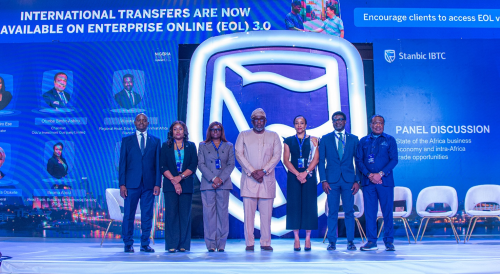
Stanbic IBTC has concluded its 2026 Regional Economic Outlook Series, a regional investor summit designed to provide high net worth individuals, investors, business leaders, and senior executives with clarity in a rapidly evolving economic environment.

Hosted in Lagos, Abuja, and Port Harcourt, the series served as a strategic platform for translating Nigeria’s reform momentum into practical investment and business decisions.

The series featured a keynote address by Professor Adedipe, whose insights set a strong analytical foundation for the conversations that followed.

His presentation unpacked structural reforms, fiscal recalibration, and the direction of monetary policy, offering attendees a comprehensive perspective on Nigeria’s growth trajectory and the discipline required to sustain macro-economic stability.

Across all three cities, Stanbic IBTC’s subject matter experts and industry professionals moved the discussion from macroeconomic signals to market strategy.

Sessions were structured to bridge economic context with sector specific opportunities, portfolio construction frameworks, and risk management considerations. The focus extended beyond understanding the environment to making informed, disciplined decisions within it.

A recurring theme throughout the summit was the evolving monetary policy cycle. Discussions examined the Central Bank of Nigeria’s tight stance in addressing inflationary pressures and stabilising the currency.

Participants also considered the potential implications of a gradual policy easing cycle, particularly for fixed income instruments, equity positioning, and broader asset allocation strategies. Emphasis was placed on timing, selectivity, and portfolio resilience.

Beyond markets, the conversations addressed the practical realities of wealth and business strategy. High net worth individuals gained clarity on diversification, currency exposure, and inflation management, while business leaders explored how improving macro-economic stability can support capital allocation decisions and long-term expansion plans.

Busola Jejelowo, Chief Executive of Stanbic IBTC Asset Management, reflected on the quality of engagement across the regions. She noted that the depth of questions and analytical rigour demonstrated a maturing investment culture and a growing appetite for data driven strategies.

According to her, the series was not only about presenting forecasts, but about equipping clients with structured frameworks for navigating uncertainty.

Olu Delano, Executive Director, Personal and Private Banking at Stanbic IBTC, emphasised the importance of linking macro-economic trends to personal financial goals:

“Whether planning for retirement, funding education abroad, or expanding a business, improved stability creates opportunities. But those opportunities require careful structuring around foreign exchange dynamics, inflation trends, and interest rate movements.”

As Nigeria approaches 2026, the outlook is optimistic, supported by improving macro-economic fundamentals and a clearer policy direction. While global headwinds and domestic structural challenges remain, the prevailing sentiment across the summit was one of confidence anchored in disciplined reform and data driven decision making.

The successful delivery of the Regional Economic Outlook Series reinforces Stanbic IBTC’s role as a trusted financial partner and thought leader.

By convening critical conversations and equipping clients with analytical depth and practical strategy, the organisation continues to empower investors and business leaders to navigate complexity with confidence and purpose.


emPLE Partners Lagos State, Bastion Health for International Women’s Day “emPOWERHer” Health Drive

0

emPLE, one of Nigeria’s rapidly growing insurance companies, has announced a strategic partnership with the Lagos State Ministry of Health (LSMOH) and Bastion Health to celebrate International Women’s Day 2026 through its emPOWERHer campaign. This community-focused health initiative aims at promoting preventive healthcare for women and their children.

Taking place on Saturday, March 7, 2026, at emPLE’s headquarters on Akin Adesola Street, Victoria Island, Lagos, the initiative brings together public and private-sector partners to offer free screenings, vaccinations, and wellness activities in a unified call to action for proactive women’s health.

Under the collaboration, LSMOH will lead specialised medical interventions, including cervical and breast cancer screenings as well as free Human Papillomavirus (HPV) vaccinations for girls aged 9–14. Bastion Health will coordinate routine health checks, such as hypertension screening, blood sugar tests, and Body Mass Index (BMI) assessments.

The program will start with an awareness walk from emPLE’s head office at Akin Adesola to Ozumba Mbadiwe, then to Muri Okunola Junction, and back, symbolizing collective advocacy for women’s wellbeing. This will be followed by a cardio and fitness session, along with a full range of health screenings.

Commenting on the initiative, Olalekan Oyinlade, Managing Director/CEO of emPLE General Insurance Limited, said: “International Women’s Day is a powerful reminder that protecting women’s wellbeing requires practical action. Through emPOWERHer and our partners in Lagos State and Bastion Health, we are helping remove barriers to early detection and prevention by bringing essential services closer to the community.”

Also commenting, Jolaolu Fakoya, Acting Managing Director/CEO of emPLE Life Assurance Limited, stated that “when women have access to timely screening, routine checks, and credible health information, outcomes improve for families and for the next generations. emPOWERHer reflects our commitment to empowering Nigerians, especially our women, to take proactive steps toward protecting their health.”

The event is also supported by Sosa Fruit Drinks, which will provide its refreshing fruit drinks to participants.

Activities for the day include an awareness walk, cardio and fitness session, breast cancer screening, cervical cancer screening, hypertension checks, blood sugar level tests, BMI assessments, and free HPV vaccination for girls aged 9–14.

The event will begin at 8:00 a.m. prompt at emPLE HQ, Plot 1297 Akin Adesola Street, Victoria Island, Lagos. It will be open to women and families seeking accessible, high-quality preventive healthcare services.


About emPLE

emPLE is a Nigerian insurance brand operating through emPLE General Insurance Limited and emPLE Life Assurance Limited, focused on providing accessible protection solutions rooted in governance discipline, operational excellence, and sustainability principles.


Chowdeck Partners MyCoverGenius to Set New Standard for Rider Protection in Nigeria

0

Chowdeck, Africa’s leading on-demand delivery platform, has partnered with MyCoverGenius, Nigeria’s Number 1 Insurance services provider, to provide personal accident insurance for more than 20,000 riders on its platform.

Under the agreement, which commenced in November 2024, every active Chowdeck rider will be automatically enrolled in a personal accident insurance plan powered by MyCoverGenius. The cover includes accidental medical expenses, temporary disability, and other key protections. This landmark collaboration sets a new benchmark for rider welfare in Nigeria, giving thousands of riders who serve over two million Chowdeck customers the security of a reliable safety net.

Since launching in October 2021, Chowdeck has grown to become one of Nigeria’s most trusted delivery platforms, known not just for speed and reliability, but also for its commitment to empowering riders. The partnership with MyCoverGenius underscores Chowdeck’s continued investment in rider welfare and its mission to build a delivery ecosystem where safety, dignity and sustainability are prioritized.

The rise of on-demand services has opened up new opportunities for work across Africa.

In Nigeria, a recent survey revealed that 64% of location-based gig workers said their income from gig platforms made a meaningful difference to their household finances. At the same time, this growth has underscored the importance of providing stronger protections for the riders that support the success of the industry.

By partnering with MyCoverGenius, Chowdeck is setting a new standard for on-demand services in Africa – one that places rider wellbeing at the centre, while enabling them to continue delivering the speed, reliability and excellent service that customers value.

Umar Nasir, Head of Operations at Chowdeck, said “riders are a critical part of everything we do at Chowdeck. This partnership with MyCoverGenius is about more than just insurance – it’s about setting a new benchmark for how delivery platforms in Africa should protect and support their people. We want every Chowdeck rider to feel secure knowing that their wellbeing is just as important as the meals and packages they deliver every day.”

Adebowale Banjo, CEO at MyCoverGenius added: “Our mission has always been to make insurance accessible, relevant, and impactful for everyday Africans. By partnering with Chowdeck, we’re not only extending protection to thousands of hardworking riders, but also demonstrating how digital platforms can integrate insurance in ways that directly improve lives.”


About Chowdeck

Chowdeck is a technology company transforming how food and hospitality businesses operate across Africa. 

Founded in October 2021, the company provides a platform that brings together smart logistics, seamless payments, inventory management, and real-time performance tools. Combining reliable infrastructure with strong merchant partnerships, Chowdeck enables thousands of businesses to run more efficiently while delivering excellent experiences to millions of customers every day.


About MyCoverGenius

MyCoverGenius is a leading insurance technology company transforming how individuals and businesses access and experience insurance. 

The company has built a fast-growing digital platform that simplifies access to health, auto, gadget, travel, and third-party coverage all in one seamless solution. 

Backed by innovative technology, and a deep understanding of customer needs, MyCoverGenius continues to make insurance more accessible, affordable, and flexible for Nigerians everywhere.

ABoICT Lecture/Awards 2026 to Focus on Impact of AI, IoT on Business Operational Efficiency

0

The Board and Management of Communication Week Media Limited, publishers of Nigeria CommunicationsWeek, at the weekend announced that this year’s Africa’s Beacon of ICT Merit and Leadership lecture will focus on Impact of AI and IoT on business operational efficiency.
Africa’s Beacon of ICT Merit and Leadership lecture, widely regarded as the most prestigious annual event available in the ICT industry in Nigeria is in its 17th year.
The lecture holds on May 30, 2026 at Oriental Hotel, Lekki, Lagos, according Ken Nwogbo, Editor-in-Chief of Nigeria CommunicationsWeek, the organisers of the event.
He said that this year’s event “is digital transformation edition” to recognise and celebrate organisations and individuals in the ICT industry that have impacted in digital transformation of the economy.
“Most of these organisations and individuals have consistently being voted by our readers as leaders in their areas of operations and we have decided to reward them in this special edition, tag: ‘Digital Transformation Edition 2026.’
He added that, Digital transformation, driven by AI and IoT, will fundamentally boosts business operational efficiency by automating complex tasks, enabling real-time data analysis, and reducing costs.
“IoT technology optimizes resources, predict maintenance needs, and enhance decision- making, allowing companies to streamline workflows and improve productivity across sectors like manufacturing and logistics.
“It is an emerging technology that has impacted lifestyles and has changed the way we think and act, and the way we interact with each other.
It has also changed the way we work as it enables very large-scale monitoring, control, and automation, and has impacted the digital transformation of organisations in different industries”, he said.
According to him, “the transformative power of Artificial Intelligence exists as a bringing force in organisational communication. AI tools perform repetitive jobs, deliver simultaneous translations, and register team communication patterns, which lead to better understanding of group interactions. AI chatbots help manage customer support inquiries thus enabling staff members to dedicate their efforts
toward complex work activities.”
The Africa’s Beacon of ICT Merit and Leadership Distinguished (ABoICT Lecture 2026) is designed to explore efforts to put Nigeria on the global Information and Communications Technologies map.
The lecture series however is reserved for distinguished achievers in the ICT sector.
Past lecturers included Dr. Ernest Ndukwe, then executive vice chairman, Nigeria Communications Commission (NCC); Uche Orji, Managing Director/Chief Executive Officer, Nigeria Sovereign Investment Authority (NSIA); Biodu Omoniyi, Managing Director/CEO, VDT Communications; Ayotunde Coker, former Managing Director, Rack Centre Limited; Prof. Adewale Obadare, Chief Visionary Officer, Digital Encode; Dr. Oluseyi Akindeinde, Founder, Hyperspace & amp;amp; NeuraL AI and John Obaro, CEO and Founder of SystemSpecs; Prof. Isa Pantanmi, former minister of Communications and Digital Economy, among others.


SanlamAllianz Nigeria Pays over ₦77bn in 2025 Claims, Reinforces Financial Strength, Customer Trust

0

SanlamAllianz Nigeria, comprising SanlamAllianz Life Insurance and its subsidiary, SanlamAllianz General Insurance, has announced total claims payments in excess of ₦77 billion across its Life and General Insurance businesses for the 2025 financial year, reaffirming its financial strength and commitment to policyholders amid sustained macroeconomic pressures.

The performance underscores the company’s role as a reliable risk partner and reflects the strength of the Sanlam Allianz joint venture, which combines African market leadership with global insurance expertise.

According to the unaudited figures, the Life business recorded Net Claims Incurred of ₦57.06 billion in FY 2025, compared to ₦51.04 billion in FY 2024, representing an 11.8% year-on-year increase.

The increase reflects elevated claims costs driven by Nigeria’s 2025 macroeconomic environment, including inflationary pressures impacting benefit payouts and medical-related claims across the industry. Despite this, the Life business delivered strong top-line growth, with Gross Written Premium (GWP) rising to ₦81.39 billion in 2025, up from ₦60.86 billion in 2024, a significant 33.7% year-on-year increase.

Commenting on the results, Tunde Mimiko, Chief Executive Officer, Life Business, said: “Our unaudited 2025 results reflect disciplined growth and an unwavering commitment to our policyholders. In a year defined by economic pressure, we honoured our obligations promptly and responsibly. The strong premium growth demonstrates increasing trust in our Life solutions and confidence in the SanlamAllianz value proposition. Our focus remains on protecting families and businesses so they can truly live with confidence.”

The General Insurance business, on the other hand, according to its unaudited results, paid ₦20.9 billion in claims in 2025, compared to ₦13.97 billion in 2024, marking a 47.6% year-on-year increase in claims settlement.

Gross Written Premium for the General business stood at ₦47.05 billion in 2025, reflecting sustained underwriting capacity and expansion across corporate and retail portfolios.

Jacqueline Agweh, Chief Executive Officer, General Insurance Business, stated: “The true measure of an insurance company is its ability to pay claims efficiently and transparently. Our unaudited 2025 performance demonstrates operational strength and financial resilience. As part of the SanlamAllianz joint venture, we leverage global underwriting standards, strong capital backing, and deep local expertise to ensure individuals and businesses remain protected against uncertainty.”

SanlamAllianz Nigeria operates under a strategic joint venture between Sanlam, Africa’s largest non-banking financial services group, and Allianz, one of the world’s leading global insurers.

The alliance combines global risk management expertise, strong capital and governance frameworks, advanced technical underwriting capabilities, and deep local market understanding

The company’s claims record reinforces its brand promise, “Live with Confidence.”

By honouring over ₦77 billion in claims in 2025 alone, SanlamAllianz continues to provide financial security, stability, and peace of mind to individuals, families, and businesses across Nigeria.


About SanlamAllianz Nigeria

Formed as a merger of Sanlam, Africa’s biggest non-banking financial services firm and Allianz, easily the world’s most recognisable insurance brand in a JV across 28 countries on the continent, SanlamAllianz has become the clear leader in the non-banking financial services industry in Africa with strong commitments to be top two in every market in which they operate.

Consummated in Nigeria as SanlamAllianz Nigeria in June 2025, the brand immediately embarked on a rebrand campaign which saw it dominate headlines to the delight of industry watchers.


Stanbic IBTC Economic Summit Delivers Strategic Framework for Navigating Nigeria’s 2026 Investment Landscape

0

Institutional investors, corporate leaders and economic experts gained practical insights into portfolio positioning at the recently held Stanbic IBTC Economic Summit.

Delivered virtually under the theme ‘From policy to pockets: How 2026 economic shifts will shape your financial decisions’, the summit explored how Nigeria’s shift from economic stabilisation to growth consolidation is redefining opportunities and risks for decision-makers. Discussions examined monetary policy transmission, sectoral opportunities, equity valuations and institutional risk frameworks.

Speaking on the objective of the webinar, Busola Jejelowo, Chief Executive, Stanbic IBTC Asset Management, said:

“Stanbic IBTC brings a distinct perspective to this conversation. As an integrated financial services group spanning asset management, banking, pension administration, insurance, stockbroking, trustees and investment banking, we support clients across every stage of their financial journey from treasury and trade finance to pension fund custody and structured investment solutions.”

Busola added that today’s environment calls for discipline and long-term thinking. “Economic uncertainty demands proactive risk management and continuous learning. By working with trusted advisers and staying ahead of market shifts, investors can preserve value and position to capture opportunities in a transforming economy. Our teams are ready to support portfolio reviews, strategic asset allocation, and tailored solutions.”

Kuranga, Abdulazeez A, an Economist in Global Markets at Stanbic IBTC Bank, expressed confidence that Nigeria’s economy will rely less on oil and grow from a wider mix of sectors in 2026. In his view: “We expect broader sectoral diversification in Nigeria’s growth trajectory, with the non-oil sector driving GDP expansion in 2026 as structural reforms deepen and reliance on petroleum revenues declines.”

Abdulazeez projected GDP growth of between 4.1% and 4.4% in 2026, marking a clear acceleration and pointing to stronger macroeconomic fundamentals compared to 2025.

Toyin Aju, Head of Fixed Income at Stanbic IBTC Asset Management, highlighted the value of professional asset management: “Mutual funds simplify investing by undertaking rigorous credit analysis and comprehensive reviews before deploying capital. Sound financial health starts with informed decisions, and we encourage investors to engage us in planning their financial future.”

On equities, Kehinde Owonubi, Head of Equities, Stanbic IBTC Asset Management, maintained a positive outlook:

“We remain constructive across most sectors, supported by expectations of sustained economic growth and improving macroeconomic stability. In particular, the banking sector stands to benefit from this growth momentum. As interest rates decline, we expect credit growth to accelerate, supporting lending activity and profitability.”
He also described the recent regulation by the National Pension Commission (PenCom), which revised the allowable limit for pension fund allocation to equities upward, as supportive of market depth, noting that increased pension fund participation should be constructive for long-term market development.

Across sessions, speakers agreed that while stabilisation progress is evident, translating stability into sustainable returns will require disciplined execution. Panellists emphasised scenario-based portfolio construction incorporating optimistic, baseline, and downside cases to build resilience across varying economic outcomes.

The summit reinforces Stanbic IBTC’s role as a thought partner to investors – deepening market insight; strengthening investment decisions; and supporting the long-term growth of Nigeria’s financial ecosystem.

ITREALMS Media Announces 2026 Nigeria DigitalSENSE Forum, Focuses on Sustaining WSIS Vision, Multistakeholder Synergy

0

As the global community accelerates toward a more integrated digital future, ITREALMS Media Group, through its flagship digital rights initiative, the Nigeria DigitalSENSE Forum (NDSF), has officially announced the 2026 edition of its annual convening on Internet Governance for Development (IG4D).
The Forum, scheduled for Thursday, June 11, 2026, at the Welcome Centre Hotels, Ikeja, Lagos, will bring together policymakers, tech innovators, and civil society under the theme: “Sustaining WSIS Vision with Multistakeholder Synergy in Nigeria.”
This year’s theme aligns with the recent UN General Assembly Resolution A/RES/80/173, which reaffirms the World Summit on the Information Society (WSIS) vision. The 2026 NDSF aims to address the critical need for connecting all citizens, ensuring the affordability of digital technologies, and increasing investment in Digital Public Infrastructure (DPI) to bridge the widening digital divide.
Speaking on the upcoming event, Ogbuefi Remmy Nweke, Group Executive Editor and Lead Consulting Strategist at ITREALMS Media, emphasised that the stability of Nigeria’s digital economy depends on collaborative security.
“Building an inclusive, open, and secure digital space remains paramount,” Nweke stated. “Beyond connectivity, we must ensure that our digital ecosystem protects children online and remains resilient against global threats. The 2026 NDSF serves as a catalyst for the multistakeholder synergy required to achieve these goals.”

Key Highlights of NDSF 2026:
Focus on Emerging Tech: In-depth discourse on IPv6 adoption, Domain Name System (DNS) security, and the evolution of Digital Public Infrastructure.
Child Online Protection: Strategies for creating a safer internet for the younger generation.
Strategic Collaboration: Continuing a long-standing partnership with the Nigerian Communications Commission (NCC), NITDA, and Association of Licensed Telecoms Operators of Nigeria (ALTON).
Smart Infrastructure: Exploring how telecommunications and satellite technology can drive the “Smart Nigeria” agenda.
The forum will feature a keynote address titled “Sustaining the WSIS Vision via Telecoms: Driving Multistakeholder Synergy for Nigeria’s Future,” expected to be delivered by leadership from the nation’s top regulatory bodies.
Since its inception, NDSF, hosted by DigitalSENSE Africa (DSA), an ICANN-certified At-Large Structure; has been at the forefront of motivating public discourse on the business and technological benefits of advancing internet governance.
Members of the press, stakeholders in the ICT sector, and the general public are invited to join this milestone event to help shape the trajectory of Nigeria’s digital sovereignty.

NCDMB: Remittance of 1% Nigerian Content Levy Still Mandatory

0

The Nigerian Content Development and Monitoring Board (NCDMB) on Tuesday reminded operators, contractors, and service companies in the upstream sector of the Nigerian oil and gas industry of their mandatory obligation to remit one percent (1%) Nigerian Content Development Fund (NCDF) levy into the bank accounts officially designated by the Board.

In a statement at the Nigerian Content Tower, Yenagoa, Bayelsa State, the Executive Secretary of NCDMB, Engr. Felix Omatsola Ogbe explained that the NCDF is established under Section 104 of the Nigerian Oil and Gas Industry Content Development (NOGICD) Act, 2010 as a dedicated fund for the development of Nigerian content in the oil and gas industry.

He reiterated that covered entities are bound to remit one percent (1%) of the value of every upstream contract, adding that NCDMB is vested with the exclusive authority for the management and administration of the fund.

Funds generated under the NCDF are deployed to support indigenous oil and gas contractors and service companies, to finance capacity development and training in the industry, to enable access to affordable finance for indigenous participation, and to drive sustainable growth across the oil and gas value chain.

Ogbe clarified further that “the NCDF is a ring-fenced statutory development fund created by a specific Act of the National Assembly,” adding that it is “not classified as Federal Government revenue payable into the Consolidated Revenue Fund and its collection and administration are expressly governed by Section 104 of the NOGICD Act.”

He stressed that all remittances of the one percent (1%) NCDF levy must be made strictly into the accounts officially designated by the NCDMB, pointing out that “any remittance made outside the accounts formally designated by the NCDMB “shall not be recognised as valid payment of the one percent (1%) NCDF Levy under the Act.”

He urged companies to ensure strict compliance and to seek clarification from the Board where necessary prior to effecting any remittance. The Executive Secretary assured industry stakeholders that the Board remains committed to transparency, accountability, and the effective utilisation of the Fund for the growth and sustainability of Nigerian Content in the oil and gas industry.

Furthermore, the NCDMB has announced that obtaining the Nigerian Content Development Fund Compliance Certificate (NCFCC) has become a key requirement for accessing the Board’s regulatory services and approvals.

The NCDF Compliance Certificate is issued to companies to confirm their full compliance with statutory obligation to remit one per cent (1%) of the value of every contract awarded in the upstream sector of the oil and gas industry.

The Board stated that “without a valid NCDF Compliance Certificate, access to regulatory documents, certifications, approvals, and clearances issued by NCDMB shall not be granted.” Some of these include Nigerian Content Equipment Certificate (NCEC), approvals and clearances for projects and contracts, and other regulatory documents issued by the Board.

The agency advised oil and gas industry stakeholders to regularise their NCDF remittance status, apply promptly for the document and ensure continuous compliance to avoid disruptions to operational schedules.

The Board said the process of obtaining the NCFCC is fully digital and accessible via the NCDMB online portal. It advised all eligible companies to submit relevant contract and remittance information, upload evidence of NCDF payments, complete verification and compliance review, and obtain the Compliance Certificate upon confirmation.

According to NCDMB, obtaining the NCDF Compliance Certificate matters because it is a validation of a company’s standing with the Board, and serves as a mechanism for promoting transparency, accountability, and sustainable Nigerian content development.


NCDMB Builds Capacity in Health Sector, Donates Hi-tech Equipment, Simulators to Bayelsa Medical University

0

A state-of-the-art Clinical Skills and Simulation Laboratory, fully equipped by the Nigerian Content Development and Monitoring Board (NCDMB), was on Friday commissioned at the Bayelsa Medical University (BMU), Yenagoa, with the goal of positioning the institution to align with global best practices in medical education, and “strengthening local capacity in Bayelsa State and Nigeria at large.”

Equipment provided include high-fidelity adult and pediatric patient simulators, laparoscopic training systems, obstetric trainers, advanced life support mannequins, consultation cubicles, and audio-visual learning systems, all of which the university authorities claimed would enable students to “learn, make mistakes, and perfect their life-saving skills in a zero-risk environment before they ever touch a human patient.”

Speaking at the commissioning ceremony at the Clinical Skills Acquisition Centre, BMU Main Campus, the Executive Secretary of the NCDMB, Engr. Felix Omatsola Ogbe, said that capacity building is “not just about oil and gas; it is about ecosystems,” and that the industry does not operate in isolation. He listed health care, education, engineering, and logistics, among others, as sectors with linkage to the oil and gas industry.

He noted that “Simulation-based learning is now the global standard in medical education” and that it allows students to acquire hands-on clinical skills, improves decision-making, and builds confidence in a controlled safe environment before engaging the blue patient.

Represented by Mr. Ene Ette, Acting Director, Planning, Research and Statistics (PRS) of the Board, the Executive Secretary commended the Management of BMU and partner organisations for their collaboration, professionalism, and shared vision, pointing out that the upgraded laboratory is a strategic investment in human capacity and capital development and a practical demonstration of how policy can translate into measurable impact.

In his welcome address, the Vice Chancellor of the institution, Professor Dimie Ogoina, noted that the event was not just the commissioning of a building or unveiling of medical equipment, it was about “securing the future of healthcare in Bayelsa State, the Niger Delta, and Nigeria at large.” He said words could not adequately express his profound gratitude to the Management of the NCDMB.

He recalled that when he assumed office as Vice Chancellor in 2025, he shared his vision, encapsulated in what he termed A.S.P.I.R.E. Agenda, to transform Bayelsa Medical University into a globally recognised leader in medical education, research, and innovation, driven by technology and excellence. “Today,” he remarked, “as we look at this world-class facility, we are seeing the ASPIRE Agenda come to life.”

To the Executive Secretary and the entire Management of the NCDMB, he declared: “You have provided us with the very best – from advanced patient simulators and CPR mannequins to essential surgical and diagnostic kits,” noting that by equipping the lab to such a standard, the Board was “directly contributing to the reduction of medical errors, the improvement of patient safety, and the development of indigenous healthcare professionals who will serve our communities and our industries.”

“We are not just training doctors for today, we are nurturing digital-age physicians capable of competing on the global stage,” he emphasised.

Professor Ogoina also appreciated the Bayelsa State Governor, Senator Douye Diri, and the Commissioners for Health and Education, for the unwavering support and for creating an enabling environment that allows partnerships like the one with NCDMB and its partner organisations to thrive.

In a similar vein, the Provost of the College of Medicine, Bayelsa Medical University, Professor Philip Eyimina, expressed profound gratitude to the NCDMB for its foresight and generosity in equipping the University Clinical Skills and Simulation Laboratory, and to the Bayelsa State Government for continued commitment to strengthening healthcare and education in the State.

He pointed out that the newly upgraded laboratory played a significant role in the institution’s recent accreditation verification exercise. According to him, “The presence of a functional, well-equipped Clinical Skills Laboratory strongly affirmed our readiness to deliver high-quality medical education in line with national standards.”

According to him, “In this laboratory, our students will learn essential competencies – history taking, physical examination, suturing, intravenous access, cardiopulmonary resuscitation, obstetric skills, and emergency response – while developing critical thinking, teamwork, and communication skills.”

In a special address, the State Governor, Senator Douye Diri, who is the Visitor to the University, lauded the NCDMB for providing facilities which he described as remarkable. He recalled the aspiration of the Vice Chancellor to make BMU “a leading university in medicine,” noting that “What the NCDMB has done is clearly a demonstration of going with that vision to market this university to the entire world.”

Represented by the State Commissioner for Education, Dr. Gentle Emelah, the Governor declared that the institution has the firm support of the State Government as it strives for high academic standards and global reckoning.

In a goodwill message, the Pro-chancellor of the University, Professor Tarilah Tebepah, said while the Governing Council was considering the vision of BMU becoming globally known as a leader in medical education, producing very sound innovative healthcare professionals, it never lost sight of the fact that a lot of technology, equipment and funding would be required.

He thanked the NCDMB profusely, while pleading that it should continue to identify with the institution as it grapples with resource-related challenges.

The event was concluded with a tour of key units of the state-of-the-art Clinical Skills and Simulation Laboratory, which include a Virtual Reality Station, Paediatric and Airway Management Stations, EGG and Patient Monitoring Station, IV Fluids Administration and Cannulation Station, and a Demonstration Hall.

NCDMB Holds Lagos Midstream Workshop, Charges Operators on Compliance, New Policies

0

The Nigerian Content Development and Monitoring Board (NCDMB) has enjoined operators in the midstream segment of the oil and gas industry to comply with the Nigerian Oil and Gas Industry Content Development (NOGICD) Act 2010, or risk attracting sanctions, including project withdrawal, suspension and criminal prosecution.

The Board also reaffirmed that obtaining the Nigerian Content Equipment Certificates (NCEC) attracts zero processing fees, and it had banned the use of middlemen in all its transactions and confirmed that expired or misapplied NCECs will lead to automatic disqualification from tenders.

These positions anchored the NCDMB Sensitisation Workshop for Midstream Companies and Stakeholders, held on Friday in Lagos, as the Board deployed a five-directorate technical team to deepen compliance awareness across Nigeria’s fast-expanding midstream segment.

Organised by the Monitoring and Evaluation Directorate and supported by the Project Certification and Authorisation Directorate, Capacity Building Directorate and Planning, Research and Statistics Directorate, the workshop was themed, ‘Compliance with the Provisions of the NOGICD Act 2010: The Path to Industrialisation’.

Opening the workshop, the Acting Director of Monitoring and Evaluation, NCDMB, Mr. Omomehin Ajimijaye, said the decision to host the Lagos leg of the engagement underscored the Board’s commitment to extending Nigerian content enforcement beyond the upstream sector and the Niger Delta region.

“Today’s workshop is one of the key platforms for deepening engagement with the midstream sector. We are not focused only on the upstream sector. We are also doing our best to ensure that our midstream and downstream stakeholders are carried along in the quest for Nigerian content value expansion, and for the economic progress and energy security of our country,” he said.

Conveying the appreciation of the Executive Secretary of NCDMB, Engr Felix Omatsola Ogbe, he thanked participants for honouring the invitation at short notice, describing them as strategic partners in the Board’s national mandate.

Ajimijaye outlined four objectives of the engagement: deepening understanding of the NOGICD Act; clarifying statutory reporting templates; addressing midstream-specific compliance challenges; and strengthening collaboration between the Board and industry players.

“Your feedback is crucial as we move towards our collective goal of raising Nigerian content to 70 per cent. This journey requires partnership and mutual understanding,” Ajimijaye added.

The Director of Capacity Building, Engr. Abayomi Bamidele, said, “The Act mandates all operators and contractors to prioritise Nigerian employment and training,” noting that any project or contract valued at $1m and above must submit an Employment and Training Plan for Board approval.

He explained the NCDMB Field Readiness Initiative, designed to bridge workforce gaps created by retirements and emigration of some personnel, and open the oil and gas sector to OND, HND and BSc holders via the NOGIC JQS portal.

Bamidele reiterated that NCEC processing is completely free, middlemen are prohibited, and companies must own, not lease, certified equipment.

Delivering a detailed technical presentation, the Supervisor, Project Certification and Authorisation Directorate, Mr. Elvis Ogede, explained that every operator was statutorily required to submit a Nigerian Content Plan in line with Sections 7 and 8 of the Act.

“With respect to your scope of work, we expect you to set targets. These targets are achievable, not just aspirations — with the capacity that exists in-country,” Ogede said.

He explained that operators must engage the Board at five mandatory points, including Nigerian Content Plan submission; approval of selective or sole-source contracting strategies; review of invitation-to-tender documents; participation in bid openings; and submission of technical and commercial evaluation reports before issuance of the Nigerian Content Compliance Commitment.

Clarifying recent changes, Ogede stressed that the NCCC was not a certificate of past compliance but a binding commitment.

“It is not a certificate that you have complied. It is a commitment — what you are going to do — and you will be monitored against it,” he said.

He also warned that Memoranda of Association could no longer substitute for valid NCEC, that expired NCECs are disqualifying, and that service-specific certification is mandatory.

“Nobody should expect to use a consultancy NCEC for fabrication work and then complain when disqualified,” he added.

The Deputy Manager, Midstream Monitoring Division, Mr. Damola Aderibigbe, outlined the Board’s monitoring framework, which spans performance, compliance and intervention monitoring across upstream, midstream and downstream operations.

“We do not just monitor activities — we measure performance against commitment,” he said.

He listed 14 statutory reports required from companies and warned that late or incomplete submissions remained the most common compliance failures.

Aderibigbe stressed that engineering firms must hold corporate COREN accreditation, not just individual staff certification.

“If you fall short of the law, remediation will be required, suspension may follow, legal action can be taken, and projects can be withdrawn. But the Board is a business enabler — we want compliance, not conflict,” he said.

The Supervisor, Planning, Research and Statistics Directorate, Mr. Emmanuel Paulker, said that the NOGIC JQS portal had registered 406,000 individuals and 11,445 companies, including 115 operators, though much of the midstream sector remains outside the system.

He said 1,603 expatriate quota applications had been processed, with 1,417 approvals, generating 13,833 employment commitments, and warned that companies must obtain NCDMB’s approval before approaching the Federal Ministry of Interior.

“Anything outside that process is a contravention of the law,” Paulker said.

Delivering the vote of thanks, the Supervisor, Midstream Monitoring Division, Engr. Pius Waritimi, reiterated that compliance commitments are binding and encouraged stakeholders to engage the Board early.

“We want everyone here to join the NCCF and the Sectoral Working Groups, where industry concerns can be addressed constructively,” he said.