
The Asset Management Corporation of Nigeria (AMCON) has so far acquired over 12,000 Non-Performing Loans (NPLs) worth about N3.7 trillion from 22 banks in the country while it has injected N2.2 trillion as financial accommodation to 10 commercial banks in order to prevent systemic failure in the banking sector. This has contributed in stabilising the financial system in Nigeria.
Records from AMCON also indicate that about N3.66 trillion of depositors’ funds were protected since the creation of the Corporation during the 2008/2009 financial crisis while approximately 14,000 jobs were saved as a result of AMCON’s intervention in the banking sector.
The idea is to recover the debts either through structured repayment or dispose of transferred assets towards settlement of the Bonds.
Meanwhile, leading legal luminaries including the former Chief Judge of the Federal High Court, Hon. Justice I. N. Auta and the President of Court of Appeal, Hon. Justice Zainab Adamu Bulkachuwa have joined the campaign by the management of AMCON) in calling for a paradigm shift in debt recovery processes in Nigeria.
Such shift according to them would act as act as panacea, if indeed the Corporation were to meet its mandate of resolving its huge outstanding obligation.
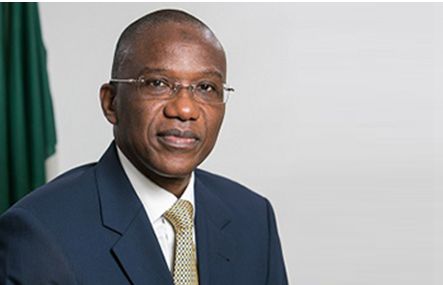
Current AMCON management under the leadership of its Managing Director/Chief Executive Officer, Mr. Ahmed Kuru upon assuming office and reviewing the challenges as well as bottlenecks inhibiting recoveries mounted a strong campaign that the current practice where habitual and recalcitrant debtors are treated with kid gloves, especially by agencies of government would not help AMCON resolve these loans before its sunset date.
According to Justice Auta, the approach to debt recovery and resolution must change at this point in the life of AMCON especially going into 2018 and beyond because the Corporation came as a child of necessity at the time it was created with all the good intentions in the world to recalibrate the beleaguered economy of the country at the time.
In his words: “Nigeria witnessed the 2007 global financial crisis, which was caused by insolvency, illiquidity, poor corporate governance and outright financial crimes. However, with the creation of AMCON by the federal government, no bank has been liquidated, depositors’ funds are safe and no bank has been subject to collection queues. The financial crisis led to the depression in value of the securities created against these defaulting loans thereby leaving the banks with an unfortunate inability to recover their losses. The effect of such monumental exposure was that banks were unable to sustain the equilibrium of lending required to maintain a vibrant economy. This in turn led to higher interest rates and an inability to perform the bank’s primary functions of financial intermediation like the pooling of savings and lending.”
Explaining further he said: “In addition to significant reduction in lending to customers, financial crisis created by non-performing loans can result in breakdown of interbank lending, which in turn leads to drastic drop in liquidity of banks and a consequent reticence or direct inability to advance loans to the broader public. Collectively, these factors create a vicious cycle resulting in a hike in interest rates; concomitant default and insolvency; volatility of currency values; a drop in investments and general stagnation of the economy among other crisis.”
Justice Auta having enumerated the facts argued that it is extremely important for all stakeholders, especially Judges to note the correlation between bank failure, which AMCON saved, and a large concentration of non-performing loans.
He added that Judges have critical role to play in the insulation of the macro-economy from fragmentation since most disputes that relate to banking, which AMCON currently shoulders are presented before them. Describing the AMCON framework as “extremely complex” he said AMCON’s goal can only be accomplished if all stakeholders, especially the entire hierarchy of the bench appreciates the fundamental underpinnings of its regime.
Lending her voice to Justice Auta’s position, Justice Bulkachuwa in her own analogy argued that since the rise of the financial sector is tied to economic growth, Nigeria’s economy, the livelihood and wellbeing of the citizenry are inextricably related to finance. She said all over the world, whenever the economy goes into crisis, governments across the world intervene to stabilise the macro-economy, which AMCON did in the case of Nigeria.
But with what she described as “deliberate reluctance” of debtors to redeem their obligations to AMCON, Justice Bulkachuwa said: “Having realised deliberate reluctance of debtors to redeem their obligations to AMCON, it would seem that AMCON has limited options other than resorting to our courts to enforce its enormous powers towards debt recovery. To recover as much debt as possible within its defined lifespan, expediency is essential if AMCON is to achieve its value maximization and financial stability goals.”
Corroborating the position of the two distinguished Justices, Kuru submitted that AMCON is currently indebted to the CBN to the amount of N4.7trillion, which is more than half of the proposed 2018 national budget. Aside that, more than 70 per cent of AMCON’s Eligible Bank Asset (EBA), portfolio is also locked in one form of litigation or the other meaning that without the support of the judiciary, AMCON cannot see the light of day.
On the back of that, he said there is also a rising number of appeals emanating from trial courts on AMCON cases, adding that at this stage in AMCON’s existence, expeditious determination of appeals brought before the courts remains key to AMCON’s ability to resolve all outstanding assets and prevent the undesired economic consequences of failure to recover the assets. The inability to resolve the debt he argued would have dire implications for the entire Nigerian economy.