
By Elvis Eromosele
When the dream for the Africa Sustainability Forum (ASF 2026) first began to take shape, I asked myself a straightforward question: Is this going to be just another talk shop?
We have all attended conferences packed with high-minded rhetoric that vanishes the moment the lights go down. I wanted something different. I wondered, suppose we could focus sharply on action, real-world partnerships, and solutions that actually work?
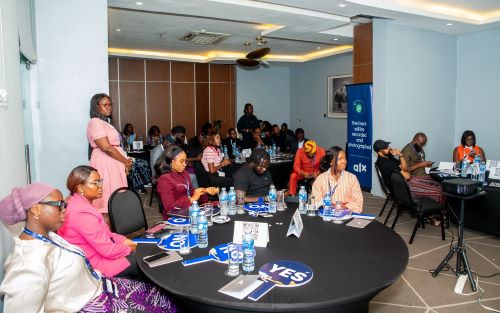
The ASF 2026 surpassed every expectation. Held under the theme “Sustainable Futures: Driving Just Transitions, Green Growth, and Shared Prosperity,” the forum proved that Africa’s sustainability movement is moving decisively from conversation to implementation.
A Coalition for Change
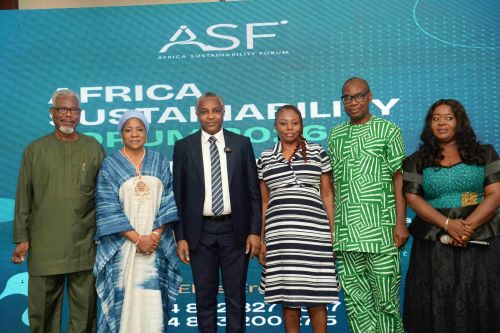
The event brought together an extraordinary panel of visionary speakers, including: Marilyn Obaisa-Osula, Partner and Head of ESG, Sustainability and Climate Change Services, PwC West Market Area, Fola Odufuwa, Managing Director, New Frontier Capital Advisors, Agharese Lucia Onaghise, Executive Director, Food and Beverage Recycling Alliance (FBRA), Olori Data Matemilola, Executive Director, Solace Foundation, Mrs. Olutunde Osunleye, Principal Manager, Regulatory Services, NCC (representing Dr. Aminu Maida, Executive Vice Chairman/CEO, NCC), Monday Irenoa, Managing Director, Omisej Nigeria, Chinwe Obi, Sustainability Manager, Nestlé Nigeria, Dr. Adeyemi Adun, Group Lead, Environmental and Sustainability, Dangote Industries Limited and Ola Igwe, Business Operations and RevOps, ALX among others.
The forum’s impact was amplified by generous support from leading corporate and regulatory stakeholders, including Nestlé Nigeria, MTN Nigeria, the Nigerian Communications Commission (NCC), Rite Foods, Flour Mills of Nigeria (FMN), Guinness Nigeria, FBRA, PwC Nigeria, Omisej Nigeria Limited, and Aren Paper Mills. Their active participation underscored a vital truth: cross-industry collaboration is essential to turning environmental challenges into economic opportunities.
Top 10 Takeaways from ASF 2026
- A Just Transition Grounded in African Realities
Africa’s shift toward a green economy cannot follow a copy-and-paste global blueprint. As Dr. Marilyn Obaisa-Osula highlighted, a “Just Transition” must balance decarbonisation goals with the continent’s immediate realities, energy access, job creation, industrial development, and affordability. Sustainability must elevate livelihoods, not stall economic growth.
- Radical Collaboration (SDG 17) is Non-Negotiable
No single entity can solve systemic environmental issues alone. True progress requires deep strategic alliances among governments, corporate leaders, investors, and local communities. The cross-sector backing at ASF 2026 proved that business viability and environmental responsibility are mutually reinforcing.
- Circular Economy: Turning Waste into Wealth
Waste must no longer be viewed as refuse, but as valuable raw material for new industries. Discussions led by FBRA and industry experts showed how organic waste can yield fertiliser, plastics can transform into durable building tiles, and beverage cartons can be repurposed into polyboards. Source-sorting and localized recovery systems are critical to unlocking millions in green job creation.
- Moving Beyond ESG Compliance to Boardroom Strategy
Sustainability governance must evolve beyond token updates and yearly compliance reports. Boards must embed climate risks and green opportunities directly into strategic decision-making, capital allocation, and risk management frameworks to ensure long-term resilience.
- Bridging the Digital Infrastructure & Connectivity Gap
Fola Odufuwa emphasised that digital inclusion is foundational to sustainable development. While Nigeria boasts approximately 35,000 telecommunications towers, millions remain disconnected from the digital economy. Accelerating wholesale data policies, expanding rural infrastructure, and unlocking regional digital trade protocols (like AfCFTA’s Digital Trade Protocol) are vital to driving shared prosperity.
- Financing Africa’s Next Growth Engine
Mobilising private capital is essential to scaling green solutions. Sustainable finance models must back local entrepreneurs, build resilient infrastructure, and scale high-impact innovations across the continent. Financial inclusion models, such as fintech platforms expanding access to underserved populations, demonstrate how inclusion generates strong business returns.
- Enabling Policies and Realistic Timelines
Policy documents cannot sit on shelves. Governments must clearly communicate existing green economy frameworks and support them with practical business incentives. Moreover, moving from a linear model to a circular economy requires realistic implementation timelines, workforce retraining, and institutional support for transitioning enterprises.
- Empowering Youth with Green Skills and Employability
With Africa’s burgeoning youth demographic, vocational training and technical education must align with emerging green industries. Young Africans were urged to take individual initiative: identify market needs, acquire specialised skills in renewable energy, recycling, and sustainable manufacturing, and position themselves for the jobs of tomorrow.
- Harnessing Trade and Homegrown Digital Platforms
Pan-African frameworks, including the African Continental Free Trade Area (AfCFTA), supported by institutions like Afreximbank, AfDB, and the Pan-African Payment and Settlement System (PAPSS), provide a springboard for growth. Building homegrown digital and financial platforms ensures economic value remains within the continent while enabling African businesses to scale seamlessly across borders.
- Authentic Storytelling and Action-Oriented Leadership
Corporate communications must reject superficial “greenwashing” in favour of verified outcomes, clear targets, and measurable data. Business leaders were challenged to step up as executive thought leaders, demonstrating how sustainability drives competitiveness. Crucially, success should not be measured by conference announcements, but by real-world metrics: businesses created, jobs funded, skills imparted, and environments restored.
The Path Forward
ASF 2026 closed not with a sense of completion, but with a call to work. The true test of our time together lies in what we build next. As attendees return to their respective organisations, the mandate is clear: translate these lessons into measurable progress so that when we gather again, we return with proven solutions and impact.
Eromosele, a corporate communications expert, sustainability advocate, and Lead Coordinator for the Africa Sustainability Forum 2026, writes via [email protected].