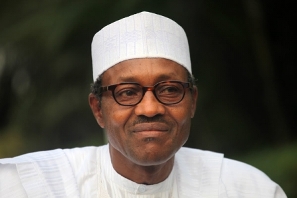

Professor Akpan Ekpo, Director-General, West African Institute For Financial And Economic Management (WAIFEM) has drawn a 6-Point Economic Plan for the in-coming Buhari Administration sustainable economic renaissance on the back of regime support for the private sector as growth engine of the economy.
The 6-Point Plan is anchored on Reduction of Unemployment, Infrastructure, Human Capital, Diversification, Utilisation of Foreign Reserves and Poverty Reduction.
Ekpo said for the country to make progress, the regime must continue to support the private sector as the engine of growth, given that the sector exists in an economic system managed by government.
“First, the issue of unemployment must be tackled head-on. Here, the private sector cannot do much in the short-run because it is a crisis. The unemployment rate is about 28 per cent and rising, especially among youths. Hence, public sector jobs must be created in the medium and long-run.”
He lamented the prevailing 27 per cent lending rate in the economy, saying a single-digit lending rate would empower investors to borrow and invest, and thus create jobs. He warned however, that such scenario cannot not be achieved through the market because the banking sub-sector is oligopolistic.
Ekpo emphasised the importance of infrastructure to drive growth, especially constant power supply, which must be pursued with vigour. He expressed regret that despite the previous administration unbundling the Power Holding Company of Nigeria (PHCN), not much progress has been made.
“Third, the public school system at all levels must be revived. No matter the existence of private schools, no serious government ignores the public school system. Apart from the fact that thousands of people go through such a system, it is also a source of future artisans and other professionals.”
The economist insisted that efforts at diversifying the economy must continue unabated. “It is crucial that the oil sector be demystified since it is a wasting asset; oil sector must be linked to other sectors of the economy in other to accelerate industrialisation.”
On foreign reserves, he said it must be utilised to support production and as a minimum to import capital goods. He warned against using forex to support the import of petroleum products, rice from Thailand and toothpicks from China.
Finally, he said all strategies and programmes of the Buhari Administration must be geared towards the reduction of poverty, lamenting the current 70% level of poverty in the country.
“Nigerians expect a lot from the in-coming administration of General Buhari. The new administration must, therefore, hit the ground running from May 29th.
Consequently, the in-coming regime must constitute a committed team that is ready to develop the country to becoming a modern knowledge-based economy within the shortest possible time.