
By Haniel Ukpaukure
Nigerians know the president the country does not need in the post-Buhari era. We have had them in succession, from the military era to the present date.
As campaigns gather steam for the February, 2023 general election for which expectations are higher than any other in the nation’s chequered political history, we must focus attention on a rigorous search for that leader the country has not been fortunate to have since independence.
Fortunately, we still have about two months left to conduct that search during the period of electioneering that should take 18 job seekers who have submitted application for employment across the length of breadth of the country.
It is really not a good commentary that 62 years after independence, we are still in search of a leader who would end the description of Nigeria as a country that has remained stuck with having potential for every good thing under the sun, but unable to realize the potential. It should be possible, by the time the applicants turn up for the aptitude test on February 25, for Nigerians to have made up their minds on who gets the job.
We are looking for a president who has the attributes that are required to move Nigeria in an entirely different direction, and get it off the life support on which it is at the moment – attributes such as character, capacity, vision, courage, independent mindedness, clarity of mind, intellect and integrity, among others. Beyond attributes that are natural, Nigeria’s next president must be sufficiently educated, beyond paper qualifications, and well enlightened to keep pace with the changing dynamics of a world that is moving at the speed of lightening in the 21st century.
It is needless to add that he must be physically and mentally fit (in sound health, generally) for the arduous task of piloting the affairs of a country that currently bleeds on all fronts. After Yar’Adua, and Buhari whose frequent medical tourism to the United Kingdom made King Charles to ask him if he also has a house in that country (like other Nigerian political leaders), we don’t need a president who would raise the blood pressure of Nigerians each time he travels abroad on a “private” visit.
We need a leader who can speak extempore, quite unprepared, on any issue under the sun at any gathering, anywhere in the world, without having to refer to prepared speeches that may not have any relevance with the issue under discussion, or questions asked.
No official reason has ever been given for President Muhammadu Buhari’s failure to attend the World Economic Forum that holds in January of every year at Davos, Switzerland. It has been the responsibility of Vice President Yemi Osinbajo to attend an event that is meant for presidents, prime ministers and heads of government.
The event has segments that do not allow for the luxury of reading from prepared speeches, since discussions on critical issues that affect survival of humanity and the planet are sometimes done extempore.
This is probably the reason Osinbajo, whose eloquence, articulation, mastery of the English language and grasp of issues make him comparable to any leader anywhere in the world, has been the one attending an event that should have Buhari in attendance.
It should be taken as a given that the president we are looking for must understand the complexities of a country of more than 250 nationalities, and know how to weave the complexities into one truly indivisible (that word!) country – a leader that can heal and unite a country that today stands sharply divided along ethno-religious line.
Nigeria is in search of a leader who would always be conscious of the fact that he has responsibility for over 200 million people; someone who would not be encumbered by loyalty to family, friends and cronies, as well as ethnic, religious, business and other sundry interests. We have seen the worst form of nepotism under Buhari who, on October 21, 2022, identified it as one of the factors that aid corruption in public office – quite an irony!
While speaking at the maiden edition of the Nigeria Excellence Award in Public Service, the president said, inter alia: “Several reasons for these issues still exist because of the rooted problems like nepotism, political patronage, as well as lack of transparency and accountability. These vices distract them (public office holders) from delivering on their mandates and aspirations”.
It must have come as a rude shock to Nigerians to hear their president condemn nepotism, a major factor that has contributed to the woeful failure of his administration to deliver on the mandate Nigerians gave him in 2015 and 2019. It is one factor that renders the president too handicapped to hold his appointees to account when they demonstrate incompetence on their jobs.
We need to recall the strident attack on Buhari by none other than one of his closest allies and Second Republic senator, the late Junaid Mohammed, when the president came under severe criticism for the nepotistic disposition of his administration, shortly after assuming office in 2015.
Speaking in an interview with Punch in its issue of July 23, 2016, the fiery critic said, after listing the hoard of public appointees in the federal and even some state governments who are directly related to Buhari: “This is enough to prove to you that this is the worst form of nepotism in the history of governments in Nigeria, in fact, in the history of Africa. Let me make bold to say that I have never seen any level of nepotism that has equaled or surpassed this in my entire life – I am in my 67th year.”
He went on: “If this is not nepotism, then I don’t know what is nepotism; and anybody who has the guts, the brutal arrogance to appoint these relations, not bothering about public opinion, about the sense of justice, about competence, then you can say that he has a serious case to answer.” Quite instructively, Mohammed was Fulani, like Buhari.
We need a president who would see Nigeria differently. We need a leader with a clear idea of where he wants to take the country. Nigerians cannot recall a leader, since independence, who came into office with what could be described as a vision – something for which they can be remembered probably till the end of time, as Chief Obafemi Awolowo is still remembered more than 60 years after he left office as premier of the Western Region, and 35 years after his death. Everyone talks about vision, but not one has been able to clearly articulate would could pass for a vision.
Nigerians have the opportunity to effect the real change that they need, not one that is promised by political parties merely as a slogan. For them, therefore, it is 2023 or never.
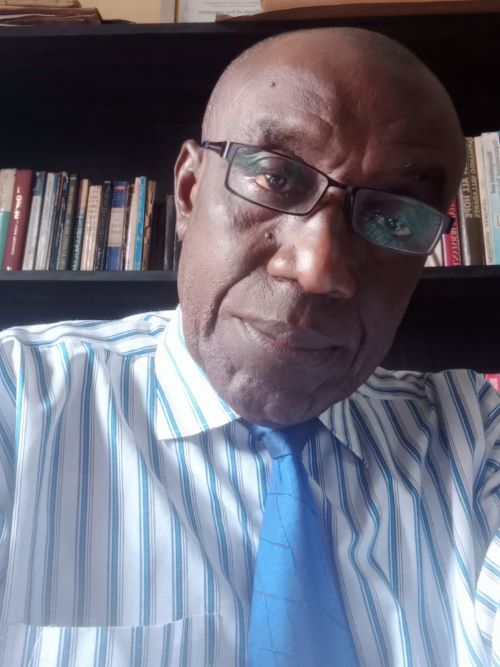
Ukpaukure, a media consultant and writer, lives in Lagos.