
By Temitope Ajayi
President Bola Tinubu demonstrated foresight in July 2024, when he approved the use of the naira as the payment currency for crude oil supplied by the NNPC to the Dangote Refinery.
Since the launch of the naira-for-crude initiative on October 1, 2024, Nigeria has experienced a strategic breakthrough amid the ongoing economic turmoil resulting from the Iran-Israel-US conflict in the Middle East.
Since its inception, the technical committee on naira-for-crude, which has the Minister of Finance and Co-ordinating Minister of the Economy, Wale Edun and Executive Chairman of the Nigerian Revenue Service, Zacch Adedeji and others as members, the Federal government has developed a robust framework that has ensured the Presidential initiative continues to deliver on its core objectives by maintaining supply security, stabilising the economy, and safeguarding Nigeria’s energy future.
The US/Israel-Iran war has now entered its 6th week, triggering global economic chaos. With no immediate end in sight, the conflict has been exacerbated by Iran’s closure of the Strait of Hormuz, an important maritime corridor between the Persian Gulf and the Gulf of Oman, that accounts for over 20% of global oil and gas flows. The disruption of this vital waterway has sent shockwaves through energy markets worldwide.
Across Europe, the United States, Asia, Africa, and the Middle East, prices for LPG, LNG, PMS, and diesel have skyrocketed, placing enormous pressure on households and governments alike.
The rising costs of energy have intensified economic strain on many nations, especially those with limited resources, where transportation and basic goods are becoming increasingly unaffordable.
While the cost of PMS and other petroleum products has also gone up in Nigeria, as in other countries, the global energy crisis has not led to a domestic scarcity of petroleum products, unlike in major countries where people are standing in long queues for days at gas stations. Many countries in Europe, Asia, and major African countries, such as South Africa and Kenya, now rely on supplies from Nigeria through the Dangote Refinery.
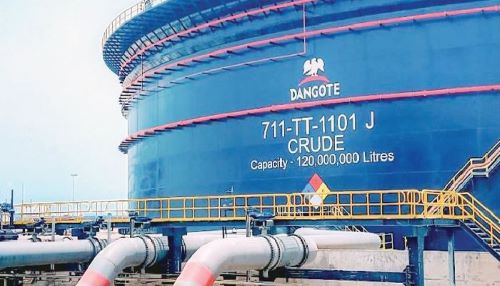
The Dangote Refinery, located in Lekki, Lagos, has validated the strategic importance of local production and refining capacity for a country as critical as Nigeria, a regional economic powerhouse. There is no doubt that the ongoing conflict in the Middle East has exposed critical vulnerabilities in the global energy supply architecture.
The conflict has constrained crude oil and refined product availability, triggering acute shortages and sharply rising energy costs across many markets. Countries that historically depended on the import of refined products are currently experiencing disruptions to their supply chains, with immediate and visible consequences.
A few examples: Vietnam is encouraging people to work from home to reduce transportation costs. The Thai government has ordered civil servants to conserve energy in public buildings and is considering whether to compel private businesses to do the same.
Bangladesh told universities to close early for a holiday and imposed daily limits on fuel sales. Pakistan has implemented emergency measures, including a four-day government work week and temporary school closures, to conserve energy. Indian restaurants are closing their doors due to LPG scarcity. In Egypt, shops and restaurants are mandated to close by 9 pm every day as part of the government’s exceptional measures to combat soaring energy prices.
In the Philippines, the government has declared a national energy emergency. In parts of the United States, Americans join long queues to buy fuel.
Fortunately, the Dangote Refinery has largely shielded Nigeria from the worst effects of the global supply crisis. By scaling up production at a critical time before the escalation of the conflict, the refinery has met Nigeria’s refined products requirements.
Even in the face of more attractive export options, the Dangote Refinery committed to prioritising Nigeria’s energy security. This commitment has ensured full availability of petroleum products with zero queues, while other countries grapple with scarcity.
While the price of petroleum products has had to go up, this is being managed to reduce the impact on Nigerians. For example, despite a 10% increase in crude oil prices over the last couple of days, the Refinery has cut petrol prices by 75 Naira per litre.
This was done, even though the refinery is paying an additional premium of up to $18 per barrel for Nigerian crude oil cargoes. This is the benefit of local refining.
The Dangote Refinery is transforming Nigeria into a more resilient and energy‑independent nation, providing all‑year‑round availability of petroleum products and enabling the country to withstand external shocks better.
Petrol queues, even during festive seasons, have disappeared since the Refinery commenced PMS production in Oct 2024. What is perhaps not visible to many Nigerians is how this was achieved while simultaneously eliminating the huge demurrage bill that NNPC used to incur in maintaining safety stock on several floating vessels.
Furthermore, the ongoing crisis has positioned Nigeria as a strategic and credible exporter to Africa – a role with long-term commercial and diplomatic significance as African governments seek more resilient and integrated energy supply arrangements.
Since the conflict began, the Dangote Refinery has ramped up exports to Africa in a bid to help shore up supply across the continent. In March, the refinery exported close to 500,000 tons of refined products to various African countries, generating export earnings for Nigeria.
This underlines the importance of local production and the need for Africa’s industrialisation as championed by the Dangote Group.
Not only does local production create and sustain jobs for thousands of people, preserve foreign exchange, and stimulate other sectors of the economy, but more importantly, as we have seen, it insulates the country from global volatility, supply disruptions, and geopolitical risks that continue to batter import-dependent economies in times of stress.
The Dangote Refinery is more than an industrial asset; it is the foundation of Nigeria’s energy sovereignty and a catalyst for sustainable economic growth.
-Ajayi is the Senior Special Assistant, Media and Publicity to President Tinubu.