
By Michael Owhoko, Ph.D
The astronomical rise in banks’ profit as reflected in the 2024 full year financial report has exposed the banking industry as a lucrative enterprise powered by arbitrary charges imposed on unwilling customers.
In some cases, these inexplicable charges and other unholy electronic deductions, leave customers to reel on the throes of pains, with impact on their blood.
That the Central Bank of Nigeria (CBN) has been penalising the banks for flouting stipulated guidelines as contained in its “Guide to Charges by Banks, Other Financial, and Non-bank Financial Institutions”, is a confirmation that these banks deliberately use arbitrary and excessive charges to fleece customers, obviously to boost profitability.
Since these painful charges constitute part of the big profits made by banks at the expense of customers, they are likened to blood profits. Like blood money which is obtained at the expense of another’s man’s life, blood profits are earnings gained by banks at the cost of customers’ blood.
In context, blood here refers to the sweat, sacrifice, pains, frustration and helplessness customers go through when deductions veiled in hidden and arbitrary charges are made on their accounts.
In other words, bank earnings are tantamount to blood profits when viewed against the backdrop of resultant pains suffered by helpless customers who bear the brunt of arbitrary charges.
These charges are embedded in crazy debits alerts sent through SMS notifications and emails, and sometimes, they are delivered incoherently, in arrears or at odd hours, perhaps, to shield or distract customers from scrutinizing the alerts. Besides causing general body imbalance, the charges also trigger mood swings and countenance upset among customers, once received.
Some of these crazy charges include, but not limited to commission on turnover, withdrawal fees, transfer charges, electronic money transfer, processing fees, VAT charges, ATM fees, debit or credit cards issuance, replacement or renewal fees, account maintenance fees, NIP transfer charges, SMS alert charges, stamp duty fees, interest charges, SMS VAT charges, hardware token charges, cybersecurity levy, bills payment fees, and other random levies.
Besides, the CBN’s recent introduction of on-site and off-site charges during cash withdrawals at ATM machines, is also unhelpful and inimical to current plight of bank customers, who are now compelled to pay withdrawal fees for use of ATM machines owned by banks other than theirs. But where such transactions are carried out in customers’ own banks, such transactions attract no charges. This introduction is coming on the heels of a fresh increase of SMS alerts charges from N4 to N6 per transaction, further compounding the woes of customers.
Implicitly, these charges constitute huge burden on the average bank customer who contends daily with depletion in his or her account balances. Corporate customers or businesses are also not spared from these questionable charges that have become a drain on the balance-sheet of companies.
With about 312 million active accounts bank-wide as at December 2024, these irrational charges have contributed immensely to the bottom line, occupying a larger space in the profit basket of banks, dislodging loans and foreign exchange sources of profits, which have diminished overtime by high-interest rate regime and prevailing foreign exchange dynamics.
For example, from the 2024 financial year report of just five of the tier 1 banks, the profit growth rose enormously with pre-tax profit hitting N4.56 trillion, approximately 69.5 percent increase compared to N2.69 trillion declared in 2023, while their net profit after tax rose by 66.2 percent in 2024, amounting to N3.78 trillion, as against N2.27 trillion recorded in 2023.
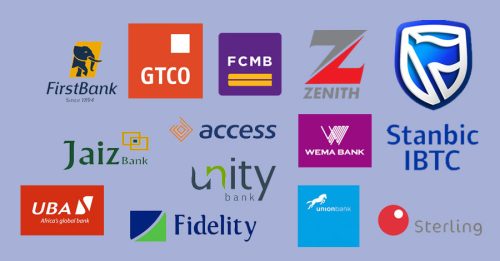
These five tier 1 banks, whose total combined assets in 2024 reached N108.21 trillion, from just N72.80 trillion recorded in 2023, include First Holdco Plc, GTCO Plc, Zenith Bank Plc, UBA Plc, and Stanbic IBTC Holdings Plc.
Specifically, First Holdco grew its profit before tax to N862.39 billion in 2024 from N356.15 recorded in 2023, just as its profit after tax rose to N736.7 billion in 2024 from N308.4 billion it earned in 2023. GTCO on the other hand, grew its pre-tax profit from N609.3 billion in 2023 to N1.27 trillion in 2024, with its net profit rising to N1.02 trillion in 2024 from N529.66 billion made in 2023.
Also, Zenith Bank grew its profit before tax to N1.33 trillion in 2024 from N795.96 billion recorded in 2023, just as its profit after tax rose from N676.9 billion in 2023 to N1.03 trillion in 2024. Similarly, UBA grew its pre-tax profit to N803.72 billion in 2024 from N757.68 billion it recorded in 2023, with its net profit increased from N607.7 billion in 2023 to N766.6 billion in 2024.
In the same vein, Stanbic IBTC Holdings reported a profit before tax of N303.8 billion in 2024 from N172.91 billion it made in 2023. Its profit after tax rose to N225.3 billion in 2024, compared to N140.62 it recorded in 2023.
With charges as sources of cheap revenue, banks are no longer motivated to embark on constructive and creative efforts in their quest for profit generation. Profits gained from matching of deposit funds against credit lending in consonant with traditional banking, are now waning. Perhaps, this explains the drop in number of banks’ female employees deployed to chase depositors for cheap funds.
Though, lacking ingenuity and industry, use of charges as sources of cheap profits, can make the ordinary businessman to be envious of bank owners. Even Aliko Dangote, as the richest man in Africa, perhaps, may be regretting for allowing his bank, Liberty Merchant Bank, to go under, just like previous bank owners whose banks have closed shop. Their banks might have been sources of value addition to their wealth.
Regrettably, rather than portray the banks in positive light, these colossal profits shunned out by Nigerian banks, are stirring negative public perception about their operational methods, believed generally to be unhelpful to individual and business ventures, particularly, small and medium business enterprises.
The Federal Government and CBN are complicit in this unjustifiable charges and levies. Reason: the Federal Government recently received approximately N84.05 billion from Electronic Money Transfer Levy alone in the first quarter of this year, 2025. This is unhealthy, and a nightmare for the average Nigerian bank customer, who sees it as sheer extortion.
Since the government is a direct beneficiary of these charges, CBN may have been reluctant to exercise strict and regular oversight over the banks on compliance with its guidelines. And this may have unwittingly, encouraged the banks to thrive in unbridled manner, particularly, in “under the table transactions.” These boom and windfall profits would have been near impossible under a sane financial environment typified by global best banking practices.
So, while the banks jubilate for a job well done for full year 2024 financial reports, the real sector and individual customers for which the banks were established to support, groan and suffocate in pains due to business decline and losses suffered, including, in some cases, complete closure of operations and insolvency.
Put differently, the banking system has become a pain in the neck of customers. While customers are experiencing frustrations from incessant debit alerts attributable to subjective and jumbled charges, corporate customers, in addition, also suffer from inability to access simple credits to run businesses, including foreign exchange to settle Letters of Credit.
It is therefore imperative to compel the banks to function appropriately without putting the customers through pains. Gaps created by CBN’s unimpressive efforts at enforcing compliance with rules guiding bank charges, should be filled by various consumer protection agencies for the good of customers.
The Federal Competition and Consumer Protection Commission (FCCPC) and other non-governmental organisations (NGOs) established to protect the interest of consumers should rise to the challenge of banks’ growing quest for abnormal profit through use of arbitrary charges, devoid of empathy for emotional state of customers.
Some of the policies that necessitated the bank charges should be reviewed, so as not to discourage Nigerians from optimising the services of the banking industry. Failure to do this, could undermine government’s cashless policy, with implication on banks’ total clientele base. Moreso, as the country is still underbanked.
The banks must therefore, wake up, smell the coffee, feel the impulse of customers, and shore up the dwindling integrity and reputation of the banking industry.
Dr. Mike Owhoko, Lagos-based public policy analyst, author, and journalist, can be reached at www.mikeowhoko.com, and followed on X {formerly Twitter} @michaelowhoko.