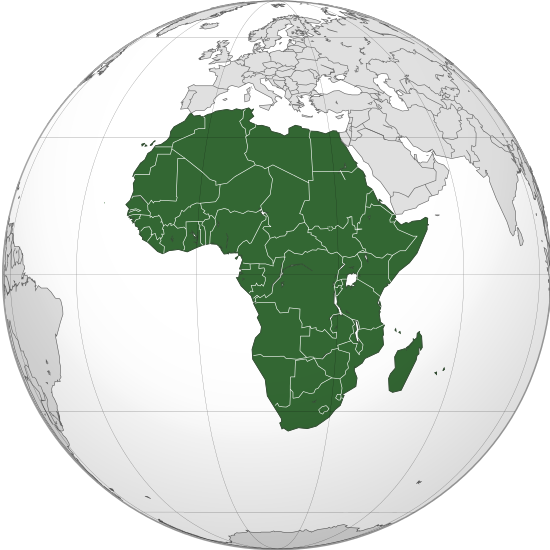

L’Oréal has inaugurated its new Research & Innovation Center to study African hair and skin specificities as well as the beauty routines and expectations of sub-Saharan consumers.
The Research & Innovation Center in South Africa is the Group’s 7th R&I hub globally. It hosts product development, evaluation and advanced research teams and will employ scientists from the fields of chemistry, chemical engineering, physiology, cosmetology and biochemistry.
Alexandre Popoff, Executive Vice-President Eastern Europe and Africa, Middle East, said: “Sub-Saharan Africa is one of the fastest growing regions for L’Oréal. Our new research arm in South Africa will solidly enable us to continually create the beauty products of the future for our African consumers, while drawing inspiration from the diverse beauty rituals and the various needs of our consumers on the continent.”
Laurent Attal, Executive Vice-President of Research and Innovation, said: “By opening this new Research & Innovation Center, we are spearheading L’Oréal Research for the African continent. We are showing our determination to go further in innovations for the African beauty market. Our consumer surveys conducted since 2010 and our in-depth studies of skin and hair since early 2000, represent the knowledge base for the development of tailored products for African consumers. We are starting with hair and our ambitions are much broader and cover the body, hygiene, skin care and makeup categories.”
Deep knowledge of African Beauty
The Research activity in South Africa started in 2003 with an Evaluation Center focused on consumer knowledge and product assessment.
The mission of the brand new Research & Innovation Center is to translate beauty needs and hair and skin knowledge into innovative products ranging from hair care, hair color, relaxers and shapers to personal hygiene.
Cutting edge instruments to visualize the skin surface, the spots or to measure hair breakage and rigorous protocols are used daily to assess the technical, functional and sensorial benefits of the products. The key areas will be skin evenness, sebum, acne, dryness, hair manageability, sensitive scalp and the fine tuning of fragrances.
The new Research & Innovation Center will also cooperate with the African scientific ecosystem, universities, dermatologists, natural biodiversity centers as well as hairdressers.
Innovating for the African Consumer
L’Oréal has already introduced key beauty innovations for African consumers.
For example, the African Beauty Brands team has brought to the market the black oil technology for hair color, failsafe relaxers as well as skin evenness routines.
In addition, customised products such as Hair Food and Make-up fully adapted to African skin tones are already offered to sub-Saharan consumers.