The International Monetary Fund cut its forecasts for global economic growth this year and next as the unexpected U.K. vote to leave the European Union creates a wave of uncertainty amid already-fragile business and consumer confidence.
“The Brexit vote implies a substantial increase in economic, political, and institutional uncertainty, which is projected to have negative macroeconomic consequences, especially in advanced European economies,” according to the IMF’s World Economic Outlook Update released yesterday.
“Brexit has thrown a spanner in the works,” said Maurice Obstfeld, IMF Chief Economist and Economic Counsellor. And with the event still unfolding, the report says that it is still very difficult to quantify potential repercussions.
In particular, policymakers in the U.K. and the European Union (EU) will play a key role in tempering uncertainty that could further damage growth in Europe and elsewhere, the IMF said. It called on them to engineer a “smooth and predictable transition to a new set of post-Brexit trading and financial relationships that as much as possible preserves gains from trade between the U.K. and the EU.”
The global economy is projected to expand 3.1 percent this year and 3.4 percent in 2017, according to the IMF. Those forecasts represent a 0.1 percentage point reduction for both years relative to the IMF’s April World Economic Outlook.
The IMF said its forecasts were contingent on the “benign” assumptions that uncertainty following the U.K. referendum would gradually wane, the EU and U.K. would manage to avoid a large increase in economic barriers, and that financial market fallout would be limited.
Even so, the IMF warned that “more negative outcomes are a distinct possibility.” “The real effects of Brexit will play out gradually over time, adding elements of economic and political uncertainty,” said Obstfeld. “This overlay of extra uncertainty, in turn, may open the door to an amplified response of financial markets to negative shocks.”
Because the future effects of Brexit are exceptionally uncertain, the report outlined two scenarios that would reduce world growth to less than 3 percent this year and next.
In the first, “downside” scenario, financial conditions are tighter and consumer confidence weaker than currently assumed, both in the U.K. and the rest of the world, until the first half of 2017, and a portion of U.K. financial services gradually migrates to the euro area. The result would be a further slowdown of global growth this year and next.
The second, “severe” scenario, envisages intensified financial stress, particularly in Europe, a sharper tightening of financial conditions and a bigger blow to confidence. Trade arrangements between the U.K. and the EU would revert to World Trade Organisation norms.
In this scenario, “the global economy would experience a more significant slowdown” through 2017 that would be more pronounced in advanced economies.
The outlook for other emerging and developing economies remains diverse and broadly unchanged relative to April.
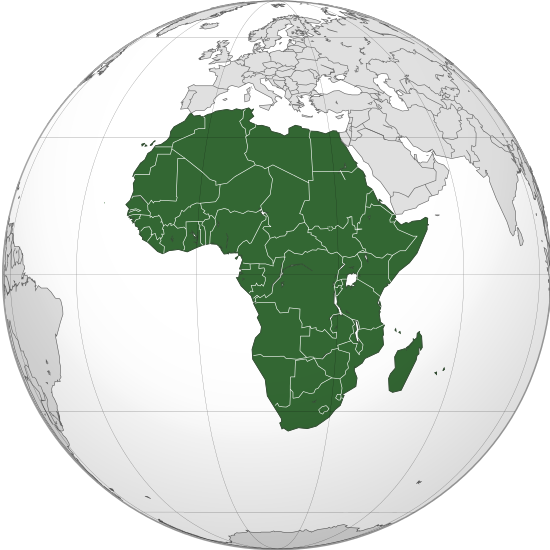
That said, gains in the emerging group are matched by losses in low-income economies. Indeed, low-income countries saw a large downward revision in 2016, in large part driven by the economic contraction in Nigeria, and also worsened outlook in South Africa, Angola, and Gabon.

IMF Cuts Global Growth Forecast over BREXIT







Popular Categories


Previous article
Next article