FG Plans N350bn Capital Projects, $1bn Eurobond to Ease Recession

In line with its commitment to stimulate economic growth in the country, the Federal Government is set to release over N350 billion to fund capital projects across the country, in addition to $1 billion Eurobond scheme before the end of the year.

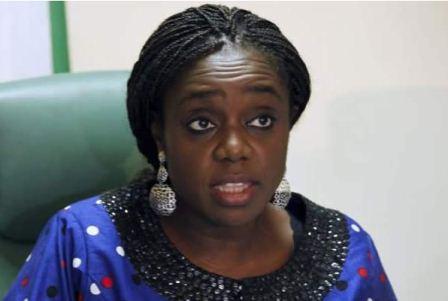
The Minister of Finance, Mrs. Kemi Adeosun assured that the N350 billion capital votes will be released immediately into the system asthe Federal Government continues to tackle the economic crisis currently
facing the nation.

Adeosun explained:

“With the N350 billion to be released this week, the federal government would have released the total sum of N770 billion for capital projects this year, having released N420 billion thus far in
2016.”

She explained that the bulk of the money so far released went into on-going projects, especially works, defence, transportation, interior, power and agriculture.

The minister also disclosed that the administration was working on raising $1 billion Eurobond. The proceeds for this would be used only for capital projects.

Giving further clarifications on the Eurobond issue, Director-General, Debt Management Office (DMO), Dr. Abraham Nwankwo, said: “We intend to raise the money before the year ends. In terms of the progress made so far, more than five weeks ago, we put out advertisements for Request For
Proposals in local and international media, following due process so that we can allow transaction partners who are interested to compete.“

The closing date of the RFPs is September 19, 2016.

“We have a directive to make sure we use minimum time to conclude all these activities. So we
assure you that we are going to cut the time because of the emergency situation. Before the middle of December, we will have the money. We are very focused on the fact that these monies are needed urgently to turn around the economy and we are working on that.”


spot_img
spot_img
spot_img
spot_img
spot_img

Hot this week

emPLE Bolsters Capital Capacity, Customer Confidence after Securing NAICOM Recapitalisation Mandate

emPLE Nigeria has strengthened its capital position following the...

T+1: SEC Insists on 5pm Settlement Deadline for Equities, Commodities on CSCS Platform

The Securities and Exchange Commission (SEC) has fixed 5:00...

Tinubu: Refineries Will Return to Deliver Profit, Welcomes Support by NUPENG

President Bola Ahmed Tinubu said in Abuja refineries will...

NRS Chair: Report of $279m Frontier Exploration Fund Transfer is Fake News

The Executive Chairman of the Nigeria Revenue Service (NRS),...

Former CFI: Regulatory Concession on Recapitalisation Will Undermine Integrity of the Process

The former Commissioner for Insurance/CEO, National Insurance Commission (NAICOM),...

Topics

How African Entrepreneurs Can Tap Into Global Market

Everybody loves chocolate. Hundreds of years ago, the Greeks referred to chocolate as the ‘food of the gods’. It’s a highly demanded luxury product and an impulsive treat for millions of people around the world. No wonder the global market for chocolate and cocoa beverages is now worth over $100 billion (and growing) every year. Although the developed and fast developing countries (especially in Europe, Asia and North America) consume over 90 percent of the chocolate produced every year, chocolate largely exists because of Africa.

Ericsson’s CEO Resigns with Immediate Effect

Ericsson's CEO, Hans Vestberg has resigned from the company...

CNG Adoption: NNPC Retail Educates 1,000 Auto Mechanics

As part of its efforts to accelerate the adoption...

African Insurers Must Innovate to Attract Digital Consumers

Insurers who are able to innovate when it comes to the design and delivery of products and services will not only be fostering greater loyalty amongst their consumers, but they will also be helping to change the perception that the insurance industry is still playing catch up.

Independents to Account for 25% Oil Production by 2020

Independents are projected to account for about 500kbpd by the year 2020, representing 25% of crude oil production in Nigeria, from the current level of 10%. The development is seen as a reflection of the changing landscape of the oil and gas industry in Nigeria. Key Recommendations: • Integration of the upstream to other parts of the value chain may eventually be driven by the independents. • Challenges such as security, especially for independents operating in shallow waters. Local companies reiterated that security and community challenges have greatly altered their cost of production which cannot be fully ascertained. When coupled with Government take and interest from loans the cost per barrel increases. • Government is to ensure that an enabling environment is created - independents need to be able to deliver on capacity growth and funding.

The Founder Effect: How Long-Term Industrial Builders Create Enduring Shareholder Value

    By DAVID OPUTAH Capital markets have an interesting way of...

Vodacom, Smart Lab Partner to Support Business Startups

Leading telecommunication company Vodacom Tanzania Plc and Smart Lab...
spot_img

Related Articles

Popular Categories

spot_imgspot_img