Home Blog Page 40

NCDMB Identifies Key Skill Areas for Capacity Building as AEW Holds in Cape Town

0

The Nigerian Content Development and Monitoring Board (NCDMB) on Wednesday in Cape Town, South Africa, identified key skill areas it would focus capacity building efforts for optimal job creation opportunities in the Nigerian oil and gas industry.

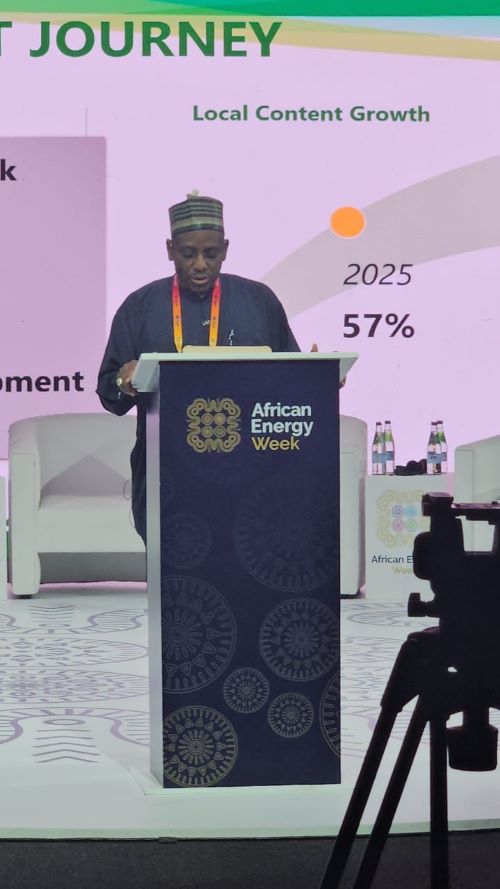
The Executive Secretary of the Board, Engr. Felix Omatsola Ogbe disclosed this in his keynote address at the on-going Africa Energy Week (AEW), as he shared Nigeria’s success story in local content development.

The skill areas highlighted for special focus include underwater welding, subsea engineering, geosciences, project management, deepwater operations (drilling, production engineers), instrumentation and controls.

Others are digitalisation including Artificial Intelligence (AI), helicopter pilots, with a delivery model that is based on classroom and hands-on approach.

Delivering the address entitled “From Policy to Prosperity: Scaling Local Content for Africa’s Energy Future,” the Executive Secretary said no policy succeeds without people, and that challenges such as infrastructure gaps and financing limitations “are not reasons to slow down” but “reasons to deepen collaboration between government, operators, service companies and host communities” to co-create solutions.

He pointed out that in the aforementioned challenges and expected solutions are a shared opportunity for African countries to “harmonise local content policies, create regional supply chains, and leverage continental institutions like the emerging African Energy Bank.”

He further charged African countries to ensure that the skills of citizens, the creativity of entrepreneurs and strength of their institutions define the future of African energy.

The Executive Secretary, who was represented by the Director, Corporate Services of the NCDMB, Dr. Adbdulmalik Halilu, noted that the local content strategy developed by the Africa Petroleum Producers Organisation (APPO) for member countries and the Africa Continental Free Trade Agreement policy of the African Union are “clear pathways towards fostering trade-based multilateral cooperation within the continent.”

He emphasised that scaling local content requires human capital development and deployment, infrastructure development, technology and innovation, cross-border collaboration and partnerships (common standards, tariff and demand), in addition to policy harmonization.

On Nigeria’s local content journey, with in-country value addition now at 57 per cent, up from five per cent in 2010, when the Nigerian Oil and Gas Industry Content Development (NOGICD) Act, 2010, the NCDMB boss said the overarching objective was to position Nigeria as the destination of choice for investment in exploration and production (E&P) but most importantly to create jobs for citizens and new industries supporting E&P value chain, while ensuring sustainable operations for future generations.

Local content implementation, according to him, was anchored on six broad pillars, namely, regulatory framework, gap analysis, capacity building, incentives and funding research and development (R&D), and access to market, and driven by several policy interventions.

The policy interventions include Equipment Component Manufacturing Initiative, which requires companies to obtain Nigerian Content Equipment Certificate to qualify for supply of equipment; marine vessel categorization scheme, which requires companies to provide proof of indigenous ownership of marine vessels to qualify for vessel contracts; project-based training, which requires project promoters to commit a percentage of project cost to industry-relevant training.

On accomplishments under the NOGICD Act, Engr. Ogbe declared: “Nigeria now hosts a world-class fabrication and integration yard for fabrication of production platforms and integration of Floating Production Offloading and Storage (FPSO) vessels, high voltage cables and fiber optics for LNG train.” Also, that production platforms are now produced from Nigerian cable manufacturers, while design engineering capacity exists for onshore, offshore, LNG, [and] gas gathering facilities.”

He disclosed that operators like Renaissance Africa Energy Limited, Seplat and Oando are taking over assets from international oil companies (IOCs), under a divestment programme, and would become key contributors to Nigeria’s target to achieve three million barrels per day production by 2030.

He noted that recent Executive Orders by the Administration of President Bola Ahmed Tinubu that introduced tax incentives tied to time-bound upstream investment and cost leadership and also intended to accelerate contract processing cycles for oil and gas projects, from 36 months to six months, have birthed major projects such as UBETA Gas Development Project and Bonga North Project, among others that are in the pipeline.

Engr. Ogbe concluded with a firm assurance to other oil- and gas-producing countries on the continent that NCDMB is committed to partnering them all “to build an African energy sector that is owned, operated, and sustained by Africans.

The African Energy Week, organised by the African Energy Chambers, is an interactive exhibition and networking event, attended by energy policymakers, operators and service companies in the oil and gas industry and prospective investors, among others.

NCDMB: NOGICD Act Not Weakened by Presidential Orders on Oil Sect

0

The three Executive Orders issued by President Bola Ahmed Tinubu on the Oil and Gas Industry in March 2024 did not erode the relevance of the Nigerian Oil and Gas Industry Content Development (NOGICD) Act on the operations of the oil and gas industry, the Nigerian Content Development and Monitoring Board (NCDMB) has said.

This was one of key messages from the Local Content Masterclass and panel discussion at the African Energy Week, which started in Cape Town, South Africa.

Discussions at the panel highlighted Nigeria’s local content’s milestones and processes, provided local lessons for other African oil and gas producing countries, clarified misconceptions, as well as positioned Nigeria’s oil and gas industry for investment.

The panellists included the Director Capacity Building, Engr. Abayomi Bamidele, General Manager Monitoring and Evaluation, Mr. Silas Omomehin Ajimijaye, and General Manager, Nigerian Content Development Fund (NCDF), Ms. Fateemah Mohammed, and the session was moderated by the General Manager Corporate Communications, NCDMB, Dr. Obinna Ezeobi.

Giving insight into the Presidential Directives, Engr. Bamidele observed that some oil and gas stakeholders grossly misinterpreted the Presidential Directives to mean that the NOGICD Act had been relegated or sidestepped and they no longer need to comply with the provisions of the law.

“The Special Adviser to the President on Energy had to clarify that the Presidential Directives did not set aside local content. They only mandated that existing capacities must be patronized and middlemen must be excluded from the contracting process.”

The three Executive Orders are the Presidential Directive on Local Content Compliance, Presidential Directive on Reduction of Petroleum Sector Contracting Cost and Timelines and Presidential Directive on Oil and Gas Companies (Tax Incentives, Exemption, Remission, etc.

Bamidele confirmed that NCDMB had streamlined its contracting strategies to align with the Presidential Directives, collapsed its touchpoints in the contract approval process from 9 to 5, thereby contributing to the shortening the industry’s contracting cycle, reduction of the cost of projects and catalysing new oil and gas projects from operating oil and gas companies.

He announced that qualified international service companies can now be awarded the Nigerian Content Equipment Certificates (NCEC), to facilitate their direct participation in deepwater operations in the Nigerian oil and gas industry, as provided in the NOGICD Act. This policy will attract investments into the sector, and is consistent with the Presidential Directives, he explained.

On Board’s strategy for capacity development for new oil and gas projects, he said plans are afoot to conduct trainings in skill areas that are in a high demand in the sector. He underlined the need to always streamline capacity building initiatives with requirements and changing dynamics in the industry.

The Board is also committed to developing critical infrastructure such as the Brass Island Shipyard with support of the NLNG, as well as completing and operationalising the Nigerian Oil and Gas Parks at Odukpani, Cross River State and Emeyal-1 in Bayelsa State, he hinted.

Counselling sister Africa countries, Engr. Bamidele noted that local content and capacity building strategies must be country-specific, and policy makers must understand the mindset and skillsets of their nationals.

He further advised that local content policies and capacity building models must be relevant and applicable to the host country’s technological, educational and manpower capacities.

While making his comments, the General Manager, Monitoring and Evaluation, Mr. Silas Omomehin Ajimijaye outlined the robust mechanism the Board deploys in monitoring companies’ execution of oil and gas projects, ensuring compliance with the provisions of the NOGICD Act, and retaining significant value in the economy.

On the impact of divestment of oil and gas assets on Nigerian content compliance, he stated that the transfer of assets to indigenous operators had not impacted negatively on compliance. This is because the Board sustained the compliance protocols it had established with the previous owners. However, the Board, is ready to support successor companies to navigate challenges they might have with compliance, he added.

Speaking further Ajimijaye highlighted the importance of robust research and development initiatives to achieving sustainable local content development. He indicated that NCDMB had developed an R&D roadmap and collaborates regularly with operating companies, service firms, the academia, and other relevant institutions.

Currently, NCDMB has established six centers of excellence at key universities across six zones of the country, while Research and Development Fund has been deployed to support commercialization of viable projects, with 15 research ideas and inventions currently supported to ensure their successful development, he added.

In her contributions, the General Manager, NCDF, Fateemah Mohammed explained that the Nigerian Content Intervention Fund is a dedicated finance scheme that provides single digit financing to Nigerian service companies, enabling them to grow capacities and play key roles in the oil and gas industry.

Giving insight into the seven products of the NCI Fund, she dwelt on the Community Contractors Fund, which is a N50 billion finance scheme designed for contractors in local communities, whereby they can assess up to N100 million, at single digit to execute contracts in the oil and gas industry and grow the local economy.

Another unique product is the US$20 million Women in Oil and Gas Intervention Fund managed by Nigeria-Export-Import Bank, for deepening the capacities and capabilities of women entrepreneurs and industrialists to fully participate in the Nigerian oil and gas industry.

Recommending similar funding schemes to other African countries, Mohammed disclosed NCDMB’s aspiration to grow the NCI Fund and collaborate with other financial institutions to unlock larger projects and enhance skills development of the populace.

Anambra Traditional Ruler, Ichie Martin Ezeosi, for Burial Oct 9

0

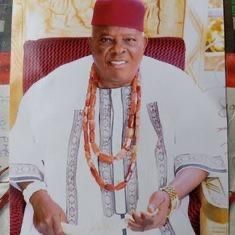
The Oko Community in Orumba North Local Government Area (LGA) of Anambra State has finalised arrangements for the official burial and final rites of passage for its traditional ruler, Onowu Oko, Ichie Martin Ezeosim, on Thursday next week.

The demise of late Onowu was jointly announced by His Royal Highness, Igwe Prof. Laz Ekwueme, Eze Ijikala II and his cabinet; the Oko People’s Union, (OPU) and the family who have fixed his burial for October 9, 2025.

The late Onowu Oko – the traditional Prime Minister, who is the second in Command to Igwe of Oko, died at the age of 78, with a string of remarkable contributions to the development of the community.

The funeral rites for a befitting burial of Onowu Oko have been set for the Alex Ekwueme Civic Centre, Oko, after a Christian burial ceremony in his country home in Eziabo Village in Oko.

A committee for the official burial of the late Onowu, led by a member of the Oko Council of Chiefs, Chief Larry Iloh, and other prominent members from all segments of the Oko community, have been set up to oversee a very befitting ceremony that will involve the participation of government officials, the entire Oko community and their friends.

Prof. Ekwueme, who condoled with the entire community, expressed deep sorrow at the loss of an illustrious, reliable and hardworking community leader who contributed immensely in many facets of the community’s development and leadership, urged the committee to ensure that the community hosts befitting rites for the late traditional prime minister.

The President of OPU, Nze Sunday Nwafor, also paid glowing tributes to the late Onowu, whose life, he said, replicated a very simple life of a Christian, with a personae, bravery and carriage that are worthy of emulation in the community.

In his message, Chairman of Onowu Oko Burial Committee, Chief Iloh, said the community, on behalf of Oko community, owes a lot of gratitude to the late Onowu, whose contributions are invaluable.

He promised that the committee will leave no stone unturned to ensure that Oko sons, daughters, and friends of the community, turn up to pay their last respects to the late leader.

Finance Min, Wale Edun, to Keynote FiBOP Annual Confab Oct 18

0

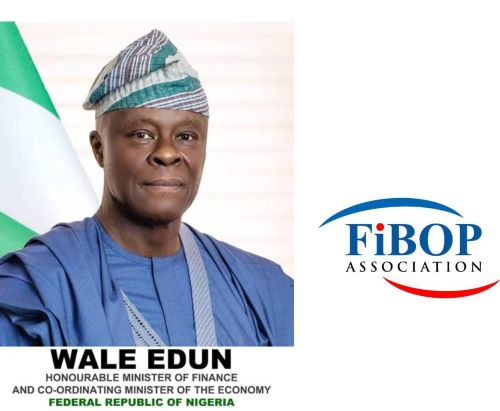
The Honourable Minister of Finance and Coordinating Minister of Nigerian Economy, Mr. Wale Edun will lead robust discussions on how to transform and grow the nation’s economy to one trillion dollars at the 2025 Finance and Business Online Publishers (FiBOP) national annual conference.

The theme of the conference is:” Achieving $1 Trillion Economy: Leveraging Technology Innovations, Tax Reforms, and Opportunities in Renewable Energy, Agriculture and Financial services.

The FiBOP Conference is bringing together technocrats, leaders of thought, captains of industry, the academia and key players from across all sectors of the economy to discuss the ways to put the country on the path of accelerated economic growth and development.

The FiBOP 2025 National Annual Conference will hold on October 18th to 19th, 2025 at Orchid Hotels, Lekki, Lagos State.

The 2025 conference which has continued to garner support and sponsorship from some of the most reputable organisations and institutions in the nation’s economy has gotten firm commitments from the Nigeria Deposit Insurance Corporation (NDIC), emPLE Insurance Limited, Nigerian Communications Commission (NCC), Polaris Bank, Zenith Bank, Fidelity Bank, Universal Insurance and Nestle Nigeria Plc. These organizations alongside others will be joining forces to fast track the process towards achieving the one trillion dollars economy by year 2030.

This conference is pointedly an integral part of the renewed hope agenda of the President Bola Ahmed administration designed to chart a clear plan for securing successful mutual accountability and investment strategies, crucial for Nigeria’s economic growth and development, particularly in areas of technology innovations, tax reforms, renewable energy, and agriculture.

Specifically, technocrats and speakers from different sectors of the economy will also identify innovative strategies for diversifying from dependence on oil, adapting technology, fostering innovation, investing in renewable energy, insurance, agriculture, and services.

The conference organisers have expressed optimism that more institutions will join the train to attain the $1 trillion economy by 2030 as a means of ensuring improved living conditions for the citizens of the country.

Edun believes that domestic savings are the engine of sustainable investment. “A trusted and stable financial system, anchored by strong institutions is essential to lifting millions out of poverty and driving Nigeria’s transition to a $1 trillion economy”

Meanwhile, President, Finance and Business Online Publishers FiBOP, Mr. Charles Onwuatogwu has called on more companies and organisations to partner with the association in alignment with federal government’s objective of wealth creation and advancing the dividends of democracy for the betterment of the people

He also assured that partners and sponsors will gain a wide range of benefits including well-articulated media hype via press interviews, media publicity promotions, display of their organisation’s backdrops and similar publicity initiatives to mention but a few.

FiBOP is a registered body by the Corporate Affairs Commission (CAC) made up of seasoned online publishers and editors, with wealth of experience in the print and electronic media, who are dedicated to promoting informed and balanced reporting of economic events and activities, wealth creation, and contributing to the growth and development of the Nigerian economy and the continent of Africa.

The association’s annual conference provides the needed platform for experts and stakeholders to contribute to issues of great national importance aimed at fostering inclusive growth, unity, and national prosperity.

CBN Governor Champions Next-Gen Leadership with New National Lecture Series

0

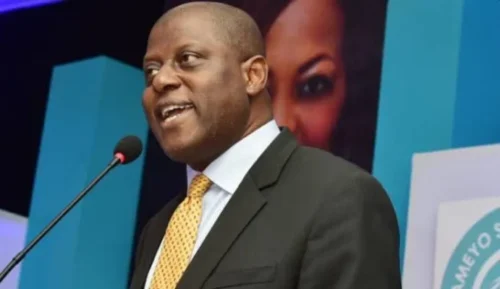
The Governor of the Central Bank of Nigeria (CBN), Mr. Olayemi Cardoso, will deliver a landmark lecture at Lagos Business School on Friday, October 3, 2025.

The lecture, titled “Next Generation Leadership in Monetary Policy & Nation Building,” marks the launch of the CBN Governor’s Lecture Series, the first in a series of thought-leadership discourses to be held in collaboration with leading tertiary institutions across the country over the next three years.

This inaugural edition also commemorates the second anniversary of Team Cardoso’s leadership at the Central Bank of Nigeria, a period defined by renewed focus on price stability, institutional transparency, and anchoring monetary policy to the everyday realities of Nigerians.

The Governor’s Lecture Series, part of Mr. Cardoso’s broader Knowledge Acceleration and Thought Leadership Initiative, is central to the CBN’s strategy of deepening public understanding and strengthening the transmission of monetary policy. It aims to foster dialogue, promote innovation, and advance an inclusive financial system that works for all Nigerians, while positioning the country as a leader on both the African and global stages.

Since assuming office in September 2023, Mr. Cardoso has consistently emphasized linking central banking to the daily realities of citizens. He has stressed that the Bank’s core mandate, safeguarding price stability, is essential to driving sustainable economic growth and protecting livelihoods.

“Nigeria is at a pivotal moment, where technology, global financial realignments, and the energy of its youthful population are reshaping its economic future. Innovation must be harnessed intentionally and confidently, particularly by institutions like the CBN,” Cardoso noted in an earlier engagement.

The lecture is expected to attract senior policymakers, industry leaders, academics, and students, underscoring the crucial role of monetary policy in fostering stability, growth, and national development.

President Tinubu to Inaugurate Renovated National Arts Theatre Today

0

As part of activities commemorating Nigeria’s 65th Independence Anniversary, President Bola Ahmed Tinubu will today, Wednesday, October 1, 2025, officially inaugurate the newly renovated National Arts Theatre, Iganmu, Lagos.

The historic project, executed by the Central Bank of Nigeria (CBN) and the Bankers’ Committee as part of their commitment to giving back to the nation, marks a bold investment in Nigeria’s cultural heritage and creative future.

President Tinubu, who in July 2024 renamed the edifice the Wole Soyinka Centre for Culture and the Creative Arts in honour of the Nobel Laureate, will lead a distinguished gathering of state governors, members of the National Assembly, the diplomatic corps, captains of industry, academics, cultural ambassadors, and youth leaders.

In a joint statement, the CBN, the Bankers’ Committee, and the Federal Ministry of Arts, Culture and Creative Economy underscored the theatre’s reopening as both a celebration of Nigeria’s rich cultural legacy and a launchpad for its creative industries. While the renovation was financed and delivered by the CBN and the Bankers’ Committee, the Ministry’s partnership in programming, policy alignment, and stewardship of Nigeria’s cultural ecosystem ensures that the rejuvenated National Theatre will serve as a truly national asset.

The reopening will feature performances by the National Troupe and other leading artists, along with special remarks from Prof. Wole Soyinka. CBN Governor Olayemi Cardoso will deliver the welcome address, with goodwill messages from Lagos State Governor Babajide Sanwo-Olu and the Honourable Minister of Arts, Culture, Tourism, and Creative Economy, Hannatu Musawa.

Upgrades to the facility meet the highest global standards for theatre and performance. Key improvements include a completely overhauled HVAC system, enhanced fire safety measures, new electrical, water, and sewage systems, advanced audio-video-lighting technology, world-class stage engineering, 17 new passenger lifts, solar power integration, refurbished interiors and furniture, and the restoration of historic artworks across the façade and interiors.

Ahead of the inauguration, CBN Governor Olayemi Cardoso noted: “This is not just an edifice; it represents our history and culture. The transformation of this landmark into a world-class facility is a testament to the Nigerian spirit.”

Governor Sanwo-Olu added: “The Wole Soyinka Centre for Culture and the Creative Arts (National Theatre) will not only showcase arts, tourism, and culture, but will also serve as a world-class venue for global conferences and performances.”

Minister Hannatu Musawa described the project as “a gift to the nation and a source of pride. The successful renovation of the National Theatre marks a milestone in our collective effort to preserve cultural assets while creating new opportunities for the creative industry.”

Originally constructed under the Yakubu Gowon military regime and completed in 1976 under General Olusegun Obasanjo, the National Theatre famously hosted FESTAC ’77, the Second World Black and African Festival of Arts and Culture. With this transformation, it now stands ready to host the next era of Nigeria’s cultural and creative renaissance.

NEM Insurance Chairman, Tope Smart, Receives NAIPE Award, Pledges Continuous Commitment to Market Growth

0

The Chairman of NEM Insurance Plc, Mr. Tope Smart has applauded the Nigerian Association of Insurance and Pension Editors (NAIPE) for giving him Award of Excellence.

Smart received the NAIPE Award of Excellence and Stewardship for the impact he has made in the insurance industry, not only in Nigeria but at the continental level as the Past President of the African Insurance Organisation (AIO).

Aside being the past Group Managing Director/CEO of NEM Insurance Plc, he was also the past Chairman of the Nigerian Insurers Association (NIA), among others.

In all these endeavours, Smart distinguished himself as an exceptional operator, a friend and supporter of insurance journalists.

While receiving the award in his office, Smart said the accolade is a message for him to do more to ensure that the insurance industry takes its rightful place in the national economy and discourse.

“I have a personal philosophy that what is worth doing is worth doing well. What shaped my perception was the derogatory image our Head of Department in the university created about insurance companies in Nigeria then. He had highest regard for foreign insurers and disregarded the local ones. From that moment, I decided that I must make a difference. So, when I joined the industry, I tried my best to be able to change the narrative. The NEM building on Ikorodu road was built without any bank loan to the glory of God and it has become the envy of others.”

While appreciating every member of NAIPE, he said he and the Group have come a long way together.

“I run a business and I know it’s not easy to run a business.  So, for you guys, especially, those who run their media platforms to be there with tenacity, despite all the struggles in the business operating environment and still making a difference, it is commendable and I will continue to support your projects in a joint effort to develop the insurance industry.”

On her part, the Chairman of NAIPE, Mrs. Nkechi Naeche Esezobor appreciated the support and partnership of Mr. Tope Smart and his company, NEM Insurance over the years, saying the Group never took them for granted.

“This building (NEM Insurance) was what made many insurance companies to start making their buildings big. Every company coming in is looking at doing what NEM did because you have challenged them. Your efforts can never be in vain. As an Association, we feel it is good to recognise people when they are alive. We appreciate what you have done for the industry and we felt we needed to appreciate this feat in our 10th anniversary of organising our annual conference,” she noted.

Meanwhile, the Chairman, 2025 NAIPE Annual Conference, Mr. Roland Okoro said Mr. Tope Smart ticked all the boxes when assessing the personalities to be awarded, calling on him not to rest on his oars towards deepening insurance acceptance, penetration and recognition.

WAICA Confab to Explore Climate Change Market Risk, Opportunities

0

The West African Insurance Companies Association (WAICA) Education Conference scheduled for October 12-15, 2025 in Lagos will explore climate change risks and opportunities for insurers in the West African region under the theme: The West African Insurer in the Face of Climate Change.

Mrs. Ebelechukwu Nwachukwu, the Chairperson of the Local Organising Committee (LOC), said in Lagos that over 250 delegates from across Africa are expected at the confab. She said the conference will explore the risks that insurers in the sub-region and Africa are exposed to and the readiness of the market to respond to such risks.

Nwachukwu, who is also the Managing Director/CEO of Rex Insurance Limited, described the confab as a landmark event to reinforce regional integration and co-operation in insurance business.

“This year’s conference, organised by the Nigerian Insurers Association (NIA) with the theme “The West African Insurer in the Face of Climate Change,” will bring together insurance practitioners, regulators, policymakers, and thought leaders representing countries across the West African sub-region. Member countries of WAICA, namely Nigeria, Ghana, Sierra Leone, Liberia, and The Gambia, will be represented, making the conference a truly regional platform for knowledge exchange, networking, and collaboration. The conference will provide a strategic platform for deliberations on the impact of climate change on the insurance industry, as well as actionable strategies to safeguard the future of insurance education and practice.”

She added that it is important for African insurers to engage in robust discussions on climate change, as the continent faces unique vulnerabilities such as extreme weather events, flooding, drought, and agricultural disruptions that directly impact businesses, communities, and livelihoods.

“For insurers, these challenges translate into rising claims, increased risk exposures, and the urgent need for innovative products and risk management strategies. By coming together at the WAICA conference, African insurers not only strengthen their collective preparedness but also position themselves to engage competitively with their global counterparts in shaping sustainable insurance practices and climate resilience solutions.”

The Honourable Minister of State, Ministry of Finance, Dr. Doris Uzoka-Anite will deliver the keynote address at the Opening Ceremony of the conference on Monday, October 13, 2025 while Mr. Olusegun Omosehin, Commissioner for Insurance, National Insurance Commission (NAICOM) is the Chief Host.

The LOC has equally assembled an array of eminent local and international insurance industry leaders, dignitaries, and technical experts who will speak on and critically dissect the theme and various sub-themes of the conference.

These include:

  • Abiba Zakaria, Ag. Commissioner of Insurance, Ghana
  • Wole Oshin, Group Managing Director, Custodian Investment Plc
  • Bockarie Kaloko, Deputy Minister of Finance, Republic of Sierra Leone
  • Tola Adegbayi, MD/CEO, Mutual Specialist

Following the paper presentations, three panel sessions will be held and chaired respectively by:

  • O.S. Thomas, Former Commissioner for Insurance, NAICOM
  • Alhaji Mohammed Kari, Former Commissioner for Insurance (NAICOM)/Wazirin, Bauchi
  • Olamipo Adeola, Head, Corporate Communication & Branding, Scib Nigeria & Co. Ltd.

Other programme highlights of the conference include:

  • Monday Evening Soiree – On 13 October 2025, Sponsored by Africa Reinsurance Corporation, at Eko Hotel & Suites.
  • Closing Dinner Ceremony – Tuesday, 14 October 2025 at Eko Hotel & Suites, sponsored by WAICA Reinsurance Corporation, at Eko Hotel & Suites.
  • Visit to Tourist Sites/ Departure – Wednesday, 15 October 2025.

The LOC has also put in place adequate arrangements for the transportation and security of foreign delegates and other participants at the conference to ensure a seamless and safe experience throughout their stay in Lagos.

The 2025 WAICA Education Conference promises to be a landmark event, reinforcing regional cooperation and highlighting the critical role of insurers in responding to climate challenges while offering delegates a unique opportunity to experience the dynamism of Lagos.

Stanbic IBTC Insurance Unveils Manifold Endowment Plan to Redefine Financial Security

0

Stanbic IBTC Insurance, a subsidiary of Stanbic IBTC Holdings has launched the Manifold Endowment Plan, an innovative blend of insurance and investment designed for Nigerians who want to protect what matters, grow their wealth, and enjoy peace of mind.

With life cover up to ₦1 billion, partial maturity payouts, and end-of-term bonuses, Manifold is for the modern Nigerian working hard today, planning boldly for tomorrow.

The Manifold Endowment Plan is uniquely designed for Nigerians aged 18 to 64, providing them with flexible policy durations ranging from six to fifteen years. At its core, it integrates death benefits, partial maturity bonuses, and accidental medical coverage, all while offering a structured avenue for individuals and families to plan, protect, and prosper.

The Nigerian insurance sector, though still underexplored, has seen remarkable growth, with industry revenues surging by 147% in the first nine months of 2024. Yet, with insurance penetration hovering around just 0.5% of GDP, the gap in uptake remains stark. Stanbic IBTC is tackling this head-on by introducing an offering that speaks to the everyday concerns of middle- and high-income Nigerians who seek value, reliability, and transparency in financial services.

Speaking on the launch, Akinjide Orimolade, Chief Executive, Stanbic IBTC Insurance, noted:

“The Manifold Endowment Plan is a response to Nigeria’s pressing need for accessible and rewarding insurance solutions. We are not just offering protection; we are empowering Nigerians to build financial resilience while preparing for the future. With Manifold, every premium is an investment in both peace of mind and real financial return.”

Manifold bridges the perception gap often associated with insurance. It assures Nigerians that even if the “worst” doesn’t happen, their money is never wasted. With premiums starting at just ₦10,000 monthly, policyholders can earn two 25% bonuses on their premiums while still receiving 100% of their chosen sum assured at maturity.

At its core, the Manifold Endowment Plan aligns with Stanbic IBTC Insurance’s broader mission: to help Nigerians secure today and prosper tomorrow. Whether it’s a young professional saving towards future goals, a parent building generational wealth, or a retiree seeking peace of mind, Manifold offers a tailored and transparent financial solution.

With the Manifold Endowment Plan, Stanbic IBTC Insurance is not only offering Nigerians a way to secure their futures, but it is also redefining what insurance can and should mean in today’s world.


AIICO Deepens Bond with Retirees, Holds Annuity Forum in Lagos, PH

0

Mr. Gbenga Ilori, Head, Retail Business at AIICO, in an interactive session with annuitants at the forum.

AIICO Insurance Plc, Nigeria’s leading composite insurer, today hosted another successful edition of its Annuity Forum, a yearly engagement platform designed to strengthen ties with its annuity customers, listen to their feedback, and create opportunities for meaningful interaction.

This year marks a significant expansion of the Forum. For the first time since its inception, the event, traditionally held only in Lagos, is spreading its reach to other regions of the country. The Lagos edition sets the pace, with another scheduled to hold in Port Harcourt, Rivers State, targeting annuity customers in the South-South region.

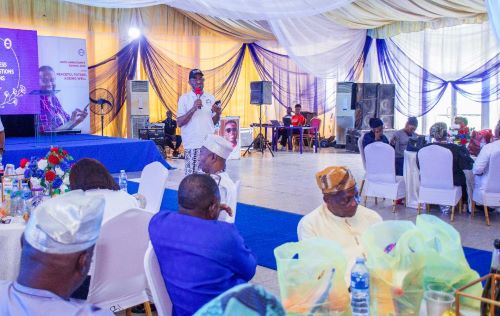
The atmosphere at the Lagos event was lively and refreshing, with customers treated to a mix of business and leisure – including health checks, entertainment, quizzes, and refreshments, alongside constructive conversations on enhancing customer experience.

Speaking at the event, satisfied annuitants expressed their gratitude to AIICO for creating a platform that fosters connection and trust.

His Royal Majesty Oba Ogungbayi Akanni Wasiu, the Onitetiku & Oluowode of Ota, Ogun State, and a retired officer from the Ministry of Education, is one of AIICO’s delighted annuity customers who attended the event. Sharing his experience, he said: “I retired 15 years ago and started my annuity immediately after retirement. I have no regrets because AIICO has paid me every month without fail. I strongly recommend AIICO to anyone preparing for retirement because the company has been very consistent.

Mrs. Judith Chibuogwu, who retired as a Director of Nursing from Lagos University Teaching Hospital, began her annuity with AIICO earlier this year in March. Sharing her experience, she said: “It’s been wonderful. I took the advice to take on annuity with AIICO, and it has been an amazing experience with the steady, constant payments. Today’s event has also been very enlightening, especially the conversations around retirement life, health, and wellbeing. In fact, I’ve already started talking to my former colleagues who are still in service about AIICO’s annuity.”

The MD/CEO of AIICO Insurance Plc, Mr. Babatunde Fajemirokun, while welcoming the annuitants stated “This annual gathering is not just a meeting – it is a celebration of your achievements, resilience and the trust you have placed in us as your partner on life’s journey. You are not just clients – you are family. This forum is an opportunity to strengthen our bond, share updates on our industry and re-affirm the promises we have made to you.”

He addressed head-on the negative claims circulating online about the alleged mismanagement of annuity funds, stating “AIICO Insurance ensures that your funds are kept with pension fund custodians – that means there’s no individual within the AIICO team that has access to your funds. This is the case with all insurance companies in the annuity business.  – the funds are professionally managed in line with strict regulatory guidelines that have been provided”.

Mr. Gbenga Ilori, Executive Director, Retail Business Division, echoed the sentiment:

“Our business exists because of our customers, and we believe it is important to create avenues for physical interaction and engagement. These forums give us the opportunity to listen, respond to their questions, and hear their ideas on how we can serve them better. They have entrusted their pensions to us, and we consider it a sacred duty to always stay connected to them.

More and more people are placing their trust in AIICO for their annuity needs — today, we serve over 25,000 annuitants across the country, and the number keeps growing. This is why we are taking the forum beyond Lagos, with the South-South region as our next stop in a few weeks.”

With a large and growing number of annuitants nationwide and monthly disbursements of over N1.7 billion, AIICO Insurance has built a reputation as a leading player in Nigeria’s annuity market. The company continues to back this leadership position with unmatched customer service, strong financial performance, and innovative engagement platforms like the Annuity Forum.

The journey continues in Port Harcourt, where AIICO will bring the Annuity Forum experience to annuitants in the South-South. This marks the beginning of a broader mission to take the Forum across Nigeria’s geopolitical zones over time, ensuring that retirees everywhere can share in the warmth, interaction, and assurance that define our commitment. For AIICO, every retiree deserves not just timely income, but also a community that celebrates and supports them throughout their retirement journey.

About AIICO Insurance Plc

AIICO Insurance is a leading composite insurer in Nigeria, with a 60-year record of accomplishment in delivering quality service to its clients. Founded in 1963, AIICO provides life and general insurance, health insurance, and investment management services to create and protect wealth for individuals, families, and corporate customers.


Sovereign Trust Insurance Holds 30th AGM

0

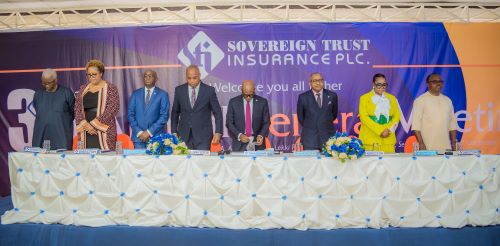
L-R: Eric Balogun, Independent Director, Emi Faloughi, Director, Kayode Adigun, Executive Director, Finance & Corporate Services, Oloruntomiloba Olagunju, Company Secretary, Abimbola Oguntunde, Chairman, Ugochi Odemelam, Executive Director, Marketing & Business Development and Shedrach Odoh, Director, Sovereign Trust Insurance Plc at the 30th Annual General Meeting of the Company held at the Baylounge on Admiralty Way, Lagos on Thursday, September 25, 2025.

Unity Bank Shareholders Approve Merger with Providus Bank

0


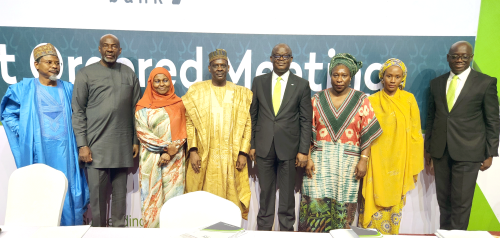
EGM: From left: Mr. Usman Abdulkadir, Executive Director, Risk Management and Compliance; Mr. Sam Okagbue, Non-Executive Director; Hajiya Yabawa Lawan Wabi, Non-Executive Director; Alhaji Hafiz Mohammed Bashir, Acting Chairman; Mr. Ebenezer Kolawole, Managing Director/CEO (Ag.); Prof. Iyabo Obasanjo, Non-Executive Director; Hajiya Halima Babangida, Non-Executive Director; and Mr. Alaba Williams, Company Secretary during the court-ordered meeting of Unity Bank Plc on the proposed merger with Providus Bank. 

Shareholders of Unity Bank Plc have approved the proposed merger with Providus Bank Limited, marking a major milestone in the business combination of the two financial institutions.

At the Court-Ordered Meeting held on September 26, 2025 in Abeokuta, Ogun State, 295 shareholders participated and deliberated on all items in the Scheme of Merger. Of these, 293 shareholders representing 99.32% of total shareholding (₦4.4 billion in value) voted in favour of the resolutions, while 2 shareholders representing 0.68% voted against.

As part of the Scheme Consideration, Unity Bank shareholders will receive ₦3.18 per share or be allotted 18 ordinary shares of ₦0.50 each in Providus Bank Limited (credited as fully paid) for every 17 ordinary shares of Unity Bank Plc held. Upon completion, Unity Bank’s entire share capital will be cancelled, and the Bank dissolved without winding up, while Providus Bank Limited will retain its certificate of incorporation as the enlarged bank.
Speaking on the development, Chairman of Unity Bank Plc, Hafiz Mohammed Bashir, said: “This approval by our shareholders is a strong vote of confidence in the merger and what it represents for the future. By joining forces with Providus Bank, we are creating a stronger, more competitive, and more resilient institution that will deliver long-term value to our customers, shareholders, and the Nigerian economy.”

He stated that the new name of the enlarged entity shall be Providus-Unity Bank (PUB) to reflect the core loyalty present in the vast northern market.
The Chairman clarified to the shareholders during the Court-ordered meeting that the NGX lifted the suspension of trading of Unity Bank shares on the floor of The Exchange on 25th September 2025, with a remarkable crossing of 4.004Billion units of AMCON shares (representing 34% of issued shares of Unity Bank Plc) to an existing shareholder of Unity Bank and not to Providus Bank.
Shareholders also authorised the Bank’s Directors and Solicitors/Transaction Advisers to seek the necessary Court orders and take all required actions to give full effect to the Scheme.
Analysts commend the shareholders for endorsing the merger to pave the way for the emergence of a financial powerhouse anchored on strong market positioning with the capacity to take on the competition on the strength of both traditional and modern digital Banking.


NNPCL: Ogoni Re-entry is a Beacon of Reconciliation through Collaboration

0

The re-entry into Ogoniland marks a historic turning point for Nigeria — not just in terms of oil production, but more broadly, this milestone reflects the spirit of President Bola Ahmed Tinubu’s Renewed Hope Agenda, which commits to building a stronger country, attracting responsible investment, and ensuring that community development is at the heart of national progress.

Speaking during the presentation of the Ogoni Consultations Report at the State House in Abuja on Wednesday, President Tinubu acknowledged that the Ogoni people have endured long years of pain, and that this re-entry reflects the government’s recognition of their sacrifices.

“We are not, as a government, taking lightly the years of pain endured in Ogoniland. We recognise that, otherwise we would not be here today…We declare with conviction that hope is here and is back with us,” the President said.

The Group Chief Executive Officer of NNPC Ltd, Engr. Bashir Bayo Ojulari, echoed the President’s sentiments, calling the development a re-affirmation of the company’s unwavering commitment to the Ogoni re-entry plan and a bold step towards justice, healing, and national prosperity. He emphasized that the re-entry demonstrates that Nigeria can confront its past, honour the sacrifices of its communities, and forge a new path with a vision of prosperity and justice for all.

“The re-entry into Ogoniland is not just about oil and gas. It is about justice, healing, and charting a new future for our nation,” Ojulari said.

Ogoni re-entry can be seen as both a test and an opportunity for the country. It demonstrates that equity can exist in national development, and oil can co-exist with environmental stewardship and inclusive nation-building. This milestone is a practical example of how President Tinubu’s Renewed Hope Agenda translates into reality by strengthening our country, creating conditions for responsible investment, while prioritising the prosperity of host communities.

Ojulari acknowledged the pivotal leadership of the National Security Adviser, Mallam Nuhu Ribadu, in convening a committee that brought diverse stakeholders together, creating the platform for dialogue and consensus that made this breakthrough possible. He also praised the work of Professor Don Baridam and members of the Presidential Committee, who engaged tirelessly and transparently with all relevant parties to produce a report that tells a story of fairness and inclusivity that will ultimately bring closure and renew hope for the Ogoni people and all Nigerians.

“The lesson is that this journey cannot be driven solely by production volumes. It must be anchored on justice, equity, sustainability, and most importantly, collaboration with the very people whose land bears this wealth,” he stated.

To that end, Ojulari was categorical that in resuming operations in Ogoni, NNPC Ltd will continue to build trust by prioritising community engagements with key stakeholders, investing in infrastructure, and empowering local enterprise.

He confirmed that NNPC has already began initiatives in road construction, infrastructure upgrades, and economic empowerment programs designed to rebuild trust and demonstrate accountability in an inclusive manner. “NNPC Ltd is determined to transform Ogoniland from a symbol of conflict into a beacon of reconciliation, renewal, and sustainable progress,” he concluded.

In his remarks, the National Security Adviser, Mallam Nuhu Ribadu, echoed the general sentiments that sustainable progress is possible and proven through collaboration with all parties concerned. He said the report was the outcome of an intensive, methodical, and transparent engagement, while Professor Baridam, on behalf of the Committee, thanked the President for his unwavering commitment to the well-being of the Ogoni people, stressing that through diplomacy and relentless insistence on dialogue, host community trust was earned, and hope restored.

This restored hope is also a message for the international community— Ogoni re-entry is more than a Nigerian milestone. It is a classic example of how a resource-rich nation like Nigeria can reconcile environmental protection with energy security. By placing community benefit at the centre, Nigeria is rewriting the global playbook on how oil and gas operations can co-exist with local aspirations, sharing a global example of how energy development can be reconciled with environmental protection and community inclusion.

For Nigeria, it signals progress is being redefined as a partnership between government, industry, and the people.

NLNG, NCDMB Celebrate 122 Graduates of Train 7 HCD Training Program

0

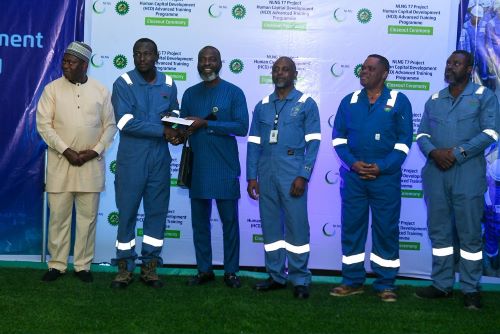
NLNG in collaboration with the Nigerian Content Development and Monitoring Board (NCDMB), on Friday achieved a major milestone in the Nigerian Content development commitment, with the close-out of Train 7 Project Human Capital Development (HCD) Advanced Training Programme, at the plant complex in Finima – Bonny Island. The training ends officially on 30th September 2025 with the departure of the trainees from its plant facility in Bonny Island.

The HCD programme, run under the guidance of the NCDMB, is a Federal Government Initiative to build capacity for the oil and gas industry and fulfil the Nigerian Oil and Gas Industry Content Development (NOGICD) Act’s requirement on human capital development.

A total of 122 trainees, having completed prior HCD Basic Training Programmes, were approved by the NCDMB, to participate in the rigorous three month on the job training (OJT) within NLNG facilities, covering both graduate and vocational categories. The training programme focused on development of technical expertise in plant and facility management, amongst other competencies, and has positioned the trainees to take advantage of future opportunities within the oil and gas industry.

Speaking at the ceremony, the NLNG Train 7 Project Director Engr. Ali Uwais, represented by Engr. Joshua Anemeje, the NLNG Train 7 Project Corporate Liaison Manager, described the advanced training programme as a testament of the resilience, discipline, and growth of the trainees. He congratulated the trainees for their commitment to excellence and urged them to take advantage of future opportunities within the oil and gas industry.

“This programme is about building a new generation of Nigerian professionals who will shape the oil and gas sector for decades to come. Its successful completion with a zero-incident safety record reflects not only your dedication but also NLNG’s uncompromising culture of ‘Safety First and Always’, and its operational excellence”, Joshua said.

He further commended the role of NCDMB as a strategic partner in driving Nigerian Content targets and capacity development in the industry. He also commended the training partners, Candix Engineering Nigeria Limited, AOS Orwell, Arco Marine and Engineering Limited, Dover Engineering and Amaiden Energy Nigeria Limited, who ensured the trainees got a world class OJT experience and HR management.

“Today is proof that strategic collaboration delivers impact. Through our collaboration with NCDMB and our training partners, we are shaping the future by investing in people, strengthening capacity, and laying the groundwork for sustainable national prosperity.” He added.

Joshua encouraged the graduates to leverage their skills to create value in Nigeria’s energy sector and beyond. He added that the investment in building their skills was made by the Federal Government of Nigeria via the NLNG Train 7 Project Human Capital Development Programme for which they are expected to take maximum advantage.

In his comments, the NCDMB’s General Manager, Human Capital Development (HCD), Esueme Dan Kikile, Esq, expressed delight on the conclusion of the training programme, which produced a pool of skilled and globally competitive workforce, knowledgeable in key areas such as instrumentation, electrical, mechanical, lifting and rigging activities, and fabrication, preventive and corrective maintenance, and can compete globally in the oil and gas industry and its linkage sectors. In addition, the programme is another important milestone in the collective journey towards building a skilled Nigerian workforce for the oil and gas industry and its linkage sectors.

Kikile described Train 7 Project as one of the largest gas infrastructure developments in Africa, noting that it not only created jobs but also provided a platform to groom young Nigerians with advanced technical and managerial competencies.

“This training provided hands-on experience on a live LNG project that complimented your academic and theoretical knowledge. This training further exposed trainees to specialized advanced technical disciplines, project management, health and safety, and emerging technologies critical to the future of the industry,” he added.

‘It is my delight to note that twenty-seven (27) have received special recognition awards for their aptitude during the programme, out of which six (6) who were very exceptional have been offered automatic employment by AOS Orwell, one of the training partners’, he said.

He charged the trainees to utilize the rare skills they have acquired to contribute meaningfully to the Nigerian oil and gas industry and national economy, and serve as good ambassadors of the programme, contributing meaningfully to Nigeria’s industrial growth.

He lauded the NLNG and all other partner companies for their unwavering commitment to Nigerian Content development, referencing several other initiatives the Board is partnering NLNG to deepen local content implementation in the Nigerian oil and gas industry.

Awards were also presented to all the deserving trainees as part of the programme.

Effective Employee Management for Profitability and Competitive Edge 

0


By Kazeem Olayemi Odeyeyiwa, FCA 

Expectedly, the desire of all businesses is to stay ahead of the competing crowd or maintain a strong competitive edge and be profitable. And it is a truism that lasting competitive advantage is possible through availability of outstanding employees to drive various value activities of the value chain.

It takes a lot of time and resources to recruit, maintain and retain outstanding employees. Every once in a while, special employees come along that just really seem to get it. They drive the entire company forward in ways that were unimaginable. Advancement and reward are never an issue for these superstars because they understand the power of cause and effect, and only a worthy company can retain and afford them.

Apart from outstanding employees, there are also other categories of employees, among who are “the coming employees”. The coming or upcoming employees are employees that are still growing. For this category of employees to become outstanding, what seems like four stages of leadership and intellectual influence must take place.

That is, the coming employees must see (or be made to see) outstanding employees as role models. This stage of influence is called “Modelling”. From Modelling, coming employees begin to see outstanding employees as their motivators. This stage is called “Motivation”.

Having become motivated by the outstanding employees, coming employees approach outstanding employees for mentoring relationship. The outstanding employees begin to practically guide the coming employees.

This stage is called “Mentoring”. When the outstanding employees have finally deposited almost all that they know in the coming employees, the coming employees will finally become like outstanding employees. This stage is called “Multiplication” which is technically called “Reproduction”. This process will naturally ensure sustenance of corporate culture of peak performance and possibly facilitate effective succession planning.

According to John Maxwell in his masterpiece, “The 360 Degree Leader”, “The best way to develop high-caliber leaders is to have them mentored by a high-caliber leader. If you lead your organization, you are probably the best (or at least one of the best) leader in the organization. If you are not already doing so, you need to pick the people with the greatest potential, invite them into your circle, and mentor them.”

Recruitment Process

It is noteworthy that any organisation that is passionate about having outstanding employees must first put in place a tested and rigorous recruitment policy that focuses more on personal or general skills rather than technical skills. This is because over-reliance on intelligence quotient (IQ) for employee recruitment can also lead to influx of intellectual employees that lack interpersonal skills, emotional intelligence, team spirit, etc., that are critical to becoming outstanding employees.

This is because no employee can become outstanding without the operational support of his colleagues just as no football striker can deliver sterling performance consistently without regular supply of passes to him or her by teammates. 

HBR’s Paradox of Work Engagement of Outstanding and Low Performers

John Baldoni, president of Baldoni Consulting, a full-service executive coaching and leadership development firm paradoxically explains in his article christened “Your Least Engaged Employees Might Be Your Top Performers” published in the Harvard Business Review thus: “Some of the most engaged employees in your organisation are your worst performers. And some of the least engaged are your highest performers.”

This inference stems from the new research by a consulting firm, Leadership IQ. The study “matched engagement survey and performance appraisal data for 207 organisations”. According to Mark Murphy, chief executive officer of Leadership IQ, “We had long suspected that high performers might not be as engaged as has traditionally been assumed. But seeing that, in 42% of cases, high performers were even less engaged than low performers was a bit of a shock.”

This conclusion runs contrary to the traditional belief as well as many studies (including the one from Gallup) that show high engagement — that is, how much employees are committed to their work — correlates with better bottom line results, including productivity and profitability.

You could think of these low performers as hamsters on a wheel, spinning fast but actually going nowhere. Conversely, high performers may be coasting like swans on a pond, just gliding by. You do not see their effort because it is below the water. As Murphy says, “In our study, high performers gave very low marks when asked if employees all live up to the same standards.”

The research confirms that while low performers may be more engaged, their efforts may not be as productive, especially since it is the higher performers, despite low engagement, that are doing all the work. The underperformance of the former undermines the effort of the latter. This is especially true, according to the study, when low performers are not held accountable for poor performance. These employees may not even know they are doing a poor job.

Naturally when poor performers are allowed to slide by, it erodes the morale of high performers who feel, again according to the study, “helpless about the trajectory of their careers”.

“We had seen plenty of cases where managers avoid dealing with low performers (because they believe the conversation will be difficult), and instead assign work to the employees they enjoy — i.e. high performers,” says Murphy. “And as a result, they end up ‘burning out’ those same high performers they enjoy so much.”

Baldoni says while he finds Leadership IQ’s findings linking high engagement to poor performers to be contrarian, it is not usual for good performers to feel lost in the system. This is a comment he hears frequently in his coaching work.

The question is, what do we do about it? Murphy offers two suggestions. “First, leaders need to set very explicit, and behaviourally-specific, expectations for performance. These expectations need to define and delineate good, great, and even poor performance so employees and managers can clearly define and differentiate best practices, teach those practices to others, and then hold people accountable accordingly.”

Doing this, according to Murphy, “gives high performers confidence that their manager understands the meaning of ‘high performer’ and it holds the manager accountable to actually differentiate employees on the basis of their performance”.

Second, Murphy suggests regular monthly meetings (perhaps lasting no more than 20 minutes) that ask managers about what’s going on in the workplace and how motivated they feel. As Murphy says, “If a company CEO were told that their best customers were unhappy, it’s a safe bet that CEO would be on a plane within hours. If we truly believe that people are our most important asset, shouldn’t we pay a bit more attention to the engagement of the best of those people?”

Senior management needs to communicate more clearly, hold people at every level accountable for results, and actively invest time and resources in the talents of high performers.

All too often, companies do not know their employees are unhappy until they leave. Exit interviews reveal that they leave because they did not believe anyone cared. Research has confirmed the old saw that people leave bosses, not companies. That makes holding bosses accountable for employee engagement critical.

Senior leaders need to do a better job of teaching managers how to be better managers. And they also need to apply such standards to themselves. 

Turning Creative Employees into Outstanding Employees

Creative employees are another set of coming employees that that become outstanding employees with proper talent management skills. In fact, unless you learn to get the best out of your creative employees, you will not get the best from them. However, if you just hire and promote people who are friendly and easy to manage, your firm will be mediocre at best.

Dr. Tomas Chamorro-Premuzic, an international authority in personality profiling and psychometric testing says although every organisation claims to care about innovation, only very few are willing to do what it takes to keep their creative people happy, or at least, productive. The following are some of the things to do to effectively engage, retain and turn coming creative employees into outstanding ones.

Make them feel important. According to T.S. Eliot, “Most of the trouble in this world is caused by people wanting to be important.” And the reason is that others fail to recognize them. Fairness is not treating everyone the same, but like they deserve. Every organisation has high and low potential employees, but only competent managers can identify them. If you fail to recognise your employees’ creative potential, they will go somewhere where they feel more valued.

Let them freely express themselves. Show your creatives unconditional support and encourage them to do the absurd and even fail. Innovation comes from uncertainty, risk and experimentation. That is, if you can predict the outcome, it is no longer creativity. Creative employees are the natural experimenters, so let them try and test and play. Of course, there are costs associated with experimentation — but these are lower than the cost of NOT innovating.

Do not pressurise them. Creativity is usually enhanced by giving people more freedom and flexibility at work. If you like structure, order and predictability, you are probably not creative. However, we are all more likely to perform more creatively in spontaneous, unpredictable circumstances — because we cannot rely on our habits.

Do not constrain your creative employees. Do not force them to follow processes or structures. Let them work remotely and outside normal hours; do not ask where they are, what they are doing or how they do it. This is the secret to managing Don Draper, and why he never went to work for a bigger competitor. This is also why so many top athletes fail to make the transition from a small to a big team, and why business founders are usually unhappy to remain in charge of their ventures once they are acquired by a bigger company.

Surprise them. Few things are as aggravating to creative employees as boredom. Indeed, creative people are pre-wired to seek constant change, even when it’s counterproductive. They take a different route to work every day, even if it gets them lost. Creativity is linked to higher tolerance of ambiguity.

Creative people love complexity and enjoy making simple things complex rather than vice-versa. Instead of looking for the answer to a problem, they prefer to find a million answers or a million problems. It is therefore essential that you keep surprising your creative employees; if you fail to do this, you should at least let them create enough chaos to make their own lives less predictable.

Only involve them in meaningful work. Natural innovators tend to have more vision. They see the bigger picture and are able to understand why things matter (even if they cannot explain it). The downside to this is that they simply will not engage in meaningless work. This all-or-nothing approach to work mirrors the bipolar temperament of creative artists, who perform well only when inspired — and inspiration is fuelled by meaning. This rule can also be applied to other employees: everyone is more creative when driven by their genuine interests and a hungry mind.

Notable Attributes of Outstanding Employees

The following are some of the attributes that outstanding employees possess. If your managers do not value these attributes, maybe they are not the right managers for your organisation anymore.

Outstanding employees are highly expressive as they ask for help whenever they need it.

They form great relationships with people inside and outside the company. They know which teams they are a member of and work to strengthen their team relationships so that things do not get tense or stressful in a clinch.

Outstanding employees know more than just the procedures their job requires. According to “ForbesCareers Newsletter”, they know the reason why their jobs exist and that knowledge lets them suggest tweaks and innovations that let them work more effectively.

Outstanding employees notice what is going on around them at work, and they integrate their constant learning into the way they do their jobs.

Great employees look ahead and anticipate problems that might emerge on the job. They bring up potential problems early and push to get those problems addressed before they can do harm.

Outstanding employees tell the truth about sticky topics like workload, work/life balance, difficult customers (or vendors, fellow employees or managers) and ineffective procedures. They find their voice and use it even when no one else dares to.

Outstanding employees do not rest on their educational credentials, job title or honours bestowed on them. Liz Ryan is CEO/founder of Human Workplace and author of Reinvention Roadmap, they are open to new ideas no matter who suggests them. They share their own thoughts, not the conventional wisdom they have been taught by other people. They do not brag about themselves.

Excellent employees are coaches and mentors to people around them. They often hear “You are so generous to share your expertise!” They do not take the view that knowledge is power. They know that knowledge is only power when it is shared with others. Outstanding employees address conflict rather than avoiding it. When they step into a conflict resolution process, they maintain respect for everyone in the mix. They do not place blame on other people. Rather, they do not apologise just to keep the peace.

Outstanding employees have a personal career plan or direction in mind. They do not assume that their employer will manage their career for them. They manage their own career.

They enthusiastically learn all aspects of business. According to Kevin Daum, a career management expert, outstanding employees understand they are part of something bigger and more worthwhile than just their jobs. They look to learn other areas of the business and be fluent in finance and management so that they will positively impact multiple areas of the company.

Outstanding employees steward their organisations. They treat the organisations as if they (the organisations) were theirs. They look to make prudent decisions about expenses and opportunities with the long-term future of the company in mind. They easily assess risk versus reward, selflessly when making decisions.

They generate viable opportunities. Outstanding employees know you do not have to be in sales or marketing to help a company grow. They see company growth as a collective effort and constantly keep their eyes open for ways to more than pay for themselves.

Outstanding employees resolve issues before they are issues. Amazing employees are always looking to improve systems proactively, and they do.

They tell it as it is. Amazing employees understand that hiding bad news helps no one. They find kind ways to bring uncomfortable information to the surface, but they bring it to the surface. They tell people what is necessary before major damage is done.

They demonstrate high standards with low maintenance. Managers always feel relaxed when they can trust an employee to perform a task to the same high standards they would expect from themselves. Not all can do this without constant attention or difficulty. Amazing employees quietly drive their own high standards.

They grow themselves and others. They not only drive their own careers but inspire others to do the same. These employees lead by example in how to advance without creating animosity or resentment. They see and create their perfect future, and also bring others along.

Motivation and Regular Training of Coming and Outstanding employees

It is noteworthy that to achieve and sustain corporate peak performance, organisations need to motivate employees and cultivate the culture of regular training of upcoming and outstanding employees. This training will ensure enhancement of the capabilities of upcoming employees to become outstanding while assisting existing outstanding employees to sustain and even exceed their peak performance and avoid complacency or diminishing returns setting in.

According to Andy Grove, there are only two ways for a manager to improve the output of an employee, these are motivation and training. Motivation is the key ingredient for success in any organisation. You can have all the technical skills in the world, but if you cannot motivate your team, it will be difficult to achieve success.

Motivation has long been recognised as being vital to the fulfilment of human potential. It has never been so important, however, as in our current era of drastic social and technological change and the stress that necessarily results.

Dr. Walter Doyle Staples, author of “Power to Win” and one of most-celebrated American authorities on human-potential issues says there can be few subjects as fascinating as positive and stimulating motivation if only because it means so many different things to different people. Only positive motivation will bring about productive results because it concentrates on desire, whereas negative motivation concentrates on fear.

To motivate your team, one of the things you need to do is to find out the level of their motivation. Everyone has motivation. Your employees are motivated on some level and it is your responsibility to find the level of their motivation and move them (the employees) to the next level. The key to this motivation is to be consistent with all your employees at all times.

If you show sincere in your employees, they will definitely be motivated. Understand what your employees are passionate about in their lives. Try to know their personal needs, what brings them joy or pain, what their short- and long-term goals are, etc. Once you can find out these, you can move them to a new level of motivation, because you have shown enough care. Once you understand your employees’ needs and goals, they will take more interest in understanding and achieving your goals.

Sykes suggests that to motivate your employees productively, you need to listen to What’s in It for Me? (WIIFM). Sykes educates that to truly be a motivator, you must always be in tune with your employees’ WIIFM. Find out why it is beneficial for them to do a task, etc.

Once you have found out the employees’ motives, you have discovered how to motivate them. Giving your employees the opportunity to be proud of their work constitutes yet another of the many ways of motivating them. Napoleon Bonaparte corroborates this by saying, “A soldier will fight long and hard for a bit of coloured ribbon.”

Reward team members publicly for a job well done. Give them an opportunity in a team meeting to explain how they accomplished a task. Let your organisation give recognition to these employees by personally sending a note, recognising them in an organisational or team meeting, or creating a Hall or Wall of Fame recognition for them that really have gone beyond the call of duty.

Also let your employees know why doing a particular task is important to you, the organisation and to them. Employees like to know why tasks are being requested of them so that they can feel involved and that the task is worth it. To motivate your team, you need to expect the best from them. If you expect the best, your employees will rise to that level. You do it with the words you use.

Also, training should be the most basic requirement for all managers in an organisation. An effective way to enforce this requirement is by withholding new employee requisitions from managers until they have developed a training programme for their departments.

Motivating Outstanding Employees through Appraisal

At times, outstanding employees are not accorded the necessary recognition. Experts say if you are an outstanding employee stuck in an undeserving organisation, your path is clear — it leads up and out of there, and on to your brilliant future.

The employee appraisal process therefore gives organisations the opportunity to praise employees who are outstanding. To ensure that these employees truly understand how much you appreciate their contributions, carefully select the words you include on their evaluations. By picking just the perfect words, you can communicate your appreciation clearly and allow them to bask in your pride, likely bolstering their commitment to the workplace.

Fatal Error of Recognising only Outstanding Employees

Human Resource Management experts are of the opinion that in as much as it is good to motivate and recognise outstanding employees christened, it is will be counterproductive according alone them the recognition, compensation or motivation.

Steven Brown, author of 13 Fatal Errors Managers Make with the subtitle And How You Can Avoid Them, predicates his displeasure with recognising only top performers on the fact that if you take all the top performers in your industry and hire them for your organisation, at the end of a year, only one person will come first.

In Brown’s words, “Before you begin to think how fantastically such employees would perform, on the average, I have some bad news for you: You cannot hire all the top performers, and you cannot build any department within a company with only top performers. No matter how great your financial resources, recruiting abilities, or connections, your efforts will fail. Why? Because … many top performers just don’t exist, and even if they did, only one person can get the top spot, while the others get the title also ran.”

He stresses that many managers waste much time trying to make themselves the first to achieve the impossible feat of hiring only top performers. “Simultaneously, they unintentionally discourage their middle (or steady) performers, who make up the backbone of any successful organization. All profitable companies build their business on good, reliable middle producers, plus a few superstars,” educates Brown.

Parting Shot

From Brown’s submission therefore, it makes sense for organisations to always recognise outstanding employees to sustain and exceed performance while recognising coming employees where necessary to as a way of challenging them to increase their performance. 

Kazeem Odeyeyiwa, a Professional Accountant, Certified Information System Auditor and an alumnus of the London Business School undergoing a Doctorate of Business Administration Programme at the California Intercontinental University, USA, is the Managing Director/CEO, Repton Group based in Nigeria.