Tuesday, April 21, 2026
31.5 C
Lagos
Home Blog Page 354

Olashore Lancaster Foundation Commences UK Trip

0
Olashore school

Olashore Lancaster Foundation Students is set to commence their trip to the United Kingdom [UK].

The trip which is scheduled to hold between March 5th and 19th is organised in partial fulfillment of the Lancaster University Foundation Programme (LUFP) qualification.

The Foundation is an off-shoot of a globally acclaimed secondary school institution in Nigeria, Olashore International School.
The purpose of the Foundation programme is to provide students with the necessary skills needed to go on to study for an undergraduate Bachelor Degree at Lancaster or any UK University.

Students embarking on this programme would spend one year in Olashore International School, Nigeria and three (3) years at Lancaster University or any UK University. The Lancaster University Foundation Programme (LUFP) welcomed its first students in October 2007 and has had over 100 students join universities across the UK and beyond.

Some of the unique features of the Olashore Lancaster Foundation programme includes study skill sessions, academic and cultural orientation trip to UK Universities, opportunity to apply to five UK Universities, guaranteed progression to UK universities, visa processing support, ensuite accommodation and the learning environment is safe and serene.

According to the Programme Co-ordinator, M.r H.B. Rufai, “the Olashore foundation programme is well known, approved and accepted by UK universities. Lecturers from Lancaster University visit Nigeria in November and June for an intensive study skills sessions during the one year programme at Olashore. Applicants must have completed secondary education with good grades in WASSCE before they can enroll for the One-year foundation programme, and when the programme is half way, the students are taken abroad for taster lectures, volunteering programs and community development.”

The school principal, Mr D.K. Smith, emphasised on the essence of the Lancaster University Foundation Programme (LUFP):
“The idea of the Lancaster Foundation came up after working in affiliation with Lancaster for few years, under the leadership of the former principal. The essence is to allow for easy and smooth transition from here in Lancaster University or any University in the UK through the help of this foundation programme. Lancaster University has existed for more than 50 years now, and has progressed to being one of the top 10 universities in the UK consistently. Based on the award we got in year 2015 that has positioned Olashore as one of the ten top schools here in Nigeria, we want to affiliate ourselves with top schools.”

Established in 1994, on 60 acres of land, Olashore International School is a co-educational school which offers high calibre education in a wide range of subjects.

It is one of Nigeria’s leading boarding schools, is particularly appealing to discerning Nigerians at home and abroad, as well as expatriates residing in Nigeria, who desire a school with a strong value system, proven track record and a clear sense of purpose.

Orange, Google Partner on Mobile Internet Services in Africa, Middle East

0
orange

Orange announces a new partnership with Google™ to bring the best of mobile internet across its full African and Middle Eastern (Orange MEA) footprint.

By combining the strength of Orange’s mobile network and mobile expertise with Google’s mobile applications, the move offers customers the best of both partners in terms of access and content through an all-inclusive digital communication package. googleOrange and Google have come together to deliver a package that is tailored to meet the needs of the market. Customers across the Orange MEA footprint will now have access to a range of best-in-class online services including, but not limited to, popular content covering fashion, sport and music, as well as everyday tools such as Google Search™, YouTube™ and Google Maps™.

Bringing Value to Customers through Enriched Local Content
The partnership will address the mass market for Orange in Africa and the Middle East, following Orange’s ongoing success of delivering smartphones across the region.

Through an educational campaign, customers will be offered advice to better understand the benefits and direct value mobile Internet can bring. Important information will be made accessible, for example, finding answers to questions instantly through Google Search or the ability to locate the nearest health clinic using Google Maps.

Languages, such as Arabic, will be supported to enrich the customer experience, with additional languages to be added throughout the year.

The digital communication package is especially well-adapted to youth who have high data usage and want the latest generation smartphone. Customers will receive one of the most competitively priced tariff plans in the region starting at $40, which will consist of a high-specification smartphone and a communication bundle with voice, SMS and data.

The offer will be delivered in a phased approach and will start to roll-out across the full Orange MEA footprint in Q2 this year. The device will launch with the native set of Google services and the goal of the partnership is to develop local services and content over time.

“As the first pan-Africa and Middle East mobile partnership with Google on this scale, we are able to bring direct value to our customers by offering the best access and services to ensure they get the most out of the mobile internet,” says Yves Maitre, Executive Vice President of Connected Objects and Partnerships, Orange.

“Through this all-inclusive digital communications package, we are proud to continue our promise to deliver affordable internet access across the region and connect people to what is essential in their lives.”

Richard Turner, Director Android Partnerships for Europe, the Middle East and Africa says:
“Today, over three billion people across the world are using the internet to live better, richer lives and create opportunities for themselves and their communities. The driving force behind this growth – particularly in Africa and the Middle East – is smartphones. We are very excited to work with Orange to bring together data services, content and a high quality Android™ device to provide a great experience for first-time or experienced smartphone users.”

Orange Rise 31 Special Edition, 3G flagship device for Orange MEA
The affordable offer will launch on the Orange Rise 31 Special Edition, a new and exclusive Orange branded 3G device. As the flagship model of Orange’s 2016 smart family line-up for Orange MEA, it will be running on Google’s latest OS Android 6.0 Marshmallow, has a 4-inch screen and comes with the latest version of Orange Experience 8 to ensure a smooth and supportive smartphone experience.

The smartphone is a powerful quad-core product, boasts a high memory package (1GB RAM/8GB ROM) and will provide access to the full suite of Google Apps.

Coming with a 3 mega pixel camera with LED flash and a 1500mAH battery, it will be the first Orange customised smartphone to run Android 6.0 Marshmallow at a low-price point.

Pension Assets Hit N5.3tr, N41bn Deficit Expected in 2016

0
pencom

Nigerian pension assets have hit all-time high of N5.3 trillion at the end of December 2015, according to Mrs. Chinelo Anohu-Amazu, Director-General, National Pension Commission [PenCom].

She said the sum of N20 billion was outstanding in 2015 in respect of retired workers in the federal civil service.

The PenCom DG said the commission requested for N91 billion to settle pension liabilities of such federal pensioners in 2016, but the 2016 budget made provision for only N50 billion, leaving a deficit of N41 billion.

“Truth is that the funds are not there to pay all the retirees at the same time. We have competing demands for increasingly dwindling resources at the disposal of the Federal government due to falling oil prices in the international market. However, the federal Government can take out a loan for the purpose and adequate funding made possible going forward. We are in talks with all arms of government to sort out the issue.”

On micro-pension which the commission is actively canvassing, she said the objective is to bring in about 60 per cent of the population who are mainly in the informal sector of the economy, like artisans, barbers, mechanics etc into the new pension scheme.

“The bulk of Nigerians reside within this segment, meaning that those in private practice deserve pension cover to take care of themselves when they are no longer able to work.”

Amazu assured concerned stakeholders that pension funds will not be lost in infrastructure investment as the commission will adhere strictly to the enabling laws governing such investments.

FCMB Plans African Expansion in 2 Countries

0
FCMB

As Nigeria suffers from the actual global plunge in oil price, the Nigerian banking group, First City Monument Bank (FCMB) plans on expanding to at least two African countries, Bloomberg reported.

“We have identified a key market in East Africa and another key market in West Africa”, FCMB’s Chief Financial Officer, Patrick Iyamabo told Bloomberg without giving details.

During the nine first months on 2015, FCMB’s pre-tax profit fell to N1.87 billion ($9.4 million) against N14.2 billion over the same period in 2014, mainly as a result of depreciated investment in the oil and gas industry but also because of lower revenues from trade funding.

This year, the Nigerian Stock Exchange listed-bank intends to reduce its exposure to the oil and gas sector and prioritise loans to companies operating in the retail and large-scale distribution as well as exporting firms.

Visa Holds 1st Fraud Prevention Workshop in West Africa

0
visa

Visa Inc., a global payments technology company, organized its first ever fraud prevention workshop dedicated to its West Africa-based clients and partners.

Held in Dakar, the three-day workshop provided an in-depth look at the latest tools, information, and best practices for issuers and acquirers to effectively combat fraud. Workshop attendance was high, with thirty-two delegates representing 17 partner banks from eight markets in West Africa attending the workshop.

Conducted by Visa Business School, the workshop outlined the key functional areas that are critical for identifying fraud trends and neutralizing the most advanced fraud threats in the payment industry. These areas include operations, compliance programs, fraud risk management, data, merchant cardholder monitoring and loss controls.

“This workshop is part of Visa’s commitment to share fraud prevention best practices and the latest technologies with our clients in West Africa, a region that is witnessing considerable growth in electronic payments driven by high rates of mobile penetration and adoption of new trends in the payments industry,” said Ismahill Diaby, Visa’s West Africa Manager.

“The topic is very important as the region embarks on a journey to gain the needed tools to offer more payment options, provide financial services to underserved populations, and adapt to a fast-changing payments environment.”

With decades of expertise and practical payments experience gained across every continent in the world, Visa Business School is uniquely positioned to deliver fresh insights, relevant strategies, and best practices across a wide range of payment topics.

The school consists of Visa specialists who work every day with clients in the industry, as well as a select group of external industry experts who can offer additional insights into the most topical trends and payment techniques.

About Visa Inc.
Visa Inc.is a global payments technology company that connects consumers, businesses, financial institutions, and governments in more than 200 countries and territories to fast, secure and reliable electronic payments.

We operate one of the world’s most advanced processing networks — VisaNet — that is capable of handling more than 65,000 transaction messages a second, with fraud protection for consumers and assured payment for merchants. Visa is not a bank and does not issue cards, extend credit or set rates and fees for consumers.

Visa’s innovations, however, enable its financial institution customers to offer consumers more choices: pay now with debit, pay ahead of time with prepaid or pay later with credit products.

How Mobile Internet is Transforming Businesses in Nigeria

0

With sub-US$50 smartphones on the way, rapid improvements to telecom infrastructure, and the availability of affordable cloud applications, the mobile Internet is rapidly transforming the way that Nigeria does business.

It is empowering enterprises to be more flexible, responsive and efficient than ever before. That’s according to Magnus Nmonwu, Regional Director for Sage West Africa who says that Nigeria is adopting the mobile Internet as quickly and enthusiastically as it did mobile voice services some years ago. “Mobility is the growth engine of the Nigerian economy,” he adds.

“It is helping people to enhance their lives and to improve their standard of living, while enabling enterprises to transform how they operate.”

According to statistics from the Ericsson Mobility Report total mobile subscription penetration in Sub-Saharan Africa is about 80% but will grow to 100% and 1 billion mobile subscriptions by 2021.

Nigeria, as one of the largest mobile markets in Africa, is leading the trend based on these results. As one example of mobile’s impact on Nigeria’s economy, consider the fact that the Ministry of Science and Technology forecasts that the mobile market will be worth US$166 billion dollars in 2020 and directly employ about 2.7 million people.

New Mobile Behaviours
“Many of our customers and employees today walk around with smart devices that give them access to apps and information wherever they are,” says Nmonwu.

“For example, Facebook’s statistics show that 7.1 million Nigerians access its platform every day. And 100% of its monthly users access Facebook on a mobile smart phone.”

Tapping into this behaviour gives organisations new ways to interact with employees, suppliers, customers and other stakeholders, he adds. This ranges from mobile marketing, advertising and e-commerce for consumers to mobilising business applications such as the enterprise resource planning (ERP) solutions.

On the Road Again
Employees and managers are increasingly able to access information on the road to serve customers, speed up decision-making, and save time. A salesperson can now easily check from a tablet or smartphone whether a product is in stock while on-site with a customer, and place the order without going to the office. And managers can now use their time between meetings and at airports more productively.

Mobile technology is also helping HR departments to become more efficient and to build better relationships with employees. For example, companies can offer employee self-service (ESS) across mobile devices to streamline HR processes and engage with employees more effectively.

With mobile ESS, companies can enable employees to file leave applications, submit doctor’s notes when they’re ill, and make expense claims – all from their mobile devices. They can look up their payslips, change their personal details, and more, all without needing to do paperwork, visit or call the HR department.

The future is mobile and we are giving our customers the power to control their businesses from the palm of their hand,” says Nmonwu. “We connect our customers to accountants and partners with real time and intuitive information about their business.”

Productivity boom
Says Nmonwu: “In addition to the productivity boom, organisations need to adopt mobile business processes and apps to meet the expectations of employees and customers. Today’s consumer and employee wants to interact with companies using accessible, easy to use mobile services and apps.

“Enterprises thus need to start mobile security and device management, so that they can support mobile employees. Today’s consumer wants service on demand from a handset and today’s employee wants to be productive wherever he or she is, at anytime or in any location. With this, we expect to see a great deal of investment into mobile technology in West Africa over the next year or two.”

Image credit: Telecominfo

BMCE Bank of Africa Unveils 2nd African Entrepreneurship Award

0
BMCE bank

The BMCE Group Bank of Africa announces the second edition of the African Entrepreneurship Award set to kick off on Monday, February 15.

The African Entrepreneurship Award, initiated by its President Othman Benjelloun, shows BMCE Bank of Africa’s ambition to foster entrepreneurship in Africa by rewarding talents and technology beyond borders.

The initiative aims to support entrepreneurs from Africa or of African origin and spur them to surpass themselves because they have talents and their ideas hold the promise of a better world. The African Entrepreneurship Award receives funding allocation amounting to $1 million every year to reward the best African entrepreneurs in three categories: Education, environment and untapped domains in Africa.

Building on the success of the first edition, which gathered more than 5,000 applications from 54 countries, the African Entrepreneurship Award launches the second edition and announces the opening of the application process which spans until Saturday, May 7.

This first step, which will allow gathering the most useful ideas for the region, will be followed by two more steps: Successful applicants will be asked to sell their projects with convincing presentations prior to the final selection which praises the most innovative and sustainable projects.

Project nomination is carried out with the assistance of the partners of African Entrepreneurship, including entrepreneurs, academics, leaders and mentors from across the globe; they will assist the candidates throughout the contest.

Through the second edition of AEA, BMCE Bank of Africa, with foothold in twenty countries in the continent, reasserts its social and responsible commitment to support young entrepreneurs in their pursuit to create jobs and make Africans’ lives better.

India Threatens to Seize Vodafone Assets Over $2.1bn Tax Dispute

0

The Indian government is threatening to seize Vodafone’s assets in the country if it doesn’t pay a disputed USD2.1 billion tax demand.

Both sides have been in dispute over the tax demand ever since Vodafone made its initial investment in the country in 2007.

An attempt by the Indian government to retrospectively change the law after it lost a court case scared away foreign investors and the government has been seen as keener now to seek an amicable settlement and close the issue.

Now it is reported that the Income Tax dept at the government has sent a letter to Vodafone warning that it may seize Vodafone assets if it doesn’t pay the outstanding tax bill.

In the letter, the tax department said that it may seek to recover any overdue amounts, even from overseas companies, “from any assets of the non-resident which are, or may at any time come, within India.”

Background
The Indian government has argued that although the transaction took place via subsidiaries in Mauritius, as the bulk of the assets were within India, then taxes should be paid to the Indian government. In addition, under Indian law, it is the buyer of assets who pays taxes, not the seller.

Vodafone International Holdings BV, a company registered in the Netherlands, acquired the entire share capital of CGP Investments (Holdings) Ltd, a Cayman Islands based company from Hutchison International (HTIL). CGP, itself, owns 52 per cent stakes in Hutchison India.

Vodafone Essar has argued that Vodafone Holdings , CGP Investments as well as HTIL are foreign companies and as the transaction was structured through Mauritius, capital gains cannot have been accumulated within India. Also India and Mauritius have a double taxation avoidance treaty, so it would not be possible for India to apply capital gains tax on transactions that are already taxed within Mauritius.

A High Court ruling was issued in favour of Vodafone, but the government then changed the law to make similar transactions subject to tax, and also retrospectively applied it to past transactions.

The lack of legal clarity and the risk of doing business in a country where tax laws can be retrospectively changed spooked foreign investors.

The current government had been making conciliatory noises about the situation, until this latest development.

Facebook Kicks Off Global Initiative on Women’s Safety

0
facebook

Facebook hosted a Women’s Safety roundtable in Kenya on February 10 with participants from NGOs, academia, women’s rights groups, and safety organisations from Kenya and across Sub-Saharan Africa to highlight how the community can work together to create a harassment-free online environment where everyone can feel safe to share and interact.

The roundtable coincided with Safer Internet Day (February 9, 2016), a 100-country effort to make the Internet a better place for everyone who uses it.

The Kenyan roundtable was the first to be held around the world, with others to follow in Ireland, the Middle East, India and the US. The focus was on addressing the issues of online harassment of women.

“At Facebook, safety is at the centre of how we build products,” said Antigone Davis, Head of Global Safety for Facebook.

“We have a community of nearly 1.6 billion people, and we work hard to develop our global policies that focus on safety, encouraging online respect, and honouring the cultural diversity of our platform. It is absolutely critical that we spend time with our partners around the world to listen and learn how we can do better as we develop our policies and educate people about how they can stay safe.”

“Facebook is an important way for people in Africa to connect and share, and we’re committed to working with our partners to ensure our community, especially women, feel safe when they use our platform,” said Ebele Okobi, Head of Public Policy Africa for Facebook.

“This roundtable, our first in a global series, has proved invaluable to gaining insight to our approach in Kenya and across Sub-Sarahan Africa. We look forward to continuing the conversation in order to better reflect our community and develop the right policies.”

This year’s Safer Internet Day’s theme is Play Your Part for a Better Internet. Facebook is working with partners such as Watoto Watch in Kenya SHIFT in Nigeria and J Initiative in Ghana to ensure the safety and education of their communities and address the needs of vulnerable people.

Thirty organisations were represented at the roundtable in Nairobi, including participants from NGOs, academia, women’s rights groups, and safety organisations.

African countries represented included Kenya, Malawi, Botswana, Zimbabwe, South Africa, Uganda, Ghana, Nigeria, Cameroon, Tanzania, and Zambia.

Africa CEO Forum Launches Online Campaign

0

The Africa CEO Forum launched a Q&A Campaign#AskDelphine this week through their Twitter handle @africaceoforum and their LinkedIn pagewherein they are asking their followers to #AskDelphine Maïdou CEO of Allianz Group’s industrial insurer, Allianz Global Corporate & Specialty (AGCS) in Africa aboutAfricaBusinessRisksfor2016andbeyond.

The campaign is run in both English and French, which enables brokers and risk managers across both Francophone and Anglophone Africa to take part.

Africa CEO Forum will then pick relevant questions after a week and post the responses fromMaïdou on @africaceoforum and LinkedIn and also tweet to AGCS and twitter handles@AGCS_Insurance and @Allianz. Brokers, risk managers and stakeholders can participate by replying, retweeting, liking and sharing the content using #AskDelphine.

This campaign is based on the 2016 Allianz Risk Barometer, which was released in January this year. “Risk management is an ever changing discipline and it is important for us to constantly engage brokers, risk managers and other stakeholders beyond our four walls to get a sense of the type of risks they are dealing with and how we as AGCS Africa can work with them,” says Maïdou. “While businesses in Africa are less concerned about the impact of traditional industrial risks such as natural catastrophes or fire, they are increasingly worried about the impact of other disruptive events, fierce competition in their markets and cyber incidents, so this platform enables AGCS Africa to continue our discussion in finding relevant risk management and insurance solutions.”

The drive, which should run for over a week gives AGCS in Africa the ability to interact with brokers and risk managers about leading risks on continent ahead of the actual forum in Abidjan from 21 – 22 March. Maïdou and other colleagues from AGCS Africa will be taking part in it specifically at an AGCS Africa-sponsored knowledge session to discuss the topic – the finish line: becoming an African champion.

The forum, which is attended by leaders from government such as presidents – Alassane Outtara of Ivory Coast and Uhuru Kenyatta of Kenya – and business, will enable AGCS Africa to grow its followership and network on the continent with some of the most influential people in the region.

CBN Targets N500-to-Dollar Exchange Rate

0
central bank of Nigeria

The Central Bank of Nigeria [CBN] is subtly pushing for exchange rate of N500 to a dollar at the parallel market to discourage importation of frivolous items into the country and in the process, conserve the nation’s dwindling foreign currency revenue.
As at yesterday, the Naira exchanged for N345 to a dollar at the parallel market.

A senior official of the CBN told Business Journal in Abuja: “Officially, we are alarmed at the rising exchange rate between the Naira and major international currencies. But unofficially, we are really optimistic that the expensive cost of major foreign currencies will discourage our people from travelling abroad to bring in all manner of goods the country could either produce domestically or do without entirely. For us at the CBN, the development is a double-edged sword.”

In the same vein, a market analyst in Lagos said the CBN could be the biggest beneficiary of the rising dollar value against the Naira.

“Who wants to import at a loss? What the CBN failed to achieve by banning 18 items, could now be achieved through the back door because many importers will simply think twice before travelling to Dubai or China to bring in second-hand clothing that could become very expensive for people to buy. The end result would be less importation. The only challenge would be for genuine operators in the real sector who need foreign exchange to import raw materials and machinery for industrial production.”

Affirming the situation, an importer, Mrs. K. Obioma said: “Normally, l travel to Dubai or London once a month to bring in mostly used consumer goods but the current high cost of dollar has become a real headache for my business. And that explains why l have not made any trip since this year. The issue is: how many people can afford such goods at the new price and how will l recoup the investment and make profit? Of course, l’m now looking inward for a business l can easily transact locally without the problem of dollars.”

Samsung Showcases Innovative Products at 2016 Samsung Africa Forum

0
Samsung

Samsung Electronics Company Limited yesterday unveiled its product line-up for 2016 at its annual Samsung Africa Forum event. The company underlined the importance of innovation that makes a meaningful difference in people’s everyday lives, showcasing its new bezel-less curved SUHD TVs with Quantum dot display, the industry-first Front Load Washer with AddWash™, and a range of refrigerators and freezers with Twin Cooling™ technology.

“Samsung has continuously worked to help people live smarter lives, and this year we have taken a huge step forward with our diverse products and services,” said Mr. Yoo Young Kim, CEO and President of Samsung Electronics, Africa Office. “We will continue to enhance consumers’ quality of life by listening to their needs and strengthening our ecosystem.”

The Next Generation of Home Entertainment

Samsung unveiled its spectacular new line-up of SUHD TVs that feature unparalleled picture quality with Quantum dot display; the world’s first bezel-less curved design, which is beautiful from every angle; and the smartest user experience that makes it easy for consumers to access all their entertainment content in one place.

Samsung’s 2016 SUHD TVs feature the world’s only cadmium-free, 10-bit Quantum dot display, offering the most true-to-life picture quality with stunning brightness, exceptional contrast and the most lifelike colours ever offered by Samsung. The future of display technology, Quantum dot display converts light into nearly any colour in the visible spectrum without distortion or compromising the brightness level, delivering the optimum viewing experience for consumers, regardless of the lighting environment.

This year, all of the Samsung SUHD TVs will feature the ability to provide a premium high dynamic range (HDR) experience, with 1,000 nit HDR minimum for a higher level of contrast between light and dark images. New Ultra Black™ technology also significantly reduces light reflection, further enhancing picture quality with minimal glare.

Built on the Tizen operating system (OS), Samsung’s 2016 Smart TVs make it easier for consumers to discover and access all their favourite content and services, from TV shows and movies, to games and programme information, all in one place. The new Samsung Smart TV eliminates the need to juggle multiple remote controls.

The Samsung Smart TV will automatically recognise the type of set-top box, game console, OTT box or home theatre system that is connected to the TV. This allows users to control all of the external devices with the Smart Control remote — with no setup required.

Samsung also unveiled the latest additions to its audio product line-up, including the HW-K950 Soundbar, the company’s first to feature Dolby Atmos®, and the industry’s first soundbar package to include two Dolby Atmos®-enabled wireless rear speakers.The complete HW-K950 package delivers an incredible 5.1.4-channel sound.

Intelligent Digital Appliances Transform the Kitchen

Many consumers have dreamed of owning a spacious refrigerator that keeps food fresher longer so their weekly grocery shop goes further. It is a common disappointment to reach into the refrigerator to find that the fruits or vegetables have lost their natural moisture, even when kept in the vegetable drawer.

“The R&D team at Samsung worked hard to overcome this problem. Now consumers can keep food fresher, longer, with Samsung’s innovative Twin Cooling Plus™ technology,” says Sunil Gupta, Africa Regional Product Manager, Digital Appliances.

Samsung’s Twin Cooling Plus™ technology is a truly independent cooling system, preventing unpleasant smells from food moving between the fridge and freezer, ensuring the original flavour of ingredients stored in the freezer is perfectly preserved and odour-less.

No air movement between the compartments also means the freezer stays completely frost-free, prolonging the shelf life and the flavour of its contents. It also prevents the build-up of ice, removing the need to defrost the freezer.

Thanks to the Twin Cooling Plus™ technology, consumers can enjoy flexibility with cooling storage depending on their needs. The true independent cooling system allows for turning the freezer into a fridge when required, or just turn off the fridge compartment when leaving home for a long vacation. The five modes are Freezer-Fridge, Energy Saving, Vacation, Fridge Max, and Mini mode.

Samsung also launches an affordable range of refrigerators and freezers, designed especially for African consumers. These include the vertical freezer, the 180-litre top-mounted freezer, the 1-Door 110-litre fridge, and a chest freezer in the small size capacity of 150 litres.

Making the Washing Machine Work For You

Samsung recognises that in the rush to get laundry done on a frenzied weeknight or during a crazy weekend, a stray sock may simply get overlooked, so Samsung’s simple, practical response to that is to add the industry’s first “AddWash” door to its front load washer.

The Samsung Front Load Washer with AddWash™ has a distinctive access door that makes it convenient to add any item, such as a piece of forgotten laundry or extra detergent, in mid-cycle without needing to drain the washer and open the main washer door.

AddWash utilises a SuperSpeed feature, which finishes a load in less than an hour. It also features our EcoBubble technology, which premixes detergent with air and water, penetrating clothes 40 times faster than a normal mix of water and soap. It comes with an array of smart functions, making it easier for users to monitor and control wash cycles.

From gently caring for delicate fabrics, to advanced technologies that make detergent work harder, to a full load washed in as little as 30 minutes, Samsung’s Front Load Washer with AddWash can easily keep up with your family’s toughest laundry tasks.

Corporate Citizenship at the heart of business strategy

For the first time at Samsung Forum, Samsung will be showcasing its Corporate Citizenship initiatives in Africa.
Samsung will bolster its efforts in Africa in a bid to help the continent achieve its Sustainable Development Goals.

“As a global citizen, we felt it was important to use our technology to give back to society. We do this in four ways: by creating new learning opportunities so that young people can enjoy access to better education; by using our technical expertise to develop and provide access to new healthcare solutions; by supporting youth employment through vocational training and skills development; and by reducing our impact on the environment,” says Abey Tau, Corporate Citizenship and Public Affairs Manager.

Ecobank Appoints Adjei as CEO for CESA Countries

0
Samuel Ashitey Adjei

Ecobank Transnational Incorporated (ETI), parent company of the Ecobank Group, has announced a leadership change in its most profitable subsidiary, Ecobank Ghana Limited.

Mr. Samuel Ashitey Adjei, the current Managing Director of the Ghana Subsidiary, has been appointed Managing Director for the Group’s recently combined region, Central, Eastern, and Southern African (CESA) Countries, consisting of 18 subsidiaries. Mr. Adjei will step down as MD of Ecobank Ghana on the 30th of March, 2016.

Mr. Sam Adjei, credited with the bank’s outstanding performance in the last several years, assumed the position of Managing Director for Ecobank Ghana in 2006, and has since built the bank from eight to 78 branches, and to an enviable position of the leading bank in Ghana. Today, including the Ghana subsidiary, Sam Adjei runs the Group’s West African Monetary Zone member countries. A renowned banker in the Ghana banking industry, Sam has influenced policies and industry transformation, and is a well-respected banking professional across the market.

Mr. Adjei, who started his banking career over 25 years ago, has spent the significant part of his career with Ecobank. He joined Ecobank in 1990 and held several business leadership positions until his appointment as Managing Director. Prior to the MD role, He was Deputy Managing Director for a year, and following that, was an executive director, and head of Corporate Banking & Treasury.

Ecobank Group CEO Ade Ayeyemi said, “over the last several years, and more so in the last 10 years, as Managing Director, Sam has taken our Ghana Subsidiary to unprecedented leadership heights, and has given us a franchise that is well positioned for continued and sustainable success. The last 10 years have seen this subsidiary grow exponentially. It has become the most successful and profitable subsidiary, both internally within the Ecobank Group, and externally in the Ghana banking industry. We are confident that Sam will exemplify this success in his new role as Regional Executive for our newly created CESA Region”.

Mr. Adjei said: “I have spent the last 25 years of my life, contributing to and helping to build this great institution of ours – Ecobank. But the real credit goes to the many great men and women alongside whom I have worked in Ecobank Ghana, the West African Monetary Zone region, and Ecobank overall. I have had the privilege of working with the best and brightest in the industry. Together, my leadership team and the respective boards of directors, have been the pillar of success at Ecobank Ghana, and the West African Monetary Zone region. I leave my customers and my partners in the industry with a heavy heart, but I continue to believe that it is the overall franchise that has contributed to their respective journeys with Ecobank, and I wish them all well with continued success.”

The Chairman of the Ecobank Ghana Board, Mr. Terence Darko, said: “Sam is a modest and assiduous gentleman. It has been a pleasure to work and learn from him the business of banking. This is a well-earned promotion. On behalf of the Ecobank Ghana Board, its Management team and staff, I would like to thank Sam for his commitment and outstanding leadership over the last ten years. We wish Sam continued success in his new and challenging assignment. There is no doubt that he will replicate this success in his new role.”

Mr. Darko indicated that in partnership with the Group’s head office, the Board will immediately launch the process of selecting a successor to Mr. Adjei, a process that will conclude by the 30th of April.

BlackBerry Announces 2OO Redundancies

0
Blackberry

BlackBerry has made around 200 staff redundant at its Canadian headquarters, including BBM co-founder, Gary Klassen.

Earlier reports had suggested that as many as 1,000 staff were being made redundant, which would have been around a third of the staff, but this was later clarified to the smaller number of 200 redundancies.

In a statement, the company said
“As BlackBerry continues to execute its turnaround plan, we remain focused on driving efficiencies across our global workforce. This means finding new ways to enable us to capitalize on growth opportunities, while driving toward sustainable profitability across all parts of our business. As a result, a small number of employees have been impacted in Waterloo and Sunrise, FL”

The company added that it is still hiring staff in other areas of its business.

TagPay Wins Kalahari Award for Mobile Financial Services in Africa

0
TagPay

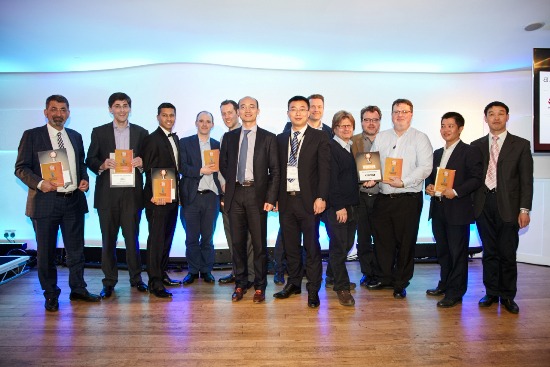
Tagattitude, the innovative French FinTech has won a Kalahari Award for its digital banking platform, TagPay at the 6th Remittance and Mobile Money Expo, held in Lagos, Nigeria.
The award recognises TagPay as the best technology enabler platform. With Near Sound Data Transfer Technology at its core, the TagPay platform can turn any mobile device into a payment tool, without changing its hardware or software. Be it a feature phone or a smartphone, the end-client can save, send and spend his money freely, right at his fingertips.
Financial service providers use TagPay to offer financial services directly on their clients’ mobile phones, thanks to a wide variety of channels, including IVR, the web and sound. With this specific channel, there is no need to depend on the USSD channel controlled by mobile network operators to process mobile transactions.
The TagPay digital banking platform manages all of the transactions that a bank needs: P2P money transfer, salary disbursement, bill payment, and transactions at the point of sale. TagPay also manages the entire branchless banking agent network, making it possible to follow and control all operations in real-time from headquarters.

Yves Eonnet, Tagattitude’s CEO, received the award in Lagos, saying that it “was a great honor. The award recognises the impact that TagPay’s technology can have in building new financial service ecosystems in Africa. We have built TagPay, bringing the best technology to the table, in order to help financial institutions reach their financial inclusion goals.”
Yves Eonnet presented the case study of the Trust Merchant Bank, in the Democratic Republic of Congo. The Trust Merchant Bank’s mobile financial service, Pepele Mobile, powered by TagPay, helps the bank reach the last mile and bank the vast unbanked populations of the country.
The Kalahari Awards were presented at the 6th Remittance and MobileMoneyExpo in Lagos, Nigeria.
Emmanuel Okoegwale, Principal Associate of Mobile Money Expo, oversaw the awards.
“We congratulate all of the award winners today and it is our sincere hope that the honor will inspire better innovation in 2016 and beyond,” he said. “MobileMoneyAfrica is proud to be celebrating the 6th Kalahari awards, which celebrates innovative leaders in e-commerce, payments, remittances and mobile financial services.”
The Kalahari awards are dedicated to acknowledging creativity, commitment and excellence in the digital payments and remittance industry across Africa. The awards are given to organizations that have made significant contributions to the remittance and mobile financial services sector by making financial services more affordable and more available, thereby creating impactful developments in Africa.

About Tagattitude
Tagattitude has developed a digital banking platform, called TagPay that powers financial services in 20 countries, with a strong footprint in Africa.
The TagPay platform is the backbone of mobile financial services implemented by banks, microfinance organizations, MNOs and FinServs.
The TagPay platform is omnichannel and ubiquitous. With TagPay, end users can receive their salaries, ask for a loan, pay bills, transfer money and pay at a point of sale.
Tagattitude’s sound payment technology, NSDT™, turns every existing phone into a contactless payment tool and authentication device, regardless of the MNO, be it a feature phone or smartphone.