Wednesday, January 14, 2026
23.8 C
Lagos
Home Blog Page 332

Union Bank Reports N4.7bn Profit in 1st Qtr 2016

0

Union Bank of Nigeria Plc has unveiled its unaudited results for the quarter ended March 31, 2016.

Bank Financial Highlights For The Quarter:

Profit Before Tax (PBT): ₦4.7bn (₦4.9bn in Q1 2015); excluding gain on sale of subsidiaries*, increased by 85% to ₦4.7bn (₦2.5bn in Q1 2015).

Gross earnings: ₦26.6bn (₦29bn in Q1 2015); excluding gain on sale of subsidiaries*, at par with prior year at ₦26.6bn.

Interest income: up 5% to ₦21bn (₦20bn in Q1 2015) as a result of improvement in asset yield from 14.36% in Q1 2015 to 15.65% in Q1 2016.

Interest expense: down 16% to ₦6.6bn (₦7.9bn in Q1 2015) driven by a deliberate effort to manage funding costs, resulting in a reduction in primary cost of funds from 6.07% in Q1 2015 to 4.73% in Q1 2016.

Non-interest revenue: ₦5.6bn (₦9bn in Q1 2015); excluding Q1 2015 one-off gains, revenues are up 9% compared to normalised ₦5.1bn in Q1 2015, driven by trading and e-business fees.

Operating expenses: ₦14.2bn (₦13.7bn in Q1 2015), an expected increase of 3% , given budgeted investments in technology and network infrastructure.

Customer deposits: up 9% to ₦587.2bn (₦539.4bn Mar 2015) on the back of growing customer confidence in service and product offers as well as a re-energised brand identity.

Gross loans: up 2% to ₦383.6bn (₦375.6bn Mar 2015) reflects cautious loan growth in targeted sectors of the economy.

Commenting on the Bank’s first quarter results, Emeka Emuwa, Chief Executive Officer said:

“Our first quarter results reflect steady progress on the execution of our strategic priorities. The Bank’s core PBT in Q1 2016 is up significantly by 85% to ₦4.7bn compared to ₦2.5bn in the same quarter last year. With the sale of non-banking subsidiaries near completion, the Bank is now focused on growing and delivering results through its core banking business.

Customer deposits grew 9% in the year to March 2016, compared to March 2015, reflecting increased customer confidence in our service channels, new product offerings and a re-energised brand identity.

Our priorities to sustain growth in 2016 remain focused on growing our deposit base and new customer acquisitions, as well as driving gains in transactional income. We will continue leveraging the technology and operational platform we have invested in whilst proactively managing our risks and operational costs.”

Breaking down the Bank numbers, Chief Financial Officer, Oyinkan Adewale said:

“The Bank delivered strong results this first quarter. Our focus on customer deposit growth has led to 16% interest expense reduction as we rely more on low cost deposits to fund the bank. This trend is expected to continue and should moderate funding costs and improve net interest margins for 2016.

Non-interest revenue continues to grow, driven by securities trading, e-business and other transactional fees. Excluding 2015 one-off gains, we were able to grow core revenues by 9%.

Given our continuing investment in technology and network infrastructure, we have seen a slight increase of 3% in operating expenses this quarter compared to Q1 2015. This short term increase is expected to normalise over the course of the year.”

AFRICA TELECOM & IT Loses Director, Monique Butt

0
Monique Butt of Africa Telecom & IT Magazine

The Board, Management and Staff of Telecom and IT Business Limited; publishers of Africa Telecom & IT has announced the death of its Editorial/Business Services Director, Ms Monique Butt.

She passed on to eternal glory on Thursday, 17th March, 2016 in London, United Kingdom.

A polyglot gifted in the excellent use of English, French, Yoruba and to some extent, Hausa languages. Ms Butt had traversed the media landscape as a top flight marketing executive. She had excellent working relationship with some of the renowned icons in the African media industry; including Peter Enahoro popularly called “Peter Pan”.

She was once a top executive of African Business magazine where she was in-charge of the development of the Nigerian market.

Monique was a top gun in media relations, public relations, marketing communications, corporate communications, business strategy, marketing strategy, strategic communications, social media, business development, event management.

She was a graduate of the University of Essex, United Kingdom. She would have turned 60 years in August this year.

Global Tech Professionals Gather in Egypt

0

Techne Summit, the renowned international entrepreneurship technology event that acts as a platform by including the main global players in the technology industry, will launch this year once again in the Mediterranean city of Alexandria, Egypt from 7th to 8thMay 2016.

Carrying the same slogan of TECHNOLOGY.INNOVATION.TALENT on which the event concept is built, the two-day summit will act as a platform including the main global players in the technology industry, namely: industry professionals as speakers, technology businesses, entrepreneurs and startups, investors, users and media representatives.

Techne Summit 2016 will be under the auspicious of The Ministry of Communication and Information Technology where Minister H.E. Eng. Yasser El Kady, will be leading the event’s opening ceremony. Techne Summit will also be under the auspicious of The Federation of the Egyptian Chambers of Commerce, The Information Technology Industry Development Agency, The Federation of the Egyptian Chambers of Commerce and The General Division for The Computer and Software.

Techne Summit 2016 will build on the success of Techne Summit 2015 held back in October 2015 where it was the first of its kind event in the region. This year, the event will continue with the same philosophy of capitalising on the crucial role of the technology and communications sectors in the development of nations, and fostering innovation, creativity and entrepreneurship to serve the development process. Techne Summit will present international speakers with the opportunity to share their experience with professionals, enthusiasts in the industry, as well as network with others in the technology field from around the world.

Techne Summit will be an opportunity for startups to grow in the Middle East &North Africa region by connecting with investors and distributers by showcasing their products and acquiring funding for their businesses as well as foster the exchange of ideas and experience across various regions worldwide.

Techne Summit aims to create a platform where booming startups in the technology market are able to showcase their latest innovations, granting their products or services greater visibility among industry professionals and enthusiasts.

Similarly, participants will have access to the latest innovations and recent business trends, therefore gaining exposure and increased knowledge in the field. Similarly investors will be able explore new areas of potential business collaboration and success, paving the way to mutual business growth for all participating parties.

The event aims to ultimately develop the technology industry by fostering the mindset of decentralisation within the field and building bridges of informational and cultural exchange between regions. An important goal of Techne Summit is to also grow the contribution of conference tourism to the city of Alexandria and in turn Egypt.

Orange Completes Acquisition Tigo in DR Congo

0
orange

Less than three months after signing an agreement with Millicom, Orange announced today that it has completed the acquisition of 100% of the mobile operator Tigo in the Democratic Republic of the Congo (DRC).

The mobile market in the DRC is undergoing significant growth and is currently the largest mobile market in Central and West Africa, after Nigeria. With a population of more than 80 million people and a relatively low mobile penetration rate of 50% of the population, the country offers considerable growth potential for Orange. The consolidation of Orange’s and Tigo’s operations in the DRC will enable Orange to strengthen its presence in the country.

Commenting on this agreement, Bruno Mettling, Deputy Chief Executive Officer of Orange in charge of Operations in Africa and the Middle East, said: “We are extremely happy to announce the completion of the acquisition of Tigo by Orange DRC in a market marked by very strong growth potential. Through this strategic investment, Orange confirms its ambition to reinforce its presence in the Democratic Republic of the Congo and accelerate the conditions in which it can develop its services through this consolidation.”

This acquisition illustrates Orange’s development strategy in Africa where almost one in ten people are already customers. In this zone, the Group aims to reinforce its positions as a leader in the countries in which it is present.

About Orange
Orange is one of the world’s leading telecommunications operators with sales of 40 billion Euros in 2015 and 156,000 employees worldwide at 31 December 2015, including 97,000 employees in France.

Present in 28 countries, the Group has a total customer base of 263 million customers worldwide at 31 December 2015, including 201 million mobile customers and 18 million fixed broadband customers.

Orange is also a leading provider of global IT and telecommunication services to multinational companies, under the brand Orange Business Services.

In March 2015, the Group presented its new strategic plan “Essentials2020” which places customer experience at the heart of its strategy with the aim of allowing them to benefit fully from the digital universe and the power of its new generation networks.

Nigeria Will Overcome Short-term Oil Price Challenges

0
Randy Buday DHL

Randy Buday, Managing Director/CEO of DHL Express Nigeria, shares his thoughts on the Nigerian economy.

How is the fall in the oil price impacting Nigeria’s general business environment?
Nigeria is the eighth-largest exporter of crude oil in the world – the economy is almost entirely dependent on this revenue.

Unfortunately, there is a very large sector of oil services and other companies which are dependent on the production of oil and they have also been negatively affected by the low price of crude.

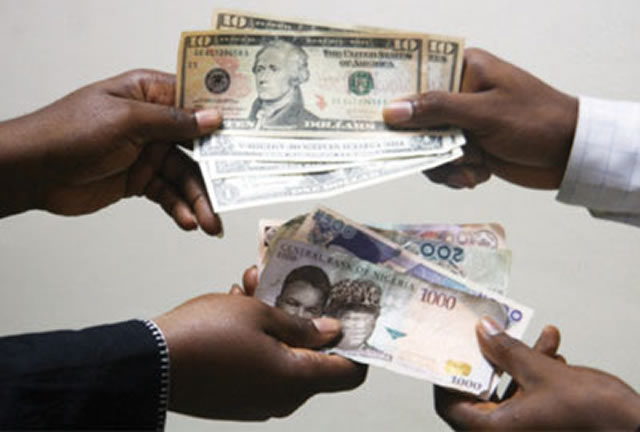
The reduced oil revenue has created a shortage of available foreign exchange, thereby increasing inflation and the volatility of the exchange rate, which has created an unstable operating environment for companies in Nigeria.

We are seeing a situation where many companies cannot access foreign exchange for the importation of their raw materials, thus forcing them to purchase foreign exchange from the parallel market at a very high premium.

Describe your medium to long-term outlook for the Nigerian economy
The above describes the short-term situation in Nigeria.

However, this country has an amazing ability to overcome operational, environmental and political challenges as demonstrated in the past and the general outlook for the future is very bullish for the Nigerian economy.

The price of crude oil will eventually increase to a level that will bring in the much needed forex to run Africa’s largest economy.

Nigeria is also home to Africa’s largest population, which is one of the fastest-growing consumer markets in the world.

The future bodes well for the consumer goods sectors as Nigeria has a very young population with almost 45% under the age of 14. You also have a rapidly-growing e-commerce industry and, not to forget, the agriculture sector, which is now receiving a lot of attention from the government.

DHL Express recently entered into a partnership with Total whereby customers can now send packages from Total service stations. How important are these types of partnerships in a country where informal retail still accounts for as much as 90% of the market?

Our recent partnership with Total has increased our retail footprint throughout Nigeria exponentially; we now have service points in locations where we have been under-represented and also with extended service hours.

Several years ago we embarked on an aggressive campaign to increase our retail presence throughout Nigeria and we now have over 400 DHL retail outlets.

In an earlier interview with How We Made it in Africa you highlighted online retail as a fast-growing industry in Nigeria. How has the sector evolved in recent years?

As expected, the sector has continued to maintain its rapid growth with many new players flooding into the market while the larger, more established players have continued to scale their operations.

With continuous improvement in power, Internet penetration and a young population, I expect that this will continue for a long time.

The e-commerce firms have started a re-awakening in the nation’s financial industry, with many of the banks innovating and developing new ways to attract young and tech-savvy customers.

African Aviation Generates $80bn in GDP Per Year

0
IATA

· Carries 70m Passengers
· Creates 6. 9m Jobs

The International Air Transport Association (IATA) announced the theme for the 2016 Aviation Day Africa (Abuja, Nigeria, May 23 – May 24, 2016): “Driving African Economies through the Power of Aviation.”

The conference will bring together regional stakeholders to address current issues affecting aviation in Africa including the proliferation of taxes and charges, public-private partnerships, aviation, safety, security, next generation airports and market connectivity.

Aviation in Africa carries over 70 million passengers a year, supports more than 6.9 million jobs on the continent and generates over $80 billion in GDP. Over the next five years the African economy is forecast to grow at a strong 4.7% per year, well above the global average rate. For the continent to realize its full economic potential, aviation – particularly commercial air transport – must be prioritised.

Raphael Kuuchi, Vice-President Africa, IATA said: “Governments and organisations need to focus not only on national issues but also on the strategic development of pan-African aviation. Policies that promote investment in air transport infrastructure, improve safety and enhance air connectivity must be implemented. Aviation has the potential to make a much more significant contribution to economic growth and development within the continent if its power is unleashed.”

“The conference is a great opportunity for Africa’s key stakeholders to debate the industry’s most pressing issues and align actions to address the challenges. Through harnessing the power of aviation we will be helping to build a brighter future—not only for individual airlines and the air transport industry, but for all Africans, who will benefit with greater prosperity through jobs and opportunities,” said Hussein Dabbas, IATA’s Regional Vice-President for Africa and The Middle East.

The Africa Day Conference speaker line-up reflects a broad spectrum of aviation stakeholders from governments, policy makers, regulators, airlines and manufacturers.

Technology: Urine as Power Source for Electronic Devices

0
mobile phone

Researchers at the University of Bath, United Kingdom [UK] have developed an innovative miniature fuel cell that can generate electricity from urine, creating an affordable, renewable and carbon neutral way of generating power.

In the near future this device could provide a means of generating much needed electricity to remote areas at very little cost, each device costs just £1-£2. With growing global pressures to reduce reliance on fossil fuels and the associated greenhouse gas emissions, microbial fuel cells could be an exciting alternative.

A microbial fuel cell is a device that uses natural biological processes of ‘electric’ bacteria to turn organic matter, such as urine, into electricity. These fuel cells are efficient and relatively cheap to run, and produce nearly zero waste compared to other methods of electricity generation.

In practice, urine will pass through the microbial fuel cell for the reaction to happen. From here, electricity is generated by the bacteria which can then be stored or used to directly power electrical devices.

The research team from the University’s Department of Chemical Engineering, Department of Chemistry and the Centre for Sustainable Chemical Technologies (CSCT), have worked with Queen Mary University of London and the Bristol Bioenergy Centre, to devise this new kind of microbial fuel cell that is smaller, more powerful and cheaper than other similar devices.

This novel fuel cell developed by the researchers, measures one inch squared in size and uses a carbon catalyst at the cathode which is derived from glucose and ovalbumin, a protein found in egg white. This biomass-derived catalyst is a renewable and much cheaper alternative to platinum, commonly used in other microbial fuel cells.

The researchers worked on the cell’s design to maximize the power that could be generated. By increasing the cell’s electrodes from 4mm to 8mm, the power output was increased tenfold. Furthermore, by stacking multiple units together, the power was proportionally increased.

Currently, a single microbial fuel cell can generate 2 Watts per cubic metre, enough to power a device such as a mobile phone. Whilst this value is not comparable with other alternative technologies such as hydrogen or solar fuel cells and other methods of bioenergy digesters, the significant advantage of this technology is its extremely cheap production cost and its use of waste as a fuel, a fuel that will never run out and does not produce harmful gasses.

The research team is now looking at ways of improving the power output of the microbial fuel cell and is confident that by optimising the design of the cell, they will be able to increase the cell’s performance.

Lecturer in the University of Bath’s Department of Chemical Engineering and corresponding author, Dr Mirella Di Lorenzo, said: “If we can harness the potential power of this human waste, we could revolutionise how electricity is generated.

“Microbial fuel cells can play an important role in addressing the triple challenge of finding solutions that support secure, affordable, and environmentally sensitive energy, known as the ‘energy trilemma’.

“There is no single solution to this ‘energy trilemma’ apart from taking full advantage of available indigenous resources, which include urine.”

Lead author and CSCT PhD student, Jon Chouler said: “Microbial fuel cells could be a great source of energy in developing countries, particularly in impoverished and rural areas.

“To have created technology that can potentially transform the lives of poor people who don’t have access to, or cannot afford electricity, is an exciting prospect. I hope this will enable those in need to enjoy a better quality of life as a result of our research.”

Head of the Department of Chemical Engineering and Co-Director of CSCT, Dr Tim Mays, added: “Renewable ‘pee-power’ is a brilliant idea and its use in developing countries will have huge positive impact on people’s lives in areas of energy poverty. Dr Mirella Di Lorenzo, her PhD student Jon Chouler and their research collaborators must be congratulated on the innovative science and engineering that has led to this exciting development.”

Africa Needs Professional Hotels

0

Global Hotel Group, Swiss International is seeking to open more facilities in Africa as part of its global expansion into markets that hold demand for international hotel services.

The hotel operator was established in Switzerland in 1982, but moved its international services centre to Ras al Khaimah, UAE.

Since 2014, Swiss International has opened in Nigeria, Sierra Leone, Morocco and Rwanda. It is planning to launch in Ghananext month, and is also working on new projects in Kenya, Ethiopia and Uganda.

“We are focusing very much on Africa. We opened our office in Lagos two to three years ago and currently have eight hotels across Africa,” says Swiss International CEO Henri Kennedie. “There is a strong need for professional hotels [in Africa].”

A recent survey shows hotel developments across the continent is going up, with 36 chains planning to develop more than 64,000 rooms in 365 hotels.

Growth in new hotels is attributed to projected economic growth across the continent and a positive outlook for business, trade and capital investments. Nigeria and Angola top the list of countries with the highest number of hotel rooms currently under development.

However, operators such as Swiss International have faced challenges in some markets where it operates.

“If you are entering the market the way we do there will be good times, bad times and struggling times – but if you are committed you will overcome all of those,” says Kennedie.

“We launched our hotel in Sierra Leone and about two months later there was an Ebola outbreak. We could not have predicted that. We had low occupancy initially, but we started getting business from aid workers as humanitarian efforts intensified.”

“Africa is going through rapid economic development. We believe there is a shift in the world, which we all know about theoretically, but we now feel it in practice. Of course we should never forget that the traditional markets are extremely established but we see other markets developing, Africa in particular [is] accelerating,” adds Kennedie.

Previously Kennedie worked with Golden Tulip hotels. He recalls when Golden Tulip opened its first property in Africa in the early 1990s – in Ghana’s capital Accra – there was very little competition.

“Now there are hotels everywhere. I take Ghana as an example for other African countries with strong development [such as] Nigeria, Kenya, Tanzania and Rwanda. You see them developing very fast.”

EU Expected to Block UK Mobile Mergers

0
European Union

A merger of two of the UK’s mobile networks is expected to be blocked by European Union competition authorities concerned about consolidation in the market.

Hutchison 3G UK has offered $14.5 billion to buy rival operator,O2 from its Spanish parent, Telefonica, but the move would see the market consolidate down to just three mobile networks.

Citing sources familiar with the EU regulators, Bloomberg reported that the regulators were not convinced that an offer to boost MVNO services would offset the loss of competition in the market.

UK competition regulators recently wrote to their European counterparts calling for the merger to be blocked.

The EU may consider approving the merger, but only if the companies agree to sell part of their network infrastructure to a new entrant into the market.

The UK used to have five mobile networks, but the merger of Orange and T-Mobile into EE reduced that to four. The other operators are Vodafone, O2 and Three.

Greenpeace Ranks Top 5 SA Retailers on 100% Renewable Energy Vision

0
Greenpeace

South Africa’s top five retailers (Pick n Pay, Massmart, Spar, Woolworths and Shoprite) have a major role to play in shaping sustainable growth in the energy sector and need to champion South Africa’s transition to 100% renewable energy, according to the latest report launched today by Greenpeace Africa.

The report ‘Shopping Clean – Retailers and Renewable Energy’ marks the launch of a new Greenpeace campaign ‘Renewable Energy Champions’ initially aimed at getting the country’s top five retailers to show solar energy some love.

The report outlines how retail companies in South Africa have made a start in the transition to 100% renewable energy. Most importantly, it details the current status of renewable energy investments and commitments from each of the top five retailers in South Africa.

The retailers are ranked against one another on four key criteria – energy transparency, commitment to renewable energy, greenhouse gas mitigation and lobbying for clean renewable energy.

In the report, Woolworths ranks highest with an overall score of four out of ten. Woolworths and Pick n Pay currently have solar PV installations that contribute a small percentage of renewable energy to their overall operations.

Massmart and Woolworths have both identified pilot solar PV projects for distribution centres and stores respectively that will be rolled out in 2016. Shoprite received the lowest ranking because of its lack of transparency with regard to the company’s energy information.

“Ranking the five retailers against one another makes it clear that none of them are doing particularly well when it comes to a commitment to a 100% renewable energy vision.

Also, none of the retailers are engaged in active lobbying for the barriers to renewable energy to be removed, which is an essential step if a 100% vision is to be achieved, and this has heavily impacted on their scores” stated Penny-Jane Cooke, Climate and Energy Campaigner for Greenpeace Africa.

If the annual electricity consumption for each of the top five retailers is compared to the average electricity consumption of households in South Africa, Pick and Pay, for example, could liberate enough electricity to supply 65,000 households in South Africa by switching to 100% renewable energy. Woolworth’s electricity consumption is enough to power 55,000 households whilst Massmart could power 53,000 households. Collectively, the retailers can free up enough energy to power at least 178 400 households.

“This campaign provides an opportunity for Pick n Pay, Shoprite, Spar, Woolworths and Massmart to take the lead and show the millions of South Africans who support them that they really care about the future of this country. Renewable energy provides a real opportunity for South Africa to move away from a developmental path based on polluting coal and expensive nuclear power. The five leading South African retailers have begun to take steps towards a renewable-powered future, but the current levels of ambition are clearly inadequate, which means that there is significant room to improve,” added Cooke.

By switching to a 100% renewable energy, retailers will reduce their current electricity consumption, thus decreasing pressure on the grid and reducing the need for load shedding. Possibly most importantly of all, retailers will be opening up the space for millions of South Africans to generate their own power through lobbying government for better renewable energy legislation.

“Greenpeace believes that Pick n Pay, Massmart, Spar, Woolworths and Shoprite can lead South Africa to a clean energy future by making a commitment to 100% renewable energy. They also need to articulate how they will achieve this vision in the short and long term, make the required investments and take the next step by lobbying government to remove the barriers to renewable energy for the benefit of their loyal consumers and the country” Cooke concluded.

Natural Disasters Inflict $7tr Economic Losses Since 1900

0
Natural disaster

Natural disasters around the globe have resulted in economic losses of roughly $7 trillion since 1900, according to a new calculation from scientists.

Their database, which contains some 35,000 events, reveals the catastrophes have also resulted in more than eight million deaths.

The analysis should assist governments with crisis planning and response, the researchers say.

Their results were presented at the European Geosciences Union meeting.

$7tn is equivalent to about £5tn or €6tn.

The team, led from the Karlsruhe Institute of Technology in Germany, scoured the media and old records for all the information it could find on floods, droughts, storms, volcanoes, earthquakes, and wildfires.

Reports in more than 90 different languages were assessed for the group’sIntegrated Historical Global Catastrophe Database.

Over the 1900-2015 period, roughly 40% of economic losses are ascribed to flooding. Earthquakes accounted for about a quarter; storms for about a fifth; 12% was due to drought; 2% to wildfire, and under 1% to volcanic eruptions.

But although the economic losses in absolute terms have increased during the past century, these losses actually now represent a smaller fraction of the total value globally of buildings and other infrastructure.

It means, say the scientists, that in many instances, we are now doing better at mitigating the consequences of natural disasters.

Country by country, circumstances vary, of course.

Indeed, when the team took the historic costs in each nation and summed them in 2015 US dollars, it was clear that not even the nature of the disasters is spread evenly.

For example, in the UK the largest losses tend to be from floods; Chile and New Zealand have to count their greatest losses from earthquakes; in large parts of central Africa and South America, it is losses from heatwaves and drought that top the impacts.

And using data just from more recent decades, the global patterns shift as well. Big efforts have been made in places like China to improve flood defences, which means losses from water inundation are not the factor they once were.

“If we just take data from 1960, we see a change in the trend; we see that storms are having a bigger piece of the pie,” the civil/structural engineer and geophysicist James Daniell told BBC News.

“About 30% of all losses are due to storms and storm surge these days. Earthquake as well is still around the 26% mark.”

Daniell says analysing the economic consequences of past disasters can help governments and aid agencies better assess the scale of the needed response in current and future events.

For example, it permits a rapid assessment of the likely costs of Saturday’s quake in Ecuador. Economic losses there could top $2bn, according to the group’s modelling.

Likewise, the losses from Japan’s big tremor on Friday are probably going to be in the region of $12bn.

On mortality, in terms of the absolute numbers, total deaths from natural disasters remain reasonably constant (around 50,000 people per year on average). However, again, relative to the population of the globe as a whole, which is growing, deaths from such catastrophes are declining, according to Dr Daniell.

The researcher emphasises that all the numbers he quotes have quite a wide range. For total economic losses since 1900, this is between $6.5 trillion and $14 trillion, and depends on the particular metric used to convert “event dollars” to current 2015 US dollars.

Similarly, it is very hard to get definitive death statistics. Numbers will very frequently be over-estimated or under-estimate

-Jonathan Amos

Nigeria Under Pressure as Oil Freeze Talks Collapse

0
Oil Rig

Nigeria and other African economies that depend solely on oil revenue are once again are under pressure as talks by oil producers on April 17, 2016 in Doha, Qatar, over output freeze failed.

The talks lasted 11 hours more than required, but finally, Saudi Arabia, who produces 30.8% of OPEC’s output, said Iran must be present before reaching any agreement. Iran however, could not be present given tensions with Saudi Arabia.

Subsequently, oil price fell to $38.4/barrel, resulting in a new dollar hike, which pressures African economies.

Nations such as Angola, Nigeria or CEMAC’s, whose revenues directly depend on crude export, should not have their budget earnings improve in the short term. Meanwhile, the new dollar hike weighs on African currencies, even non-oil producers’.

In this context, Nigeria plans to reinforce taxation so as to generate more tax revenues. It is an option which has proven efficient in the Lagos State and the Federal Government now wants to replicate in other states. But it is easier said than done, according to observers of the Nigerian economy.

Another solution would be to raise Value Added Tax (Nigeria is one of the lowest worldwide with 5%) as inflation is now a major issue.

Wary of the international debt market where conditions tightened, many African economies, suffering from weakening currency and pressure on budget, reached out to IMF asking for help. And though average rates of African sovereign bonds have been falling since the beginning of March 2016, they remain quite high for emerging economies.

So, countries like Mozambique, Angola (now leading oil producer in Africa), Ghana and Tunisia already asked IMF for large credit lines. Other nations such as Kenya have negotiated, still with IMF, precautionary provision. It is expected that Zambia will also ask the Bretton Woods institution for help.

Nigeria keeps signing partnerships to finance its infrastructure projects and reduce its budget gap.
Regarding the OPEC meeting, a new one is planned for June 2016.

Analysts however are not very optimistic about its outcome but looking at global production, it is possible that balance between supply and demand might be achieved around mid-2017.

Also, despite Iran re-entering the market, OPEC only contributes to 38.5% of global production. This will not be regularised in the short-term and should be a strong argument in up-coming negotiations.

-Idriss Linge

AXA Mansard Backs Purple Capital with N800m Investment

0
Mansard-Insurance

Leading asset manager, AXA Mansard Investments, has concluded N800 million investment in Maryland Mall, an ultra-modern retail development sponsored by Purple Capital Partners Limited.

The Maryland Mall is estimated to be worth over ₦5 billion (about $25 million) upon completion, later this year.

Maryland Mall sits on one of the most important arterial routes in Lagos today, with 5,000 cars passing through every hour.

The mall sits on a total land size of 7,700sqm and will have the first dedicated underground car park within any mall in Nigeria. It will play host to a mix of local and international brands anchored by Shoprite, Genesis Deluxe Cinemas and The Place restaurant.

Further cementing the long term viability of the retail facility, Shoprite has selected the Maryland Mall for the Nigeria debut of its Usave brand shopping concept.

The mall will also have a 550 square meter LED screen, the largest in Sub-Sahara Africa. This unique feature will set it apart from any other retail complex in Africa’s most populous nation.

Commenting on the investment, Mr. Obinna Onunkwo, Co-Managing Partner of Purple Capital Partners Limited. said: “We are particularly delighted to be partnering with AXA Mansard on this journey into the future of retail in Africa’s largest economy. This transaction represents much more than a cash injection in the project, it is an expression of the trust reposed in the project and its importance in the evolving retail landscape.”

Lagos is expected to lead the national count for malls over the next decade, in tandem with the city’s fast growing population, currently put at anywhere between 17 and 20 million people. Projected by the United Nations to be the ninth largest city in the world by 2030, the city and its suburbs is now home to a fast growing middle-class. Ultimately, their lifestyle choices will fuel the demand for modern goods and services.

Also commenting on the investment, Mr. Olaide Agboola, Co-Managing Partner of Purple Capital Partners Limited said: “Notwithstanding the challenging economic climate, Nigeria remains an investor’s haven, and this strategic transaction with AXA Mansard is clear evidence that it is possible to structure sound investments that can impact different sectors of the economy.”

“It also confirms the efficacy of our investor and stakeholder relations, effectively incorporating the demands and privileges of key stakeholders in the financial services industry, land owners, the Lagos State Government and relevant federal institutions and authorities,” Agboola says.

Analysts estimate that Nigeria has at least 18 large shopping malls, each with at least 10,000 square meters of space to rent (about 108,000 square feet), serving the country’s 182 million people.

Comparatively, 60% of South Africans shop in formal retail supermarkets compared to 30% of Kenyans, 4% of Ghanaians, 2% of Nigerians and 2 % of Cameroonians.

Mr. Deji Tunde-Anjous, Chief Executive Officer of AXA Mansard Investments Ltd. commenting on the investment said: “This investment reflects our commitment to supporting creative home grown opportunities and businesses as key catalysts for economic development as well as our resolve to keep our clients well positioned in an evolving investment landscape.”

The deal, which consists of a mix of debt and convertible debt stock, reinforces the country’s ranking as a top destination for retail investments in Africa, driven by its population size, rapid urbanisation, growth and economic resilience.

It also offers the potential for future collaboration between both entities, as Purple Capital expands its bespoke retail offering across the nation.

In addition, the deal offers the following:
· The deal showcases the continued attractiveness of the nation’s retail sector, even in a fiscally tight economy.
· It also reflects the connectedness of economic sectors – as this impacts the real estate, retail, construction technology, logistics, finance and investment, facilities management, marketing communications, physical asset management and asset protection sectors.

Consequently, hundreds of jobs have been created during the construction of the mall over the last two to three years, and hundreds of more jobs will be directly and indirectly created when the malls opens its doors to the public later this year.

About Purple Capital Partners Limited
Purple Capital Partners Limited (“PURPLE”) is a specialist investment firm with business areas in Principal Investment, Private Equity and Real Estate; investing in opportunities that allow for stakeholders value creation.

Purple co-invests with its long term partners including family offices, HNIs and institutional clients using a thought through risk calculated approach in achieving positive alpha returns under an investor –manager aligned structure.

The firm has raised over $50 million to fund its various projects.

About AXA Mansard Investments Limited
AXA Mansard Investments Limited (AMIL) is duly registered by the Securities and Exchange Commission of Nigeria as Fund/Portfolio Managers.
It has built an enviable track record in investing across traditional (Equities, Money Market & Fixed Income) as well as alternative asset classes (Real estate and Private Equity).
AMIL is a wholly owned subsidiary of AXA Mansard Insurance Plc. a member of the AXA Group – a worldwide leader in insurance and asset management with 161,000 employees serving 103 million clients in 59 countries.
AXA Mansard Insurance is rated A+ by Agusto & Co. (2014) and B+ & bbb- by A.M. Best (2015) for Financial Strength and Issuer Credit Ratings respectively.

Africa Power Vision Plans to Electrify 80% of Households by 2040

0

Africa’s electrification recently welcomed a new advocate, Africa Power Vision (APV). APV is a joint-venture established by the African Union Commission, the NEPAD agency, Nigeria’s ministry of finance, the UN Economic Commission for Africa and the African Development Bank. It aims to boost the number of people that has access to power across the continent.

“APV aims to achieve an 80% residential electrification rate by 2040 and 90% for industry/business, with sufficient energy to deliver to those connected, while also implementing off-grid solutions and making full usage of the vast renewable energy sources in Africa,” NEPAD said in a statement.

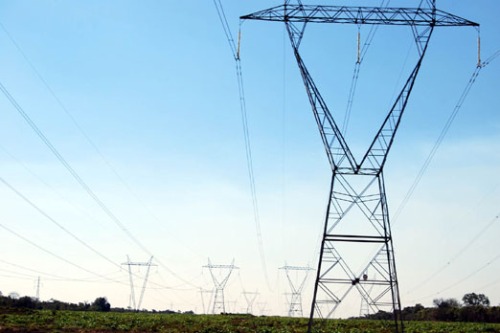
The project plans for, among other things, the construction of an 8,000km-long transmission line across Egypt, Sudan, South Sudan, Ethiopia, Kenya, Uganda, Tanzania, Malawi, Mozambique, Zambia, Zimbabwe and South Africa. The line which will greatly facilitate trade between Eastern and Southern African nations will have a capacity of 3,000MW – 17,000MW.

Establishing APV was done in the framework of the Programme for Infrastructure Development in Africa (PIDA).

-Gwladys Johnson

NSE Reports Trading Glitch, Extends Transaction Time

0
NSE

The Nigerian Stock Exchange (NSE) yesterday reported it experienced a disruption to its trading services. The Exchange noted that throughout the incident it maintained open communication with trading community.

However, trading recommenced at 2.15 pm and was extended to 4.00 pm (from the usual time of 2:30 pm) in order to give investors the opportunity to complete their desired transactions for the day.

The Bourse said it regrets any inconvenience the incident might have caused. NSE wishes to reassure investors and stakeholders of its commitment to provide best in class trading services with optimal availability.

The Exchange stated that it intends to open for trading at the normal trading hours today.