

Global Credit Ratings Co. (GCR) has affirmed Union Bank of Nigeria’s credit ratings of BBB+ and A2 for long and short term respectively, and a stable outlook through June 2017.
According to GCR, the ratings take into consideration the Bank’s improved market position in Nigeria’s highly competitive banking industry following its recapitalisation in 2012, and improved NPL ratio and profitability metrics in subsequent years.
In 2013, Union Bank embarked on a transformation programme to reposition the bank and once again become a respected provider of quality banking services in Nigeria. In that time the Bank has executed critical initiatives around infrastructure, technology and human capital in line with its strategic objectives.
In October 2015, Union Bank unveiled a new brand identity, signalling readiness to operate more competitively in the Nigerian financial industry.
Commenting on the ratings, Mr. Emeka Emuwa, Chief Executive of Union Bank, said, “The affirmation of the bank’s credit ratings from the previous year is a result of the management’s focus on rebuilding fundamentals and positioning Union Bank for sustainable long term growth. We are pleased that GCR’s review highlights some of the key successes of the Bank’s robust transformation programme over the past three years. Going forward, the Bank will continue to focus on delivering consistent growth to all its stakeholders in the short and medium term.”
Union Bank Earns BBB+, Stable Rating from GCR

BREXIT Cuts UK 2016 IT spending Forecast by 10%

Canalys expects the uncertain future of the trading relationship between the UK and the EU will hit UK IT spending immediately. Unemployment and inflation in the UK are low, and the economic outlook was positive.
The decision to leave changes this outlook, resulting in a range of short- and longer-term implications, the extent of which will be unclear for months, if not years, as it is expected to take at least two years for the UK and the EU to negotiate exit and new trading terms.
‘Canalys’ IT spending forecast, based on the UK remaining in the EU, was in the range of USD90 billion to $100 billion in the UK. Canalys now expects this to fall by up to 10% in 2016, based on the public sector and businesses cutting expenditure to reduce risk,’ said Matthew Ball, Principal Analyst. ‘The outlook for 2017 could be even worse, with up to a 15% decline as IT budgets are set lower on the prediction of a tough year ahead and ongoing uncertainty.’
Some effects are more imminent than others. Sterling’s fall has added to its continuing volatility against the US dollar, which has been an issue since the start of the year. It could feasibly drop below the US$1.20 mark if confidence deteriorates further and capital continues to flow to safer assets.
‘This will be a key issue for the IT sector, as technology prices rise due to higher import costs,’ said Matthew Ball, Principal Analyst. ‘In the short term, contracts will have to be renegotiated and proposals requoted due to the strong shift in value. Any new activity will be suspended until rates stabilise,’ Ball added.
‘International businesses will have to assess their Sterling cash position and level of exposure, as their assets will be worth less if not adequately hedged against.’
‘Trade disruption, political instability, recession, stagflation, talent pool reduction and the collapse of the EU are all potential outcomes that need consideration,’ said Research Analyst, Claudio Stahnke.
‘The UK is taking a big gamble on its future. The unprecedented nature of the move to leave makes the true extent of the outcome an unknown. Though there are a number of different scenarios that could play out, what is certain is that we are only at the very start of defining the UK’s new relationship with the EU.’
Financial markets will be volatile for at least the next six months, as different data points emerge and prominent business and political leaders pass judgment. The UK is in danger of moving into recession, as organisations and consumers look to reduce risk by delaying spending and placing an immediate suspension on all high-value transactions until the situation stabilises.
Global Air Freight Growth Slows in May

The International Air Transport Association (IATA) released global air freight data showing that demand measured in freight tonne kilometers (FTKs) slowed in May with growth falling to 0.9% year-on-year. Yields remained pressured as freight capacity measured in available freight tonne kilometers (AFTKs) increased by 4.9% year-on-year.
Freight demand decreased or flat lined in May across all regions with the exception of Europe and the Middle East. These regions recorded growth in air cargo volumes of 4.5% and 3.2%, respectively, in May, compared to the same period last year.
Broad weakness in world trade volumes, which have largely tracked sideways since the end of 2014, accounts for about 80% of air freight’s sluggish performance.
“Global trade has basically moved sideways since the end of 2014 taking air cargo with it. Hopes for a stronger 2016 are fading as economic and political uncertainty increases. Air cargo is vital to the global economy. But the business environment is extremely difficult and there are few signs of any immediate relief,” said Tony Tyler, IATA’s Director General and CEO.
|
May 2016
(% year-on-year) |
World share¹
|
FTK
|
AFTK
|
FLF
(%-pt)² |
FLF
(level)³ |
|
Total Market
|
100.0%
|
0.9%
|
4.9%
|
-1.7%
|
41.9%
|
|
Africa
|
1.5%
|
0.3%
|
22.2%
|
-5.6%
|
25.5%
|
|
Asia Pacific
|
38.9%
|
-0.7%
|
3.7%
|
-2.3%
|
51.6%
|
|
Europe
|
22.3%
|
4.5%
|
5.7%
|
-0.5%
|
43.9%
|
|
Latin America
|
2.8%
|
-9.7%
|
-7.0%
|
-1.0%
|
35.3%
|
|
Middle East
|
14.0%
|
3.2%
|
9.5%
|
-2.5%
|
40.9%
|
|
North America
|
20.5%
|
-0.2%
|
3.2%
|
-1.1%
|
31.8%
|
Regional Performance
Asia-Pacific airlines reported a 0.7% decrease in demand for air cargo in May compared to last year. Capacity expanded 3.7%. Airlines in Asia-Pacific continue to face headwinds from weak trade in the region and globally.
North American carriers experienced a decline in demand in year-on-year performance of 0.2%. Freight volumes have suffered from the strength of the US dollar which has kept the US export market under pressure. This has contributed to the freight demand of US carriers remaining in negative territory for the past twelve consecutive months.
European airlines witnessed a 4.5% increase in freight volumes and a 5.7% increase in capacity in May 2016. The positive European performance corresponds with an increase in export orders in Germany over the last few months.
Middle Eastern carriers saw demand expand by 3.2% and capacity rise 9.5% in May 2016 compared to the same period last year. Despite carriers in the region reporting the fastest growth in aggregate, demand conditions have weakened considerably. Annual growth in May 2016 was one-fifth of the pace registered in May 2015. This reflects both an easing in network expansion by the region’s main carriers over the past six months and weak trading conditions.
Latin American airlines reported a decline in demand of 9.7% and a decrease in capacity of 7%, as economic conditions continued to worsen in Latin America, particularly in the region’s largest economy, Brazil.
African carriers saw freight growth in May 2016 of 0.3% compared to the same period last year. African airlines’ capacity increased by 22.2% year-on-year on the back of long-haul expansion continuing the trend seen since December 2015.
Intelsat Partner AfricaOnline on Broadband for Sub-Saharan Africa

Communication satellite services provider Intelsat SA signed with Gondwana International Networks subsidiary AfricaOnline, a partnership agreement to provide Broadband Internet service across sub-Saharan Africa.
While Intelsat will provide satellite services via its Intelsat 28 satellite, AfricaOnline will provide ground support and network management services from Hartebeesthoek in South Africa, to deploy the internet services.
By sharing charges, the two firms will reduce their operating costs and focus on the service they provide customers, as Virtual Network Operators (VNO).
“We want to be the leading VSAT services provider across Africa and this collaboration with Intelsat allows us to boost our portfolio of services. The upfront capital commitment and ongoing fixed operating cost structure of Ku-band VSAT has constrained expansion of services in Africa. A managed VNO platform allows for increased economies of scale, both in terms of capex and opex, and is a giant step forward in bringing cost-effective connectivity to Africa,” said Mathew Welthagen, CEO of Gondwana International Networks.
Report: 1.3bn 5G Mobile Connections by 2026

As the use of smartphones and tablets on 4G LTE networks has grown dramatically, the demand for mobile data services has also increased. 5G is the wireless and mobile industry’s solution that will provide high quality mobile data services to satisfy mobile consumers’ demands, as well as the need for widespread IoT (Internet of Things) connectivity.
5G is an ecosystem, defined by ITU-R’s IMT-2020 5G standard that has the goal of improving the connectivity experience of the mobile consumer and enterprise.
The first 5G networks are not expected to be deployed before 2020, with the first commercial services launched in 2021.
However, the current LTE and LTE-Advanced network, including all improvements made to them between now and 2020, will lay the foundation for the 5G network. Unless the ground work is completed with LTE in the next few years, 5G IMT-2020 will not be launched commercially by 2021.
�How is the 5G market expected to develop globally? And how much bandwidth will IMT-2020 networks likely have to deliver?
iGR, a market research consultancy focused on the wireless and mobile industry, has recently published a market study that answers these questions. The study presents a model for the global development of 5G markets from 2021 to 2026, including the number of 5G connections and the amount of data used on the 5G networks in each region of the world. This model estimates that 5G connections based on the IMT-2020 standard will start slowly in 2021 and grow to 1.3 billion in 2026.
“Although much of the discussion surrounding 5G has involved the Internet of Things, 5G is expected to be used for many other use case scenarios, as well,” said Iain Gillott, President and Founder of iGR who is chairing the second day of 5G World in London this week.
“By looking at the many potential uses, services, and applications, iGR has built a model of how the 5G networks and markets could develop — both in the number of connections and in the amount of bandwidth used.”
Quartz Innovators Summit 2O16 Set for July 2O
Quartz’s Africa Innovators Summit returns to Nairobi, Kenya on Wednesday, July 20th to celebrate the thought leaders and entrepreneurs innovating across the continent. The event’s honorees and speakers include:
Smockey (Serge Bambara), hip-hop artist and co-founder of Le Balai Citoyen (The Citizen Broom), Burkina Faso
Wanjiru “Ciiru” Waweru, founder and CEO of FunKidz Limited, Kenya
· Matsi Modise, managing director of SiMODiSA, South Africa
· Wanuri Kahiu, award-winning film director and science fiction writer, Kenya
· Wilfred Ndifon, scientist and founder, International Institute of Computational and Systems Immunology, Cameroon
· Winnifred Selby, co-founder of Afrocentric Bamboo, Ghana
· Agosta Liko, founder and CEO of PesaPal, Kenya
Heritage Bank Reports N1.5bn Profit for 2015

Heritage Bank Plc has announced a profit before tax of N1.5 billion for the operating year ended 2015.
This was contained in the audited financial statement announced by the bank for 2015, which represents its first full operating year since its acquisition of former Enterprise Bank Plc in October 2014.
The financial statement showed that the bank recorded Gross Earnings of N24.2 billion, Net Interest Income of N12.2 billion and Profit after Tax of N1.1 billion.
During the year, Heritage Bank attracted N312 billion as deposit from customers in 2015, indicating confidence in the bank. On the other hand, the bank supported businesses and individuals with N175 billion as Loans and Advances. Consequently, the bank achieved a Total Asset of N483.4 billion for the 2015 operating year.
Commenting on the result, Managing Director/Chief Executive, Heritage Bank Plc, Mr. Ifie Sekibo said: “This result is a testimony to the increased acceptability of Heritage Bank’s innovative products and services by the banking public. It is also a reward for the diligent commitment of the staff and management of the bank to our mission to create, preserve and transfer wealth across generations.
“In the 2016 operating year, our desire to reciprocate the patronage of our customers and goodwill from stakeholders has prompted us to introduce new and bespoke services driven by cutting edge technology designed to empower businesses and individuals with opportunities to achieve economic prosperity.
“The positive response to these efforts gives us assurance of improved financial performance in 2016 leading to enhanced returns to our investors.”
Heritage Bank Plc was recently selected by the Central Bank of Nigeria (CBN) as its pilot partner to Unveil, Administer and Manage the “N3 billion Youth Innovative Entrepreneurship Development Programme (YIEDP).
The Programme is aimed at creating sustainable wealth and employment in the country with focus on dependable job creating sectors such as Agricultural Value Chain (fish farming, poultry, snail farming), Cottage Industry, Mining and Solid Minerals, Creative Industry (Tourism, Arts and Crafts), and Information and Communications Technology (ICT).
The selection of Heritage Bank Plc as pilot partner for the programme was in recognition of its commitment to supporting Micro, Small and Medium Enterprises (MSMEs).
Recently, Heritage Bank Plc in partnership with the Centre for Values in Leadership (CVL) empowered 100 aspiring start-up entrepreneurs under the Young Entrepreneurship Business Training Programme (YEBTP).
The six months intensive course involving grooming, mentoring and financing include a 3-month intensive capacity building training programme in the areas of keeping accounting records, financial discipline, sales and marketing in order to equip them with the knowledge base needed to succeed as entrepreneurs.
In addition, the entrepreneurs underwent a month hands-on internship/mentoring experience with the business mentors to understand and be acquainted with the technical skills needed for each specific business lines, under existing and experienced business owners.
Skye Bank: ‘CBN is Selective’

The leader of a major shareholder group in Nigeria has accused the Central Bank of Nigeria [CBN] of ‘selective justice’ in the take-over of Skye Bank Plc on Monday, July 4, 2016 for failing to maintain minimum levels of liquidity and capital adequacy ratios.
The shareholder group leader who insisted on strict anonymity told Business Journal in a phone conversation last night:
“Naturally, we should applaud the CBN for taking the right decision at the right time in respect of Skye Bank Plc to protect shareholders and depositors.
But my question is: Is Skye Bank the only weak bank in Nigeria today? Of course, the answer is capital NO.
It seems to me that Godwin Emefiele [CBN Governor] is now playing politics with the health of banks in Nigeria by selecting those to intervene in while letting others in more precarious situation than Skye Bank to continue to operate unhindered.”
He continued: “My brother, it is an open secret in the market that 7 or 8 banks are in weak condition and l was expecting the Emefiele hammar to fall on all of them at once.
Now-why only Skye Bank?-that is the puzzle that only Emefiele and his CBN can adequately answer.”
CBN Sacks Skye Bank Chiefs, Appoints Interim Board
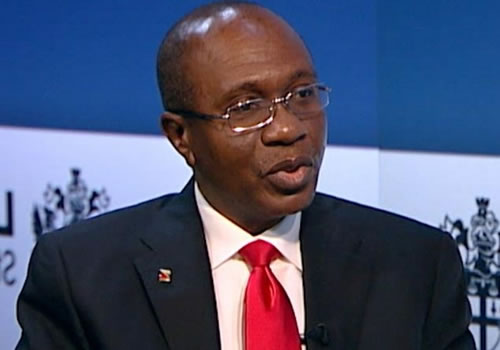
The Central Bank of Nigeria [CBN] yesterday sacked the Board and Management of Skye Bank Plc led by Mr. Timothy Oguntayo and appointed an Interim Board to run the bank.
Mr. Godwin Emefiele, Governor, CBN, said in Lagos that the apex took the decision because the bank failed to meet its minimum key liquidity and capital adequacy ratios despite repeated warnings.
The new Board of Skye Bank is head by Mr. M.K. Ahmad while Mr. Tokunbo Abiru is the new CEO.
Emefiele urged shareholders and customers of the bank to remain, saying the bank is not distressed but that the action was necessary to protect depositors’ funds.
Kachikwu Removed as NNPC GMD, Remains Minister
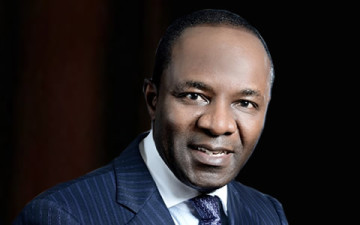
Dr. Ibe Kachikwu has been removed as Group Managing Director of the Nigerian National Petroleum Corporation (NNPC) following the composition of its Board under Section 1(2) of the Nigerian National Petroleum Corporation Act of 1997, as amended.
Kachikwu, who remains the Minister of State for Petroleum will chair the new Board with a Group Managing Director, NNPC, Dr Maikanti Kacalla Baru and the Permanent Secretary of the Federal Ministry of Finance as members.
Other members included Mallam Abba Kyari; Dr Thomas M.A John; Dr Pius O. Akinyelure; Dr Tajuddeen Umar; Mallam Mohammed Lawal, and Mallam Yusuf Lawal.
Mr. Femi Adesina, Special Adviser to the President on Media and Publicity, Mr. Femi Adesina said in a statement that President Buhari urged the new board to ensure the successful delivery of the mandate of the NNPC, ” and serve the nation by upholding the public trust placed on them in managing this critical national asset.”
WorldStage Economic Summit 2016 to Address Unemployment Challenge
With a total of 22.4 million Nigerians unemployed or under‐employed out of 76.9 million total labour force, Worldstage Economic Summit (WES) 2016 coming up in Lagos from September 7- 8, 2016 is expected to address the unemployment challenge in African biggest economy.
According to Mr. Segun Adeleye, President/CEO, World Stage Limited, ‘the alarming rate of unemployment in Nigeria is not only of great concern to the three tiers of government, but also to the private sector and other critical stakeholders of the economy on job creation. While some people see it as an indictment on the educational system that seems to be churning out ‘unemployable graduates’ it is also being seen as an economic deficiency, with the economy having a limitation of the labour force it can sustain by its productivity.”
He said Nigeria’s unemployment rate of 10.4% represents about 14 percent of global unemployment in fourth quarter 2015, the 7th highest in the world with only Kenya, Congo and Djibouti having worse rates in Africa.
“This should be embarrassing when compared with countries such as Qatar (0.2%) unemployment rate, Cambodia (0.3%), Belarus (0.5%), Thailand (0.8%), Benin (1.0%), Madagascar (1.2%), Laos (1.40%) and Guinea Bissau (1.80%),” he said.
He said the statistics on job loss in Nigeria dropped by only 1.29% in Q4 2015 at a period when oil price crashed by 65% could only show that there are other inherent factors outside oil that shapes the labour market, which would be reviewed at the summit.
On how an economic summit can address unemployment challenges, he said: “We are in an era where Nigeria’s economic problem can no longer be left in the hands of government to fix alone. There are organisations and experts that have the knowledge of how to solve economic challenges of any kind, but in most cases, they are either not talking at the right forum, or they are not being heard. At WES 2016, the government side is going to be represented by ministers, members of the National Assembly, heads of regulatory agencies, CEOs of public corporations, top officials from state governments; and they will be interacting with representatives of the organised private sector along with local and foreign experts, to discuss series of the sub-themes through which the problem of unemployment in Nigeria will be tackled.”
He made reference to the challenges facing state governments to the extent that they can no longer pay salaries as at when due, saying these could be addressed with the right concept of how to explore economic potential to create private sector jobs.
“With about 65 per cent drop in oil price since 2014, Nigeria’s main source of income, the revenue allocations to the Federal Government, States and the Local Governments have dropped drastically with most states now finding it almost impossible to pay workers’ salaries. This has become one of the greatest challenges facing the Nigerian economy, as the elected governments are becoming aware that they may not be able to deliver the electoral promises and dividend of democracy if an urgent solution is not found,” he said.
The expected participants at the summit are drawn from the Presidency, National Assembly, MGAs, State Governments, OPS- Oil and Gas, Banking, Insurance, Maritime, Aviation, Mining, Agriculture, Hospitality & Tourism, Entertainment, Construction, Power, ICT, Education, Transportation, Local and Foreign Investors, Media and Other Relevant Stakeholders.
Samsung Plans $1.2bn Investment in IoT Tech

Samsung Electronics has announced plans to spend $1.2 billion over 4 years for U.S. based Internet of Things (IoT) R&D and investments. This will be led by the Samsung Strategy and Innovation Center, Global Innovation Center and Samsung Research America.
Samsung Electronics Vice Chairman & CEO, Dr. Oh-Hyun Kwon called for his peers to “start talking and thinking differently about IoT,” with a human-centered approach, embracing the life-changing possibilities of the technology and working together to bring these benefits to society at-large.
“I am excited to show how we are moving IoT to the center of our strategy and am delighted to announce that Samsung is planning to spend $1.2 billion in U.S.-centered IoT investments and R&D over the next 4 years,” said Vice Chairman Kwon.
In his keynote Vice Chairman Kwon offered industry and policymakers two principles in addition to a ‘human-centered’ approach: to be open and collaborative.
“If we want innovators everywhere to make use of IoT, we must make sure all tools are open to them. This means technologies that connect to each other, because we know that boundaries around technologies hold back innovation and scale,” the Vice Chairman said.
He also warned that sector-specific regulations would inherently fragment the development of IoT, impeding devices and platforms from connecting to each other.
As the IoT ecosystem is by nature connected and interwoven, collaboration is vital to promoting this level of openness and interconnection. In this vein, Vice Chairman Kwon urged attendees to pursue cross-sector dialogue and partnerships, and announced Samsung’s role as a co-founder of the newly launched National IoT Strategy Dialogue.
The Dialogue, to be hosted by the Information Technology Industry Council (ITI), will design a National IoT Strategy as a tool to inform policymakers on enabling the technology to deliver benefits for individuals, communities, innovators and the U.S. economy.
This announcement, Vice Chairman Kwon reinforced, “is not about the first steps – that’s because IoT is already happening all around us. It’s time to imagine the transformative potential of IoT for our societies – and learn how to achieve its human, social benefits at scale.”
The event is part of Vision for Tomorrow, Samsung’s recently launched public affairs platform for cross-sector collaboration around issues affecting the policy dialogue in the U.S. and around the world.
Africa, ME Wearables Market Rose 65.3% in Qtr 1
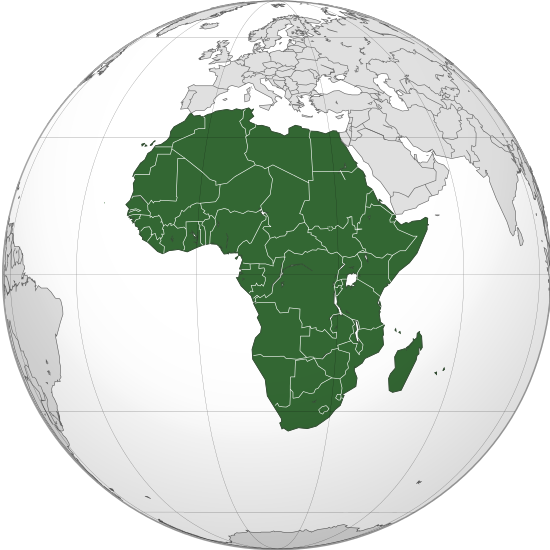
The Middle East and Africa (MEA) wearables market experienced a 65.3% year-on-year growth in shipments in the first quarter of 2016, according to global technology research and consulting firm International Data Corporation (IDC). IDC tracks seven major countries across MEA, and shipments into these countries totaled 419,925 units in Q1 2016.
“The growth of the wearables market provides a rare ray of light amid an overall downturn for personal computing in the region,” says Nakul Dogra, a Senior Research Analyst for Personal Computing, Systems, and Infrastructure Solutions at IDC Middle East, Africa, and Turkey.
“This growth has been spurred by a number of factors, including declining average selling prices, new product launches, the entrance of lower-cost wearables, and the introduction of sleeker designs.”
Smart wearables, which are classified as devices capable of running third-party applications, are still finding their feet in the market as many consumers continue to view the devices as too expensive for the features and functions they offer. As such, most of the growth in this segment of the market stems from the increasing popularity of smart watches.
Basic wearables, which are not capable of running third-party applications, continue to dominate the overall MEA wearables market with 71% unit share versus 29% for smart wearables. This dominance can be attributed to the growing popularity of fitness bands, which have been flooding into the market for a while now, proving to be a big hit with consumers.
The future of the MEA wearables market looks bright with IDC forecasting a compound annual growth rate (CAGR) of 20.1% for the 2016–2020 period. This growth will primarily be driven by increased adoption of smart watches and wristbands as these devices evolve to become more sophisticated than simple health and fitness trackers.
“The growth will be further augmented by the launch of new wearable products in the clothing, eyewear, earwear categories, among others,” says Fouad Rafiq Charakla, a Senior Research Manager for Personal Computing, Systems, and Infrastructure Solutions at IDC Middle East, Africa, and Turkey.
“IDC expects vendors to step up their new product launches in the MEA market as share gain becomes the name of the game. We also anticipate new operating systems and versatile pools of applications to emerge in order to support all these new devices.”
These are exciting times for the wearables market, with niche and mass-market introductions set to change the way we interact with technology in our day-to-day lives.
To keep pace with the changes taking place in this fast-moving market, IDC has launched its Worldwide Quarterly Wearable Device Tracker, which helps vendors looking to enter this market, promote new product developments, or accelerate the growth of their wearables divisions.
The tracker includes details on products, vendors, and technology trends at both global and country lev-els, as well as historical market data and five-year forecasts.
The report also provides valuable insights into the adoption of core wearable features, such as form factor, connectivity, sensors, operating sys-tems, and applications, and offers invaluable assistance to tech firms looking to develop successful long-term business strategies for wearable devices.
BREAKING NEWS! Skye Bank CEO, Top Management Resign Enmasse!
Mr. Timothy Oguntayo, Group Managing Director/CEO of Skye Bank Plc and top management staff of the bank have allegedly resigned enmasse to avoid sack by the Central Bank of Nigeria [CBN] over the alleged liquidity crisis in the bank.
A report by Sahara Reporters says the mass resignation was to pre-empt a decision by the CBN to sack the Board and Management of commercial banks showing signs of distress in the country.
For instance, on January 22, 2O16, the CBN sent a letter [Ref: BSD/BCS/CON/SK/O1/O32] entitled “RE: Insider Credits” to the Group MD/CEO of Skye Bank in which the bank was granted an extension till December 31, 2O16 to resolve its insider credits and related liquidity issues.
The CBN letter, which was signed by Benjamin A. Fakunle for Director of Banking Supervision, read in part:
“We refer to your letter dated December 1O, 2O15 and our exchange of correspondence on the above subject [Insider Credits] and write to inform you that the Central Bank of Nigeria has granted an extension of time till December 31, 2O16 to enable you bring your insider related credits within the stipulated regulatory maximum of 1O% of your paid-up capital per director, including his/her related parties and 6O% paid-up capital for total related credits in line with our circular BSD/9/2OO4 on Large Exposures and Connected Lending.”
African Union Unveils All-Africa Passport to Boost Travel, Trade
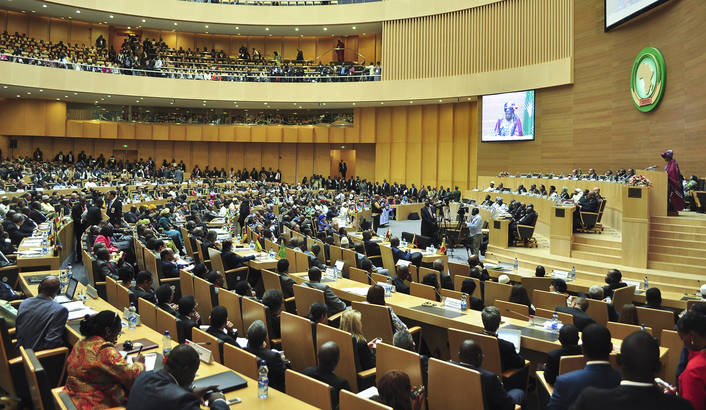
While is U.K. was busy separating from the European Union, Africa wants to become more unified with the introduction of an all-Africa passport. The idea, first approved in 2014, will launch at the 27th AU Summit in Rwanda this month.
The electronic passport is proposed as an anecdote for dissolving border restrictions, thus building greater opportunities for trade within the continent, in hopes of boosting the overall economy.
Anyone with a A.U. passport would be allowed to travel freely within the union’s 54 countries without a visa. Government officials and heads of state at the A.U. headquarters in Ethiopia, will be the first to use the all-Africa passport, which is expected to expand to all citizens in 2018.
Despite the economic benefits, the passport could have an opposite effect given the threat of terrorism.
The Motherland continues to be vulnerable to increased acts of terror, with recent attacks in Nigeria, Somalia, Kenya, and the Ivory Coast.
— Latifah Muhammad,Vibe