Monday, December 1, 2025
24.7 C
Lagos
Home Blog Page 265

9Mobile: NCC in a Fix over Court Order

0
Prof. Umar Danbatta EVC of NCC

The plan by the Nigerian Communications Commission (NCC) to sell (Mobile to today (January 16) to one of the five prospective buyers hit the rocks last week Friday when a Lagos High Court  dissolved the interim board of the telecom firm.

The NCC had earlier fixed December 31, 2017 for the sale. The plan failed and the telecom regulator pushed the date forward to January 16, 2018 (today).

As at last night, there was no official statement from the NCC on the way forward: either to disobey the court order and proceed with the process of selling 9Mobile as earlier planned or reschedule the process.

9Mobile, formerly Etisalat Nigeria, had being embroiled in crisis since 2017 over a loan of $1.2 billion taken by the former board from a consortium of 13 banks to finance its expansion programme.

Equities Market Kick-Starts the Week Positive… NSE ASI up 51bps

0

The Equities market reversed Friday’s negative close to open the week 51bps higher; consequently the All Share Index settled at 43,119.00 points while YTD return expanded to 12.7%. Investors in turn gained N78.8bn as market capitalization closed at N15.4tn.

The major drivers of today’s positive close were DANGCEM (+1.2%), GUARANTY (+2.2%) and ZENITH (+2.4%) although buying interest was observed across small and mid-cap stocks. On the contrary, activity level declined as average volume and value traded fell 47.6% and 55.7% to 730.6m units and N6.3bn respectively.

Banking Index, Sole Gainer
Performance across sectors was largely negative as 4 of 5 indices closed in the red. The Industrial Goods index led laggards, shedding 1.6% largely on the back of losses in WAPCO (-5.0%). The Insurance index followed closely, falling 1.0% as investors booked profit in LINKASSURE (-4.4%) and WAPIC (-3.5%). Similarly, sell offs in FORTE (-4.7%),NIGERIAN BREWERIES (-1.3%) and FLOURMILLS (-4.3%) dragged the Oil & Gas and Consumer Goods indices 0.8% and 0.1% lower respectively. On the flip side, the Banking index was the lone gainer, rising 1.1% due to a sustained rally in GUARANTY (+2.2%) and ZENITH (+2.4%).

Investor Sentiment Remains Positive
Investor sentiment measured by market breadth (advance/decline ratio) remained positive at 1.0x from 1.0x recorded the previous Friday consequent on 26 stocks advancing against 26 decliners. The top performing stocks were FCMB (+9.8%), SKYE (+8.3%) and CAVERTON (+5.0%) while ETERNA (-6.8%), UBN (-5.0%) and WAPCO (-5.0%) were the worst performing stocks for the day.

Although the equities market performed positively today, we expect a largely mixed performance this week as we anticipate profit taking in sessions ahead.
In the NASD OTC Securities Exchange, total volume and value traded stood at 26,508  units and N4.1m respectively. The SDFCWAMCO was the instrument traded today.

Market Statistics Monday, 15th January 2018

Market Cap (N’bn)                15,447.3
Market Cap (US$’bn)                   50.5
NSE All-Share Index              43,119.00
Daily Performance % 0.5
Week Performance % 8.2
YTD Performance %                  12.7
Daily Volume (Million)                  730.6
Daily Value (N’bn)                      6.3
Daily Value (US$’m)         20.6

BPE: ‘Nigerdock Will Realise Its Potential’

0

(L-R): Kola Oyekunle, Director of Corporate Governance, Nigerdock; Adewale Dosunmu, Head of Legal Affairs, Nigerdock; Rita Aniche, Head of Northern Zone, Nigerdock; Gen. I.B.M Haruna (Rtd.), Director, Nigerdock; Alex A. Okoh, Director General, Bureau of Public Enterprises (BPE); Yusuf Abdullahi, Chairman of Nigerdock Free Zone and Baba Mohammed, Head of Capital Markets, BPE, at the presentation of  the BPE/Nigerdock Joint Committee Report on the Resolution of Outstanding Issues in Nigerdock Nigeria Plc in Abuja.

Director-General of the Bureau of Public Enterprises (BPE), Mr. Alex A. Okoh has assured the Board and management of the Nigerdock Nigeria Plc that the Bureau is committed to the full realisation of the potentials of the integrated engineering and Fabrication Company.

Receiving a report of the BPE/Nigerdock Joint Committee on the resolution of outstanding issues in the company in Abuja, the Director General said that the present comatose state of the company was worrisome to the Bureau hence the decision to set up the joint committee to look into the issues militating against its operations.

He regretted that the company which was capable of employing about 6,000 Nigerians off the labour market and boosting the Nigerian local content policy, had only about 500 employees thus; negating the core essence of privatization.

Okoh said that the necessary frame work would be put in place to ensure that the company is patronized locally since it has the capability to deliver on its mandate.

“We shall look closely at all the issues militating against the smooth operation of Nigerdock. Patronage should not be denied the company because it has the capability to deliver. We should do everything possible to ensure that the company assumes its pride of place”, he stressed.

The Director-General stated that the report would be carefully studied and its recommendations escalated to the appropriate authorities for action.

Earlier, a director of the company, General IBM Haruna (rtd) had pledged the commitment of the Board to collaborate with the Bureau to ensure that the company survives and realises its potential.

He said the company apart from its core functions, was capable of conducting research for the Navy and Army if fully supported by the government. The director expressed the hope that with the synergy with the BPE, that was achievable and called for openness, integrity and transparency.

Presenting the report, the General Counsel of Nigerdock, Mr. Adewale Dosunmu said it was in two parts. He said it proffered short-term and long term solutions to move the company forward.

NCRIB Visits Nigerian-German Business Association

0

L-R: Assistant Executive Secretary, Nigerian Council of Registered Insurance Brokers (NCRIB), Mr. Tope Adaramola; Executive Secretary/CEO, Mr. Fatai Adegbenro; Director-General, Nigerian-German Business Association (NGBA), Mr. Gbenga Adebija and Media and Public Relations Officer, NGBA, Mrs. Oluwaseyi Sodeinde during a courtesy visit of NCRIB to NGBA in Lagos. 

SCIB Honours Ms. Efekoha with Best Staff Award

0

Mr. Shola Tinubu, Managing Director, SCIB (left), presents the company’s 2017 overall best staff award to Miss Ejiroghene Efekoha, an Account Executive, during SCIB Nigeria 2018 New Year party in Lagos on Saturday January 13, 2018.

ADB Achieves 100% Investment in Green Energy Projects in 2017

0
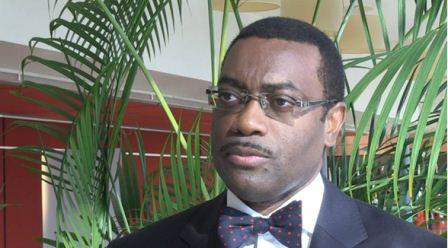
Akinwumi Adesina

The African Development Bank achieved a 100% investment in renewable energy in 2017, a major landmark in its commitment to clean energy and efficiency.

Power generation projects with a cumulative 1,400 megawatts exclusively from renewables were approved during the year, with plans to increase support for renewable energy projects in 2018 under the New Deal on Energy for Africa.

According to Bank President, Akinwumi Adesina, ‘’we are clearly leading on renewable energy. We will help Africa unlock its full energy potential, while developing a balanced energy mix to support industrialization. Our commitment is to ensure 100% climate screening for all Bank financed projects.’’

The share of renewable energy projects as a portion of the Bank’s portfolio of power generation investments increased from 14% in 2007-2011, to 64% in 2012-2016.

The Africa Renewable Energy Initiative (AREI) whose goal is to deliver 300 Gigawatts (GW) of renewable energy in 2030 and 10 GW by 2020, is now based within the Bank, as requested by African Heads of State and Government. The G7 has promised to commit US$10 billion to support the initiative, which came out of COP21 and subsequently approved by the African Union.

On November 8, 2017, the African Bank Group approved its Second Climate Change Action Plan, 2016-2020 (CCAP2) as a clear message of its commitment to helping African countries mobilize resources to support the implementation of the Intended Nationally Determined Contributions of Regional Member Countries, in ways that will not hinder development.

The approval of the action plan echoes discussions at COP23 in Bonn, Germany to strengthen the global response to the threat of climate change and achieve the Paris Agreement’s goal of keeping global temperature rises to 1.5C.

The CCAP2 is designed to incorporate the Bank’s High 5 priorities in the Paris Agreement, the 2030 development agenda, the Bank’s Green Growth Framework and the lessons learned in the implementation of the first climate change action plan (CCAP1), 2011-2015

As part of its wider mandate under the New Deal on Energy for Africa, the Board of Directors of the African Development Bank on December 15, 2017, approved an investment of US $20 million in the Evolution II Fund −a Pan-African clean and sustainable energy private equity fund.

The Bank’s investment in Evolution II Fund reflects the High 5 development priorities of the Bank, the agenda to light up and Power Africa, and the Bank’s commitment to promote renewable energy and efficiency in Africa.

The Evolution II Fund is expected to contribute to green and sustainable growth by creating 2,750 jobs and building on the track record of the Evolution One Fund (which created 1,495 jobs, of which 20% were for women, and generated 838 MW of wind energy and 87MW Solar PV energy). It is estimated that the Evolution One Fund achieved 1,190,469 of Carbon dioxide (CO2) emission savings annually

In line with its commitment to renewable energy and ongoing institutional reforms, in the first quarter of 2017, the Bank appointed Ousseynou Nakoulima as the Director for Renewable Energy and Energy Efficiency. He brings global experience in developing and managing programs and partnerships for driving renewable energy, from his work at the Green Climate Fund.

Global Communicators Set for 2018 WCF Forum in Geneva

0

Communications experts, top managers, and local market leaders, amongst others will be identifying the power of communication and its influence on the modern world at the 2018 World Communications Forum (WCF) scheduled to take place at Geneva, Switzerland between March 21st and 22nd.

The forum will analyse critically the power that goes hand by hand with the future development of the society in many ways, from technical improvements to advocacy of human rights.

The two days plenary sessions will be packed with hot discussions on the Power of Communication and Young Leadership Power, Country Branding, Agenda 2049 and Global Health Promotions, Media for All, Social Media Influencers, the Future of Learning, amongst others.

Outstanding communication stories and cases of 2017 will be awarded the C4F awards during the forum. Last year, professionals from about 12 countries were awarded with the C4F, and they include; USA, UK, Brazil, Nigeria, Kazakhstan, India, Italy, Russia, Austria, Ukraine, Armenia, and Germany. This year, professionals will also be awarded based on merits.

C4F awards was founded seven (7) years ago with the aim of recognising remarkable individual communicators and/or companies with a creative professional approach and unique vision of the future of the world development.

Individuals will be awarded with certain awards such as, the Grand Davos Award, Titan of the Future, Image of the Future, Talent of the future, and Relations of the future; while Corporates will be awarded with Education of the future awards, City of the Future, Pro Bono of the future, Community of the Future, Reputation of the future, Branding of the future, and Anti-crisis of the future.

The President, Founder and Content Director of the World Communications Association, Yanina Dubeykovskaya, reiterates, “In 2017 it became obvious that the communication industry has finally changed. There no longer exists any traditional corporate PR. New industries such as social media management and virtual reality finally shaped into separate markets.

However, talent, creativity and relationships – in their traditional sense – have acquired a complementary value. Forum’2018 will discuss exactly this new structure of markets and the required new profile of the communicator as a professional.”

To make the event a memorable and eventful one, intelligent and highly respected professionals will be speakers at the event, some of which are Mr Paul Holmes, Founder and CEO of The Holmes Report and the SABRE awards, Dr. Jon-Hans Coetzer , Chief Academic Officer at EU Business School Group, Sean Gardner, Co-Founder of the pioneering Huffington Post “Twitter Powerhouses Series”, Deborah Grayson Riegel , Director of Learning at Boda Group and author of the book “Tips of the Tongue”, and many other leading experts.

Some of the partners of the event includes: EU Business School (Switzerland), JSP Communications (Nigeria), Don Valley (South Africa), Kaiser Communications (Germany), RADA Research & PR (Egypt), Ideal H+K Strategies (Brazil), Communications Korea(South Korea), Africa Communications Week, C.Moore Media (USA), and Village Ventures International (Kenya).

World Communications Forum (WCF) is an annual event which commenced in the year 2010. It has successfully organized eight (8) editions, with 42% Agency Managers, 32% Corp Comm Heads, 11% University Reps and 10% Gov Reps,  5% media,  63 countries so far present,  343 speakers, 248 presentations, 190+ consultancies, 128+ companies, 138+ partners , 19 Gov units, 28 international orgs, 29 educational institutions, 51 media partners, 79 panel discussions, 37 keynotes, 140 videos, 37 personal + 19 corporate C4F awards, 30 case studies, 9 training classes,  14 regional forums , and 5 projects of the WCFA association.

Equities Market Extends Gains … NSE ASI Up 2.4%

0

The equities market opened the week positive, extending gains from the previous week into the third consecutive trading session as the All Share Index rose 2.4% to settle at 38,849.65 points while YTD return expanded to 4.2%. Consequently, market capitalization rose by N329.7bn to settle at N14.2tn. Today’s performance was buoyed by price appreciation in DANGCEM (+5.0%), GUARANTY (+2.3%) and ZENITH (+2.5%). However, activity level was mixed as volume traded declined 19.7% to 604.5m units while value traded inched 46.7% higher to N16.1bn.

Industrial Goods lead Positive Sector Performance
Sector performance was largely positive as all indices closed in the green. The Industrial Goods index led the gainers chart, up 2.3% primarily due to price appreciation in DANGCEM (+5.0%).

The Banking index trailed, rising 2.0% on the back of gains in GUARANTY (+2.3%) and ZENITH (+2.5%) while uptick in MOBIL (+5.0%) and CONOIL (+10.2%) pushed the Oil & Gas index 1.7% higher.

Also, the Consumer Goods and Insurance indices rose 1.1% apiece consequent on investors taking position in NIGERIAN BREWERIES (+1.4%), GUINNESS (+4.6%) and MANSARD (+4.4%).

Investor Sentiment Weakens
Investor sentiment – measured by market breadth (advance/ decline ratio) – weakened to 4.1x from 4.4x recorded the previous Friday as 37 stocks advanced against 9 decliners.

Today’s best performers were CONOIL (+10.2%), UNITY (+9.7%) and CADBURY (+8.6%) while the worst performing stocks were VITAFOAM (-4.9%), CILEASING (-4.9%) and MEYER (-4.3%). In line with expectation, market performance was positive today as investor sentiment remained strong.

Hence, we expect the trend to be sustained in subsequent trading sessions against the backdrop of a broad based rally across sectors.

Market Statistics: Monday, 8th January 2018

Market Cap (N’bn)                14,181.2
Market Cap (US$’bn)                   46.3
NSE All-Share Index              39, 849.65
Daily Performance % 2.4
Week Performance % 4.1
YTD Performance %                  4.2
Daily Volume (Million)                  604.5
Daily Value (N’bn)                      16.2
Daily Value (US$’m)         52.6

International Rating of insurance companies in Nigeria

0

By: Babajide Oniwinde

Nigerian insurance companies have been charged to open themselves up to international credit rating.

In a paper titled “International Rating of insurance companies in Nigeria” the Former Head of Strategy at NAICOM, Babajide Oniwinde, said it is important for insurers to seek for independent assessment of their financial strength and claims payment capabilities using international credit rating agencies.

Benefits of rating

For an insurance company, a rating can help attract new business or open new opportunities and possibilities. Here are some of the benefits of being rated:

  • Share price The rating could impact on the company’s share price as investors are likely to view and perceive the insurance company more favorably if they have been positively assessed.
  • Marketing tool Having a good rating will help the insurer to attract sufficient volumes of high quality business. Policyholders want to be reassured that their insurer will be able to pay/meet their claims.
  • Differentiation A well run, well capitalised and well managed insurance company can use rating to appear unique and to differentiate itself from weaker counterparts.
  • Access to capital markets Rating can help attract foreign investment, and can make it easier to mobilise funds from public and institutions or banks; it helps to improve earnings profile, enhance returns on capital/returns on equity.
  • Motivation for growth Rating provides motivation to the company for growth as the insurer feels confident in the assessment of its own status which is subject to self-discipline and self-improvement and the company is motivated to undertake expansion of its operations.

What rating assesses

Rating assesses the following areas:

  • Capital adequacy Rating will show if the company has enough capital to absorb unexpected or additional losses. Quality of and access to capital is also key.
  • Reserve strength Rating agencies spend time and resource performing independent assessment of insurers’ level of reserve adequacy (or redundancy) to determine the insurer’s future viability.
  • Profitability An insurer’s ability to generate consistent profit streams and cash flow reflects its strength in that a successful business is likely to continue trading (and to pay claims).
  • Brand value An insurer that dominates its chosen market, has secure and long-standing distribution outlets, and has a strong brand value and presence with insurance purchasers, will be likely to be stronger operationally than a smaller player.
  • Management quality Management track record, skill and controls forms part of rating analyses. This involves forming a judgement as to whether management has a clear and realistic business strategy.
  • Leverage/gearing position Failure to pay interest or principal on loans is assessed as well as allowance for the gearing position of the insurer.
  • Dividend policy the Dividend payout/profit retention is looked at.
  • Ownership Support and capital contribution from owners of the company; ownership by a prominent insurance parent may be considered to provide a greater degree of comfort than ownership by a non-insurance parent who is likely to have different strategic objectives.
  • Investments To assess if the investment portfolio/strategy is high-risk and how reliant the company is on investment returns to subsidise underwriting.
  • Legal/regulatory environment As ratings are global, credit ratings must reflect the legal and regulatory environments that an insurer operates in, to the extent that they influence its ability to trade profitably and pay claims.
  • Reinsurance A primary insurer’s reinsurance strategy —the types and extent of covers it purchases and the credit quality of the reinsurers — will form part of a credit analysis to the extent that, effectively, reinsurance is seen as a substitution or complement for capital.

The main international rating agencies for insurance companies

Standard & Poor’s, which has its origins in 1860, was formed by a merger of Standard

Statistics and Poor’s Publishing Company in 1941. It was acquired by the McGraw-Hill

Companies, Inc in 1966.

AM Best was founded in 1899 and is a worldwide insurance-rating and information

agency. It specialises in reports and ratings of insurance companies.

Others include Moody’s and Fitch.

The ratings process

The ratings process can be summarised as follows:

  • the insurer approaches the rating agency to request a rating;
  • a lead analyst and rating team is assigned, and a preliminary review is done using publicly available data;
  • the rating team meets with the insurer’s management, to gain insight into the business, and to assess the management team;
  • drawing on public and non-public information, the rating team conducts a detailed analysis of the company;
  • this analysis is then presented to a rating committee, which, after discussion, assigns a rating;
  • this rating, and the analysis behind it, is then communicated to the insurer;(the insurer can decide if they want the rating publicised)
  • following the assignment of a rating, the rating is subject to an annual review.

Type of ratings assigned

Ratings agencies assigns a letter grade as a kind of market shorthand for the strength and stability of any rated insurance company. For example, here are the ratings available from A.M. Best:

A++             Superior

A+               Superior

A                 Excellent

A-                Excellent

B++             Very Good

B+               Good

B                 Fair

B-               Fair

C++, C+      Marginal

C, C-           Weak

D                Poor

E                Under regulatory supervision

F                In Liquidation

Implementation

Just about five Nigerian insurance companies have so far opened themselves to international credit rating in UK and US. Others have sought ratings from South African rating agencies but now more insurance companies have been considering rating. Insurance companies should seek to stand out by obtaining international ratings as a tool to demonstrate their financial strength and claims paying ability.

WHO WANTS TO BUY 9MOBILE?

0
9mobile

Troubled telco, 9Mobile failed to attract a buyer at the December 31, 2017 deadline set by the Nigerian Communications Commission (NCC) despite the confirmation of five bidders by NCC.

The deadline has now being extended to January 16, 2018 with no sign of serious buyer in sight.

Unfortunately for subscribers of 9Mobile, as the long wait for its sale lingers, the quality of its services continues to decline, forcing many to dump the telco.

The future indeed looks bleak for the operator.

Who wants to buy 9Mobile?

Afreximbank, Islamic Group Sign $100m Africa Financing Pact

0
afreximbank

The African Export-Import Bank (Afreximbank), a multilateral financial institution established by African governments/institutional investors and International Islamic Trade Finance Corporation (ITFC) have signed a US$100-million agreement and a EUR 50-million Murabaha to facilitate and finance exports amongst African countries, between Africa and the rest of the world.

The agreements were signed by Eng. Hani Salem Sonbol, the CEO of ITFC, and Mr. Amr Kamel, Executive Vice President, Business Development & Corporate Banking of Afreximbank, in a ceremony held during the Afro-Arab Trade Finance Forum, which was organized by the Arab Bank for Economic Development in Africa (BADEA) on 21 December 2017 in Dubai under the Arab Africa Trade Bridges Program.

The facilities are intended to be used to support procurement from suppliers from the member and non-member countries, including local purchase, to promote trade across Africa.

On this occasion, Eng. Hani Salem Sonbol, CEO ITFC, stated: “This partnership comes as part of ITFC’s commitment to support the development of the African member countries’ exports as an important lever toward the sustainable growth, job creation and poverty reduction.”

He pointed out that this partnership will be utilized to finance African OIC member countries under the “Arab-Africa Trade Bridges” Program, a regional trade promotion program that aims at addressing some of the challenges faced in promoting trade between the two regions and supporting South-South cooperation.

Eng. Hani Salem Sonbol, CEO ITFC delivered a keynote speech at the opening session of the Forum, that focused on identifying the prospects and opportunities between the Arab countries and Africa, and the best ways to tackle the challenges that hinder the development of the trade flows in these countries.

Mr. Amr Kamel, Executive Vice President at Afreximbank, in his speech at the ceremony, stated that Afreximbank saw the Murabaha partnership agreement as a stepping stone towards greater collaboration in pursuit of the Bank’s shared vision with ITFC. He said that “ITFC has demonstrated that it stands shoulder to shoulder with the African Export-Import Bank as they collaborate to develop the African Continent and promote inter-African trade.”

“I see great prospect for the unfolding Afreximbank-ITFC partnership,” Mr. Kamel added, “but I am mindful that realizing the tremendous opportunities will require determination and hard work. We are committed to invest our resources in that direction.”

The ceremony was attended and witnessed by other participants in the Afro-Arab Trade Finance Forum.

DANGCEM Drags Benchmark Index amidst Broad Selloff in Equites…NSE ASI Down 1.6%

0

As the festive season draws to a close, the equities market recorded a 1.6% decline at the end of trading today to buck a 3-day gaining streak; thus, paring the benchmark index YTD return to 41.0%. Investors in turn lost N225.1bn in value as market capitalisation settled at N13.5tn.

DANGCEM (-3.9%) was the major drag to performance today, although selling pressures were also observed in large-cap stocks within the Consumer Goods, Banking and Agriculture sectors. However, activity level waxed stronger as volume and value rose 103.9% and 37.9% to N416.9bn and N2.1bn respectively.

Sector Performance Mixed
Sector Performance was mixed as 3 of 5 indices closed in the red. The Industrial Goods index led the losers chart, plunging 2.6% on account of sell-offs in DANGCEM (-3.9%) while the Consumer Goods index trailed, closing 1.2% lower, following price depreciation in NIGERIAN BREWERIES (-4.3%). Similarly, the Banking index lost 0.3% – pressured by ETI (-2.8%) and UBA (-0.8%). On the flipside, the Insurance index closed 1.0% higher as investors positioned in NEM (+4.0%) and MANSARD (+0.5%) while the Oil & Gas index gained 0.5%, solely on account of MOBIL (+4.9%).

Investor Sentiment Weakens
Investor sentiment weakened today as indicated by market breadth which retreated to 0.6x (from 4.0x recorded the previous Friday) as 14 stocks gained while 23 declined.

CADBURY (+9.9%), MOBIL (+4.9%) and FIDELITY (+4.6%) topped the gainers chart while OKOMU (-5.0%), PRESCO (-4.9%) and NIGERIAN BREWERIES (-4.3) led losers.

Given the significant rise in oil prices in recent times and the broadly bullish outlook for commodity prices for 2018, we maintain our positive short- to medium-term perspective for equities.

Market Statistics: Wednesday, 27th December 2017

Market Cap (N’bn)                13,483.6
Market Cap (US$’bn)                   44.1
NSE All-Share Index              37,889.57
Daily Performance % (1.6)
Week Performance % (0.1)
YTD Performance %                  41.0
Daily Volume (Million)                  417.0
Daily Value (N’bn)                      2.1
Daily Value (US$’m)         6.9

AMCON Acquired N3.7tr NPLs, Injected N2.2tr into 10 Banks

0
Ahmed Kuru MD/CEO AMCON

The Asset Management Corporation of Nigeria (AMCON) has so far acquired over 12,000 Non-Performing Loans (NPLs) worth about N3.7 trillion from 22 banks in the country while it has injected N2.2 trillion as financial accommodation to 10 commercial banks in order to prevent systemic failure in the banking sector. This has contributed in stabilising the financial system in Nigeria.

Records from AMCON also indicate that about N3.66 trillion of depositors’ funds were protected since the creation of the Corporation during the 2008/2009 financial crisis while approximately 14,000 jobs were saved as a result of AMCON’s intervention in the banking sector.

The idea is to recover the debts either through structured repayment or dispose of transferred assets towards settlement of the Bonds.

Meanwhile, leading legal luminaries including the former Chief Judge of the Federal High Court, Hon. Justice I. N. Auta and the President of Court of Appeal, Hon. Justice Zainab Adamu Bulkachuwa have joined the campaign by the management of AMCON) in calling for a paradigm shift in debt recovery processes in Nigeria.

Such shift according to them would act as act as panacea, if indeed the Corporation were to meet its mandate of resolving its huge outstanding obligation.

Current AMCON management under the leadership of its Managing Director/Chief Executive Officer, Mr. Ahmed Kuru upon assuming office and reviewing the challenges as well as bottlenecks inhibiting recoveries mounted a strong campaign that the current practice where habitual and recalcitrant debtors are treated with kid gloves, especially by agencies of government would not help AMCON resolve these loans before its sunset date.

According to Justice Auta, the approach to debt recovery and resolution must change at this point in the life of AMCON especially going into 2018 and beyond because the Corporation came as a child of necessity at the time it was created with all the good intentions in the world to recalibrate the beleaguered economy of the country at the time.

In his words: “Nigeria witnessed the 2007 global financial crisis, which was caused by insolvency, illiquidity, poor corporate governance and outright financial crimes. However, with the creation of AMCON by the federal government, no bank has been liquidated, depositors’ funds are safe and no bank has been subject to collection queues. The financial crisis led to the depression in value of the securities created against these defaulting loans thereby leaving the banks with an unfortunate inability to recover their losses. The effect of such monumental exposure was that banks were unable to sustain the equilibrium of lending required to maintain a vibrant economy. This in turn led to higher interest rates and an inability to perform the bank’s primary functions of financial intermediation like the pooling of savings and lending.”

Explaining further he said: “In addition to significant reduction in lending to customers, financial crisis created by non-performing loans can result in breakdown of interbank lending, which in turn leads to drastic drop in liquidity of banks and a consequent reticence or direct inability to advance loans to the broader public. Collectively, these factors create a vicious cycle resulting in a hike in interest rates; concomitant default and insolvency; volatility of currency values; a drop in investments and general stagnation of the economy among other crisis.”

Justice Auta having enumerated the facts argued that it is extremely important for all stakeholders, especially Judges to note the correlation between bank failure, which AMCON saved, and a large concentration of non-performing loans.

He added that Judges have critical role to play in the insulation of the macro-economy from fragmentation since most disputes that relate to banking, which AMCON currently shoulders are presented before them. Describing the AMCON framework as “extremely complex” he said AMCON’s goal can only be accomplished if all stakeholders, especially the entire hierarchy of the bench appreciates the fundamental underpinnings of its regime.

Lending her voice to Justice Auta’s position, Justice Bulkachuwa in her own analogy argued that since the rise of the financial sector is tied to economic growth, Nigeria’s economy, the livelihood and wellbeing of the citizenry are inextricably related to finance. She said all over the world, whenever the economy goes into crisis, governments across the world intervene to stabilise the macro-economy, which AMCON did in the case of Nigeria.

But with what she described as “deliberate reluctance” of debtors to redeem their obligations to AMCON, Justice Bulkachuwa said: “Having realised deliberate reluctance of debtors to redeem their obligations to AMCON, it would seem that AMCON has limited options other than resorting to our courts to enforce its enormous powers towards debt recovery. To recover as much debt as possible within its defined lifespan, expediency is essential if AMCON is to achieve its value maximization and financial stability goals.”

Corroborating the position of the two distinguished Justices, Kuru submitted that AMCON is currently indebted to the CBN to the amount of N4.7trillion, which is more than half of the proposed 2018 national budget. Aside that, more than 70 per cent of AMCON’s Eligible Bank Asset (EBA), portfolio is also locked in one form of litigation or the other meaning that without the support of the judiciary, AMCON cannot see the light of day.

On the back of that, he said there is also a rising number of appeals emanating from trial courts on AMCON cases, adding that at this stage in AMCON’s existence, expeditious determination of appeals brought before the courts remains key to AMCON’s ability to resolve all outstanding assets and prevent the undesired economic consequences of failure to recover the assets. The inability to resolve the debt he argued would have dire implications for the entire Nigerian economy.

NITDA, Microsoft Partner on ICT Innovation, Adoption

0
L-R: Dr Isa Ali Ibrahim, Director-General/CEO, NITDA and Mr. Akin Banuso, General Manager, Microsoft after the signing of the MoU in Abuja.

L-R: Dr Isa Ali Ibrahim, Director-General/CEO, NITDA and Mr. Akin Banuso, General Manager, Microsoft after the signing of the MoU in Abuja.

The National Information Technology Development Agency (NITDA) and Microsoft Nigeria signed a Memorandum of Understanding to strengthen ICT Innovation and adoption in the country.

The partnership will see both NITDA and Microsoft collaborate in ICT development and innovation in Nigeria, particularly in the areas of cloud policies, data protection and privacy laws and data classification frameworks.

NITDA mandate is to create a framework for the planning, research, development, standardization, application, coordination, monitoring, evaluation and regulation of Information Technology practices in Nigeria. The Nigerian Government priorities include anti-corruption drive, security, private sector led economic growth and job creation, youth training and skills development. Technology will be at the heart of driving and building a digital economy which will bring these priorities to fruition.

Speaking on the collaboration, NITDA’s Director-General/CEO, Dr.Isa Ali Ibrahim FBCS, stated ‘We are delighted to collaborate with Microsoft; as regulators, our mandate isto create the right policies that foster innovation and help build a robust digital economy. Nigeria is a forward-thinking economy and one which is ready to compete in the 4th industrial revolution by having policies which drive growth and encourage investments. He further added ‘This is a positive move towards digitalization of government processes and provides a tremendous opportunity to scale up citizen’s access to services and concurrently improve the quality of services’

Also reiterating on the collaboration, General Manager Microsoft Nigeria, Akin Banuso said

‘‘We are excited to collaborate with NITDA. Microsoft is committed to providing technology you can trust; We have been actively involved in discussions with governments around the world to digitally transform are also frequently asked by other governments to identify best practices for moving to the cloud; we are honoured to be able to work with the Nigerian government on this framework.

Banuso added ‘This collaboration aims to foster detailed discussions of recent regulatory and policy development, including global best practices, to create cloud regulatory frameworks appropriate for driving innovation and improving how the public sector operates and delivers citizen services.”

NITDA and Microsoft will set up a joint working group for the collaboration.

BPE to Privatise 5 Mining Firms at N108.05m

0
Mr. Alex Okoh Director-General. BPE

The National Council on Privatisation (NCP), at its 4th meeting for 2017, which held on Friday, 15th December 2017, approved the privatisation of the remaining 5 (out of the 23) subsidiaries of the Nigerian Mining Corporation (NMC).

The NCP approved the sale of Naraguta Bricks and Clay Company to University of Jos at the offer price  of N45 million; Maiduguri Bricks and Clay Company to Gargam International Services Limited at the bid price of N63 million;  NIMCO Terrazo Company Limited to Alheri (JJ) Nigeria Limited at the offer price of N15,297,000; Gano Quarry to A.A Y International Mining Company Limited at the bid price of N21,700,000; and Kujama Quarry to Yusuf Mariri Trading Company Limited at the bid offer of N20,550,000.

The Technical Committee of the NCP had opened the financial bids of the pre-qualified prospective core investors for these enterprises at a public ceremony held at the BPE Conference Room on 24th October, 2017.

The NCP, which is chaired by His Excellency, Prof. Yemi Osinbajo, the Vice President of the Federal Republic of Nigeria, noted that the move was vital as the plant and equipment had outlived their economic life and suffered theft and vandalisation over the years.

“The 23 subsidiaries of the NMC had ceased operations since the late 1980s, as a result of which they were closed down and the staff disengaged in 2004 by the Ministry of Mines and Steel Development, but for a few that were retained to provide skeletal services,” it said.

The NCP also approved the pre-qualification of five firms which should be issued Request for Proposals (RFPs) with respect to the engagement of transaction advisers for the partial commercialization of the River Basin Development Authorities (RBDAs). These firms are: Agric-Africa Consultants, Halcrow Infrastructure, CPCS, Thomas Macaulay Capital, and Feedback Infrastructure Services.

Similarly, the NCP approved that RFPs be issued to 3 firms that met the pre-qualifying score following the evaluation of Expressions of Interest for the engagement of transaction advisers for the partial commercialization of the Nigeria National Parks Service and concession of eco-tourism activities in three selected national parks. The firms are: African Wildlife Foundation, IOS Partners/IWorld/Ecoplannet, and CPCS.