

The African Institute for Mathematical Sciences (AIMS) announces the launch of a one-year intensive African Master’s in Machine Intelligence (AMMI) in partnership with Facebook and Google. The master’s will begin this September at the AIMS-Rwanda campus in Kigali.
“Machine Intelligence (MI) is revolutionizing critical aspects of our lives. It enhances medical diagnosis, improves industrial processes and enables scientific discoveries. Over the past decade, thanks to large public and private investments, MI has progressed rapidly in both basic research and the development of a vast array of applications. However, the talent pool currently advancing MI is modest and unrepresentative of the diversity of our world, leaving us less capable of facing global challenges. The challenges we choose to work on are strongly influenced by our backgrounds and our environment. Our goal with AMMI is to train a generation of young scientists who will bring a fresh perspective to machine intelligence research and contribute to advancing its development across Africa, for the benefit of its society” said Dr. Mouhamadou Moustapha Cissé, Founder and Director of the AMMI program and Professor of Machine Learning at AIMS.
AIMS, together with its partners, believes creating an effective, globally connected community of Machine Intelligence practitioners in Africa will reduce the technology gap, strengthen Africa’s economies and enable better governance.
Commenting on the partnership, Jerome Pesenti, VP of Artificial Intelligence said: “We’re proud to be partnering with AIMS and Google to launch the African Master’s in Machine Intelligence programme. At Facebook our goal is to drive positive social and economic impact across Africa, and this partnership is another step-in driving innovation by supporting the continent’s already exciting tech ecosystem and talent pool. We’re excited to see how students will utilise advanced technologies to solve problems and build solutions for the future of Africa and the rest of the world. We look forward to seeing them contribute to the growing ecosystem of African machine intelligence scientists and bring a fresh perspective on the challenges tackled by the scientific community.”
Jeff Dean, Lead of AI at Google said “The field of machine intelligence is advancing rapidly, and it’s imperative that industry leaders including Google and Facebook, continue to partner with academic institutions like AIMS to develop the next generation of students who will build MI that benefits everyone. We look forward to working with AIMS to drive this effort through the AMMI program. Along with our recent announcement of a Google AI center, scheduled to open later this year in Ghana, this partnership with AIMS is another example of our long term investment and commitment to Africa.”
The AMMI program will provide brilliant young Africans with state-of-the-art training in machine learning and its applications. Every course on AMMI will be lectured by leading experts from prestigious African and international institutions, providing the AMMI students the best possible foundation.
“AIMS is thrilled to be launching AMMI in order to fast-track the entry of young African scientists into this very exciting and relevant discipline. We hope to replicate AMMI in other African countries, creating a pan-African network of centres for training and research of the highest international quality. AMMI will open the doors to Africa’s most talented youth, enabling them to contribute to industry, government and science on the continent. They will be the pioneers of a growing ecosystem of African machine intelligence specialists bringing leading edge skills to Africa’s economy, governance and society at large. AMMI is a first step towards AIMS’ longer term goal of preparing Africa for the coming quantum revolution in information science and technology,” said Professor Neil Turok, Founder and Chair of the AIMS.
AIMS Unveils African Master’s in Machine Intelligence
Nestle Nigeria Plc: Strong Revenue, Recovery of Gross Margin in Q2-18
According to Cordros Capital, NESTLE reported 56.9% y/y EPS growth in Q2-18, driven by strong revenue and margin growth, marginal increase in opex, and a net finance income (vs. loss the previous year). Compared to our estimate, the achieved Q2 EPS was ahead by 8%. Annualized, the H1-18 EPS of NGN27.07 is c.3% ahead of consensus estimate for 2018E.
In-line Q2-18 Revenue; 2018E Growth Estimate Unchanged: The reported Q2-18 revenue was ahead of Q2-17 by 11.6% and beat our estimate by a marginal 1%. At current run-rate, we believe NESTLE’s revenue growth (10.97% in H1-8) is in line with our 10% forecast for the year, hence we make no changes. Compared to both Q2-17 and Q1-18, we estimate volume grew at low single-digit during the reference period, supported by both Ramadan-related consumption as well as the recent introduction of new SKUs – Maggi Naija Pot, Golden Morn Puff, and Milo-Ready-to-Drink – for which adverts and promotions have been aggressive thus far this year.
Food revenue grew 11% y/y while Beverages grew by 13% y/y in Q2. We are aware of rising competition in the FMCG space with new entrants, but should also note that NESTLE’s RTM is aggressive, hence we expect revenue will maintain the H1 trajectory in the remaining half of the year.
A Welcome Recovery of Margins: From the decline to 38.2% in Q1-18, NESTLE’s gross margin recovered strongly to 43.96% in the review period, exceeding both Q2-17’s 40.9% and our estimate of 41.6%.
We revise our gross margin estimate for 2018E slightly higher to 42.5%, and while noting downside risk relating to the rising price of cocoa (+20% YtD), elsewhere, we believe NESTLE’s margin will be supported more by the stable exchange rate, soft sugar (-26%YtD) and dairy prices (-8% YtD), continued sourcing of cheaper local inputs, and importantly, stable selling prices.
Our revised forecast brings gross margin closer to the average of 43% achieved between 2012-2014FY (average gross margin was 40% prior), but still below the peak of c.45% achieved in 2015FY.
EBITDA and EBIT grew 28% y/y and 30.7% y/y respectively in Q2-18, with respective 28.4% and 26% margins. Our revised estimates for 2018E produced EBITDA and EBIT growth of 17% and 18% over 2017FY, equating to record-high 27.1% and 24.5% margins respectively.
FX Gain Offsets Interest Expense: Net finance income of NGN300 million was recorded in Q2-18. FX gain of NGN590 million more than offset interest expense of NGN550 million, as the balance of borrowings reduced by a further NGN630 million to NGN17.5 billion (vs. NGN24.2 billion in 2017FY and NGN42.99 billion in H1-17). Following the result, and with the risk of FX fluctuation muted, we now model finance cost will be much lower at NGN2.6 billion in 2018E, from. NGN4.6 billion previously (vs. NGN15.1 billion in 2017FY).
High Effective Tax Rate: Recognised effective tax rate was 29.5% in Q2, averaging 32.7% over H1-18. We have consequently adjusted our tax rate assumption higher from 25% to 30%, hence the little impact of the upwardly revised gross margin and reduced finance costs estimates on 2018E EPS estimate.
Estimate and Valuation: The net impact of the changes to our model is an increase to our 2018E EPS estimate to NGN60.14 (from NGN58.30 previously) and TP to NGN942.23 (previously NGN851.48), while maintaining SELL rating.
NESTLE’s stock has lost 6% since we updated on Q1-18 result, with a SELL rating. On our estimates, the stock is trading at forward (2018E) P/E and EV/EBITDA multiples of 25x and 16.2x, a significant discount to its five-year historical averages of 45x and 21.1x respectively.
1st Nutrition Africa Investor Forum Targets Private Sector Food Industry
The Global Alliance for Improved Nutrition (GAIN)- an international organisation founded by the Bill and Melinda Gates Foundation and driven by the mission of a world without malnutrition- is hosting the first-ever Nutrition Africa Investor Forum (NAIF) in Nairobi, Kenya, on October 16-17, to invite and engage private sector investors to play a key role in improving nutrition across Africa.
The event is hosted in partnership with Royal DSM, a purpose-led global science-based company in nutrition, health and sustainable living recognized for its global fight against malnutrition, the SUN Business Network and African Business magazine.
The Nutrition Africa Investor Forum will highlight business opportunities in a largely underdeveloped market. From farm to fork, nutrient gaps in diets within low and middle-income markets constitute a largely untapped market worth USD$120bn.
According to a recent study, no African country is expected to reach the UN target of ending childhood malnutrition by 2030. In fact, malnutrition indicators remain “persistently high” in 14 countries, stretching across from Sahel from Senegal in the west to Eritrea in the east.
This challenge needs to be addressed. GAIN argues engaging the private sector is key in addressing this issue. Nutrition-sensitive capital investments along the entire food value chain are critical to drive better availability, access, affordability — and finally — consumption of nutritious foods.
GAIN works with nearly 1,000 companies across the food value chain in Africa, but many of these cite access to capital as a challenge. At the Forum, experts will present a number of viable investment opportunities from these enterprises to venture capital funds, private equity groups, finance institutions, foundations and impact investors.
The forum will showcase current and future investment potential for nutritious foods in Africa. There will also be an opportunity for the private sector and investors to discuss key challenges and discuss opportunities for unlocking greater investment in nutrition market with the instruments and vehicles that are currently available and those under development.
Lawrence Haddad, GAIN’s Executive Director, says:
“One in three people in the world suffers from some form of malnutrition. Moreover, poor diet is the number one risk factor in the global burden of disease. We believe in the enormous potential of national food businesses in Africa to address this challenge by producing more affordable, nutritious foods. However, for this to happen, new private investments must be unlocked for SMEs along with new policy and lending instruments. We’re aiming to help bridge this gap.”
Fokko Wientjes, Vice President, Malnutrition Programs & Partnerships Royal DSM and member of the SUN Business Network Executive Committee, added:
‘Nutrition is the new asset class of a dynamic African food industry. Businesses, governments and investors don’t just have a moral case for investing in nutrition – they now have a business case too. Businesses in Africa adapt their approach as governments and consumers increasingly demand access to safe, affordable nutritious foods. Smart companies and investors will start building now the African food industry of the future, serving the African consumer of the future.’
NAICOM Unveils New Capital Base for Insurers From Jan 1, 2019

The National Insurance Commission (NAICOM) yesterday unveiled a new capital model for the insurance industry in Nigeria effective from January 1, 2019. The new risk-based capital structure is divided into three tiers depending on the risk appetite and capital capacity of each operator.
Under the new capitalisation structure, life insurance firms need a capital level of N6 billion for Tier 1; N3 billion for Tier 2 and N2 billion for Tier 3: For general business, the requirement is N9 billion for Tier 1; N4.5 billion for Tier 2 and N3 billion for Tier 3.
And for composite companies (combination of life and general business), the new capital requirement is N15 billion for Tier 1; N7.5 billion for Tier 2 and N5 billion for Tier 3.
Mr. Sunday Thomas, the Deputy Commissioner for Insurance, Technical at NAICOM, said the insurance industry cannot continue to operate at present level of capitalisation if it is to contribute meaningfully to economic growth in the country.
Thomas said: “The operating capital has to be tinkered with to optimise the potential of the industry. The adoption of the risk-based capital is here. What we have is a home-grown model. We shall release the transition guidelines on August 3, 2018 to provide more details on the capitalisation initiative.”
Mr. Barineka Thompson, a Director at NAICOM, who made the presentation on behalf of the Commission, said the new capital structure does not extend to reinsurance companies operating in the country for now. He added that the Commission is working on a new policy for reinsurance firms.
The NAICOM director said the insurers Committee meeting of February 15-16, 2018 in Abeokuta, Ogun State unanimously agreed to recapitalise the insurance sector in Nigeria.
It would be recalled that a recapitalisation exercise was last carried out in the insurance industry in 2007.
Great Nigeria Insurance Delists from Stock Exchange
Great Nigeria Insurance Plc has voluntarily delisted from the Nigerian Stock Exchange (NSE) following the unanimous decision of its shareholders at the company’s Extra-Ordinary General Meeting (EGM) held yesterday in Lagos.
The company gave the following reasons for the voluntary delisting exercise:
- Over the past five years, there is little or no trading activity on the shares held by the minority shareholders and also considerable fall in trading volumes over the last 12 months in the March 2017 to March 2018 period.
- Shareholders are not benefitting from the continued listing as they are not getting any exit opportunity and their investments have been locked up in the Exchange. The company also is not benefitting as its shares continue to trade at a significant discount on the intrinsic value.
- The delisting will afford the company the opportunity to carry out an imminent corporate restructuring exercise to take advantage of emerging opportunities in the market and larger economy.
Great Nigeria Insurance insisted that the voluntary delisting will not cause any loss of business to the company as there are similar unlisted insurance companies that are commanding significant share of the insurance market without being quoted on the NSE.
The company also promised to give shareholders the opportunity of remaining with the company or have the choice of exit with full compensation.
Mr. Bade Aluko, the Chairman of Great Nigeria Insurance Plc, commended the performance of the company in 2017 as Profit Before Tax rose by 202 percent to N449.7 million while the Gross Premium Written grew by 36.59 percent to N3.02 billion from N2.21 billion recorded in 2016.
The total assets as at December 31, 2017 also moved to N10.12 billion as against N10 billion in the same period of 2016.
Mrs. Cecilia Osipitan, Managing Director/CEO of Great Nigeria Insurance expressed confidence that the company’s focus on digital optimisation will translate into key strategic benefits in the coming years.
“Since the global trend now tilts towards digital lifestyle, it is imperative that as a forward-looking business entity, we push more aggressively to harness opportunities within the digital space. Therefore, to prove support for our retail expansion, we rolled out our improved GNIOnGO digital platform with a view to ensure seamless accessibility of our range of retail products.”
Going forward, the company said: “The operational focus of the leadership of Great Nigeria Insurance Plc in the last few years has been to create a strong foundation upon which the full potential of the firm can be realised, creating significant value to its highly esteemed shareholders and building a business that is poised to be one of Nigeria’s top 10 insurance firms. To achieve this lofty goal, the firm is committed to putting the right processes in place, deepening the technology of its operations, continous training and retraining of staff, further strengthening corporate governance and building a base that would ensure that the legacy of this business would continually be upheld.”
Aluko insisted that successful completion of the delisting process will herald value creation for shareholders of the company.
Managing Director/CEO
Great Nigeria Insurance Plc
Vodacom Seeks Digitisation to Create a More Sustainable Nigeria
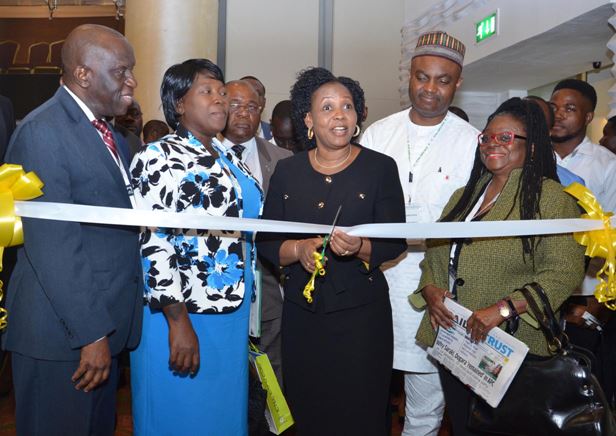
Nigeria is one of the fastest developing countries in the world and the most populous nation in the Sub-Sahara Africa continent. With an estimated 198 million people – according to the National Population Commission (NPC) – dependence on existing infrastructure is mounting.
Matching population growth with infrastructural development has become an issue of great concern across the country. Finding solutions to this growing concern, was the focus of the discourse at the recently concluded Information Communications Technology and Telecommunications (ICTEL) Expo, 2018 organised by the Lagos Chamber of Commerce and Industry.
The event which recently took place in Lagos brought together various stakeholders within the Information Communications Technology (ICT) industry to deliberate on ways to increase efficiency in the country through digitization.
Speaking on behalf of Vodacom Business Nigeria, Executive Head of Operations (Ag), Olumide Idowu said: “Leaders around the world are committed to smart city building as they attempt to chart the course towards the development of their cities in order to meet social, economic, and environmental challenges.”
Idowu noted that Nigeria is at a pivotal moment in its technological revolution and the current lack of infrastructure provides a ready springboard for the utilization of Internet of Things (IoT) technologies to create a smarter and a more efficient nation. By using IoT technology, which is commercially available today, a host of intelligently connected services such as efficient healthcare in rural communities become possible a reality.”
In the last year, Vodacom Business Nigeria, in collaboration with some State Governments, made significant strides in the development of smart solutions for problems facing rural communities within the State. In the area of healthcare, a solution was deployed to help increase the availability of essential medication by monitoring drug stock levels, improving the delivery of healthcare for citizens who access public health services. In education, Vodacom has also launched a mobile school management solution which provides real-time visibility of all management activities at schools.
The solution has been deployed to over 4000 public schools in Nigeria. While in the area of agriculture, our connected farmer solution provides a platform for connecting various stakeholders within the agricultural ecosystem to create better accountability and efficiency within the industry.
Other solutions such as payment solutions, backup solutions, energy, utility and security solutions are just a few examples of smart solutions available within the Nigerian context.
Idowu stated: “The significance of digitization cannot be overstated in creating a smarter, more efficient and more sustainable economic environment in Nigeria.
The sooner the shift to a digitalized system happens, the faster the nation can build a competitive advantage on the global stage and she can begin to reap the social, economic and environmental benefits that are sure to follow.”
Niger Insurance Plans Strategic Transformation, Injection of Capital
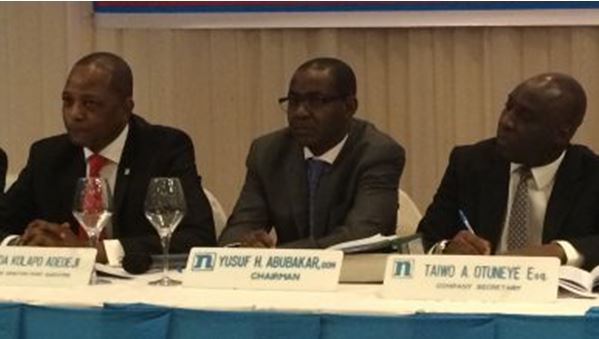
Niger Insurance Plc is set to restructure its Board, management and operations to ensure sustainable growth of the company going forward.
Mr. Hamisu Abubakar, the Chairman of Niger Insurance Plc said at the company’s 48th Annual General Meeting (AGM) in Lagos that the restructuring initiative will revolve around retail strategy, its culture and processes to produce a brand new underwriter brand in the market.
Abubakar said: “The Board continues to be focused on driving strategic direction of the company through the setting of sustainable goals and strategies. The Board has just concluded a company transformation exercise which should reposition the company on the path of sustained growth soon.”
He the company is also set to attract new investors and fresh capital to drive the transformation initiative for better result.
“I am pleased to report that the Board has reached advanced stages of discussion with investors who will add to capital and bring technical expertise to your company. We believe that at these challenging times, this is a welcome development.”
For the financial year ended December 31, 2017, Niger Insurance Plc reported total assets of N22.8 billion from N22.5 billion in 2016. It also increased gross premium earned by N2 billion or 44 percent above N5.962 billion earned in 2016.
“Taking cognizance of the macro-economics and the political realities that will shape the business landscape in 2018, our company is more determined and optimistic that we will navigate the business year and remain conscious of our vision and mission in utilizing our resources in creating value for our customers and shareholders.”
Headline Inflation Rate Declines to 11.23% in June
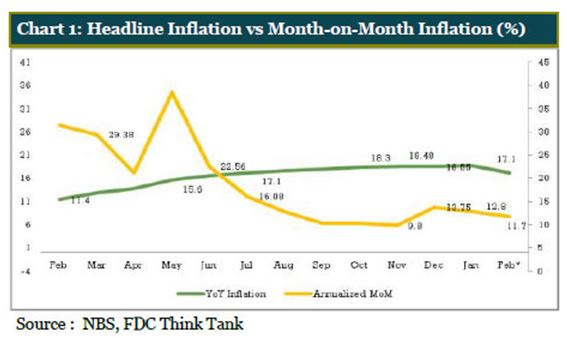
The National Bureau of Statistics (NBS) has released its CPI and Inflation report for the month of June 2018, revealing that Nigeria’s headline inflation rate moderated on a year-on-year basis for the 17th consecutive month to 11.23%, from 11.61% in May.
Compared to Cordros Capital’s forecast of 10.90%, the number came in 33 bps higher and also 27 bps ahead of Bloomberg compiled average estimate of 10.96%. Parsing the released data, we establish a number of instructive takeaways, including:
- The continued weakening of the mechanical impact of the well-known base effects. It is good to note that the pace of moderation (38 bps) recorded in June, relative to May, was the slowest since February 2018 and stood at a significant discount to the average deceleration rate of 75 bps achieved thus far this year.
- The strong increase in month-on-month headline inflation rate at 1.24%. Dissecting that number, we found it to be the highest m/m inflation rate posted in the last twelve months. Apart from that, the rate is equally higher, by 39 bps and 4 bps respectively, than the average m/m rates recorded in H2-17 (0.85%) and 2017FY (1.20%).
- The consistent downtrend and uptrend of y/y and m/m numbers respectively for the headline index and its food and core components.
- The ubiquitous nature of the m/m upward trajectory across the entire CPI basket.
Monetary Policy Committee Meeting: Further Justification to Maintain Status Quo
The Central Bank of Nigeria’s (CBN) Monetary Policy Committee (MPC) in its third meeting of the year yesterday decided to maintain the status quo.
Drawing on prevailing realities and insights from the last meeting in May, we expect members of the Committee will find the case for maintaining status quo most compelling. We would like to reiterate the MPC’s shift from a potential rate cut to a more proactive view of inflation, amid upside risks to liquidity injection over H2-18.
Outlook
Following the latest numbers, we revisit our model and revise our July inflation projection higher by 45 bps to 11.16% y/y (1.15% m/m), previously 10.71% y/y (1.04% m/m). Our workings were largely guided by our view that base effects will weaken further. Consequently, we now expect 2018 average inflation to be slightly higher at 12.29% (previously 12.09%).
While we share consensus view that elevated liquidity profile over the rest of the year portends upside risk for inflationary conditions, we equally posit that supply-side dynamics will play even a much greater role.
We establish that circa 87% of the entire CPI basket is driven by factors independent of liquidity position owing to the autonomous consumption nature of the specific constituent elements.
Very instructive in that regard, for instance, we highlight likely pressure from higher food prices (domestic and imported food inflation jointly account for 64% of the entire CPI basket) over the rest of the year amid the unresolved security upheavals in the agricultural space and rising global inflation.
NSE Opens Entries for 2018 Essay Competition to Promote Financial Literacy
In line with its commitment to ‘building a financially savvy generation, the Nigerian Stock Exchange (The NSE) is pleased to announce the commencement of the 2018 edition of its NSE Essay Competition for students in Senior Secondary Schools in all states of the Federation.
The topic for this year’s edition, “Discuss how technology can promote financial literacy and encourage investment habit among youths?” aims to bring the subject of technology to the fore and get young people to start thinking early on about how it can be applied to real life business situations.
This year’s competition, which is supported by Jim Ovia Foundation opened on Monday, July 16, 2018 and will close on Friday, October 05, 2018. To enter the 2018 NSE Essay Competition, participants are required to email their typewritten entries, which should not be more than 1,000 words to [email protected].
The competition rewards the Top 10 winners out of which the top three will be presented with equity investments, University scholarship funds and personal Laptops/tablets at the Awards ceremony which comes up in October 2018. The winners will also be honoured with a Closing Gong ceremony at The Exchange.
The schools of the top three winners will also be recognised and presented with prizes such as trophies, desktop computers and printers. The additional seven (7) essay writers will receive consolation prizes, certificate of achievement and recognition at the awards ceremony.
According to Mr. Olumide Orojimi, Head, Corporate Communications, NSE, improving financial literacy is important to the future of Nigeria. “Youths are an important stakeholder group as it relates to planning for a sustainable future as a nation and we must imbibe in them, good financial skills that will assure a secured and great future for them. The competition serves as an essential platform. As the premier multi-asset securities exchange, this is one of the ways we contribute to building a financial literate Nigeria that can access various financial inclusion offering available to them.”
Since it’s commencement in year 2000, The NSE Essay Competition has inspired over 30,000 young people in over 3,500 secondary schools across Nigeria to showcase what they have learnt about the financial and capital markets.
It provides an important opportunity for youths to engage in issues of importance to The Nigerian economy. He noted that through this competition, the NSE has been able to promote financial literacy among young Nigerians, by encouraging them to learn how good financial decisions can better their lives now and in the future, and ultimately grow the economy.
“We continue to be inspired by both the increasing number of participation in this financial literacy activation and the boundless imagination that the topics spur amongst the vast majority of the students. This year’s theme could not have come at a better time as the world prepares for a fourth industrial revolution that will be primarily driven by technology. This year’s competition hopes to spark exceptional thinking as our youths prepare to embrace a sustainable financial future that is technology will play a major role.”
Entries submitted for the competition are graded by a team of examiners identified in conjunction with the Chartered Institute of Stockbrokers at the first level. Successful writers will then proceed to the second stage by writing an in-person follow up essay on a related topic at any of the NSE branches closest to them.
The final stage involved interviews at the NSE Headquarters in Lagos. This rigorous level of assessment is to ensure that only the best amongst equals emerge as winners.
Guinea Insurance Reports N1bn Premium Income in 2017

Shareholders of Guinea Insurance PLC on Thursday, July 12, 2018 applauded the Board of Directors for its outstanding performance in the financial year ended 31stDecember 2018 during its 2017/60th Annual General Meeting held recently in Benin City, Edo State.
Addressing shareholders at the 60th Annual General Meeting of the Company in Benin City, the Chairman, Board of Directors of Guinea Insurance, Barr. Godson Ugochukwu, reaffirmed the Board’s commitment to grow the company and announced plans aimed at celebrating the 60th Anniversary of the underwriting firm “This year also marks the 60th Anniversary of our Company! Soon enough, you will begin to see signs of the upcoming grand celebrations as you move around major cities in the country… you will agree with me that 60 years is a milestone of epic proportions. There are only a few insurance companies in Nigeria that can boast of such a rich history, wealth of experience and consistent longevity. To this end, the Board and Management are resolved to use the 60th celebrations of our beloved Company to further stamp our footprints even more indelibly in the landscape of the insurance industry in Nigeria”.
During the meeting, three Directors namely: Alhaji Hassan Dantata; Mr. Osita Chidoka and Mr. Chukwuemeka Uzoukwu, were unanimously re-elected by shareholders.
While speaking on behalf of the Shareholders the: National Chairman, New Dimension Shareholders Association (NDSA), Mr. Patrick Ajudua; National Chairman, Progressive Shareholders Association of Nigeria (PSAN), Boniface Okezie and National Coordinator, Heritage Shareholders Association of Nigeria (HSAN), Wale Adewale were unanimous in their clarion call to the board of Guinea Insurance to continue to keep the faith even in the face of harsh economic realities as the reward for work well done is the opportunity to do even more. On a more inspiring note, the shareholders were of good cheer as they applauded the impressive performance in the underwriter’s profit and opined that it was indicative of the company’ readiness to be re-positioned for profitability.
On its financial performance as contained in Annual Report & Accounts presented to shareholders at the company’s 60th Annual General Meeting (AGM), the underwriting firm sustained in Gross Premium Income by 11.7% from N913.4 million in 2016 to N1,020.4 billion in 2017. Net Premium Income also grew by 15% from N649.5 million in 2016 to N747.1 in 2017. Underwriting Profit grew from N453.4 million recorded in 2016 to N501.1 in 2017 representing a growth rate of 11%. Claims Paid by Guinea Insurance on various classes of insurance decreased by 47% from N304.9 million in 2016 to N161.5 million in 2017, due to operational efficiency in terms of people, processes, technology and communications, the underwriter had said. In spite of the economic headwinds that characterized the period under review, the underwriter said its Investment Income recorded a marginal decline of 3% from N215.5 in 2016 to N208.3 in 2017. Howbeit, a remarkable performance was delivered as the underwriter posted a Profit Before Tax increase of 35% from N176.3 million in 2016 to N237.8 million in 2017; better still, it recorded a whopping Profit After Tax increase of 518% from N40.6 million in 2016 to N251.0 million in 2017. The underwriter’s zest to be over and done with the challenge of solvency margin, was further consolidated during the year under review as its Solvency Margin grew by 13% from N3.0 billion in 2016 to N3.4 billion in 2017, while increase in Shareholders’ Fund as recorded in its books stood at 16% from N2.9 billion in 2016 to N3.4 billion in 2017.
The Company’s Chairman, Barr. Godson Ugochukwu substantially noted that the company’s philosophy of delivering value to its shareholders without compromising service standard remains sustainable. He said: “we are an upwardly mobile company, peopled with skilled professionals, our strength is made manifest in our passion for high standards and the single-minded determination to emerge a world class enterprise, one with the scope and economies of scale necessary to drive home our unflinching mandate of returning Guinea Insurance on the path of sustainable profitability”. This avowal is evident in the underwriter’s 2017 performance metrics.
Ensure Insurance Targets Retail Business for Market Leadership
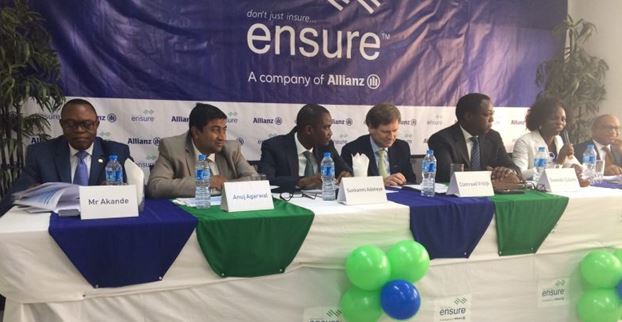
Ensure Insurance Plc says it will focus on retail business to achieve its corporate objective of sustainable growth and leadership in the Nigerian insurance market.
Mr. Owolabi Salami, Executive Director at Ensure Insurance Plc said the retail push is anchored on its partnership with Allianz, one of the largest insurance firms in the world that recently acquired majority equity in the underwriter.
Salami added that Ensure will stir the market with custom-made products tailored to the needs of the market, improve its service platform, bank on the latent experience of Allianz and adopt global best practices in the Nigerian market.
“Retail will be our focus, give that Allianz has over 80 million retail customers all over the world. Allianz is ready to deploy its huge resources to ensure that we achieve our target in the Nigerian market. We remain confident that Ensure Insurance Plc will become a leader in this market. We shall continually seek out rates that make sense to us and to our clients. Our ambition is to become an insurer of choice in Nigeria.”
Ensure Insurance Plc is one of the most innovative and fastest growing insurance companies in Nigeria. The company has undergone a turnaround and transformation exercise consequent upon its acquisition from Union Bank of Nigeria Plc in 2014 and at which time it was known as Union Assurance Company Plc.
Ensure provides simple, accessible, relevant and affordable products to the retail segment of the industry and a bedrock of highly secure reinsurance facilities and unmatched technical competence for its corporate business customers.
Ensure is focused on delivering excellent products and customer services and intends to be the dominant insurance services provider in Nigeria. Ensure Insurance Plc recorded and astounding gross revenue growth of 83 percent in the 2017 financial year.
Guild of Editors Condemns Nigerian Press Council Bill
The Standing Committee discussed the state of the nation and the media and took particular note of the Nigerian Press Council Act 1992 (Repeal and Enactment Bill 2018) which is currently before the Senate and has passed second reading.
The Nigerian Guild of Editors vehemently condemns the bill which seeks to criminalise journalists and journalism practice, takes away the power of the law courts and usurps the constitutional duties of academic institutions and regulatory agencies such as the National Universities Commission (NUC).
The Guild observes that those behind this bill have been unrelenting in their quest to cage the media under different guises, as the bill has come up under different administrations since 1961. This bill bears the semblance of the obnoxious Decree 4 of 1984 and Decree 43 of 1993.
The Guild is piqued that the Senate could bring such a bill to the fore in spite of a subsisting court case on the same subject without minding that it is sub-judice.
The Guild frowns at the attempt by the promoters of the bill to arrogate to the council the powers to decide which training institutions and professional qualifications attained there from, should be acceptable for journalism practice in Nigeria. This clearly abrogates the mandates of relevant accrediting bodies.
The Guild wonders why the sponsors of this bill are fixated on muzzling the press using draconian laws which are clearly targeted at making the watchdog toothless. Sections 22 and 39 of the 1999 Constitution, as amended, are clear on the role of the media.
The Guild perceives this bill as provocative, primitive, anti-people and anti-press freedom at a time when advocacy for free press is gaining stridency across the world.
It is noteworthy that there is nothing in this bill that shows how the council intends to create an enabling environment for the media to thrive as it is the case in other sectors of the economy. This is particularly galling at a time the media industry is in dire straits.
The sponsors of this bill are clearly undemocratic and appear to suffer illusion of grandeur. They seemed to be totally oblivious of the fact that the media houses are businesses set up with investments apart from being the fourth estate of the realm.
The Guild condemns the bill in its entirety and will never nominate any of its members to serve in a council that seeks to cage the media, destroy the profession and criminalise journalists.
Indeed, it is the opinion of the Guild that this bill should be consigned to the dustbin where it rightly belongs.
Allianz Group Completes Acquisition of Ensure Insurance in Nigeria
The Allianz Group yesterday announced the completion of the acquisition of 99.03 percent of Nigerian insurer, Ensure Insurance Plc from its core shareholder, Greenoaks Global Holdings Limited (GGH).
Ensure Insurance Plc offers life and non-life insurance services and generated N7.7 billion/18.2euros in Gross Written Premium (GWP) in 2017.
The new company will continue operating in Nigeria as Ensure—a company of Allianz and will benefit from the technical underwriting expertise, global presence and financial support of the Allianz Group.
By the acquisition, Ensure Insurance Plc becomes part of the Allianz Group and operates as Ensure-a company of Allianz effective from July 18, 2018.
The transaction is a major milestone for Allianz’s long-term growth strategy in Africa.
The combined group aspires to become an insurer of choice in the fast-growing Nigerian insurance market.
Commenting on the development, Mr. Coenraad Vrolijk, Regional CEO of Allianz Africa said: “We had clearly identified Nigeria as a high-potential market in Africa with a strong regulatory environment and interesting demographics. We are delighted to penetrate this fast-growing market through the acquisition of a solid financial player with a strong local expertise. Coupled with Allianz’ underwriting capacity and service delivery, the combined group will be able to provide the highest quality of products and services to Nigerian customers in both personal and commercial lines. We trust that our combined group will help support the Nigerian economy and grow the local insurance market.”
On his part, Mr. Owolabi Salami of Ensure Insurance Plc added: “The consummation of this acquisition will be highly beneficial to our business and improve our service platform to our valued clients. We are excited to harness the depth of technical competence that Allianz has acquired over years of experience garnered through serving clients in various sectors. We are confident that this will position us for leadership in the local operating environment.”
About Allianz
The Allianz Group is one of the world’s leading insurers and asset managers with more than 88 million retail and corporate customers.
Allianz customers benefit from a broad range of personal and corporate insurance services, ranging from property, life and health insurance to assistance services to credit insurance and global business insurance. Allianz is one of the world’s largest investors, managing over 650 billion euros on behalf of its insurance customers while its asset managers, Allianz Global Investors and PIMCO manage an additional 1.4 trillion euros of third party assets.
The Allianz Group holds the leading position for insurers in the Dow Jones Sustainability Index and achieved total revenue of 126 billion euros in 2017 through its 140, 000 employees in more than 70 countries around the world. The Group recorded operating profit of 11 billion euros.
About Allianz Africa
In Africa, Allianz is currently present in 17 countries and accompanies clients in 38 countries. Its 1, 500 employees achieved regional revenues of 600 million euros in 2017. Allianz also provides micro-insurance for 500, 000 low-income families and individuals in Africa.
About Ensure Insurance Plc
Ensure Insurance Plc is one of the most innovative and fastest growing insurance companies in Nigeria. The company has undergone a turnaround and transformation exercise consequent upon its acquisition from Union Bank of Nigeria Plc in 2014 and at which time it was known as Union Assurance Company Plc.
Ensure provides simple, accessible, relevant and affordable products to the retail segment of the industry and a bedrock of highly secure reinsurance facilities and unmatched technical competence for its corporate business customers.
Ensure is focused on delivering excellent products and customer services and intends to be the dominant insurance services provider in Nigeria. Ensure Insurance Plc recorded and astounding gross revenue growth of 83 percent in the 2017 financial year.
Nigeria Unveils New Airline, Nigeria Air
The Federal Government yesterday unveiled a new national airline, Nigeria Air to replace the defunct Nigeria Airways which died 14 years ago.
Mr. Hadi Sirika, the Minister of State for Aviation, Hadi Sirika, formally unveiled the name and logo yesterday at an airshow in London.
“Nigeria has unfortunately not been a serious player in aviation for a long time. We used to be a dominant player, through Nigeria Airways, but sadly not anymore,” Mr Sirika said.
He continued: “This will be a national carrier that is private sector led and driven. It is a business, not a social service. The government will not be involved in running it or deciding who runs it. The investors will have full responsibility for this.”
The Nigerian government is expected to have a five percent stake in the new airline.
GE Power Releases Whitepaper on Digitization of Energy Transmission, Distribution in Africa
As Africa faces emerging opportunities to help deliver efficient, affordable and reliable electricity to consumers, GE Power’s Grid Solutions business yesterday unveiled a whitepaper on the “Digitization of Energy Transmission & Distribution in Africa.”
The paper explores the opportunities and challenges faced in Sub-Saharan Africa as the new future of energy and electrification emerges. The paper also looks at the role of smart technology to transform grids as they continue to reflect the changes in the way energy is generated, distributed, traded, managed and stored.
Co-authored by the Strategic Marketing unit of GE Power in Sub-Saharan Africa and Energy & Environment Research Analysts of Frost & Sullivan, the white paper presents several challenges that affect energy access and power supply stability in Africa.
They include inadequate power generation but more significantly, low levels of electrification caused primarily by faulty, aged or wrong setup of transmission and distribution infrastructure.
With the digital transformation of the energy sector rapidly gaining traction on a global scale, new opportunities are emerging to help deliver efficient, affordable and reliable electricity to consumers. According to the whitepaper, smart grids can create the potential to combat SSA’s power sector challenges, and provide the opportunity for the region to develop its energy capabilities and, therefore its energy security as well as security of supply.
The digital transformation of grids allows users to take a holistic approach to achieve efficiency, flexibility, transparency and long-term sustainability.
Information Communication Technology Integration will support real-time or deferred bi-directional data transmission that will enable stakeholders to efficiently manage the grid through increased speed and volume of data output, providing utilities the opportunity to maximize cost reductions, increase power reliability and increase customer satisfaction
Wide Area Monitoring and Control ensures visibility into the power systems to observe the performance of grid components allowing for major cost-saving benefits associated with predictive maintenance and self-diagnosis.
Smart technology like Intelligent Electronic Devices (IEDs), Advanced metering infrastructure and grid automation ensure seamless transition and integration of renewable generation or micro-grids where necessary; predictive maintenance in distributed grids to reduce outages; and effective revenue management.
“Transmission and distribution networks are seen to be the weakest links in Africa’s power systems and hence represent a huge opportunity area for improvement,” said Lazarus Angbazo, CEO, GE’s Grid Solutions business, Sub Saharan Africa.
“Going forward, there is a need to move beyond simply maintaining and repairing aged infrastructure. To truly advance the power sector, a holistic approach needs to be adopted; one that ensures sustainability, reliability and longevity of power supply. By utilizing internet of things (IoT) technology, the smarter grids of tomorrow will deliver all-encompassing solutions based on the convergence of operating technology (OT) with information technology (IT) and incorporating emerging concepts such as distributed generation and energy storage,” he further added.
Smart grids will play a key role in the region’s transition to a sustainable energy system through facilitating smooth integration of new energy sources; promoting interoperability between all types of equipment; enabling the growth of distributed generation and its potential incorporation into the main grid; supporting demand-side management; and providing flexibility and visibility of the entire grid. GE’s grid solutions six-step process highlighted in the whitepaper will help utilities along the digitization journey of their energy infrastructure.