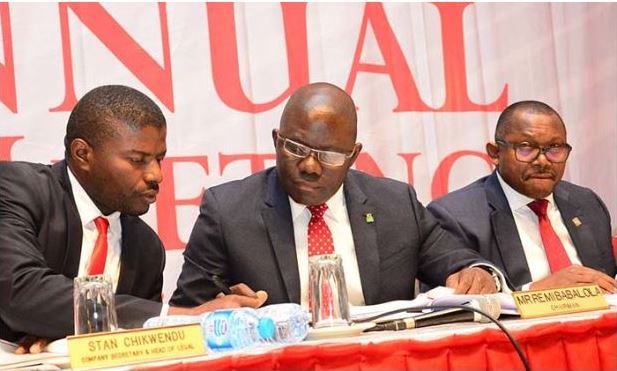
Text of the paper presented by Professor Akpan Ekpo, Director-General, West African Institute for Financial and Economic Management (WAIFEM) at the Business Journal 10th Anniversary Lecture in Lagos.

Private sector and infrastructure
- It has always been argued that the private sector is the engine of growth and as such as significant role to play in the infrastructural development of the economy.
- However, the private sector exists in an economy led by the public sector. Therefore, once the investment climate is right, the private sector would invest but in what?
- Our position is that the private sector should invest in the infrastructure sub-sector of the economy in order to sustain their businesses and profitability.
- Innovative financing methods are necessary to encourage the private sector. The Public-Private partnership is one of such approaches. There is the Build-own-and operate; Build-own- and transfer; various leasing and concession options.
- Has the private sector utilized the opportunities created by government to build infrastructure such as roads, railways, water projects, power projects, among others.
- The involvement of the private sector in the power business has been a disappointment. After biding and buying the various existing power plants, various challenges emerged reflecting the lack of appropriate capacity to do due diligence.
- Perhaps, there is need to distinguish between the foreign and indigenous private sector of the economy. The former characterized by multi/transnational cooperation.
- Even when contracts are awarded to the private sector to build infrastructure, the quality of service delivery is often below standards.
- Consequently, in the infrastructural development matrix, government remains relevant.
- Government has business in the infrastructure business. It must be a catalyst thus urging the private sector to be part of the process.
- In the ERGP, there is role for the private sector but it appears that the pledges made during the labs came mainly from foreign investors.
- It seems that the Nigerian private sector is still interested more in wholesale, retail, services, packaging, bottling and assembling and not in investing in hard infrastructure.
- However, the story is different when it comes to soft infrastructure such as education;
- with the collapse of the public school system at all levels;
- the private sector has invested and established/built nursery, primary, secondary and tertiary schools with the desire to make profits while indirectly pretending to contribute to national development.
- The quality of the products from most of these institutions leaves much to be desired.
- It is must be stated that for the private sector, the profit motive supersedes patriotism hence government must continue to pursue the development of infrastructure in order to enhance the growth and development of the country.
Mobilising Resources for Infrastructural Development
- Economies that have developed their infrastructure have invested almost 25 per cent of their annual budget on infrastructure for al least 10-15 years.
- Nigeria’s investment on infrastructure annually is less than 2 per cent. In recent times, external borrowing and the issuance of sukuk have been undertaken to finance infrastructural development.
- There is nothing wrong in borrowing to finance capital projects like infrastructure provided the proper arithmetic has been done to ensure that the projects would pay offset the amount borrowed in the long-run.
- It may be necessary to suggest that the recent windfall from oil should be geared towards the financing of infrastructure and saving part through the Sovereign Wealth Fund.
- The rising oil prices is not sustainable and should not only be utilized to defend the Naira.
- Norway remains a good example of how oil revenues were used to finance and build physical infrastructure as well as human capital.
- We do not have to re-invent the wheel.
The Strategic Alliance
- Infrastructure development is an integral part of the public policies in developing countries including Nigeria.
- Supporting infrastructure development in developing countries calls for strategic alliance as its importance cannot be overemphasized.
- The World Bank and some other development partners appreciate this position.
- The argument posited by traditional donors like the USA, Japan, etc. as why they eschewed providing support for infrastructural development because of environmental, social, and governance issues among others may not be totally correct.
- China has braced the trend with the launch of the Asian Infrastructure Investment Bank (AIIB) through its ‘One Belt One Road Initiative’.
Conclusion
- There is no doubt that building infrastructure would stimulate growth – would add about 2.5 per cent annually to the growth equation.
- Sustained growth rates would also result in new and appropriate sustained infrastructural development.
- The implications include better standard of living through job creation, poverty reduction, more revenue for government via a diversified economy and in the long-run a modern knowledge-based economy.
- The infrastructural deficit in Nigeria is so large hence efforts must be made to narrow the gap.
- The constant supply of electricity alone would stimulate both the micro, small-scale and even medium-sized businesses in the country.
- Nigeria may have made progress in terms of the easy of doing business but the cost of doing business remains very high due to disturbing infrastructural deficit, hard and soft.
- There exists a strategic alliance between infrastructure and economic growth and the nexus is self-reinforcing.
- The fast-tracking of infrastructural development would enhance economic growth which would result in economic development if government pursues the right development philosophy.