Thursday, March 5, 2026
26.7 C
Lagos
Home Blog Page 228

Almond Insurance Consumers Forum, Nite Set for Nov 22

0
Faith Ughwode CEO Almond Productions Limited

Almond Productions Limited, promoters of the annual Insurance Consumers’ Forum (ICF) is set to host the event once again this year in Lagos.

The Insurance Consumers’ Forum (ICF) which started in 2013 provides a robust platform for interaction between insurance practitioners and the insuring public in a No-Holds-Barred atmosphere on issues that bothers on excellent customer service delivery. Following the success of previous editions, the stage is now set for the 2019 edition in Lagos.

The Forum with the theme: Creating and Sustaining Positive Customers Experience Key to Insurance Growth in Nigeria will hold on Friday, 22nd of November at NECA House, Alausa Ikeja by 9:30am.

The Forum this year will be chaired by Mr. GUS Wiggle, Managing Director WJE Integrated Resources Limited. Guest Speaker this year is Dr. Sarafadeen Raji, Insurance and Health Management Consultant and Director, Academic Planning, Federal Polytechnic, Offa while the Discussants/Panelists are Mr. Bode Opadokun, Managing Director, FBN General Insurance and Mr. Ebose Augustine Osegha, Managing Director, Anchor Insurance Company Limited.

Other highlights of the Forum this year is the Open Forum which will focus on the menace of FAKE CARGO Insurance at the ports.

The panelists are the Zonal Coordinator, Zone A, Nigeria Customs Service; Chairman, Association of Nigerian Licensed Customs Agents ( ANLCA) and Chairman, National Association of Government Approved Freight Forwarders ( NAGAFF) as well as Registrar, Council for the Regulation of Freight Forwarding in Nigeria ( CRFFN).

For the first time this year, the Forum will have the Regulators Panel which will examine the sub-theme: Revolutionising Customer Service in the Nigerian Insurance Industry: The Role of the Regulator. Moderator of session is Dr. Adebayo Kolade, Executive Director, Zygosis Nigeria Limited.

The Forum according to Faith Ughwode, CEO, Almond Productions Limited is bigger and better this year because of the scope of participants who are drawn from trade groups in the formal and informal sectors, federal and state government agencies and parastatals, officers from the various law enforcement agencies who have dealings with the enforcement of insurance in Nigeria.

The grand finale of the Forum this year is the 2019 Insurance Industry and Consumers Nite also holding on the 22nd of November at the Shell Hall, Muson Centre by 6pm for the Red carpet.

The Insurance Industry and Consumers Nite is a social platform aimed at demystifying the insurance industry and connecting with the entertainment industry to create awareness about the importance and benefits of insurance in a fun and relaxed atmosphere.

The event also aims to eradicate the negative notion about insurers being ‘collectors of premium’ who don’t give anything back to those who don’t suffer loss. There is no doubt that the entertainment industry is a sure way to open up the insurance industry, especially the millennials  on social media.

Headlining the event this year are Akpororo, Kenny blaq, Destalker, AB Jokes, Ushbebe and a host of others with musical performance by Peruzzi.

The epoch-making event will also witness the award of distinction to Mr. Shola Tinubu whose tenure as President of the Nigerian Council of Registered Insurance Brokers ends in October for his innovations at the Council secretariat.

WHY SMART COMPANIES OUTSOURCE TALENT ACQUISITION

0
Source: pinterest.com

By Michael Downing

Last year, vacant positions were at a 17-year high; the unemployment rate at a low 3.9%. Across industries and at companies large and small, hiring teams are scrambling to find and attract the right applicants to fill their open roles.
Talent acquisition, the ongoing strategy for finding and hiring managers, leaders, and specialists, focuses on planning for challenging job markets like the one we’re currently in. A good talent acquisition approach helps companies benefit from a deep talent network and rigorous vetting that cuts down on time-to-hire, lowers turnover rates, and streamlines the entire hiring process.

Companies seeking to thrive in a competitive job market should outsource their talent acquisition function to save money, reach more candidates, and diversify their workforce. Here are some good reasons why your business should outsource talent acquisition.

Improve the quality of your hires
A talent acquisition firm is well-versed in finding the best candidates on the market. Professional recruiters know where to look for candidates, what qualities make an individual most qualified, and how to approach even passive candidates.

Put your recruitment in the hands of specialists: you would hire a marketing agency to design and run your advertising campaigns, so why would hiring be any different? Outsourcing your talent acquisition and recruiting function gives your company broader and deeper access to individuals with the right specialized skills and expertise.

Save money on recruiting costs
It’s estimated that the cost to hire a new employee can be over $40,000 per employee. And, if the new hire is a bad fit, the cost of making the wrong hire can be up to 2.5x salaryHR costs can go through the roof quickly, which is why working with a recruiting firm has an immediate positive impact on your bottom line.
“Besides labor costs, the costs related to recruiting activities include advertising on job boards, background screening, applicant tracking systems, and recruiting technology. These costs are all rolled into one when companies outsource recruiting.

And it’s usually less than trying to conduct an effective recruiting campaign in-house,” writes one recruitment expert. Outsourcing your talent acquisition saves on hidden costs as well. The entire hiring process becomes more streamlined, targeted, and effective.

Keep resources dedicated to core business activities
Hiring and recruitment are two areas that can become capital-intensive and resource-heavy. For smaller companies that may not have the resources to support these functions, outsourcing may be the best option.

Resources previously dedicated to the hiring process can be reallocated to core business functions – fueling growth, innovation, and serving the business’s customers and stakeholders. Outsourced recruiting allows a company to focus on what they do best while providing the support and talent to continue to achieve your mission.

Reduce employee turnover rate
There’s evidence to show that outsourcing your talent acquisition and recruiting leads to better hires – lowering the overall employee turnover rate. According to one study, 80% of employee turnover is due to bad hiring decisions.
“The various reasons behind bad hires include pressure to fill the role quickly, inability to find quality candidates, or lack of tools to pinpoint the right person. Companies should delegate recruitment to an organization that specializes in leveraging alternative hiring methods to find and vet ideal candidates,” writes one hiring expert. For companies seeking to lower their employee turnover, outsourcing talent acquisition could be the silver bullet solution.

Access talent from all over the globe
Perhaps the biggest benefit of outsourcing recruitment is gaining access to a broader range of candidates from all over the world. Companies are becoming globalized, seeking diverse talent as they expand their footprint.

Recruiters at talent agencies have more experience working in different recruiting disciplines in multiple geographies than your typical in-house recruiter. If your company seeks to expand to a new location, talent acquisition firms offer a shortcut to the best talent on the market.
Expansion aside, remote work is becoming more widely accepted: more than 60% of companies had remote workers in 2018. Talent acquisition firms have a deep network of contacts, sourcing resumes from around the world to help firms compete in the competitive hiring environment. Outsource your talent acquisition and recruiting to realize the benefits of a diverse workforce, lower turnover, and streamlined hiring.

MICHAEL DOWNING

Michael is the Managing Partner at Elevate Talent, a recruiting agency that helps companies build their Go-To-Market and People Operations teams.

NAICOM: ‘Policyholders Remain Key Component of Insurance Industry’

0
Mr. O. S. Thomas Acting Commissioner for Insurance National Insurance Commission (NAICOM)

The National Insurance Commission (NAICOM) says that policyholders remains a key component of the insurance industry in Nigeria and therefore must ensure they are treated fairly and protected as enshrined in the relevant laws; while at the same time balancing the supervisory role of ensuring financial soundness and reliability of insurance institutions in the country.

Mr. O. S. Thomas, the Acting Commissioner for Insurance said at the 2019 Interactive Session with Major Consumers of Insurance Products in Lagos that customers’ satisfaction is central to the sustainability and success of every business, insurance inclusive.

Mr. O. S. Thomas Acting Commissioner for Insurance National Insurance Commission (NAICOM)
Mr. O. S. Thomas
Acting Commissioner for Insurance
National Insurance Commission (NAICOM)

Thomas, who was represented by Mallam Adamu Balanti, a Director at NAICOM said:

“We are aware of some of the obvious challenges bedeviling the sector either on the side of operators, consumers, investors or regulator. These challenges could be very overwhelming; however, we must not relent in looking for better ways to effectively and efficiently ensure delivery of quality services to policyholders. Suffice it to say that consumers are faced with challenges that may vary from one individual or entity’s experience to another while the provider is faced with constraints that may also differ from one company to the other. But there is no doubt that regular interactions will amongst others foster a better understanding and synergy that will result to better services to the consumer.”

He said the Commission took the step in 2018 to incept the platform to provide the most critical stakeholders in the sector which is the consumer, the opportunity to be heard and be informed first-hand on the workings of the sector.

He listed some of the takeaways from the 2018 event as follows:

  • The need for insurance companies to improve the quality of their service delivery,
  • Need for operators to launch innovative, consumer – specific and problem-solving products,
  • Need to leverage on technology to deepen insurance penetration and above all,
  • Need to ensure prompt payment of claims.

“The Complaints Bureau Unit of the Commission has also been working assiduously to resolve policyholders’ issues relating to non-settlement of claims, contract agreement violation etc. Its doors are widely open to receive and resolve, as much as it can, issues on non-settlement of genuine claims from the public. The Commission has strong passion that insurance consumers are served right and feeling your pulse on the services offered you by your insurers will feed us with ingredients needed to strategise on repositioning the industry for better services.”

He said the current recapitalisation exercise is a move to ensure that the industry becomes more robust in its technical competence and financial base. He added that it will reposition the sector for self-actualisation in terms of growth and development and empower insurers to provide better protection and improved services to their customers.

“Let me reassure policyholders that the Commission shall continue to introduce new reforms and initiatives in line with international best practices for consumer protection and customer satisfaction. Henceforth, insurance companies will be assessed and ranked on the quality of their service delivery to customers and the ranking of companies in this regard will be made public in order to provoke healthy competition among insurers. This we believe will boost consumers’ choice and confidence in insurance.”

The Forum is an annual event organised by NAICOM as part of its mandate at ensuring adequate protection of insurance consumers in Nigeria. It brings all stakeholders together to collectively X-ray the factors that could be responsible for poor service delivery in the sector.

AMCON, EFCC Partner on Debt Recovery

0
DEBT RECOVERY: Managing Director/Chief Executive Officer, Asset Management Corporation of Nigeria (AMCON), Mr. Ahmed Lawan Kuru (left) in a handshake with the Acting Chairman of the Economic and Financial Crimes Commission (EFCC), Mr. Ibrahim Magu during one of the strategic meetings of the Presidential Inter-Agency Committee on the Recovery of AMCON Debt in Abuja.

DEBT RECOVERY: Managing Director/Chief Executive Officer, Asset Management Corporation of Nigeria (AMCON), Mr. Ahmed Lawan Kuru (left) in a handshake with the Acting Chairman of the Economic and Financial Crimes Commission (EFCC), Mr. Ibrahim Magu during one of the strategic meetings of the Presidential Inter-Agency Committee on the Recovery of AMCON Debt in Abuja.

Standard Bank Hosts 90 African Clients from 6 African Nations at Shanghai Expo

0

Standard Bank will host over 90 clients from six African countries at its networking activities, in partnership with the Industrial and Commercial Bank of China (ICBC), at the upcoming China International Import Expo (CIIE) from November 5 to 10, 2019 in Shanghai.

The CIIE, now in its second year, is the world’s most dominant import trade show and provides opportunities for global exporters to expand their business to China and develop beneficial trade relations with Chinese importers.Three thousand enterprises representing 150 countries are confirmed to participate in the expo, and more than 1 million visitors are expected to visit over its duration.

As the global market becomes increasingly complex with trade protectionism threatening the free trade system, China is seeking to widen market access to the rest of the world to realise the potential of its economy and support the multilateral trade system.

In recognition of China’s intent to open its economy to imports of goods and services from other countries, Standard Bank, Africa’s biggest lender and operator of the Africa-China trade corridor, is exposing export-ready clients to trade opportunities at the CIIE this year.

This is the second time in which Standard Bank has hosted a large delegation at the CIIE, and the 2019 delegation includes clients from South Africa, Uganda, Nigeria, Mozambique, Angola and Ghana spanning a range of sectors including retail, pharmaceuticals, logistics and, most predominantly, agriculture.

“The significant weighting of African clients within the food and agriculture sector is a good match for Chinese importers, who are looking to satisfy demand for quality African products such as wines, fresh produce, nuts, maize, seeds and oils,” says Leon Barnard, Chief Executive, Personal and Business Banking, Africa Regions.

Standard Bank, together with the ICBC, will host bespoke match-making sessions that run concurrently to the CIIE, where the invited African clients will be “matched” for discussion on opportunities with over 500 Chinese clients of the ICBC who are interested in importing African products.

To further support its intent to expand Africa China trade, Standard Bank has two large stands at CIIE for the duration of the expo. The first is situated in the Trade in Service Exhibition Hall (stand 1.1B4-03), while the other features prominently in the Food and Agriculture Exhibition Hall

(stand 8.2B3-01).

“Our clients will get the opportunity to introduce their products to a multitude of Chinese buyers, importers and investors who plan to attend the CIIE. It is a practical and tangible step in rapidly growing trade and investment relationships between Africa regions and China,” says Mr. Barnard.

China has ramped up efforts to support trade with Africa over the past two decades to become the continent’s largest trading partner. This is a result of its embrace of Africa as framed by the Forum on China-Africa Co-operation (FOCAC), which has ushered in exponential growth in China-Africa commercial ties.

These efforts are bolstered by the cooperation between Standard Bank and the ICBC, who together understand the vast potential of China-Africa trade better than any organization owing to their strategic partnership aimed at expanding the import and export value chains between Africa and China.

The two partners have been building an effective trade corridor between China and Africa over the 10 years of their institutional relationship, with both banks working closely together to provide product offerings to meet the needs of both Chinese importers and African exporters at both ends of the trade corridor.

Barnard added: “When we say Africa is our home and that we drive her growth, it is our responsibility to extend ourselves beyond just banking. We must add value by providing our clients with the exposure, information and expertise to foster the relationships and opportunities that drive their growth.”

Most importantly, however, exposing Standard Bank’s African clients to 150 000 Chinese importers at the wider expo presents African businesses, their trade associations and governments, “the biggest opportunity yet to grow the scale, reach, sophistication and inward integration of African businesses and economies through export-led growth,” concluded Mr. Barnard.

USSD Charge: To Be or Not To Be?

0

By Elvis Eromosele

Nigerians, like customers everywhere in the world, are averse to price change and introduction. And like good customers, Nigerians are wont to kick and resist price hike under any guise.

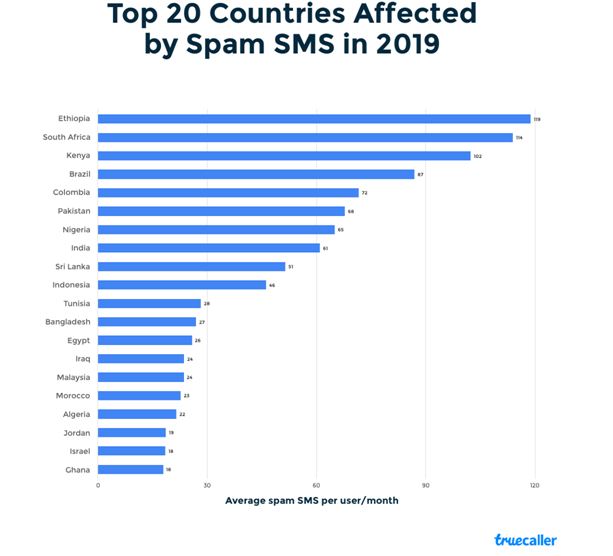
This is why when people received text messages from a leading telecommunications services provider hinting of plans to commence charging N4 per 20 seconds on Unstructured Supplementary Service Data (USSD) platforms for money transfer transactions in Nigeria, the Internet literally broke as several people took to social media to express their grievance. It was hot. It was heated. It trended.

Unsurprising it got the attention of the new Minister of Communications and Digital Economy, Dr. Isa Ali Ibrahim Pantami who directed it be suspended until further determination. He has since declared the plan cancelled.

The Bankers’ Committee rather curiously, jumped on the bandwagon and slammed the charges. It more or less called it uncalled for.

The telcos didn’t keep quiet. They, through the Association of Licensed Telecom Operators of Nigeria (ALTON) released documents purportedly showing that the charges had the agreement of the bankers.

ALTON naturally came out strongly in defense of telecom companies in Nigeria over the purported charges for USSD use.

The umbrella body of all licensed telecom operators in Nigeria, speaking through Mr. Gbolahan Awonuga, its Administrative Secretary, noted that the N4.00 was determined by the Nigerian Communications Commission (NCC), the country’s telecom regulator.

According to Gbolahan, the determination of the USSD charges came about via a study conducted by the regulator in 2017 and by May 2019, the determination was issued. He revealed that the study on USSD was conducted by the NCC and industry working group (IWG).

ALTON’s stand indicated it wasn’t afraid of a fight. It questioned the statement credited to the Minister of Communications, Dr Isa Ali Ibrahim Pantami directing the telecom operators to discontinue the charges until he is fully and properly briefed. ALTON stated that the issue being discussed is not policy, but regulation.

“We are confusing regulation with policy. There was a determination on this USSD, even before the appointment of the Minister,” Gbolahan explained.

He argued that the Central Bank of Nigeria (CBN) is protective of the banks, but wondered why the telecom operators cannot be protected. According to him, “It is not about the good boy, but this is a commercial (matter) and the normal thing has been done.  Operators did not come up overnight to charge N4. It was deliberated upon and a decision taken.”

Interestingly, the NCC, Nigeria’s telecom regulator has been uncharacteristically silent on the matter. It would appear that the commission is caught between the proverbial rock and a hard. It can’t be seen to openly contradict the Ministry and Minister. This is expected in a patronage dependent clime like Nigeria, where no institution is truly independent.

For the Minister, well, Nigerians naturally already hailed him as a hero. He is fighting for the welfare of the common man. He is getting plenty of accolades. But it should not end there. He must now demonstrate that he understands the issues and can see the bigger picture.

The truth be told, Nigerians are already inundated with charges and penalties. Consider that there is a penalty for using POS in a cashless country. There is a penalty for making cash deposits. There is also penalty for cash withdrawals. In addition, there is penalty for ATM card, Credit card/Debit card use.

So, the real problem is that the USSD charge is perceived, rightly or wrongly, as another penalty.

And Nigerians are wary of penalties.

Furthermore, the popular view is that the financial sector is the major beneficiary of these charges. The telcos it seems now simply desire a piece of the pie.

No one can argue that they don’t deserve it. They have made humongous investment in the sector. But the point is that this piece of the pie should not come separately from the customers who are already made to pay so much at every turn.

The way forward is that between the financial services firms and the telcos they must explore how to split what is already been collected. The NCC and CBN can be the arbiter in that process.

The government, on its own must decide what it wants. If the goal is to boost financial inclusion then it must cease to support or promote policies that unfairly penalise people for using financial services, regardless of whether it is online or offline.

Where it wants to move forward in the drive for the establishment of the cashless economy, the Federal Inland Revenue Service (FIRS) must stop talking of taxing online transactions. This sort of talk is no doubt counterproductive.

To build a society positioned for the digital economy, the citizens must be carried along, government policies must encourage it and the access to digital services and tools must become ubiquitous.

In the meantime, NO TO USSD CHARGES.

Elvis Eromosele, a Corporate Communication Professional and Public Affairs Analyst lives in Lagos.

Pension Scheme Transfer Window Opens June 2020

0
L-R: Susan Oranye, Executive Secretary, PenOp; Peter Aghahowa, Head of Corporate Communications, PenCom; Ronke Adedeji, President of PenOp; Bayo Yusuf, CEO, UBA Pensions Custodian and Wale Odutola, CEO of ARM Pension at the 2019 Annual PenOp Media Seminar in Lagos.

The much-awaited transfer window for the Contributory Pension Scheme (CPS) is tentatively scheduled to open by June 2020.

The transfer window will empower pension contributors to migrate from one Pension Fund Administrator (PFA) to another if they feel unsatisfied with the services of the current PFA.

Mr. Bayo Yusuf, Managing Director/CEO of UBA Pensions Custodian Limited made the announcement at the 2019 Annual Media Partners Seminar organised by the Pension Fund Operators Association of Nigeria (PenOp) in Lagos.

Mrs. Aderonke Adedeji, the President of PenOp and Managing Director/CEO of Leadway Pensure PFA said that data verification is on-going to enable seamless transfer window processing.

She lamented that growth has peaked in the pension system and slowing down due to the prevailing economic situation in the country.

Mr. Peter Aghahowa, the Head of Corporate Communications at the National Pension Commission (PenCom) said as at October 31, 2019, a total of 28, 000 participants have been recorded in the micro-pension plan launched earlier this year for Nigerians operating in the informal sector. He said the figure was generated by 19 PFAs in the industry.

Aghahowa listed some of the challenges facing the micro-pension plan as follows:

  • Low level of financial literacy
  • Low awareness of the micro-pension plan in the country
  • Inadequate technology platform to support the plan

Low NIN registration

Linkage Assurance Grows PAT by over 600% in Q3

0

Linkage Assurance Plc at the end of third quarter ended September 30, 2019 recorded a significant growth in Profit After Tax (PAT) by 601.5 percent, growing from N84.385 in the same period in 2018 to N591.914 million. The Profit Before Tax (PBT) grew by N387.115 million in 2018 to N866.86 million in the review period in 2019.

In the unaudited financial statement submitted to the Nigerian Stock Exchange (NSE), the general business insurer also saw a remarkable growth in top line, recording a 17.89 percent increase year-on-year in gross written premium, moving from N4.540 billion to N5.352 billion.

Linkage Assurance Plc also during the period exhibited high level risk management, as its underwriting profit moved from a negative position of N689, 586 million in 2018 to N295.117 million.

Committed to meeting its obligations as they fall due and providing best in class insurance solutions, the Company paid out to its customers that suffered one form of loss or the other during the period with total claims pay out amounting to N2.227 billion, a 110,17 percent increase from N1,107 billion the previous year.

Investors in the company remain upbeat, as earnings per share stood at 7.4 kobo as against 1.1kobo in 2018, showing a 572.75 percent growth.

Total assets of the company remained strong, moving from N23.146 billion in 2018 to N24.630 billion at the end of third quarter 2019.

Daniel Braie, Managing Director/CEO, Linkage Assurance Plc said key measurement fundamentals of the company remain strong despite the tough operating environment.

He attributed the growth during the review period to hard work and commitment of the board and management in the quest to grow and make the company a competitive brand in the market.

Braie also said that the significant growth in bottom line was largely due to cost optimization efforts, quality underwriting and increased consumer confidence.

According to him, the company is certain to sustain the performance all through the year, promising that shareholders will have increased value from their investment at the close of business in 2019.

Interswitch Expands Presence in Health-Tech Space via Acquisition of eClat

0
Interswitch new logo

Interswitch Limited, a leading technology-driven company focused on the digitization of payments in Nigeria and other African countries, has announced the acquisition of eClat Healthcare Limited, a Nigeria-based health technology company that aims to improve healthcare delivery in Africa.

The deal was completed on September 30, 2019, and it involves Interswitch acquiring a 60% stake in eClat through the purchase of shares from current shareholders and subscription to new shares issued by the company.

Founded in 2012, eClat Healthcare Limited specializes in assisting healthcare service providers in planning, designing and operating their unique practices through the deployment of its bespoke healthcare technology platform, designed specifically for the healthcare environment in Africa.

eClat’s healthcare technology platform, consists of a core e-Clinic software (including electronic billing, immunization, ante-natal and care pathway functions), as well as a variety of additional specialist modules.

Prior to the acquisition, eClat’s platform had become a leading Electronic Health Record (EHR) platform used in over 250 public and private healthcare facilities in Nigeria.

Nigeria’s healthcare system currently lacks adequate funding and a national framework, leading to operational inefficiencies.

Interswitch’s strategic investment in healthcare technology aims to address these challenges by modernising the healthcare sector in Nigeria and eventually in Africa through its innovative products and services. The combined product offerings of Interswitch and eClat are expected to, amongst other things, enable operators in the healthcare sector develop new capabilities, improve the efficiency of their core operations and facilitate seamless payments.

Due to the growing adoption of Interswitch’s healthcare product offerings by the operators, Interswitch’s healthcare technology platform aims to be one of the top industry platforms in Nigeria, which can be utilised as a major data source by healthcare policy makers for planning and efficiency improvements in the sector.

As a result of this acquisition, the combined healthcare technology solutions are expected to position the Interswitch group as a health-tech solution and payments provider of choice to the healthcare industry going forward.

Commenting on the transaction, Mitchell Elegbe, Founder and Group Managing Director/Chief Executive Officer of Interswitch, said:

“We are a technology company that is innovating to deliver value across sectors that are critical to Africa’s social and economic development, our acquisition of eClat demonstrates strong progress along this strategy and alignment with our corporate vision.

Healthcare is rapidly evolving towards new, integrated and scalable models of care delivery that put the consumer at the centre. At the core of Interswitch’s expansion into healthcare is our ambition to provide customers with greater access to healthcare across different interaction points beyond hospitals, such as at pharmacies and primary health care facilities, providing much needed services to patients across Nigeria and, in the future, in Africa. It also represents an opportunity to introduce a number of Interswitch’s products, such as our Verve Health cards, as well as our payment collection & disbursement solutions (Quickteller for business), that will drive much needed efficiency in payments for health services across the value chain.”

Also remarking on the acquisition, Dr. Wallace Ogufere, co-founder/CEO of eClat Healthcare Limited stated “The growing adoption of value-based care, combined with the increasing level of usage of patient portals across the industry, has made it critical to take a new approach to patient engagement solution design in Nigeria. We expect to tightly integrate the eClat capabilities into the Interswitch platform, adding functionality that would enable providers to reach their entire patient populations by leveraging existing patient contact information.”

This new acquisition by Interswitch represents the latest of several strategic investments executed by the company to enhance Interswitch’s product and service offering and expand its reach into new markets as the payments technology sector in Africa expands rapidly.

In 2016, Interswitch acquired the mobile financial services player, VANSO. Interswitch had earlier closed the acquisition of Paynet Group in February 2015 in a deal that resulted in the creation of a combined network of over 100 financial institutions, deepening Interswitch’s footprint in East Africa.

Interswitch intends to continue with its expansion strategy whilst refining its offering, creating innovative payments solutions that are tailored to the demands of the African market. The acquisition of eClat Healthcare Limited is expected to further enhance Interswitch’s capability to provide comprehensive solutions that involve making payments a seamless part of everyday life across critical social sectors in Africa.

Stanbic IBTC Launches @ease wallet

0
L – R: Wole Adeniyi, Executive Director, Personal and Business Banking, Stanbic IBTC Bank PLC; Aisha Olatiwon, Assistant Director, Payment Systems Management, Central Bank of Nigeria; Dr Demola Sogunle, Chief Executive, Stanbic IBTC Bank PLC; Christabel Onyejekwe, Executive Director, Nigeria Inter-Bank Settle System, Uche Uzoebo; Head of Distribution, Shared Agent Network Expansion Facility (SANEF) and Inwang Akpan, Head, Transactional Products and Services, Stanbic IBTC Bank; at the launch of @ease wallet, recently.

Stanbic IBTC Holdings PLC, a member of Standard Bank Group, has launched the Stanbic IBTC @ease wallet, in line with its commitment to deepen financial inclusion and drive its digitization agenda.

The product is set to provide a unique range of financial services to the informally served, the under-banked and the unbanked on various structured platforms with the last 10 digits of a phone number.

L – R: Wole Adeniyi, Executive Director, Personal and Business Banking, Stanbic IBTC Bank PLC; Aisha Olatiwon, Assistant Director, Payment Systems Management, Central Bank of Nigeria; Dr Demola Sogunle, Chief Executive, Stanbic IBTC Bank PLC; Christabel Onyejekwe, Executive Director, Nigeria Inter-Bank Settle System, Uche Uzoebo; Head of Distribution, Shared Agent Network Expansion Facility (SANEF) and Inwang Akpan, Head, Transactional Products and Services, Stanbic IBTC Bank; at the launch of @ease wallet, recently.

Stanbic IBTC @ease wallet affords customers the opportunity to access banking services such as interbank transfers, debit card issuance and card less withdrawals from Automated Teller Machines (ATMs) or the Agent Network, amongst others. This reinforces Stanbic IBTC Bank’s drive to support the federal government to deepen financial inclusion and thereby drive economic growth.

This Stanbic IBTC @ease wallet was launched on Thursday, October 31, 2019. However, customers can open a Stanbic IBTC @ease wallet through Unstructured Supplementary Service Data (USSD) application- *909#; Stanbic IBTC @ease App and Agent locations nationwide.

Wole Adeniyi, Executive Director, Personal and Business Banking at Stanbic IBTC Bank, said: “The Stanbic IBTC @ease wallet is a financial freedom vehicle for all Nigerians to access seamless financial services. This service is available to every Nigerian that can legally own a bank account. Following the product launch, there will be a series of Market and Campus Activations starting from – The Lagos International Trade Fair, where we will introduce an array of products to visitors and exhibitors at the fair.”

“We recognise the daily complexities of living in a fast-paced digital society. Stanbic IBTC @ease Wallet covers a unique range of mobile financial transactions; it is intuitive and designed around the needs of the average Nigerian.” Adeniyi added.

Ministry of Communications and Digital Economy: Beyond the Nomenclature

0

By Elvis Eromosele

The Federal Ministry of Communication has a new name. It will henceforth be known, called and referred to as the Federal Ministry of Communication and Digital Economy.

When the news broke last week that the Federal Executive Council (FEC) had approved the name change, there was plenty of cheers and jeers.

In itself, there is nothing wrong with a name change. Infact, this change takes cognizance of emerging global trend. It shows awareness of the growing significance of the place of digital technologies in modern societies. It also seeks to take advantage of the development. At face value, this name change definitely looks like a good thing.

This makes sense especially when one considers that the world, itself, is changing. This change is driven largely by the wide spread deployment of digital technology infrastructure which is in fact, a huge contribution in changing how humans live, work and plan.

Experts in different parts of the world insist that the wide spread deployment of digital technology is hugely transforming industries and spurring unprecedented socio-economic development. New and emerging technologies enable and precipitate unimaginable innovations at near breakneck pace.

These days, it is obvious that innovations arrive every day to make life easier.

For example, digital technology makes it so much easier and faster to transact businesses across borders. Digital technology continues to break borders and reshape boundaries. Today, it is creating a connected society that is the basis of the emerging digital economy.

The digital economy is the economic activity that results from everyday online connections among people, businesses, devices, data, and processes. It is said that, “The backbone of the digital economy is hyper-connectivity which means growing interconnectedness of people, organisations, and machines that results from the Internet, mobile technology and the internet of things (IoT).”

According to a report by the World Economic Forum, “By 2022, over 60 percent of global GDP will be digitised. Indeed, an estimated 70 percent of new value created in the economy over the next decade will be based on digitally enabled platforms.”It is clear therefore that digital economy is already upon us.

Thankfully, Nigeria is abreast of the trends. Experts say it is as a result of the dedication to massive investment in digital communication infrastructure by the telecommunications companies. In close to two decades, conservative estimates put the figure at over $40 billion. A direct manifestation of this investment is the number of mobile subscribers currently at over 172 million according to figures from the Nigerian Communications Commission (NCC).

Despite this growth, a lot more still needs to be done. Take internet penetration which stands at about 50 percent. A massive 50 percent of the population are still out of the internet loop. Internet access must become ubiquitous to get more people into the digital economy. This is the only way people can possibly partake and benefit.

Consider, Electronic Commerce (e-commerce). It is has taken off with a blast in the country. it is now an area of global investor confidence in Nigeria. The Euromonitor International Market Research reveals that e-commerce advancements have been most notable in Nigeria because of the surge in telecom investments and smartphone purchases which have fueled growth in internet usage.

In addition, the Central Bank of Nigeria’s (CBN) cashless policy initiative also helped to drive uptake as it is precipitating new and exciting payment options. These are the building blocks of the digital economy – digital infrastructure, internet connection and effective e-commerce along e-payment systems.

The above is precisely why talks of taxing e-commerce transactions by the Federal Inland Revenue Service (FIRS) is abhorrent. This will thwart the efforts to encourage the growth of digital economy in Nigeria. The Ministry of Communication and the Digital Economy must quickly address the issue and nip it in the bud.

The Nigerian government is big on ease of doing business.The latest report justifies the commitment and effort the government is making. Progress is been made. More still needs to be done however. Undoubtedly, the proposed e-commerce tax negates this well thought out policy drive and should be jettisoned.

Unarguably, in today’s world, access to broadband should be a human right. It should be given priority by the government in order to improve access across the country and be completely affordable. To encourage interest in the sector, the government must actively consider subsiding investment in the digital space. It should consider tax breaks and other incentives.

Evidently, the emergence and nurturing of activities in the digital economy are key for diversification of the economy. So, in order to demonstrate its seriousness in this regard, the government must support efforts, particularly by the private sector, to grow the digital economy. Perennial issues around right-of-way approval, multiple taxation and the designation of telecom infrastructure as critical national infrastructure worthy of special protection must be pursued until actualised.

Dr. Isa Pantami, the Minister in charge of the renamed ministry, was absolutely right when he insinuated that “The name change will properly position and empower the ministry to fulfill its digital economy objectives. It will further expand the ministry’s mandate to capture the goals of digitalisation of the Nigerian economy in line with the Economic Growth and Recovery Plan (EGRP), one of the key agenda of the present administration.”

However, beyond the name change, the ministry must demonstrate greater understanding of the issues, show stronger support for players in the sector and must be seen to encourage policies that promotes the growth of the sector.

In a year’s time, Nigerians must be able to look back and say the name change was worth it. The citizens should be able to celebrate real net impacts beyond the nomenclature!

This is how to grow the digital economy!

Elvis Eromosele, a Corporate Communication professional and public affairs analyst lives in Lagos.

CHI Renews N24m Group Accident Insurance Cover for Journalists

0
Consolidated Hallmark Insurance

Consolidated Hallmark Insurance Plc has again renewed its Group Personal Accident Insurance cover worth N24 million for insurance journalists in the country.

This, according to the company, was part of its Corporate Social Responsibility (CSR) project, to ensure that journalists who are mostly exposed to danger and hazard in the discharge of their civic duties are adequately protected.

The Group Personal Accident Insurance covers death, permanent disability and medical expenses.

The policy has been running for more than five years now, precisely since 2012, and is renewed annually by the company at each expiratory period on behalf of the concerned journalists.

The cover, which was recently renewed by the insurer in October, 2019 is due to expire in September, 2020. The company has promised to continue to renew the coverage for the journalists every year.

Managing Director of the company, Eddie Efekoha assured of the company’s support for the media.

He stated that journalism profession both within and outside the country is exposed to different kinds of risks

He stressed that this calls for the need for insurance to mitigate the risks in the event of this nature.

Verve Card Formally Announces its Acceptance in Ghana

0
Verve card

Verve, a leading payments technology and card business in Africa, has partnered with the Ghana Interbank Payment and Settlement Systems Limited (GhIPSS) to launch acceptance in Ghana. This initiative by Verve international also signals acceptance across several other African countries.

On the back of this strategic partnership between GhIPSS & Verve International which took place at Accra Marriot Hotel, on Friday, October 25, 2019, Verve Card users (both Verve Global & Verve Classic) can now transact across all channels throughout Ghana.

This acceptance of Verve card is available in a total of 22 Africa countries, including; Ghana, Kenya, Uganda, Tanzania, Nigeria, Gabon, Gambia, among others.

Mike Ogbalu III, CEO of Verve International stated that the launch was strategic because Verve and GhIPSS share similar vision to grow digital payments in Africa.

He said: “We are excited about this occasion. It marks the beginning of a great synergy between two organizations with similar aspirations to drive the growth of digital payments across Africa. Because we typically share the same payment and economic challenges in various African countries it’s also logical that the solution should be via African collaboration. In our attempts to solve these challenges, we realized the importance of partnerships; we also realized that GhIPSS’ vison for Ghana is consistent with that of Verve, to drive the growth of digital payment in Africa. So today we are witnessing the commencement of partnerships between Verve International and the Ghanaian financial and payment ecosystem, to grow digital payments, intra-Africa trade and ultimately drive economic prosperity.”

Archie Hesse, Chief Executive Officer of GhIPSS, said that the partnership was a welcome development as it had the capacity to boost the Ghanaian digital payment system; highlighting that the development of the digital payment system in Africa was critical to Africa’s competitiveness in the world.

He said: “We are excited to collaborate with Verve International and to midwife Verve acceptance in Ghana. We are positive this will open a new vista of opportunities for improved services and development of more home-grown solutions. The card portfolio within our banks will increase and Ghanaian cardholders will have more exciting world class services & benefits to enjoy. Together, GhIPSS and Verve will develop the digital payment ecosystem across the sub-region and beyond.”

With this partnership everybody wins; the banks in Ghana, Banks in other African countries, regulators, & most importantly customers, as it becomes easier than ever before for customers to pay for goods and services effortlessly.

Verve Card holders travelling across the African continent for business or for pleasure are rest assured of removal of transaction barriers. We are confident that this increase in transaction velocity will accelerate trade, cooperation, commerce, cultural exchange & lift more of our people out of poverty. We anticipate a ripple effect on adjunct sectors, expansion of digital payment services in Ghana, Nigeria & African cross borders at a scale that competes with what obtains in Western countries.

As Verve Card accepting countries widens, issuing countries increase & strategic partnerships among Africans deepen, we are building an African payment gateway that we can all be proud of.

It will also be recalled that in August, 2019, Verve launched its first international transaction in New York with a new product in its portfolio – Verve Global card.

Arik Airline Capable Of National Carrier Status – AMCON MD

0
arik

Given the strategic and critical role the aviation sector plays in the development of the economy of any nation, Managing Director/Chief Executive Officer, Asset Management Corporation of Nigeria (AMCON), Mr. Ahmed Lawan Kuru has called on the 9th National Assembly to reform the aviation sector, which would help local airline grow and attract many other investors that are eying Nigeria’s huge aviation business opportunity.

Kuru who made the call in Abuja when he appeared before the Senate Committee on Banking, Insurance and other Financial Institutions led by Senator Uba Sani, Chairman of the Committee and Senator Orji Uzor Kalu, the Chief Whip of the Senate and Deputy Chairman of the committee said such reform will enable airlines such as Arik, which AMCON took over in February 2017 remain in business for years to come.

The AMCON chief executive also recalled how respite came the way of Arik Airlines, which was immersed in heavy financial debt burden that threatened to permanently ground the airline when AMCON took over and restructured the operations of the airline. He said, prior to AMCON intervention, the airline, which carries about 55% of the load in the country, went through difficult times that were attributable to its bad corporate governance, erratic operational challenges, inability to pay staff salaries and heavy debt burden among other issues, which led to the intervention. If AMCON did not step in at the time it did, Arik would have gone under like many before it.

According to him, having retrieved Arik from the brink of collapse and restructured and positioned it on the path of growth and profitability, Kuru said the time is now for the national assembly to ensure that the government leverages Arik Airline as a stepping stone towards setting up a national carrier rather than trying to set up a new airline brand from the scratch, which will cost the federal government a fortune, especially in the face of the nation’s tight budget.

“Arik has enough aircraft and facilities that can be used to set up a new airline. Even if the government wants to set up a national carrier to service just the domestic market, which currently has a lot of gap, it is possible with what Arik currently has. Today if you want to travel to Lagos from Abuja and you did not book your ticket two or three days earlier, the chances are that you may not get a seat, which tells us that there is a serious gap. To address the gap means that operators such as Slok Airlines and the likes may have to come back to Nigeria air space. But for them to come back, there needs to be a lot of aviation reforms, so that it will be attractive.

“There is something the National Assembly should do to help the aviation industry. Why is it that there is no airline in Nigeria that has successfully existed for 10 years? We have successful businessmen in Nigeria, which tell you that what is happening in the aviation sector is a structural problem that needs to be address and I think the National Assembly has a role to play there.”

Linkage Assurance Raises Authorised Share Capital to N15bn

0
L-R: Okanlawon Adelagun, executive director; Moses Omorogbe, company secretary ; Joshua Fumudoh, chairman, and Daniel Braie , MD/CEO , all of Linkage Assurance Plc , at the company’s Extraordinary General Meeting in Lagos.

Linkage Assurance Plc has secured the approval of its shareholders to increase the authorized share capital of the company from N7.5 billion to N15 billion by the creation of additional 30,000,000,000 billion ordinary shares at 50 kobo each.

This is to enable the general business insurer meet the new minimum capital requirement set for insurance companies in the industry, and position for bigger ticket risks in the market.

Directors of the company at an Extra Ordinary General Meeting held in Lagos also secured the approval of the shareholders to raise additional equity capital up to the maximum limit of the authorised share capital, whether by way of way of special placement or public offer, right issue or other methods or combination of any of them, either locally or internationally and upon such terms and conditions as the directors may deem fit in the interest of the company and subject to the approval of the regulatory authorities.

L-R: Okanlawon Adelagun, executive director; Moses Omorogbe, company secretary ; Joshua Fumudoh, chairman, and Daniel Braie , MD/CEO , all of Linkage Assurance Plc , at the company’s Extraordinary General Meeting in Lagos.

Chief Joshua Fumudoh, Chairman of the company addressing shareholders at the meeting said “the new share capital regime provides unique opportunity for the company to strategically position itself as a key market leader within the insurance industry”.

Chief Fumudoh therefore assured the shareholders, that the Board and Management will utilize the additional equity capital to aggressively expand and grow the business and ensure consistent returns on investment to shareholders.

Daniel Braie, Managing Director/CEO, Linkage Assurance Plc responding to questions from shareholders said the board has quite a number of options to recapitalize the company, but assured them that any decision that will be taken at the end of the day will be in the overall interest of the shareholders.

With nearly N200 billion expected into the Nigerian insurance industry after the ongoing recapitalisation by underwriters, the sector is hopeful to emerge stronger, contribute reasonably to the economy and also able to offer good returns to investors.

Industry experts believe that the sector post consolidation will have enough resources to attract quality manpower, acquire necessary skills to underwrite big ticket risks, increase retention in the local market, and be able to take advantage of untapped potentials to create shareholder value.

The National Insurance Commission (NAICOM) had in a circular issued on Monday May 20, 2019 announced increase in the paid-up share capital of life companies from N2 billion to N8 billion; General Business from N3 billion to N10 billion; Composite Business from N5 billion to N18 billion; and Reinsurance Companies from N10 billion to N20 billion, with 30th June 2020 as deadline.