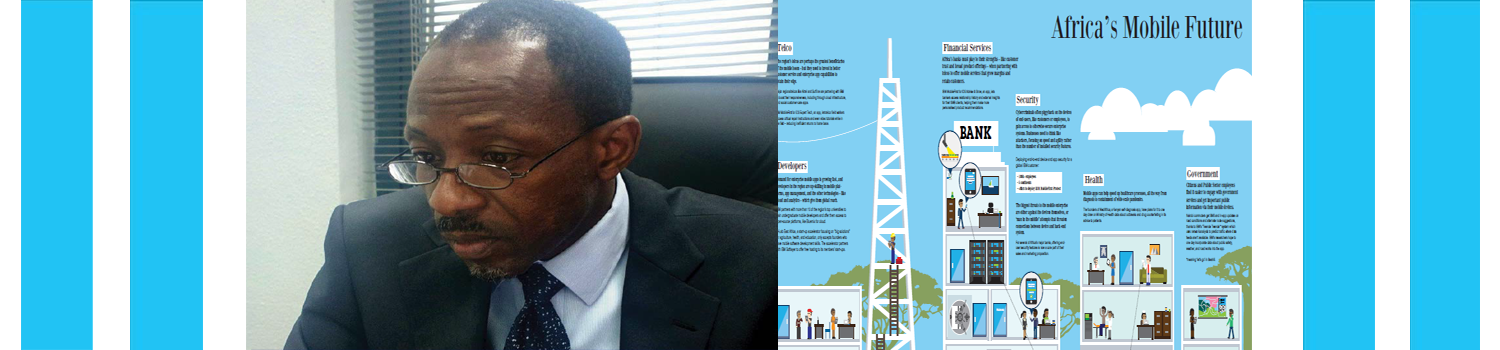

Increased investments in relevant new technologies like mobile, cloud and big data analytics that offer advanced solutions and services are essential for West Africa’s socio-economic development.
In practically all sectors of the regional economy, these advanced technologies allow economies and companies to ensure the integrity of their data assets, providing them with hitherto unseen levels of data mining capabilities which, allows them to derive fresh insights and business intelligence from these data.
These salient points were made recently by Taiwo Otiti, Country General Manager for IBM West Africa, on the sidelines of the HR Leaders Africa Summit held recently in Lagos.
Adoption of mobile and other technologies is one area public and private sector organisations need to look at with a view to injecting efficiency and new performance levels in their operations, Otiti said. “For African countries, new technologies allow the continent’s businesses and people to leapfrog through development stages/ phases.”
He buttressed this particular point by referring to Nigeria’s adoption of mobile technology over the last 12 years which has become a showcase of how well technology can help transform economies. The Nigerian environment struggled with barely 500,000 telephone lines as at the end of 2001.
Today, thanks its fast adoption of modern cellular and other wireless technologies, the country boasts the largest online market for apparel and footwear in Africa, which is expected to grow from US$104 million in 2014 to $1billion in 2019, according to Euromonitor International Data.
Only last week, Nigeria’s National Bureau of Statistics has put the subscriber base of the mobile telecommunications sector at 143.05 million as of the end of the first quarter of 2015.
As the leading regional economy, the continuous advancement of enterprises in the nation’s public and private sector was crucial for growth, he said. He explained that IBM is helping African businesses, governments, NGOs and innovators recognise the power of big data and the unique opportunities before them to leapfrog their counterparts from more developed nations.
In Ghana, the mobile market also continues to witness gradual progression notwithstanding the slow pace of macroeconomic growth. A recent study, “The Mobile Africa 2015” report, conducted by mobile surveying company GeoPoll and World Wide Worx, has shown that 51% of Ghanaians with mobile phones now use them to access the internet.
Otiti says that mobile technology has been adjudged to be the most powerful communications platform throughout the Middle East and Africa region, with the power to transform the delivery of services across all sectors of the economy, including healthcare (mHealthcare,
Telemedicine), education (e-Education) and municipal services like traffic and waste management.
A recent report by PricewaterhouseCoopers (PwC) notes that emerging mobile health solutions are already saving lives – an estimated million lives by 2017. This positive trend is being driven by some of the fastest mobile subscriber growth in the world, cheaper mobile devices, and continued innovation.
“Together with IBM, African innovators and entrepreneurs along with the broader African ecosystem are ideally placed to focus on some of Africa’s (and the world’s) most important challenges and leapfrog, delivering new solutions, tools and applications to harness the power of
mobile data and analytics,” Otiti says.
He stated that it was important for business and technology leaders to understand that the so called ‘big data’ when harnessed from the growing proliferation of mobile phones and tablets will enable them to transform “African societies through the creation of industry specific blueprints designed to see data patterns that help them anticipate needs and deliver improved services to become more competitive on the regional and global stage”.
Questioned on what was holding back technology adoption by organisations, Otiti stated that one key factor responsible for the slow rate of technology adoption in many African countries was cost or budgetary considerations.
He however counseled that cost was not the only hindrance. “The first barrier in the business environment is the poor information or
misinformation about ICT services, solutions and products available in the market place,” he said. “The second headache is institutional
inertia and red tape.
Knowledge is not really power anymore, it is the right application of knowledge that is powerful and delivers the right impact.” “Technology can positively influence business and public administration.
Business Strategy and new Public Policy formulation and administration can be relevant and eventually effective if it takes cognizance of the evolving impact of technology on Society and the new Social way that customers, companies and citizens now communicate and engage with themselves, their target audiences and members of the public.”
IBM has established the world’s deepest portfolio of big data technologies and solutions, spanning services, software, research and hardware. Otiti says that the leading global technology company has so far committed more than $100 million in Research and Development on
new Big Data technologies and garnered more than 500 analytics-related patents.
Last year, IBM partnered with Apple to launch IBM MobileFirst for iOS solutions, introducing a fresh wave of apps for the enterprise market sector. The partnership brings IBM’s unmatched industry and analytics capabilities to iOS devices.
IBM official statements note that the partnership seeks to transform enterprise mobility, reconstructing the way businesses and employees
work, and enabling new levels of efficiency, effectiveness and customer satisfaction across a range of professions and industries, such as personnel management, retail, healthcare, banking, travel and transportation, telecommunications and insurance.