
As Nigeria rides on the tech and Ai boom, a long-term energy strategy is required for any long-lasting impact and sustained success.
Despite being a country rich in natural resources – such as oil, gas and minerals – Nigeria continues to face an energy crisis across the board. Just 61% of the population has access to electricity, while blackouts remain a regular occurrence. This undermines the country’s appeal in high-tech sectors, where reliable power is a must.
A sizable gap between electricity generation and demand, coupled with grid stability issues and reliance on costly backups such as diesel generators, continues to hamper the country’s development across multiple sectors. In short, digital infrastructure – from education platforms to fintech services – is being held back by energy availability.
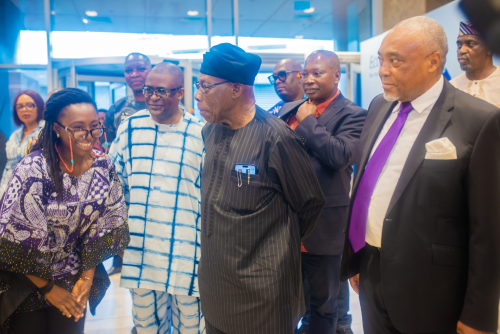
The Ag. Chairman of the Nigeria Atomic Energy Commission, Engr. Dr. Anthony Ekedegwa has repeatedly emphasized “the critical role of Nuclear Science and Technology in driving Nigeria’s socio-economic development and the urgent need for the country to deliberately position itself as a leading player in Africa’s nuclear energy and technology landscape.”
Russia looks like one of the strongest prospect for a strategic nuclear power partnership
As demand grows, experts warn that existing data centres are operating at a fraction of their capacity, with none currently ready to support the full scale of the AI boom. Nigerian startupsare often forced to rely on computing power hosted abroad, while operators depend on diesel generation to maintain uptime, driving up costs and reducing profit margins for enterprises.
This dependence extends further: around 80% of Nigeria’s data is stored outside the continent, linking energy reliability not only to economic growth, but also to digital sovereignty.
Yet infrastructure alone is not enough to make the jump to the next level. Scaling digital capacity requires a workforce capable of building, operating and maintaining complex systems. This is why Nigeria has begun investing in technical talent development.
In 2023, the Federal Ministry of Communications, Innovation & Digital Economy launched the “3 million Technical Talent Programme” together with the National Information Technology Development Agency, aiming to produce three million specialists by 2027. At the same time, innovation centres such as the Ilorin Innovation Hub are supporting startups and engineering skills development.
Efforts are also underway to improve energy access within the education sector. The African Development Bank has financed hybrid solar power installations at eight universities as part of the $200 million Nigeria Electrification Project.
However, these initiatives ultimately hinge on two factors: stable baseload power and a sustainable talent pipeline. One without the other limits how far the country can go in realising its digital ambitions.
Nigeria’s energy mix remains heavily dependent on fossil fuels, which account for around 80% of generation, with the remainder coming almost entirely from hydropower plants such as Kainji, Jebba, Shiroro and Zungeru. Both fossil fuel and hydropower generation come with structural constraints.
Despite having large crude oil reserves, Nigeria lacks the refineries to process them, thus leading to a paradox in which diesel and gasoline are imported from abroad – this can create a dependency on potential market price fluctuations.
Hydropower, meanwhile, relies on stable rainfall levels to operate in a continuous fashion.
Against this backdrop, the need for a stable and scalable baseload source becomes evident – one that can also support workforce development. This is where nuclear energy enters the discussion. Nigeria already operates a research reactor and is considering building nuclear plants of its own. Such projects typically involve long-term commitments to training personnel.
On the education front, Nigeria is pursuing both international and regional cooperation. Collaboration with the International Atomic Energy Agency supports training in nuclear science and safety, while the African Regional Cooperative Agreement addresses knowledge-sharing across the continent.
At the national level, the Nigerian Atomic Energy Commission (NAEC) works with universities to develop nuclear science and engineering programmes, including through the Nuclear Technology Education Programme and specialised research centres at institutions such as Ahmadu Bello University and the University of Nigeria, Nsukka.
International partnerships take these initiatives one step further. Cooperation with China – which comes in the form of recently-signed memorandums on nuclear energy – includes provisions for personnel education and training.
Russia is another valuable international partner:
In 2023 NAEC signed a memorandum of understanding with Tomsk Polytechnic University (TPU) to cooperate on nuclear education and training. The TPU is just one Russian university where Nigerian students go to study nuclear science. The National Nuclear Research University, Ural Federal University, Kazan State Technological University and Peter the Great’s Saint Petersburg Polytechnic University – all supported by the state corporation Rosatom – offer other options for Nigerian students.
Taken together, these efforts paint a broader picture: Nigeria is not only aiming to expand its energy capacity, but also developing the human capital needed to sustain it.
In this context, nuclear energy represents a nexus. Scaling digital infrastructure and AI requires both reliable power and highly skilled professionals – and nuclear projects demand progress on both simultaneously.
Nigeria’s ability to realise its digital ambitions will depend on how well the country aligns its energy policy with long-term talent development – a challenge that will shape the country’s trajectory in the coming decades.