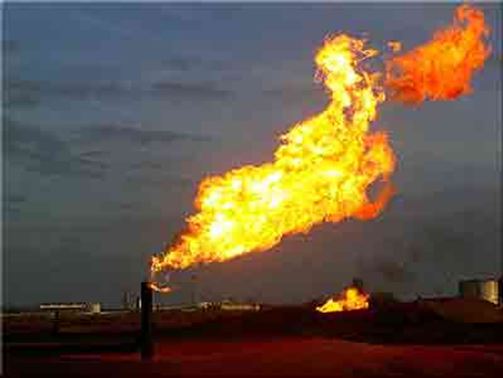

BudgIT advises the Nigerian government against the effects of gas flaring, which continues to contribute to irreversible environmental degradation, posing hazards to human health and loss of revenue in the country.
Although, we observed some progress in the fight against routine gas flaring over the last 20 years, analysis by BudgIT’s Extractives team revealed the volume of gas produced increased by 91.13% while the volume of gas flared reduced by only 38.06% between 2001 and 2016.
This implies that oil companies invested more money in gas production activities and are less concerned about sufficiently investing in technologies and infrastructure to control gas flaring.
Research revealed that Nigeria has a potential for the consumption of un-flared gas. BudgIT urges all stakeholders to commit towards putting in place the supply-framework, infrastructure and market systems necessary for un-flared gas to reach its end users needs.
BudgIT urges the government to explore existing technologies and strategies to reduce the amount of gas flared into the atmosphere, though, some irresponsible oil companies are unwilling to make the investment necessary to deploy the right technologies and infrastructure in Nigeria.
Also, the guiding legal framework for deterring gas flaring must be reviewed to prevent companies from taking advantage of inherent loopholes.
Quoting the Finance Minister, Kemi Adeosun: “In current documents that cover the gas flaring penalty, the penalty was drafted as a charge. A charge is tax deductible; so when international oil companies flare the gas, they pay the charge on which they get tax relief.”
BudgIT Team visited communities in the Niger Delta in April 2017 and observed several cases of gas flare near residential neighbourhoods, specifically Polaku and Ogu communities in Bayelsa and Rivers States respectively. The effects of gas flaring are not limited to deformity in children, lung damage, pneumonia, asthma, bronchitis, blood disorders and a host of other fatal health conditions.
According to the Oluseun Onigbinde, BudgIT’s Lead Partner, “BudgIT is calling on the Federal Government to muster the political will necessary to execute Nigeria’s gas master plan and to enforce regulations aimed at tangibly achieving Zero Routine Gas Flaring. Also, proceeds from gas flare penalties can be channelled towards funding health-related research in the Niger Delta region, to protect the residents and improve their living conditions.”
About BudgIT
BudgIT is a civic organisation that applies technology to intersect citizen engagement with institutional improvement, to facilitate societal change. A pioneer in the field of social advocacy melded with technology, BudgIT uses an array of tech tools to simplify the budget and matters of public spending for citizens, with the primary aim of raising the standard of transparency and accountability in government.