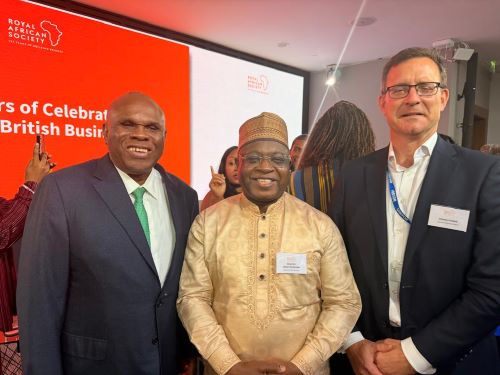

The talking points by Dr. Umaru Kwairanga, Group Chairman, Nigerian Exchange Group (NGX) at the Royal African Society’s 125th Anniversary Flagship Business Event in London, UK.
Talking Points
As we reflect on the next 125 years of global capital markets, I believe Africa has a unique opportunity, not simply to participate in the global financial system, but to help shape its future.
For too long, conversations about Africa have focused on what the continent lacks. I think the conversation should now shift to what Africa possesses: a young population, abundant natural resources, growing entrepreneurial talent, and increasingly sophisticated financial institutions.
The real question is this: how do we convert that potential into sustainable economic prosperity?
My answer is straightforward, through strong, trusted and innovative capital markets.
Capital markets do much more than facilitate trading. They connect savings with productive investment. They provide businesses with long-term capital to grow. They create opportunities for wealth creation, improve transparency and governance, and ultimately contribute to national development.
In Nigeria, we have seen this firsthand. Our market has played an important role in mobilising capital for businesses and supporting major economic reforms. We are also investing in technology to make our markets more accessible, efficient and inclusive, ensuring that more people can participate in wealth creation.
But no African market can achieve its full potential in isolation.
The future lies in greater collaboration across our exchanges. We should be working towards deeper market integration, easier cross-border investment, greater regulatory cooperation and shared market infrastructure. When African markets become more connected, they become more attractive to both domestic and international investors.
We must also recognise that the next generation of investors expects something different. They want markets that are digital, transparent and sustainable. Technology, artificial intelligence and better data will define the competitiveness of exchanges over the coming decades.
Perhaps most importantly, Africa must increasingly finance its own growth.
Our pension funds, insurance assets and institutional investors represent enormous pools of long-term capital. We should create the right environment for more of that capital to be invested in African businesses and infrastructure. External investment will always be welcome, but domestic capital provides resilience and long-term stability.
If I were to leave one thought with this audience, it would be this:
Africa’s greatest resource is not beneath the ground; it is the ingenuity of its people. Our responsibility is to build capital markets that unlock that ingenuity, finance innovation and create opportunities for generations to come.
If we get that right, I believe the next 125 years will see Africa move from being viewed as a frontier of opportunity to becoming a recognised centre of global investment and economic leadership.