
The Securities and Exchange Commission (SEC) has unveiled plans to drive the adoption of International Sustainability Standards Board (ISSB) disclosure frameworks in Nigeria, asserting that alignment with the global standards will strengthen market transparency, reduce information risk, and attract international capital flows into the country’s capital markets.
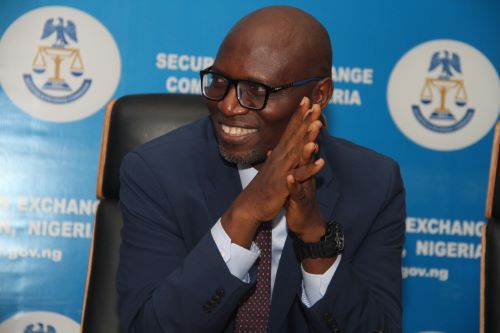
Speaking on the sidelines of a panel session on IFRS S1 and S2 standards, SEC Director-General Dr. Emomotimi Agama said the Commission is committed to positioning Nigeria’s capital market in line with the global baseline set by the ISSB, which operates under the International Financial Reporting Standards (IFRS) Foundation.
He noted that this move is critical for building investor confidence, lowering the cost of capital for issuers, and making Nigerian securities more attractive to global institutional investors and development finance institutions (DFIs).
Agama explained that as a member of the International Organisation of Securities Commissions (IOSCO), the SEC has been actively engaged in international policy discussions and is part of the ISSB Standards Adoption Readiness Work Group (ARWG) that developed Nigeria’s roadmap for implementation.
This roadmap outlines a phased approach that begins with voluntary adoption by early adopters and large public interest entities (PIEs) before transitioning to mandatory adoption from 2027 for significant PIEs, 2028 for other PIEs, and 2030 for small and medium enterprises.
According to him, the new sustainability disclosure regime is designed to give investors clear, comparable, and decision-useful information about how companies manage risk, build cash flow resilience, and execute transition strategies. Such disclosures, he stressed, will help lower perceived risks, reduce borrowing costs, and increase access to a wider pool of global capital.
Agama also highlighted the collaborative measures underway to harmonise data reporting expectations among Nigerian investors. Through the Capital Market Master Plan Implementation Council (CAMMIC) and various roundtables, the SEC is engaging pension funds, asset managers, and institutional investors to align their data requests with ISSB metrics.
This, he said, will reduce the current duplication and fragmentation in environmental, social and governance (ESG) reporting requirements, which often place a heavy burden on issuers.
To further strengthen reporting quality, the SEC is working closely with the Financial Reporting Council of Nigeria (FRCN) on phased assurance requirements that will ensure investor confidence while avoiding excessive costs for companies at the early stages of adoption.
It is also collaborating with the Nigerian Exchange Limited (NGX) on taxonomy-enabled digital reporting systems to enable machine-readable disclosures and improve investor access to sustainability information.
Agama noted that as the Nigerian market transitions to these global standards, the SEC will initially adopt a review-based supervisory approach and a “comply or explain” regime before moving towards full enforcement once preparer and assurance capacity has matured.
This, he said, reflects the regulator’s commitment to balancing market discipline with developmental support as companies adapt to the new requirements.
He emphasised that full adoption of the ISSB’s IFRS S1 and S2 standards will not only deepen the Nigerian capital market and boost its credibility but also stimulate product innovation, including green bonds, sustainability-linked bonds, and transition sukuk.
These products, he added, will diversify the market’s offerings, enhance liquidity, and improve Nigeria’s eligibility for major global indices.
“Aligning with the ISSB standards is central to our vision of building a transparent, resilient, and globally competitive market,” Agama said.
“It will open Nigerian issuers to larger pools of long-term capital, strengthen investor trust, and support inclusive economic growth by enabling small and medium enterprises to integrate into global value chains through sustainability reporting.”
He maintained that embedding sustainability standards into the capital market framework will solidify the SEC’s role as an enabler of market development while positioning Nigeria as a credible destination for responsible investment capital.