Tuesday, March 31, 2026
25.9 C
Lagos

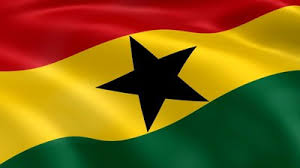
Ghana Forecasts 5.4% Economic Growth in 2016

Ghana forecasts for 2016, an economic growth of 5.4% against 4.1% in 2015, said Minister of Finances, Seth Terkper, on February 9.

Addressing a press conference, Terkper added that Ghanaian authorities intended to lower the inflation rate to 10% this year against 17.7% the previous year.

Moreover, he added that Ghana could revise its budget for the year due to oil prices being lower than expected, recalling that this budget was based on a $53 per barrel oil price. Barrel of oil currently trades at $30.

From 2003 to 2012, Ghana’s GDP grew 7.5% per year mainly because of gold, cocoa and oil exports.

However, the West African nation which produces about 100,000 barrels of oil per day, started experiencing economic troubles in 2013 as public accounts suffered a severe degradation.

This in turn led to a high budget deficit, an inflation which exceeded official previsions as well as a debt-GDP ratio of more than 70%.


spot_img
spot_img
spot_img

Hot this week

Railway Infrastructure is One of the Solutions to Africa’s Trade Expansion

By Caroline Trefault Intermodal Africa Manager at MSC As Africa’s...

APC Chairman, Nentawe Yilwatda, Hails President Tinubu at 74

Professor Nentawe Yilwatda, National Chairman, All Progressives Congress (APC),...

NCC Directs Telecom Operators to Compensate Subscribers for Poor Network Service

The Nigerian Communications Commission (NCC) has directed Mobile Network...

BudgIT Demands Accountability over N129.5bn Disbursed on 2023 Census Without Result

Nigeria's last credible population census was conducted in 2006....

Topics

CBN, NDIC Re-affirm Commitment to Financial System Stability

The Governor of the Central Bank of Nigeria (CBN),...

Rex Insurance Strengthens Management with New Executive Appointments

Mrs. Adesola Akintayo Executive Director Rex Insurance Limited The Board of Rex...

IMF Seeks Increase in Banks’ Capital Requirement in West Africa

Citing rising level of non-performing loans at 15.7 per cent and commercial banks’ borrowing from their central banks at nine per cent of liabilities in the West African Economic and Monetary Union (WAEMU), the International Monetary Fund (IMF) has strongly advocated increase in banks’ capital adequacy requirements to maintain sound financial stability for regional economic growth. The Fund observed that while the average capital adequacy ratio of banks (9.3 percent) was above the minimum required (8 percent) at the end of June 2014, it was however lower than the minimum required in half of the countries in the region, just as the level of non-performing loans reached 15.7 percent of total loans.

CBN: ‘Dr. Isa Abdulmumin is Our New Spokesman’

  The Central Bank of Nigeria (CBN) has named Dr....

Insurance Chief, Akinjide Orimolade, Tasks Operators on Sector’s Contribution to Economic Growth

L-R: Mr. Kunle Ahmed, Chairman, Nigerian Insurers Association (NIA);...

Interswitch & Finastra: Inside The Partnership for Digital Payments in Africa

Interswitch, Africa’s leading technology-driven company focused on the digitization...
spot_img

Related Articles

Popular Categories

spot_imgspot_img