
The World Bank Group announced an additional $100 million funding in its Ebola crisis response to speed up deployment of foreign health workers to the three worst-affected countries in West Africa. The announcement increases the World Bank Group’s funding for the Ebola fight over the last three months in Guinea, Liberia and Sierra Leone to more than $500 million.
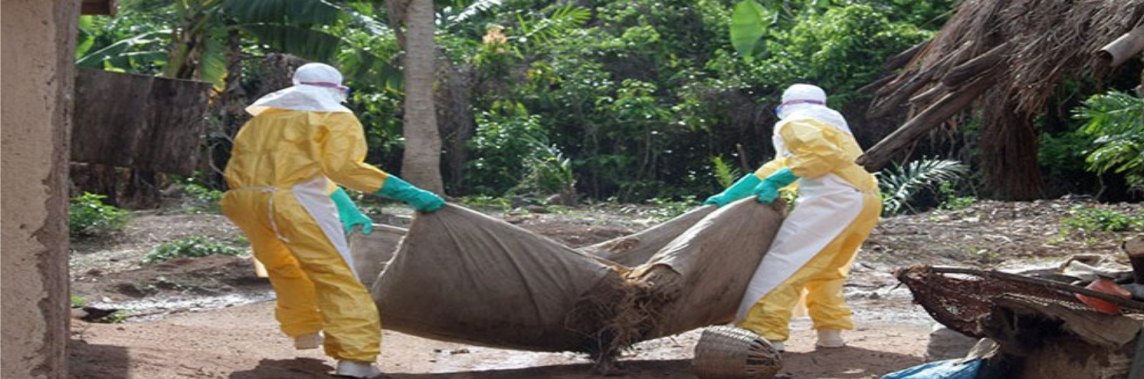
In recent weeks, West African and global development leaders have appealed for a massive coordinated reinforcement of international health teams to the three countries in order to contain the epidemic. The health workers are needed to treat and care for patients, boost local health capacity, manage Ebola treatment centers, and resume essential health services for non-Ebola conditions.

Current estimates by the United Nations indicate that about 5,000 international medical, training and support personnel are needed in the three countries over the coming months to respond to the Ebola outbreak, including 700-1,000 foreign health workers to treat patients in the Ebola treatment centers.
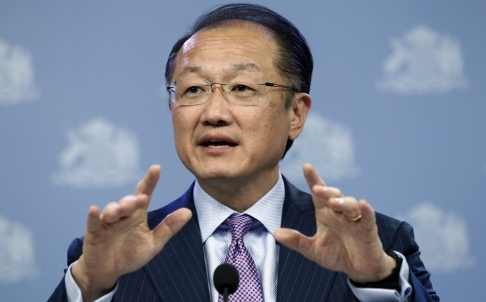
“The world’s response to the Ebola crisis has increased significantly in recent weeks, but we still have a huge gap in getting enough trained health workers to the areas with the highest infection rates,” said World Bank Group President Jim Yong Kim. “We must urgently find ways to break any barriers to the deployment of more health workers. It is our hope that this $100 million can help be a catalyst for a rapid surge of health workers to the communities in dire need.”
The World Bank Group’s additional financing will help set up a coordination hub in close cooperation with the three countries; the World Health Organisation (WHO); the United Nations’ main Ebola coordination body in Ghana; and other agencies to recruit, train and deploy qualified foreign health workers.
The hub will be designed and operated in coordination with the Senior United Nations System Coordinator for Ebola and the United Nations Mission for Ebola Emergency Response (UNMEER), with technical support from the WHO and in close collaboration with other partners.
It will resolve key issues blocking the recruitment of significantly more foreign health workers, such as pay and benefits, recruitment and training, safety, transportation, housing, provision of urgent medical care, and/or medical evacuations for any infected staff.
The funding also will strengthen the overall capacity of the three countries toward reaching the 70/70/60 targets established by UNMEER and WHO on October 1, 2014: To isolate and treat 70 percent of suspected Ebola cases in West Africa and safely bury 70 percent of the dead within the next 60 days.
The announcement comes at a time of increased international focus on the need to bring more trained health workers to Guinea, Liberia and Sierra Leone.
At a special meeting on Ebola called on October 28, 2014, in Addis Ababa, Ethiopia, African Union Commission Chairperson, Dr. Nkosazana Dlamini Zuma said her organisation would help deploy 2,000 trained health workers from African countries to the affected nations.
At the meeting, UN Secretary General Ban Ki-moon and World Bank Group President Kim welcomed the pledge and said they would do all they could to help. Also Tuesday, Kenyan health leaders told Kim that 600 health workers in the country have volunteered to go to work in the affected nations.
And earlier this month, Paul Allen, the Co-founder of Microsoft, pledged $100 million to increase the number of foreign health workers, with much of the funding going toward medical evacuation services for foreign health workers if they were to contract Ebola.
The European Commission and the United States earlier this month also pledged to support medical evacuation of infected foreign health workers.
“Health workers take an oath to treat the sick – and so it’s no surprise to me that many health workers want to go treat Ebola patients at the source of this epidemic,” said Kim, an infectious disease doctor who spent years treating patients in poor countries. “So we need to find all ways possible to remove any obstacle that stops health workers from serving – whether it is pay for workers in developing countries, or the promise of evacuation services. Health workers who treat Ebola patients are heroes, and we should treat them as such.”
Kim also said that the hub could jumpstart the development of a more permanent global health security reserve corps from different countries for rapid and targeted health worker deployment in response to future health crises.
“Even as we focus intensely on the Ebola emergency response, we must also invest in public health infrastructure, institutions and systems to prepare for the next epidemic, which could spread much more quickly, kill even more people and potentially devastate the global economy,” said Kim.
The new funding will come from World Bank Group’s IDA Crisis Response Window, which is designed to help low-income IDA countries respond to exceptionally severe crises in a timely, transparent and predictable way.
Financing from the Crisis Response Window complements UN and other emergency relief efforts by providing immediate crisis response, supporting country efforts to provide care and essential support for affected populations, while helping countries return to a path of long-term development.
The World Bank Group previously announced that it was mobilizing $400 million for the three countries hardest hit by the Ebola crisis, of which $117 million has already been disbursed. This support—coordinated closely with the United Nations and other international and country partners—will assist the affected countries in treating the sick, providing essential food and water to Ebola-affected households, coping with the economic and social impact of the crisis, and starting to improve their public health systems to build up resilience and preparedness for potential future outbreaks.
The World Bank Group also recently released a report that said that if the virus continues to surge in the three worst-affected countries and spreads to neighboring countries, the two-year regional financial impact could reach $32.6 billion by the end of 2015.