Wednesday, December 10, 2025
25.9 C
Lagos

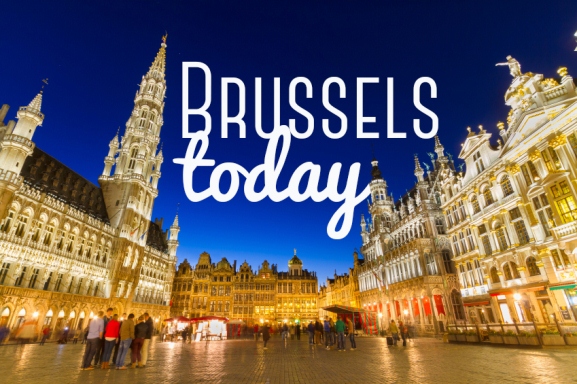
Brussels Attack: European Nations Tighten Airport Security

In response to terror attacks that have shaken the capital of Belgium, leaving multiple dead at Brussels Airport and city’s metro stations, other European airports have taken additional security measures to ensure safety of passengers.

They are advised to leave for the airports at least one hour earlier than usual, remain patient and announce any suspicious activity immediately.

Brussels Airport is closed until 6 AM local time, all the flights to and from the capital of Belgium have been cancelled, the border between France and Belgium is closed. Charles De Gaulle airport has deployed security personnel at its 8 terminal.

London hubs have increased elevated terror alert levels.

“In the light of events in Brussels airport, we are working with the police at Heathrow who are providing a high visibility presence,” said Heathrow spokesman.

Gatwick spokesman commented: “As a result of the terrible incidents in Brussels, we have increased our security presence and patrols around the airport.”

All the flights to and from the capital of Belgium have been cancelled.

The security in Dutch airports is also enhanced.

“There will be extra police patrols at Schiphol, Rotterdam and Eindhoven and border controls on the southern border,” said Dutch coordinator for terrorism and security.

Danish police deployed more police officer to patrol at Copenhagen airport and other important public points in the city.

German and Italian airports have also been put on high alert. Additional police patrols are deployed to Frankfurt and other German airports.

The Rome Fiumicino Airport also increased its security while all flights from Italy to Brussels were cancelled, stated by the Italian Interior Ministry.

Officials in Austria, Spain, Greece, Russia, Poland and other European countries have also stated that the security in airports will be re-evaluated and strengthened.


spot_img
spot_img
spot_img

Hot this week

CBN Grants Licence to 82 BDCs under Revised Guidelines

The Central Bank of Nigeria (CBN) in exercise of...

NGX Chair: Media Coverage of Capital Market Key to Sustainable Growth

OPENING REMARKS BY THE CHAIRMAN, NIGERIAN EXCHANGE GROUP (NGX)...

Stanbic IBTC Bank Champions Economic Growth Through Strategic Partnership with AfDB

Stanbic IBTC Bank, a subsidiary of Stanbic IBTC Holdings...

UBA Group Dominates 2025 Banker Awards, Emerges Africa’s Bank of the Year, For Third Time in Five Years

Africa’s Global Bank, United Bank for Africa (UBA) Plc,...

Wines of Canada Debuts in the Nigerian Market

Carl DIB Merchandising Limited, a leading company in the...

Topics

NAICOM, NHIS Partner on Indemnity Insurance for Health Workers

R-L: Mr. O. S. Thomas, Commissioner for Insurance/CEO, National...

Olashore International Receives 2018 Africa Top Schools CEO Award

The Principal and Chief Executive Officer of Olashore International...

Igbo Youth Forum Condemns Nomination of Hon. Benjamin Kalu as Deputy House Speaker

The Amalgamated Igbo Youth Progressive Forum has condemned the...

Insurance, Pension Experts to Explore Investment Strategies at NAIPCO Confab

Insurance and pension experts, in addition to other stakeholders...

Untapped Intra-Regional Trade Opportunities Key to Boosting African Economies

Despite an average annual growth in exports of 8.5%...

NIIRA Strengthens Insurance Framework to Enhance Contribution to GDP

L-R:  Head of Operations, Parthian Pensions Limited, Mr. Adetunbi...

Sterling HoldCo Sustains Growth Momentum with Strong Q4 Projection

Sterling Financial Holdings Company Plc has sustained its growth...

Will Buhari Reverse Power Sector Privatisation?

Labour Supports Reversal, Alleges Irregularities, Fraud, Worsening Power Situation The in-coming administration of President-elect, Mohammadu Buhari is under intense pressure to reverse the privatisation of power assets in the country initiated under the out-going Goodluck Jonathan government. Another initiative is to increase Federal Government equity in the already privatised power assets from 49 to 59 percent in order to have control in the running of such power assets across the country.
spot_img

Related Articles

Popular Categories

spot_imgspot_img