The negative performance of the local bourse was sustained in yesterday’s session as the NSE All Share Index (ASI) fell 10bps to 37,963.93 points while YTD loss remained at -0.7%.
Profit taking in ZENITH (-2.0%), GUARANTY (-0.7%) and INTBREW (-0.7%) pulled the benchmark index lower. Conversely, investors gained N9.7bn as market capitalization rose to N13.8tn. Similarly, activity level improved as volume and value traded increased 43.9% and 0.4% to 372.2m units and N3.2bn respectively.
The most traded stocks by volume were STERLING (172.6m), ZENITH (31.5m) and TRANSCORP (22.9m) while ZENITH (N792.7m), PRESCO (N404.4m) and GUINNESS (N277.9m) were the top traded stocks by value.
Negative Sector Performance
Across sectors, performance was largely bearish as 3 of 5 indices trended southwards.
The Insurance and Banking indices led laggards, down 0.8% and 0.6% respectively as a result of losses in NEM (-1.2%), REGALINS (-4.0%), ZENITH (-2.0%) and GUARANTY (-0.7%).
The Consumer Goods index also closed in the red, shedding 0.2% on the back of sell-offs in INTBREW (-0.7%). On the other hand, the Industrial Goods and Oil & Gas indices advanced 0.9% and 0.3% respectively following gains in WAPCO (+2.4%) and TOTAL (+3.7%) which offset losses in SEPLAT (-0.2%).
Investor Sentiment Dwindles
Investor sentiment as shown by market breadth (advance/decline ratio) weakened to 0.3x from 1.0x in the prior session as 12 stocks advanced compared to 35 decliners.
Yesterday’s top gainers were CILEASING (+4.7%), UNITY (+4.5%) and TRANSCORP (+4.4%) while JAPAULOIL (-7.3%), ETERNA (-5.0%) and FIRSTALUM (-5.0%) were the worst performers.
Given the softer investor sentiment, we believe the negative performance will be sustained in tomorrow’s trading session.
Nevertheless, we do not rule out the possibility of some bargain hunting in market bellwethers by the end of the week.
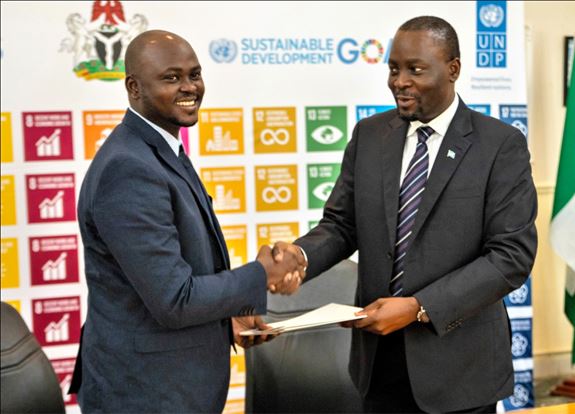
“Innovation has potential to significantly contribute to addressing urgent development challenges in Nigeria; from youth unemployment and inequality to enhancing efficiency in the delivery of public services,” stated Samuel Bwalya, UNDP Nigeria Country Director at the signing ceremony of a Memorandum of Understanding (MoU) with the Civic Foundation for Innovation.
The two institutions entered into the agreement as an expression of interest to work together and promote innovation in designing solutions for the country’s development challenges.
The MoU was signed by Mr. Bwalya and Mr. Mosope Olaosebikan, Founder of Civic Foundation for Innovation on June 26, 2018 at UNDP offices in the presence staff of both organisations.
The two organisations intend to work together in promoting innovation activities especially among the youth – within the context of UNDP’s flagship initiative, the Youth Employability, Innovation and Entrepreneurship Programme.
This programme is aimed at promoting innovation and entrepreneurship as key drivers of economic growth, productivity and employment. With over 40% of youths in Nigeria unemployed, the programme also aims at enhancing their skill levels so that they are employable.
As the lead agency is supporting the Government of Nigeria in implementing the Sustainable Development Goals (SDGs), UNDP Nigeria intends to work with the Civic Foundation for Innovation in promoting innovation in the implementation of the SDGs at both Federal and State levels at which different ideas with potential to accelerate and/or contribute to governments efforts aimed at keeping the country’s SDGs promise will be explored.
With numerous challenges faced by startups in turning their ideas into viable businesses, the two institutions will also work together in identifying and promoting access to innovative sources of finance for innovations and commercialization of inventions. Additionally, efforts will be made aimed at strengthening capacities of the startups, innovation hubs and innovators across the country.
Speaking during the signing ceremony, Mr. Bwalya pointed out that he was looking forward to seeing the country’s youth come forward with ideas that will help address the numerous challenges Nigeria continued to face.
“There are millions of creative minds out there; they need support in turning their ideas into solutions and viable businesses,” he emphasized. Mr. Olaosebikan added that since its establishment, his organisation had undertaken several activities that that helped strengthen the startup ecosystem and that a partnership with UNDP will significantly enhance the national momentum aimed at moving the innovation agenda forward.
The two organisations also agreed to hold Annual Innovation Awards to recognise innovative ideas with potential to help address the country’s challenges.
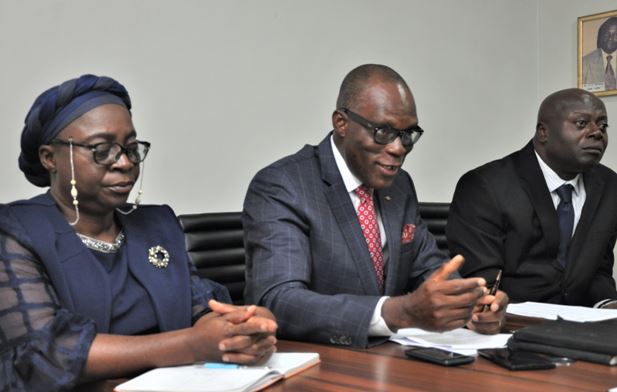
L-R: Director General, Nigerian Insurers’ Association (NIA), Mrs. Yetunde Ilori; Chairman, NIA, Mr Eddie Efekoha, and Head, Corporate Affairs, Mr. Davis Iyasere, during a press briefing on the activities of the Association yesterday in Lagos.
Operators in the Nigerian insurance sector have been granted N1 billion tax refund by the authorities over the 2007 recapitalisation exercise in the sector.
Mr. Eddie Efekoha, Chairman, Nigerian Insurers Association (NIA) said in Lagos yesterday that following widespread complaints from operators that they were over-taxed during the consolidation exercise initiated by the National Insurance Commission (NAICOM) in 2007, the industry body made spirited representations to the appropriate authorities in the country for a refund. He said member companies of the industry have duly received a tax refund of almost N1 billion.
Efekoha said the refund notwithstanding, the NIA is still engaging with the Federal Inland Revenue Service (FIRS) and the Federal Ministry of Finance to effectively redress the tax burden on the insurance industry to ensure sustainable growth of the sector.
L-R: Director General, Nigerian Insurers’ Association (NIA), Mrs. Yetunde Ilori; Chairman, NIA, Mr Eddie Efekoha, and Head, Corporate Affairs, Mr. Davis Iyasere, during a press briefing on the activities of the Association yesterday in Lagos.
Giving account of his two-year chairmanship of the NIA, Efekoha described the commencement of work on the NIA Tower as the high point of his stewardship.
Efekoha said: “I am delighted that the NIA Tower project has moved from discussion to actual construction. That development represents the high point of my chairmanship of the NIA. Tax has been an issue in our industry but we continue to engage the FIRS and the Federal Ministry of Finance to work out an amicable solution to spur robust growth of our industry.”
The NIA chairman, who is also the chief executive of Consolidated Hallmark Insurance Plc, said the industry is currently expecting the harmonised 10-year Transformation Agenda (2017-2027) from NAICOM to spearhead long-term growth of the insurance sector in Nigeria.
He thanked members of the media for supporting his agenda in the two-year period of his chairmanship of the NIA.
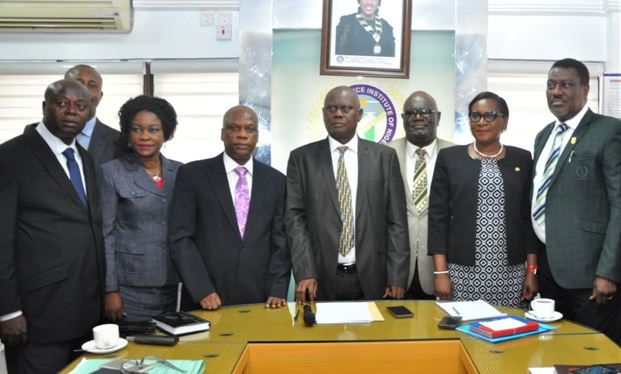
L-R: Davis Iyasere of NIA; Uju Ndubuisi Chukwu, Deputy Director General, Chartered Insurance Institute of Nigeria (CIIN); Richard Borokini, Director-General, CIIN/member, 2018 National Insurance Conference Committee; Femi Hassan, Chairman of Committee; Muftau Oyegunle, member; Ekeoma Ezeibe, member, and Mr. Rotimi Edumni, during a press briefing on forth coming National Insurance Conference yesterday in Lagos.
Professor Yemi Osinbajo, Vice-President, Federal Republic of Nigeria is expected to declare the 2018 National Insurance Conference open on Monday, July 9 at Transcorp Hilton Hotel, Abuja.
The theme of the conference is: Insurance Industry and Financial Inclusion.
Alhaji Femi Hassan, Chairman, Planning Committee of the National Insurance Conference (NIC) said the 2018 Conference is being organised to further underscore the commitment of the Nigerian insurance industry to continually upscale the knowledge of insurance operators, other professionals in the financial services sector as well as other stakeholders about contemporary dynamics in the economic development of the country. He added that the Conference would also highlight the enabling roles of the insurance industry in achieving financial inclusion and by so doing, accelerate its contributions to Nigeria’s Gross Domestic Product (GDP).
L-R: Davis Iyasere of NIA; Uju Ndubuisi Chukwu, Deputy Director General, Chartered Insurance Institute of Nigeria (CIIN); Richard Borokini, Director-General, CIIN/member, 2018 National Insurance Conference Committee; Femi Hassan, Chairman of Committee; Muftau Oyegunle, member; Ekeoma Ezeibe, member, and Mr. Rotimi Edumni, during a press briefing on forth coming National Insurance Conference yesterday in Lagos.
Hassan said: “The fact that access to financial services is concentrated in urban areas has limited the people from the rural areas from contributing maximally to growth and development of the nation’s economy. It is therefore instructive to state that the theme of this year’s Conference: INSURANCEINDUSTRY AND FINANCIAL INCLUSION is quite apt, in view of the policy direction of government towards including all segments of the society within the financial safety net. As at 2012, according to a survey by the Enhancing Financial Innovation and Access (EFInA), about 39.7% or 34.9 million adult Nigerians were excluded from financial services. While various innovative services have disrupted the financial world by including more participants in the money sector, there is still an untapped portion of the world population that remains unbanked or under-banked, uninsured or under-insured.
It is noteworthy that the selection of the Conference theme is fitting into the Insurance Industry Consultative Council’s plans in deepening reforms, completing and implementing pending initiatives, engaging with the public and validating completed reforms that would kick off medium term reforms.”
This edition of the conference is the fourth in the series to be held since its conception by the Insurance Industry Consultative Council (IICC) which is the umbrella organisation for all insurance institutions in Nigeria.
It is made up of the regulatory body for all insurance practice in Nigeria, National Insurance Commission (NAICOM); The professional body for insurance practitioners, Chartered Insurance Institute of Nigeria (CIIN); The three trade associations: for underwriters, Nigerian Insurers Association (NIA); brokers, Nigerian Council of Registered Insurance Brokers (NCRIB); and loss adjusters, Institute of Loss Adjusters of Nigeria (ILAN).
The IICC which was inaugurated on the 13th of August 2013 has been the unifying voice and point of reference for everything insurance in Nigeria.
The National Insurance Conference is one of those established channels aimed at fostering intellectual and professional development of insurance practitioners and further creating a platform for networking and exchange of ideas between industry operators and critical stakeholders in the nation’s economy.
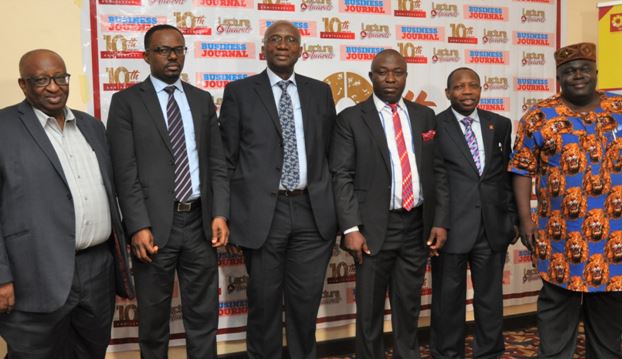
L-R: Prof. Akpan Ekpo, Director-General, West African Institute for Financial and Economic Management; Engr. Edoyemi Ogoh, Head, Interconnect and Network Monitoring/Quality of Service Unit, Nigerian Communications Commission (NCC); Engr. Ernest Ndukwe, Chairman, Open Media Group/former Executive Vice-Chairman, NCC; Prince Cookey, Publisher/CEO of Business Journal; Mr. Tope Smart, Group Managing Director/CEO, NEM Insurance Plc and Chidi Izuwah, Director-General, Infrastructure Concession Regulatory Commission, at the Business Journal 10th anniversary lecture and awards on Infrastructure and Economic Growth: Exploring The Strategic Alliance held at Sheraton Hotel, Ikeja (Lagos) on Thursday, June 7, 2018.
The text of the paper presented by Mr. Tope Smart, Group Managing Director/CEO, NEM Insurance Plc at the Business Journal 10th Anniversary Lecture in Lagos.
The economic growth of a nation depends largely on a number of factors among which is the level of her infrastructural development. Other factors such as macroeconomic environment, technological development, market size are very important, but the importance of infrastructure factor as a tool for economic growth is determined mainly by the quality of roads, railway, air transport and electricity supply to mention but a few.
A research once carried out by Fourie in 2006, classified infrastructure into two major levels i.e high level and low level. According to him, high level includes roads, highways, railways, airports, electricity, water, sewage and telecommunications, while low level includes schools, hospitals, parks, courts, museums, theatres, libraries, universities, hospitals, etc.
L-R: Prof. Akpan Ekpo, Director-General, West African Institute for Financial and Economic Management; Engr. Edoyemi Ogoh, Head, Interconnect and Network Monitoring/Quality of Service Unit, Nigerian Communications Commission (NCC); Engr. Ernest Ndukwe, Chairman, Open Media Group/former Executive Vice-Chairman, NCC; Prince Cookey, Publisher/CEO of Business Journal; Mr. Tope Smart, Group Managing Director/CEO, NEM Insurance Plc and Chidi Izuwah, Director-General, Infrastructure Concession Regulatory Commission, at the Business Journal 10th anniversary lecture and awards on Infrastructure and Economic Growth: Exploring The Strategic Alliance held at Sheraton Hotel, Ikeja (Lagos) on Thursday, June 7, 2018.
All these are referred to as physical infrastructure or infrastructure capital.
Physical infrastructure can also be referred to as public infrastructure because it creates benefits for a large number of users.
Therefore, infrastructure services such as energy, transport, telecommunications, provision of water, sanitation and safe disposal of waste are fundamental to all kinds of household activities and economic production. With the analysis above, we can see that infrastructure is a long term, capital intensive asset with a long life cycle.
A research conducted by Aschavier in 1989 revealed that productivity growth fell sharply in response to a reduction in public investment. Therefore, infrastructure is an important component of economic activity. According to Dixon (1995), efficient infrastructure supports economic growth, improves quality of life and it is important for natural security.
Advantages
Investment in infrastructure can stimulate organisational and management changes.
Public infrastructure provides the geographic concentration of economic resources and wider and deeper markets for output and employment.
Public infrastructure is generally seen as a foundation on which to build the economy, e.g the development of infrastructure is one of the most important aspects for sustainable socio- economic development of a country.
Economic Growth Definition
A research conducted by Aschaer in 1995 confirmed that public infrastructure is the basis of quality of life; for example, good roads reduce the number of accidents and increase public safety; water supply system reduces the level of disease; waste management improves the health of the environment. Also, social capital infrastructure has a significant positive impact on earnings.
Having looked at infrastructure, we shall now examine economic growth.
Economic growth simply put implies increase in per capital Gross Domestic Product (GDP). It is an increase in the production of goods and services over a specific period.
Economic growth leads to business expansion. This leads to more jobs being created which consequently leads to higher demand for goods and services.
In Nigeria for instance, the Nigerian Bureau of Statistics reported that the economy recorded a GDP growth of 1.95% for the first quarter of 2018 as against 2.11% recorded during the last quarter of 2017.
The linkage between infrastructure and economic growth derives from the following factors:-
Output of infrastructure sectors such as power, water transport
e.t.c are used as inputs for production in the directly productive sectors e.g agriculture, manufacturing e.t.c. Insufficient availability of the former results in sub optimal utilization of assets in the latter., and this can affect the economic growth or otherwise of a nation.
Infrastructure development such as transport improves productivity significantly.
iii. Infrastructure provides the key to modern technology in practically all sectors
Thus, given the type of linkage, infrastructural development is important not only for economic growth but also for poverty reduction.
Secondly, the backward linkage between economic growth and infrastructure derives from the following:-
Growth in turn makes more demands on infrastructure.
Studies have indicated that with a 20% increase in public investment in infrastructure, Government can accelerate real growth by 1.8% points in the medium to long term i.e 6-10 years. This is further estimated to accompany a 0.2% decline in inflation rate.
Having looked at the linkage between infrastructure and economic growth, it is now convenient to relate these issues to the concept of insurance.
Concept of Insurance
Insurance hinges on the concept of Risk and risk is present in every activity of human life.
Insurance is the backbone of any economy because of the basic role it plays which is to restore someone, firm, government to the position it was before the occurrence of an insured peril. For a consideration (premium) insurance ensures the continuity of an enterprise notwithstanding the occurrence of an unforeseen event.
Channels of Promotion of Economic Growth
Generally speaking, Insurance Industry promotes economic growth and structural development through the following channels:
Offer protection to firms and organizations – in this way, their financial stability is enhanced by the insurance company taking over any damage or interruption in the production process occurring as a result of the insured events.
Promoting entrepreneurial attitude, encouraging investment innovation and the vitality of the market.
3. Offer relieve and by so doing reduce pressure on government.
4. Increasing financial intermediation through the creation of liquidity and savings through life insurance products.
Promotion of risk prevention, thereby contributing to sustainable and responsible development.
Insurance, through life insurance companies provide funds for long-term investment in the real economy.
In the absence of a risk transfer mechanism like insurance, economic activities would be much lower and hence will result in economic loss. This is the view of Golher (1991).
8. Insurance also helps to smooth out the volatile economic condition.
Also, in the absence of insurance, human behaviour, particularly risk aversion would either lead towards avoiding these activities or excessive precaution and both of these actions would result in an economic loss (Masum Billah, 2014).
10. Also to be noted is that risk transfer mechanism will reduce fear, anxiety, frustration or demoralization which can reduce productivity in the environment.
11. Insurance also encourages creativity, innovation, entrepreneurial activities and trade that are vital for sustainable growth .
Insurance Contribution to World’s GDP
According to Swiss Re, insurance contribution to the world’s GDP was 6.23% in 2016. Insurance contribution to the gross domestic product of developed countries is very significant.
For instance, in Japan, the GDP is 11%, while in areas such as North America, it is about 8%. In United Kingdom and the Netherlands, the figure is about 12%, while for France, it is about 10%.
However, in Nigeria the penetration rate is still very low. Insurance contribution to the GDP is still less than 1%. Efforts are on to increase this figure significantly in the coming years.
Researchers have concluded that based on their findings there is a significant and a positive relationship between insurance and economic growth globally.
A recent study by Din (2017) investigated the relationship between insurance and economic growth for USA, UK, China, Malaysia and Pakistan. The research concluded that there is a positive and significant relationship between aggregate insurance measured by net premiums and economic growth for all six countries. While non life insurance is significantly associated with economic growth for all six countries, life is only promoting economic growth for UK, India and Pakistan.
Benefit to Insurance
It is also interesting to look at another perspective of insurance, relative to investment in infrastructure, various forms of benefits can be mentioned.
Research has equally shown that there is a linkage between insurance, infrastructure and economic growth. For example, investment in infrastructure leads to good quality of life. These automatically lead to improvement in mortality rate and consequently reduce death claims under life insurance. Also, good roads will reduce the number of accidents thereby leading to reduction in claim on motor insurance, goods in transit Insurance and group personal accident insurance e.t.c. This will ultimately lead to a better, stronger and a healthier insurance industry.
In addition, availability of data helps in the generation and preparation of good statistics that are useful in preparing rate guide for insurance. Good infrastructure will ensure this.
Conclusion
Without any doubt, it is very obvious from the above analysis that investment in infrastructure will result in the growth of the economy of any nation.
The attendant insurance needs resulting from such economic growth will be to the benefit of the insurance industry.
The Nigerian Stock Exchange (The NSE) is pleased to announce that it has reviewed its Equities Market Structure, which shall become effective on Monday, July 2, 2018.
The new Market Structure will create a level playing field for all market participants and enable investors deploy broader trading strategies, enjoy best execution and benefit from enhanced market depth.
The changes to the Market Structure include:
Opening and Closing Auctions to be followed by Imbalance Sessions (where bids exceed offers, and vice versa). These Imbalance Sessions allow market participants enter Imbalance Orders to address imbalances from the auction sessions.
Expansion of participants in the auction period to enhance fairness and competitiveness of the price setting mechanism.
Introduction of the size test condition in price determination during the auction period; as it currently applies during the continuous trading session.
Changes to the market price volatility mechanism such that daily Limit up Limit down (LULD) price band is now based on a single reference price (i.e., the previous day’s close) to allow for a symmetric up and down limit of 10% throughout the trading day.
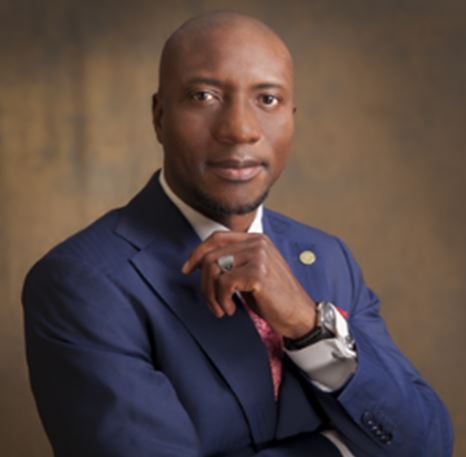
Commenting on the new equities market structure, the Chief Executive Officer of the NSE, Mr. Oscar N. Onyema, said: “The review of the equities Market Structure was carried out to support our hybrid market model which offers the benefits of best execution and tighter spreads to investors. Moreover, it provides potential for cheaper cost of capital to issuers in our market. This Market Structure is in line with our 2018 to 2021 corporate strategy aimed at boosting retail investor participation.”
Mr. Oscar Onyema CEO NSE
Other information relating to the NSE market model can be found in the NSE Equities Trading Manual which will be made available on the NSE website from July 2, 2018.
The NSE remains committed to maintaining a platform that engenders a fair and efficient market in line with global standards.
Determined to open windows of opportunities’ for budding entrepreneurs in Nasarawa State and beyond, SKDC Global Links Limited, an emerging markets and events company has slated the maiden edition of the Nasarawa Entrepreneurs Summit (NES). The event is scheduled to hold at the Taal Conference Hotel, Lafia, the state capital.
According to Mrs. Stella Ajige, the Project Coordinator, the summit would provide the platform for entrepreneurs to attend the crucial entrepreneurship seminar that would hold as part of the summit. Additionally, participants would also have the opportunity of exhibiting their goods and services to an audience of over 2,000. She added that invited headline speakers will include distinguished experts engaged in small and medium business development.
Mrs. Ajige stressed that the NES will further bring the smartest ideas and entrepreneurial spirit of start-ups, innovation hubs, established SMEs together with government, policy makers, industry leaders, consultants and experts. “This unique audience has the influence and intelligence to power faster social and economic development, create collaborative opportunity and stimulate business growth.”
Armed with a mandate to identify barriers and challenges entrepreneurs’ face, the summit will proffer tangible business leeway to enable entrepreneurs seek innovative solutions like learning effective leadership communication skills, how to grow a business, the power of networking, influencing government policy and getting funding access towards expanding opportunities for all small business players.
Beyond participating in the summit, the exhibitions will feature fascinating sights and sounds of Nasarawa – Tourism sites/products/economic assets; cultural and heritage exhibitions. Service sectors such as: telecoms services, soft wares, digital television, videos, music and local movie industry, Nollywood; subscriptions for cable television, payment gateways, tech support retail and wholesale trade, banking, business and accounting solutions providers; insurance, mining, manufacturing, fashion and style would be part of the package and focal point.
With a token N5,000.00 as participation fee per person, entrepreneurs that intend making impact beyond just attending the summit can also exhibit their goods and services with fees ranging from N50,000 to N75,000.
As an exhibitor, Mrs. Ajige noted that the event also offers numerous ways to promote businesses and innovations to the influential audience before, during and after the event. “These include stand-alone promotion via event website, or via our event WhatsApp groups through which you can share, network and interact with other participants. Our event will attract media spanning top tier publications to key trade publications and our event PR team can help you connect with these media to share your stories.”
As an emerging markets and events company expanding opportunities for small businesses to succeed in the highly competitive market places, SKDC Global Links Limited, also assures participants that they would network and cross fertilise ideas through B2B and B2G lunches, specifically designed to bring SMEs, start-ups, entrepreneurs and accelerators together with high-level decision makers from government and industry, to discuss opportunities, build partnerships, share knowledge and make meaningful connections.
By so doing, they will be able to increase their brand awareness, gain new customers, build strong customer relations skills, increase turnover through greater market penetration. They can also benefit by spreading their expertise through impressive company introduction, smart platform presentation, network strengthening, image building, local and national publicity and product introduction.
The seminar and exhibitions will equally provide professional development, networking opportunity, how to best launch new products, writing a business plan, and increasing participants’ financial literacy to help grow their businesses.
The International Telecommunication Union (ITU) – the United Nations specialised agency for information and communication technologies (ICT) – is now accepting entries for the ITU Telecom World Awards 2018, recognising the most outstanding and innovative initiatives around the globe using ICTs for social good.
Entries can be submitted online through 3 August 2018. A distinguished jury of experts will select a shortlist of entrants who will pitch their solutions onsite at ITU Telecom World 2018.
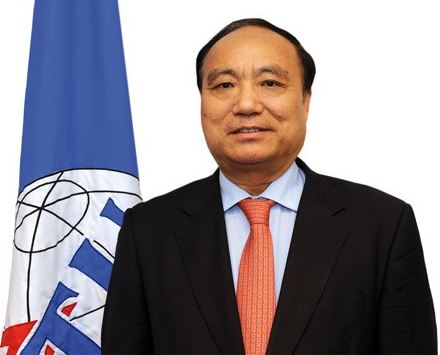
The winners will then be announced by ITU Secretary-General, Houlin Zhao at a high-profile ceremony during ITU Telecom World 2018, taking place 10-13 September in Durban, South Africa.
First launched in 2015, the ITU Telecom World Awards initiative recognizes the innovative application of ICTs for social good created by entrepreneurs; small- and medium-sized enterprises (SMEs), and large industry players alike.
It also facilitates knowledge sharing of best practices, while providing a platform from which to network, mobilise investment, explore partnership potential and create new business opportunities.
The ITU Telecom Awards 2018 welcomes entrants in the following categories:
Global Corporate Awardsfor the most promising innovative solutions with social impact within large companies in two categories: sustainable development and smart emerging technologies.
Global SME Awardfor the most promising solutions from SMEs making innovative use of ICTs for social impact, in a number of different categories.
Host Country SME Award for the best and most innovative SME or solution from the Host Country.
Government Awardfor the National Pavilion at ITU Telecom Word 2018 with the most promising innovative SMEs present at the event, entering the Global SME Award.
All ITU Telecom World 2018 sponsors and exhibitors, either participating within a National Pavilion or Thematic Pavilion, as an Independent Stand, or with an SME Workstation, are eligible to enter the awards.
“Previous ITU Telecom World Awards winners have represented the innovative application of ICTs in the areas of e-health, e-education, digital finance, and smart emerging technologies. Winners earn global recognition, helping them to expand and scale up their businesses, while improving livelihoods through their innovative use of technology,” said ITU Secretary-General, Houlin Zhao. “ITU is proud to have developed this platform for promoting innovative examples of ‘tech for good’ and I look forward to exploring the next wealth of winners this September in Durban.”
ITU Telecom World is a global platform for accelerating ICT innovations, and is organized annually by ITU. It aims to deliver economic development and social good faster through its exhibition for digital solutions, forum for sharing knowledge, and networking hub connecting nations, organisations and individuals.
“The network and connections you can build at ITU Telecom World are invaluable – from a business perspective, an investor perspective, and a networking perspective,” said Matthias Brodner of South Africa’s Simplus Innovation, winner of the 2017 Global SME Award for best business model.
ITU Telecom World 2018 takes place 10-13 September at the Durban International Convention Centre in Durban, South Africa.
Under the theme Innovation for a smarter world, it will combine an international tech exhibition, a forum for sharing knowledge, a networking hub for corporates, governments and SMEs, in addition to the influential ITU Telecom World Awards.
It provides a unique international platform that brings together developed and emerging markets, public and private sector leaders, and industry representatives from across the entire ICT ecosystem.
The negative performance of the local bourse lingered yesterday, marking the fourth consecutive decline as the All Share Index (ASI) shed 0.2% to 38,605.07 points while the YTD return reduced to 0.9%. Accordingly, investors lost N16.2bn as market capitalisation declined to N13.9tn. Profit taking in market bellwethers – SEPLAT (-5.0%), GUARANTY (-0.9%) and NIGERIAN BREWERIES (-1.0%) – was responsible for yesterday’s bearish performance.
Similarly, activity level weakened as volume and value traded fell 31.4% and 37.4% to 267.8m units and N3.8bn respectively.
Yesterday’s top traded stocks by volume were ZENITH(44.8m), FBNH (38.7m) and ACCESS (25.8m) while ZENITH (N1.1bn), GUARANTY(N494.3m) and NESTLE (N414.8m) were the top traded stocks by value.
Mixed Sector Performance
Across sectors, performance was mixed as 2 of 5 indices we track closed in the green. The Insurance and Banking indices trended northwards, up 1.4% and 0.2% respectively as a result of buying interest in NEM (+4.9%), PRESTIGE (+10.0%), WAPIC (+4.3%),ZENITH (+2.0%), UBA (+1.4%) and ETI (+1.0%). On the flipside, the Oil & Gas index was the worst performer, down 2.6% due to losses in SEPLAT (-5.0%). Equally, the Consumer and Industrial Goods indices fell 0.3% and 0.2% respectively on the back of profit taking in NIGERIANBREWERIES (-1.0%), DANGFLOUR (-1.4%), NASCON (-0.2%) and CCNN(-3.1%).
Investor Sentiment Strengthens
Investor sentiment as measured by market breadth (advance/decline ratio) strengthened to 1.2x (23 stocks advanced compared to 20 decliners) from 0.4x in the preceding session. The best performing stocks were PRESTIGE (+10.0%), CILEASING (+9.3%) and ETERNA (+8.9%) while SEPLAT (-5.0%), CUSTODIAN (-4.9%) and LIVESTOCK (-4.6%) were the worst performing stocks. In line with our expectation, profit taking across market bellwethers continued today despite improved investor sentiment.
We expect this bearish trend to be sustained in the next trading session although we do not rule out the possibility of a rebound by week end.
At the forefront of innovation and technology in energy while collaborating with power producers across the region, GE Power announced today that it has reached its 100th power plant installation in Sub-Saharan Africa.
This significant milestone was achieved with power plants in Angola powered by trailer-mounted aero gas turbine technology. The company has now installed over 300 turbines in up to 22 countries in Sub-Saharan Africa.
Leslie Nelson, CEO, GE’s Gas Power business, Sub-Saharan Africa said: “This milestone is a testimony of our commitment to providing power solutions to meet the growing energy needs in many countries in the region ahead of other OEMs. Our regional operations are led by an expert African team. Our flexible and modular energy solutions respond to the ever-changing needs of the communities where we work and live. Our ability to partner with independent power producers, EPCs, strategic investors and governments to deliver these power projects strengthens the trust and confidence that our customers place in us.”
Ghana
Over 70% of the thermal power in Ghana runs on GE technology with over 600MW added to the grid in the last 24 months, with an additional 900MW planned over the next 2 years. Leading examples include the 400MW Bridgepower project– in consortium with indigenous partners, Endeavour and Sage Petroleum – which will be the first LPG-fired power plant in Africa and the largest LPG fired power plant in the world.
In partnership with Marinus Energy, the Atuabo Waste Gas to power projectwill be the first TM2500 plant to use otherwise flared Isopentane gas as a fuel source. The 200MW Amandi power plant which will come online in 2019 will run on GE’s latest 9E technology offering superior fuel flexibility.
Nigeria
In Nigeria today, GE technology provides over 75% of the gas-powered on-grid generation, with more than 3GW of heavy duty and fuel-flexible gas turbines at nine power plants including the Omotosho I & II power plants as well as GE’s innovative trailer-mounted gas turbines currently being installed at the Afam III Fast Power plant.
GE is committed to Nigeria’s Vision 2020; signing a Country to Company agreement with the Nigerian government to support development of up to 10GW of power.
Angola
GE and the Angola Ministry of Energy and Water are set to achieve the country’s additional electric power generation capacity target of 2000MW. Today, about 80% of Angola’s gas-powered generation runs on GE technology providing energy for up to 2 million Angolan households.
With over 20 trailer mounted gas turbines installed at fast power plants and the 750MW Soyo I combined cycle power plant under construction, Angola is well on its way to achieving its energy ambitions.
Ivory Coast
GE is a historical player and a pioneer in the power sector in Ivory Coast. The first-ever gas turbines (Vridi, 1984), the first independent power production project (Ciprel, 1994) and the first combined-cycle power plants in the country (Azito and Ciprel, 2015) all run mainly on GE technology.
In 2015, GE committed to support the country’s infrastructure development goals, which includes adding 1GW of power to the Ivorian national grid. The Azito Power plant produces more than a third of the electricity in the country and marks GE’s Power Services’first GT13E2 MXL2 gas turbine upgrade in SSA. This upgrade will add an additional 30MW to the plant’s 450MW production capacity.
In addition, GE is setting up an M&D (Monitoring and Diagnostic) center in Ivory Coast to provide the digital data and analytics service to improve performance and lower lifecycle costs of all GE equipment in the region.
Kenya
Kenya needs a diverse energy mix to support its growth initiatives. The 1050MW Lamu power project will use GE’s ultra-super critical technology to deliver superior efficiency and lowest emissions. The project will guarantee that up to 30% of electricity produced in Kenya is reliable base-load power.
South Africa
In South Africa, GE is deploying smarter, cleaner, steam technology at the Medupi and Kusile Power plants. Kusile is the first wet flue gas desulphurization plant in the continent and has 93% removal efficiency rate. Upon completion, Kusile and Medupi will provide up to 9600MW – enough power to meet the electricity needs of about 7 million households in South Africa.
“As a company, we believe that one of the key drivers of development in Africa is power. Lowering the tariffs, figuring out how we can make the most of the grid, optimizing the energy value chain – this is what we think about as a business and work towards improving everyday” said Lee Dawes, General Manager, GE Steam Power in Sub-Saharan Africa.
GE’s first turbine installation in Sub-Saharan Africa can be traced as far back as the early 1970s with its Frame 5 gas turbine technology. Since then, GE Power has been at the forefront of innovation in power technology with the most recent fuel-flexible and highly efficient 9EMax gas turbines, superior ultra-super-critical steam technology as well as a broad range of hydro and wind turbines and generators. GE has power plant installations in up to 22 countries in Sub-Saharan Africa and this number is set to grow even further.
GE reinforces its commitment to investment in the region through skills development initiatives to broaden and nurture its talent pool within the countries it operates. In South Africa, $2.4M worth of student bursaries have been awarded in partnership with Eskom.
In Ghana, $3.5M was donated to support the Engineering Program at Ashesi University. Over 120 employees are on GE Leadership development programs today. Corporate Social Responsibility initiatives are also carried out through a wide range of projects in the areas of health, education, environment and community-building to improve lives in the countries where we work and live.
GE Power is attending the 20th Africa Energy Forum in Mauritius from June 19th to June 22nd, 2018.
L-R: Prof. Akpan Ekpo, Director-General, West African Institute for Financial and Economic Management; Engr. Edoyemi Ogoh, Head, Interconnect and Network Monitoring/Quality of Service Unit, Nigerian Communications Commission (NCC); Engr. Ernest Ndukwe, Chairman, Open Media Group/former Executive Vice-Chairman, NCC; Prince Cookey, Publisher/CEO of Business Journal; Mr. Tope Smart, Group Managing Director/CEO, NEM Insurance Plc and Chidi Izuwah, Director-General, Infrastructure Concession Regulatory Commission, at the Business Journal 10th anniversary lecture and awards on Infrastructure and Economic Growth: Exploring The Strategic Alliance held at Sheraton Hotel, Ikeja (Lagos) on Thursday, June 7, 2018.
Text of the paper presented by Professor Akpan Ekpo, Director-General, West African Institute for Financial and Economic Management (WAIFEM) at the Business Journal 10th Anniversary Lecture in Lagos.
L-R: Prof. Akpan Ekpo, Director-General, West African Institute for Financial and Economic Management; Engr. Edoyemi Ogoh, Head, Interconnect and Network Monitoring/Quality of Service Unit, Nigerian Communications Commission (NCC); Engr. Ernest Ndukwe, Chairman, Open Media Group/former Executive Vice-Chairman, NCC; Prince Cookey, Publisher/CEO of Business Journal; Mr. Tope Smart, Group Managing Director/CEO, NEM Insurance Plc and Chidi Izuwah, Director-General, Infrastructure Concession Regulatory Commission, at the Business Journal 10th anniversary lecture and awards on Infrastructure and Economic Growth: Exploring The Strategic Alliance held at Sheraton Hotel, Ikeja (Lagos) on Thursday, June 7, 2018.
Private sector and infrastructure
It has always been argued that the private sector is the engine of growth and as such as significant role to play in the infrastructural development of the economy.
However, the private sector exists in an economy led by the public sector. Therefore, once the investment climate is right, the private sector would invest but in what?
Our position is that the private sector should invest in the infrastructure sub-sector of the economy in order to sustain their businesses and profitability.
Innovative financing methods are necessary to encourage the private sector. The Public-Private partnership is one of such approaches. There is the Build-own-and operate; Build-own- and transfer; various leasing and concession options.
Has the private sector utilized the opportunities created by government to build infrastructure such as roads, railways, water projects, power projects, among others.
The involvement of the private sector in the power business has been a disappointment. After biding and buying the various existing power plants, various challenges emerged reflecting the lack of appropriate capacity to do due diligence.
Perhaps, there is need to distinguish between the foreign and indigenous private sector of the economy. The former characterized by multi/transnational cooperation.
Even when contracts are awarded to the private sector to build infrastructure, the quality of service delivery is often below standards.
Consequently, in the infrastructural development matrix, government remains relevant.
Government has business in the infrastructure business. It must be a catalyst thus urging the private sector to be part of the process.
In the ERGP, there is role for the private sector but it appears that the pledges made during the labs came mainly from foreign investors.
It seems that the Nigerian private sector is still interested more in wholesale, retail, services, packaging, bottling and assembling and not in investing in hard infrastructure.
However, the story is different when it comes to soft infrastructure such as education;
with the collapse of the public school system at all levels;
the private sector has invested and established/built nursery, primary, secondary and tertiary schools with the desire to make profits while indirectly pretending to contribute to national development.
The quality of the products from most of these institutions leaves much to be desired.
It is must be stated that for the private sector, the profit motive supersedes patriotism hence government must continue to pursue the development of infrastructure in order to enhance the growth and development of the country.
Mobilising Resources for Infrastructural Development
Economies that have developed their infrastructure have invested almost 25 per cent of their annual budget on infrastructure for al least 10-15 years.
Nigeria’s investment on infrastructure annually is less than 2 per cent. In recent times, external borrowing and the issuance of sukuk have been undertaken to finance infrastructural development.
There is nothing wrong in borrowing to finance capital projects like infrastructure provided the proper arithmetic has been done to ensure that the projects would pay offset the amount borrowed in the long-run.
It may be necessary to suggest that the recent windfall from oil should be geared towards the financing of infrastructure and saving part through the Sovereign Wealth Fund.
The rising oil prices is not sustainable and should not only be utilized to defend the Naira.
Norway remains a good example of how oil revenues were used to finance and build physical infrastructure as well as human capital.
We do not have to re-invent the wheel.
The Strategic Alliance
Infrastructure development is an integral part of the public policies in developing countries including Nigeria.
Supporting infrastructure development in developing countries calls for strategic alliance as its importance cannot be overemphasized.
The World Bank and some other development partners appreciate this position.
The argument posited by traditional donors like the USA, Japan, etc. as why they eschewed providing support for infrastructural development because of environmental, social, and governance issues among others may not be totally correct.
China has braced the trend with the launch of the Asian Infrastructure Investment Bank (AIIB) through its ‘One Belt One Road Initiative’.
Conclusion
There is no doubt that building infrastructure would stimulate growth – would add about 2.5 per cent annually to the growth equation.
Sustained growth rates would also result in new and appropriate sustained infrastructural development.
The implications include better standard of living through job creation, poverty reduction, more revenue for government via a diversified economy and in the long-run a modern knowledge-based economy.
The infrastructural deficit in Nigeria is so large hence efforts must be made to narrow the gap.
The constant supply of electricity alone would stimulate both the micro, small-scale and even medium-sized businesses in the country.
Nigeria may have made progress in terms of the easy of doing business but the cost of doing business remains very high due to disturbing infrastructural deficit, hard and soft.
There exists a strategic alliance between infrastructure and economic growth and the nexus is self-reinforcing.
The fast-tracking of infrastructural development would enhance economic growth which would result in economic development if government pursues the right development philosophy.
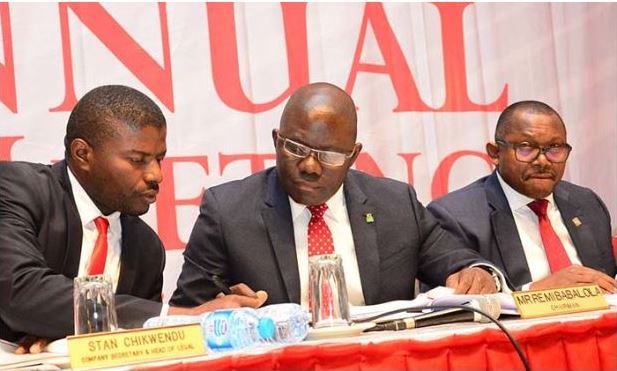
L-R: Company Secretary, Law Union and Rock Insurance, Mr. Stan Chikwendu; Chairman, Mr. Remi Babalola and the Managing Director/CEO, Mr. Jide Orimolade at the company’s recent AGM in Lagos.
Law Union & Rock Insurance Plc has released more retail products to meet the need of its customers. The new products are Travel Insurance Card and Teen Personal Accidents (TPA).
The Executive Director, Technical/Operations Mr. Olasupo Sogelola, said the introduction of the two products was part of the company’s strategic plans to meet the need of its retail customers.
According to him, the Teen Personal Accident otherwise called TPA was the company’s innovation, but has now been repackaged in four variants with premium ranging from as low as five hundred naira. The new variants provide customers with the benefits options depending on the customers’ choice.
The policy provides a cover for children of age between two and twenty-five years. The benefits include medical expenses and permanent disability resulting from accidents sustained by the insured child within and outside their school premises.
NAICOM has also granted the company an approval to underwrite Travel Insurance Card, a retail policy for regular travellers within Nigeria. With as low as seven hundred naira only, a traveller would be covered against accident arising in the course of his/her traveling by road, rail, water or air. The product comes in four variants- drivers travel card, passengers travel card, students travel card and executives travel card.
L-R: Company Secretary, Law Union and Rock Insurance, Mr. Stan Chikwendu; Chairman, Mr. Remi Babalola and the Managing Director/CEO, Mr. Jide Orimolade at the company’s recent AGM in Lagos.
The policy benefits, which include medical expenses, emergency care, accidental death and permanent disability is expected to provide succour to the accident victims/family and also reduce the level of uninsured economic losses from accident in the country.
In the last three years the company has released various retail products into the market which include Home Guard, the product that provide cover for the house contents, I-Care, I-Salute & GPA 4 Schools which provide different personal accident covers and Doctor-on-Cover, a professional Indemnity policy for Medical Practitioners.
These products are being distributed through state –of –the – art – technology which simplifies the accessibility and distribution of the policies through the company’s website, scratch card, POS and agents nationwide.
Sogelola disclosed that the company will soon commence the distribution of Worldwide Travel Insurance Policy following the regulator’s approval to underwrite the policy. The Executive Director, Technical/Operations expressed the company’s readiness to continue to provide cutting-edge services to its loyal customers.
In 2017, the company moved from accumulated loss to a positive retained earning which enables it to pay dividends to the shareholders. The company also recorded a positive growth in its top-line in first quarter 2018 to maintain its consistent growth and performance in the industry.
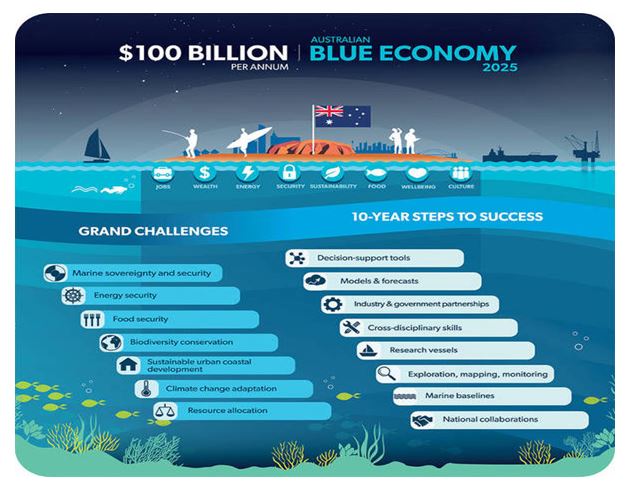
The African continent needs to work together on a country and regional level to put in place and, more crucially, implement a sustainable maritime governance system that will benefit the whole continent, concluded delegates at the first Africa Blue Economy Forum (ABEF).
ABEF 2018 took place in London on 8 June, to coincide with World Oceans Day. The Forum attracted international experts and African government ministers to debate the economic contribution of oceans in the context of the African Union’s Agenda 2063 and the UN Sustainable Development Goals (SDGs).
Paul Holthus, CEO of the World Ocean Council and keynote speaker at ABEF 2018, remarked: “Africa presents major blue economy investment opportunities and also sustainable development challenges. We are working to bring together ocean business community leadership and collaboration in Africa to address both these opportunities and challenges.”
Speaking on the panel discussing ‘The blue economy and ocean financing’, Gregor Paterson-Jones, an independent expert on renewable energy investment, said: “The blue economy is not a uniform theme. The green economy is more easily defined, because it relates to ‘clean’ energies. The blue economy has multiple sectors with different types of investment opportunities. I always say blue is the new green.”
A strong focus on action was prevalent throughout discussions at ABEF. David Luke, Coordinator, African Trade Policy Centre, United Nations Economic Commission for Africa, remarked: “Because the blue economy is such a broad concept, we need to bring coherence to it. As far as Africa is concerned, we need to be part of the change we see happening on the continent for the blue economy to have traction.”
Stanislas Baba, Minister-Counsellor to the President of the Togolese Republic, said: “Trade is an unexploited resource in Africa, but the blue economy has to be handled carefully. $350 million is lost each year in Africa due to illegal fishing. We can combat poverty by using our seas.”
Achieving a regional approach will not be easy, noted Yonov Frederick Agah, Deputy Director General, World Trade Organisation. “One of the problems we have in Africa is that we don’t like ideas,” he remarked. ”Blueprint programmes are lying on the shelf. Integration means letting go of certain things.”
Speakers and delegates at ABEF 2018 agreed on the need for innovative financing to start developing the Africa blue economy on a wider scale, not only from governments, but also the private sector. Relevant data and more research is required to shape policies, especially with regard to climate change. Focusing on educating Africa’s youth is also key to shaping the blue economy, which has the capacity to provide desperately needed jobs for the younger generation across the continent.
Leila Ben Hassen, Founder and CEO of ABEF organiser, Blue Jay Communication, commented: “The blue economy is not simply the responsibility of the 38 African coastal countries, but is also highly relevant to their landlocked neighbours. We must all contribute to put the blue economy into action, to help reduce poverty, improve livelihoods and assure sustainable socio-economic development.”
The latest airline financial data continue to show that industry profitability improved in Q1 2018 relative to the same period a year ago. The pick-up in industry-level performance was driven by a turnaround for European airlines.
Nonetheless, investor concerns about the impact of rising fuel prices on future airline financial performance saw global airline share prices fall for the fourth month in a row in May. The global airline share price index has now fallen by 8.5% since the start of the year, continuing to underperform the global equity market.
Oil prices climbed again in May, driven by tighter market supply and ongoing geo-political tensions. At the time of writing the Brent crude oil price is currently sitting around US$76/bbl – almost 60% higher than a year ago.
The seasonally adjusted trends in passenger and freight demand have continued to diverge. All told, while the industry-wide passenger load factor has continued to set new record highs in seasonally adjusted terms in recent months, the corresponding freight load factor has fallen back to levels last seen at the start of 2017.
The premium cabin’s share of international passenger revenues fell to 30.6% in Q1 2018, from 31.1% a year ago. Nonetheless, the cabin continues to provide an important buffer for airline financial performance.
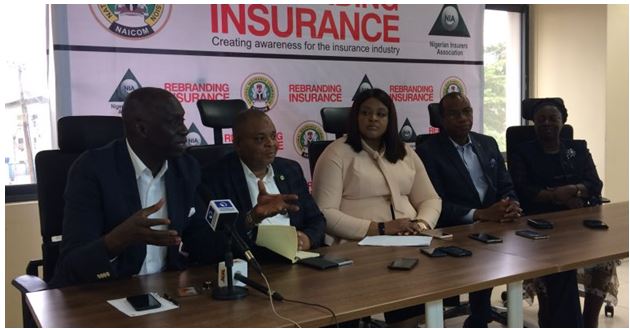
L-R: Chairman Sub-Committee on Publicity and Communication, Insurers Committee, Hassan Oye- Odukale; Deputy Director/Head, Corporate Affairs, NAICOM, Rasaaq Salami; Vice Chairman Sub Committee, Publicity, Ebelechukwu Nwachukwu; Managing Director, Custodian & Allied General Insurance Limited, Toye Odunsi and Director-General, Nigerian Insurers Association (NIA) Mrs Yetunde Ilori.
The N300 million rebranding project by the insurance industry in Nigeria has reinvigorated the hope of operators in the market for better days ahead.
Mr. Oye Hassan-Odukale, chairman of the sub-committee on Publicity and Communications of the Insurers Committee, said the project has an initial three-year lifespan to change the perception of the Nigerian public about insurance and the insurance industry itself.
Odukale maintained that Nigeria cannot attract sustainable Foreign Direct Investment (FDI) without insurance protection for the investors.
L-R: Chairman Sub-Committee on Publicity and Communication, Insurers Committee, Hassan Oye- Odukale; Deputy Director/Head, Corporate Affairs, NAICOM, Rasaaq Salami; Vice Chairman Sub Committee, Publicity, Ebelechukwu Nwachukwu; Managing Director, Custodian & Allied General Insurance Limited, Toye Odunsi and Director-General, Nigerian Insurers Association (NIA) Mrs Yetunde Ilori.
“We want insurance to move the economy forward. Investment cannot come into Nigeria without insurance protection for the investors. If we achieve one percent insurance penetration in Nigeria, it is huge given our population of 180 million. Indeed, claims payment is the best advert for insurance companies in the country.”
The insurance rebranding project will focus on four key planks:
Changing the mindset of Nigerians on the business of insurance
Ensuring the public understands the importance, values and benefits of insurance
Showcasing the advancements made delivering efficient services within the insurance sector to encourage more Nigerians to take up insurance
Propagating insurance as the engine that drives key sectors and keeps them in business
Odukale, who is also the managing director/chief executive of Leadway Assurance Company Limited added:
“The low insurance penetration rate in Nigeria is as a result o the wide financial protection gap; hence we must work hand-in-hand to ensure that risk protection and insurance education are readily accessible to the average man on the street. We need to look beyond making sales to reversing the negative perception many Nigerians have of the insurance industry.”
The rebranding project will also showcase insurance firms and chief executive officers operating in the industry, their contacts and create an avenue for them to respond to questions from members of the public.